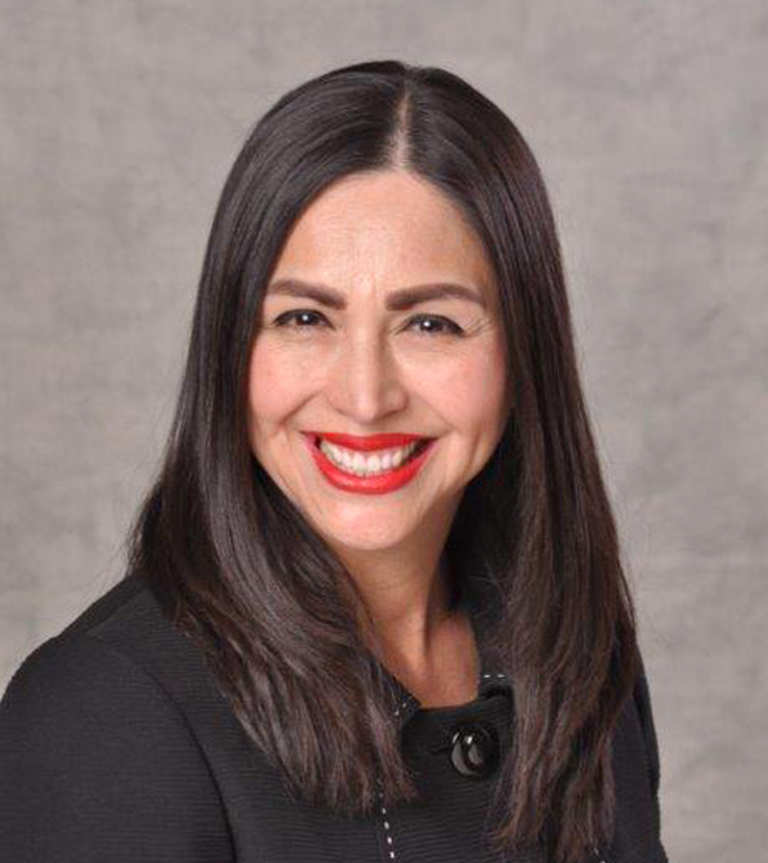
“Natural healthcare addresses root causes, not just symptoms, proving it can rival conventional medicine in improving overall health and quality of life.”
"We learn not for school, but we learn for life."
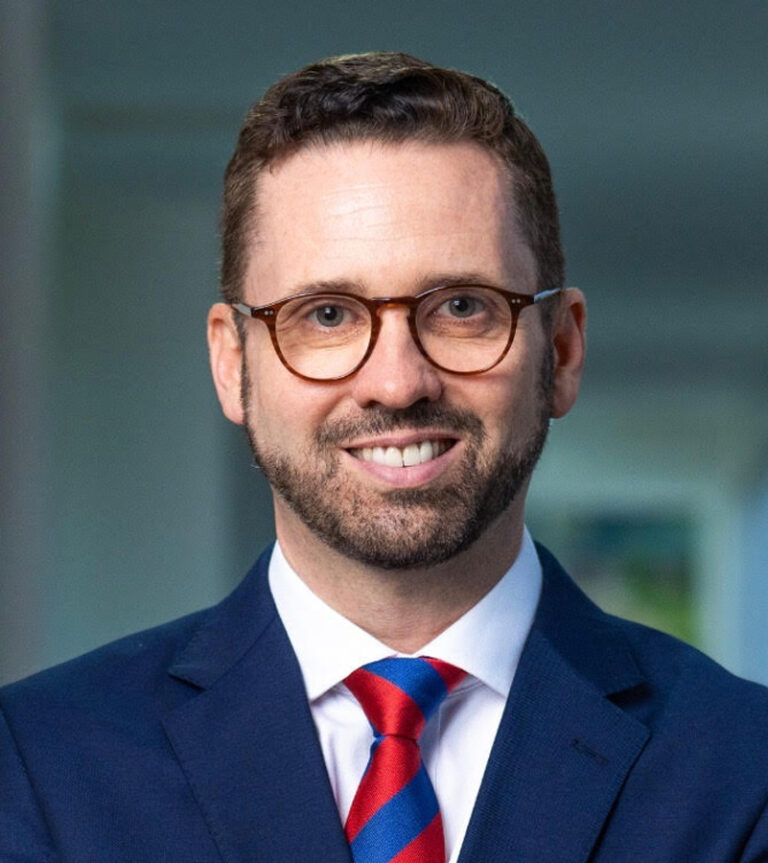
My name is Damien Paul Vassallo, and I’m very proud to be the founding head of school at Ntare Louisenlund School right here in Rwanda.
That’s a multifaceted question, so I’m going to try to pinpoint a few areas. First of all, I think that for any organization like ours to be successful, you need a compelling vision and mission. I would really point to that as the first piece that’s made us successful, because I believe our mission and vision are truly unique.
We’re trying to create not simply an international school, but one that supports students in achieving excellence in STEM fields, in particular, and in entrepreneurial pursuits. We want to be a hub where future leaders in STEM fields — designers, engineers, architects, doctors, professors — come to receive an outstanding STEM education through an international curriculum and, from there, go on to become leaders in those fields. And we do it in a way that gives many children from different backgrounds, including those in underserved communities, access to it through our Plus-STEM scholarship program.
The second thing is, we have a very unique partnership with the government of Rwanda. The government of Rwanda places a high priority on education, like hardly any other government that I’ve seen. For example, they built this state-of-the-art campus for us together with the alumni association of Ntare School in Uganda, the school where the president himself studied for a time. The government put the bulk of the resources into the construction of that campus, and it continues to support the school, not only with a startup grant but with a commitment to pay for full scholarships for half of our students. And our students are all full boarding — as long as the school continues.
Each year, we aim to add 160 students to our cohort, of whom 80 receive government-funded full scholarships. This partnership with the government is unique — it’s a public-private partnership that, in my view, is extraordinary and reflects the remarkable priority this government places on education.
The third thing I would mention is that we have a very unique blended learning approach that includes the inverted classroom. What we try to do is harness the power of the digital technology young people are surrounded by today — technology that often overwhelms them or causes addiction — to personalize and optimize their learning experience. Through blended learning, they can slow down the pace and take their own approach.
We are a face-to-face school, but much of what we do is online, even here at school, with teachers serving as coaches. There are classes with standard lessons, mainly structured around cooperative learning, but you can also use these online resources to tailor the curriculum and learning experience to individual goals, personalities, and learning needs.
The fourth thing is finding the right team. I think we’ve found an incredibly qualified team of educators from across the globe, representing 12 nationalities. These educators have extensive experience across different school systems, particularly in international schools and with an international curriculum.
We have a variety of subjects, but let me start with our curriculum framework. We are an International Baccalaureate (IB) school. Currently, we’re a candidate school, but we’ve just had our verification visit, so by the time this is published, we may be an authorized IB World School. Right now, we’re offering the IB Middle Years Programme because we only have grades seven and eight. Each year, we’re adding a grade — we’re a new school, so we have to let the kids grow up and add a cohort at the bottom each year.
We’re an IB school delivering an international curriculum. One of the great things about the IB is its flexibility in curriculum content, as it focuses on concepts and skills, allowing you to contextualize the content for your learners. We try to do that at the individual, local, and global levels so that their learning experience is relevant and personalized.
The second thing that really defines us is the Plus-STEM program. In addition to being an IB school and operating within the IB framework, we place special emphasis — for the overwhelming majority of our students who come here to study in the STEM program — on science, technology, engineering, mathematics, computer skills, and more. Concretely, this consists of a high number of hours taught in those subjects and project-based learning on the weekends, in which students engage in 4 hours of lab or field work, really getting their hands dirty in authentic learning experiences that train them to work as future scientists and engineers. This STEM program distinguishes us, and we developed it in collaboration with our sister school in Germany, which is a member of the Plus-STEM network.
For students who are not as STEM-focused and are more interested in the social sciences, we offer the STAR Entrepreneurship Program. Students in this program still have STEM subjects and a high level of STEM education, but their focus is on entrepreneurship. In this smaller group, they visit businesses, make business plans, design pitches, and deliver them. We have young entrepreneurs come to our school and work with students in workshops and on panels, giving students a lot of real-world contact with businesses and with what it’s like to establish a business, run it, handle the accounting and marketing, and all those things — at a very young age in 7th and 8th grade.
Lastly, as part of our program, we’re a global member of the Round Square network of schools. In Round Square, the focus is really on the holistic aspect of education — students training their leadership skills, developing their role as citizens in a democracy, and going on experiential education trips. The focus is really experiential education outside of the classroom.
As evidence of that, we already offer 60 co-curricular program activities at our school, which is only a year and a half old. Students have a whole range of activities to choose from, which we call co-curricular rather than extracurricular because we think it’s a fundamental part of their education. This idea of experiential education means education goes beyond the classroom, where kids engage in real-world experiences that will be fundamentally needed by them and shape them into the kind of competent students—and later professionals—that they can become.
It should also be clear that we are a Plus-STEM school — that means we offer languages, physical and health education, the arts, and social sciences like history, geography, and politics. We’re not just a school that only does STEM subjects. It’s all those subjects plus STEM, with a special focus on STEM.
We also place great emphasis on language education. All of our students learn at least three languages: English, German, and Kinyarwanda, the local language, and we’re trying to expand that as well. We’re really creating global citizens, not just STEM nerds.
There are many good schools on the African continent — well-known institutions in countries like Kenya and South Africa, and prestigious boarding schools like ours. In Rwanda, there are several international schools, but not as many as in other countries, which makes us somewhat unique already. Even though there are many international schools and top-quality private schools in Africa, the continent is the most underrepresented region in terms of IB education. Compared to Europe, North America, and Asia, the African continent is underrepresented in IB schools. Offering an IB education right here in the heart of Africa is therefore very important and unique.
In terms of what makes us competitive, first of all, we give students access who otherwise wouldn’t have a chance. We’re reaching students who wouldn’t attend those other schools because they couldn’t afford them — very talented students who don’t have the means. Beyond that, we are the only school in Africa and, I believe, in the world that combines this unique STEM program with the IB program. We’ve created a fusion of the Plus-STEM program developed by German private secondary schools with the IB curriculum. We are an IB school, and we’ve fused them together from our founding, so that we take this very unique STEM excellence approach to the IB. This makes us, I think, very attractive on the international market. A lot of parents globally, and African parents in particular, are really interested in their children pursuing careers in STEM.
Another unique element is that, even though we’re an international school rather than a German school in the diaspora, we maintain a strong connection to a well-established, renowned German boarding school that also offers the IB and the Plus-STEM program. Through that Germany connection, we are laying the groundwork for our students to have access to higher education and partnerships in Germany. Germany is a STEM nation historically through and through, known for engineering, science, and math. One of the unique things about Germany is that its university system is virtually free because it’s public — there are only marginal registration fees and no tuition. Students who come from underserved communities have a scholarship here and would love to go on to study at elite universities, but often can’t afford it. Through the Germany connection, they can. We’re already working with those universities to lay the groundwork for that transition. We’re teaching all students German so that, by the time they graduate, their German is at the B1 or B2 level, preparing them to enter university and access high-quality education. We’re also working with STEM partners like VW, and intend to work with a few others.
We’re already winning. In the first year and a half, one of our students was named Miss Nerd Rwanda for developing a breast cancer detection app. A student has already qualified for the Global Math Olympiad in Rome. And we were awarded by the African Education Summit as 2024’s most innovative school in Africa. We’re proving that we’re living up to our aspiration to be competitive in that market.
We’re lucky to have a campus built to accommodate 1,000 students. Right now, we’re running with two grades at a capacity of about 250 students, and we plan to have 1,000 students by the time we have all six cohorts here. The campus is, by and large, finished and ready to go, though we will probably build a few more dormitories and learning centers.
More than just growing the numbers, we want to do something unique. We don’t just want to be a school of STEM excellence that can compete on an international level — we also want to be a hub of educational innovation and for 21st-century education in Rwanda and in the East African region. What I mean is that we want to open the doors of our campus as a professional development and best-practice center so that other educators can come here and learn from us.
We’ve already established a student-teacher program, with several student teachers who work for us on a part-time basis while finishing their studies — one at the bachelor’s level and one at the doctoral level. They work here part-time, and we’ve given them a pathway to full employment if they demonstrate during their internships or part-time work that they’ve met our standards. We train them, and then, they have a guarantee of employment at our school afterwards. We’re actually creating jobs beyond the ones we’ve already created for young aspiring educators in Rwanda, and we want to continue doing so and expand it so that people who are already teachers can take part in professional development workshops.
We’re currently in conversation with the Ministry of Education about offering language courses for Rwandan teachers across the country to improve their English and allow them to deliver instruction in that language. We really want to be a hub and center for teacher learning.
Another goal is to increase the number of students receiving scholarships, even though we’re already offering scholarships to half our students through private partners. We’re actively looking for foundations, companies, and other institutions that want to say, “Let’s help five more students have a Plus-STEM scholarship.” We’re already in conversation with several companies interested in doing that, but the more the merrier, since each can only offer a few scholarships. I imagine us being a beacon for educational innovation and 21st-century education in East Africa and beyond.
Within the Rwandan context, the school is already very famous because it bears the name of the school that the president attended in Uganda. We are seen as a kind of daughter, partner, or sister school of that institution, and there has been significant interest in this school since it was founded. It’s already considered the best school in Rwanda, which is probably why it came to Newsweek’s attention.
In Rwanda, there is significant interest from companies in partnering with us. We’ve already partnered with several banks and corporations. We already have an MOU with VW, and we’re particularly interested in partnering with companies in STEM fields. We’re looking for more of those partnerships because they provide our students with educational opportunities and professional training. For example, VW is planning a day when our students can come to their headquarters to engage directly with engineers and specialists and view some of the automobiles. We hope to gain support from those organizations for our efforts and scholarship programs.
On the German side, one university has already reached out to us — Rheinland-Pfalz Technical University. They’ve drafted an MOU with us to help ease the transition for students to come and study in their STEM programs after they graduate. We’re four and a half years out from any of our students graduating, but we’re already laying that groundwork. Through our sister school, Luisenlund in Germany, which is well connected to many STEM partners and institutions of higher education, we’re trying to build those partnerships and connect with more technical universities in Germany to open doors of opportunity for our students once they graduate.
In Rwanda, people are coming to us and wanting to partner with us. But it’s a daily effort to reach out to companies and other educational partners, such as institutions of higher learning here in Rwanda. Another part of our approach is being present. We are already a member of Round Square. We are becoming a full IB World School and are already delivering the program. We’re pursuing several other accreditations, and we’re a member of the African International Schools Association. We attend lots of events to stay present. We also have one of the most targeted PR campaigns on social media and in online publications in the region — really doing a lot of outreach. We have a YouTube channel where we publish videos on educational innovation, discussing our approaches to teaching and learning, including our blended learning model, and we’re reaching a lot of people through those channels.
Regarding recruiting parents, we’ve been to Kenya, Tanzania, and Uganda. We’ve sent representatives from our sister school to Latin America and parts of Asia. We’re spreading the word face-to-face at educational fairs, where we can connect directly with parents. But I think the best strategy for us to reach people is just to be who we are, live up to our vision, and win day by day. Because when we win, people notice. And when people notice, they say, “I want a piece of that type of education for my child.”
A lot of schools give lip service to the idea of agency. Everyone talks about student agency and empowering students, but at our school, we really put our money where our mouth is. We genuinely give students an active role in shaping their learning day to day, supported by mentoring, but really giving them that kind of independence and the ability to work in peer teams that you might not see in other schools.
If I could put in a pitch: we’re looking for partners. We’re looking for foundations that are interested in and would like to invest in the future of STEM education on the African continent — those who may, for example, be particularly interested in supporting girls or young women in STEM fields. Half of our students are girls.
I insisted on the school being co-ed when I agreed to be the founding head. We recently hosted a conference where 20 schools participated, and 600 young women gathered for the Women Impacting STEM Excellence Conference — the WISE Conference. That’s another example of how we’re getting people’s attention, establishing partnerships, and recruiting students by hosting events that showcase our particular approach to education and our focus on promoting STEM excellence. If there are people out there who’d like to support that, we’ll include a link and perhaps a QR code so it can be included in the article. I think that would be very helpful, and they’d be doing a good thing.
The African continent is the future of the globe — it’s up-and-coming, it’s developing, it’s living much cleaner and greener than many of the countries that advocate for a green and sustainable life, and it has a strong understanding of community and solidarity. In the future, people will turn their eyes to Africa. It’s important that we do justice to the children of the continent so they can become the future global leaders that we want them to be.
The message I would like all readers to hear as an educator is this: we learn not for school, but we learn for life. We learn for our entire lives because our lives, not our classrooms, are the schools that we attend. For students to learn for life, not just for school, school has to look more like the real world beyond the classroom and campus.
That’s the type of learning environment that we’re trying to create here. And I would appeal to my fellow educators to do the same — create schools that are relevant, connected to the community, and that promote a spirit of lifelong learning.
“Natural healthcare addresses root causes, not just symptoms, proving it can rival conventional medicine in improving overall health and quality of life.”
“Trust is key to our long-standing relationships with the private sector.”
“I want to continue to be on projects that people get excited about to see.”
The monthly briefing for executives to stay ahead. Insights, book reviews, and the best tools — all curated and distilled into 5 minutes.
Welcome to The Executive Insight. Your free AI guide to the best tools is on its way. The first issue arrives soon.
Your request has been successfully submitted. Please wait for a reply from our manager, he will contact you as soon as possible.