Subscribe to outperform
The weekly Executive Briefing: insights, books, tools, and media opportunities worth your attention — curated and distilled into 5 minutes.



A colleague sends you the four-circle chart before your career review: what you love, what you are good at, what the world needs, what you can be paid for. The ikigai meaning in Japanese is simpler. Ikigai means a reason for living, often a small one, and that chart only received the word in 2014.
Our newsroom read 21 English pages that explain ikigai and recorded what each says about the chart, where it came from and what the word does in Japan. We checked their claims against Marc Winn’s own 2014 post, the Japanese government’s explainer and two large Japanese cohort studies.
Of 21 English pages explaining ikigai that we read on 23 November 2026, six present the four-circle Venn diagram as a Japanese idea, and only six credit Marc Winn or Andrés Zuzunaga, the two men behind it.
The six that present it as Japanese are MasterClass, EHL Insights, Umbrex, Calm, Science of People and WellBeing Magazine. None of the six describes how Japanese people use the word.
Eleven more flag the chart as a Western reading, or note the debate, though only six of the 21 name who made it. Two show the four circles with no origin at all, and two leave the chart out.
Longevity is where the sourcing thins. Seventeen of the 21 pages tie ikigai to a longer life. Eight name a study or a source for it, and three of those eight rest on one writer, Dan Buettner. Nine name nothing.
Famous ideas collect grander backstories than they earned. Our trace of amor fati found seven of 22 pages handing Nietzsche’s phrase to the Stoics without naming him. Our check of Hanlon’s razor found nine of 25 pages naming the 1980 Murphy’s Law book it came from.
| What the page does | Pages (of 21) |
|---|---|
| Presents the four circles as a Japanese idea | 6 |
| Flags the chart as a Western reading, or as debated | 11 |
| Shows the four circles with no origin | 2 |
| Leaves the chart out | 2 |
| Credits Marc Winn or Andrés Zuzunaga | 6 |
| Describes how the word is used in Japan | 13 |
| Ties ikigai to a longer life | 17 |
| Longevity claim with a named source | 8 |
| Longevity claim with no source | 9 |
Ikigai is a Japanese word for what makes life worth living. It joins iki, meaning life, with kai, meaning effect, which softens to gai in the compound, according to Wikipedia. The Japanese government defines it as that which brings value and joy to life, from children and friends to work and hobbies.
The ikigai meaning in KIZUNA, the government’s English magazine, covers people as well as activities and says nothing about pay.
The psychiatrist Mieko Kamiya popularised ikigai in her 1966 book, Ikigai ni tsuite, and the Observatory of Tecnológico de Monterrey ties her thinking to her work with leprosy patients. For Kamiya, it reports, ikigai cannot be understood without being lived.
Kamiya wrote that the word seems to exist only in Japanese, and her book has never been translated into English, according to Ikigai Tribe.
The neuroscientist Ken Mogi describes ikigai as a reason to get up in the morning, as PositivePsychology.com quotes him. He sets out five pillars: start small, release yourself, harmony and sustainability, the joy of little things, and being in the here and now, as Ikigai Tribe’s interview page lists them.
In Japanese, ikigai is an everyday word, often used lightly. Ikigai Tribe gives the example of an office worker who takes his first sip of beer after a hard day and calls it his ikigai. People name hobbies, friends, food and travel. In ordinary Japanese use the word points to small reasons to keep going rather than to a career plan.
Sony Life, an insurer, surveyed 1,400 people across Japan, aged from their teens to their seventies, online in April 2025, as Mynavi News reported. Of them, 61.1% said they had moments that gave them a sense of ikigai.
The top answers were eating good food, at 47.4%, and travel, at 46.0%, followed by hot springs and spas, music, and talking with a partner. Work was not among the top five. Respondents picked 8.4 moments on average. It is an insurer’s own poll, not an academic study.
The World Economic Forum reported in 2017 that in a 2010 survey of 2,000 Japanese men and women, just 31% cited work as their ikigai. The article does not name who ran it. It quotes the Hong Kong anthropologist Gordon Matthews calling ikigai “something pretty matter-of-fact”.
Nicholas Kemp makes the same point in a 2022 essay for Japonica: “ikigai is not really a special word”.

The ikigai diagram began as a purpose diagram drawn by Andrés Zuzunaga, a Spanish astrologer, around 2011. On 14 May 2014 the blogger Marc Winn put the word ikigai at its centre in place of purpose. The four circles of love, skill, need and pay came from Zuzunaga, and the Japanese label came from Winn.
Zuzunaga’s version first appeared in a 2012 Spanish book by Borja Vilaseca, according to Ikigai Tribe. Winn found it in David Carter’s book Breakthrough, he says in a 2025 account of how the chart was made.
He had met the Japanese word in Dan Buettner’s TED talk on living to 100, which highlighted ikigai in Okinawa. His original post, What’s Your Ikigai?, describes an ikigai as essentially “a reason to get up in the morning”.
A note on the 2014 post disowns the diagram and credits Zuzunaga, saying Winn only added one word to it. In the 2025 account he writes that the post took 45 minutes with a ghost writer, and calls the result “a Western adaptation, not an authentic representation of Japanese philosophy”.
The chart then travelled through the 2016 book Ikigai by Héctor García and Francesc Miralles, which included Winn’s version, according to the Japanese government’s explainer.
Pages that show the ikigai venn diagram often rename the parts too. MasterClass lists mission, passion, profession and talent. EHL Insights calls its version an ikigai chart and swaps the labels again, with pay dropped.
The table lists all 21 pages, how each frames the chart, whether it credits Winn or Zuzunaga, whether it explains Japanese use, and how it sources any longevity claim.
| Page | The four-circle chart | Credits Winn or Zuzunaga | Japanese use | Longevity claim |
|---|---|---|---|---|
| Wikipedia | Flagged as Western | Both | Yes | Sourced (Buettner) |
| Government of Japan, KIZUNA | Flagged as Western | Winn | Yes | Study described, not named |
| Japan House Los Angeles | Flagged as Western | Winn | Yes | Sourced (Lancet study) |
| The Meaning Movement | Flagged as Western | Both | Yes | Sourced (three studies) |
| Ness Labs | Flagged as Western | Both | Yes | Sourced (PubMed studies) |
| Sources of Insight | Flagged as Western | Both | Yes | No source |
| World Economic Forum | Flagged as Western | No | Yes | Sourced (Buettner) |
| BetterUp | Flagged as Western | No | Yes | No source |
| Observatory, Tecnológico de Monterrey | Flagged as Western | No | Yes | No source |
| The List | Flagged as Western | No | Yes | None made |
| PositivePsychology.com | Flagged as debated | No | Yes | Sourced (two studies) |
| Psychology Today (Tim Lomas) | Shown, no origin | No | No | Sourced (Buettner) |
| Parade, via AOL | Listed, no origin | No | No | None made |
| Ikigai Tribe | Left out | No | Yes | None made |
| Japonica (Nicholas Kemp) | Left out | No | Yes | None made |
| MasterClass | Presented as Japanese | No | No | No source |
| EHL Insights | Presented as Japanese | No | No | No source |
| Umbrex | Presented as Japanese | No | No | No source |
| Calm | Presented as Japanese | No | No | No source |
| Science of People | Presented as Japanese | No | No | Sourced (Lancet study) |
| WellBeing Magazine | Presented as Japanese | No | No | No source |
All six pages that present the chart as Japanese also skip how the word is used in Japan. Of the 13 pages that do explain the Japanese use, none presents the chart as Japanese.
The same drift shows up wherever a technique gets popular. Our check of the memory palace found eight of 16 popular claims trace to a study or a Roman text, and five say more than the evidence. Our reading of the make your bed speech found six of 17 pages drop or change Admiral McRaven’s lesson on taking risks.
Ikigai is linked to longer life in Japanese cohort studies, though none can prove that it causes it. One, the Ohsaki study of 43,391 adults published in 2008, found that people who reported no sense of ikigai had a 1.5 times higher risk of dying over seven years than those who did.
The study, by Sone and colleagues, appeared in Psychosomatic Medicine. Over the seven years, 3,048 participants died. For cardiovascular deaths the hazard ratio was 1.6.
The question was a single line, “Do you have ikigai in your life?”, answered yes, uncertain or no, as the psychologist Christopher Peterson described it in Psychology Today in 2008. Almost 60% of the adults, aged 40 to 79, said yes in 1994. The link held for cardiovascular deaths, usually stroke, but not for cancer.
Peterson lists the adjustments the researchers made: age, smoking, drinking, exercise, past illness, how healthy people rated themselves and other risk factors.
Okuzono and colleagues published a 2022 study in The Lancet Regional Health Western Pacific. In two samples of Japanese adults aged 65 and over, 6,441 and 8,041 people, having ikigai in 2013 was linked to a 31% lower risk of functional disability and a 36% lower risk of dementia three years later.
Both studies measure association. People who are already ill may report fewer reasons to get up, which is why the adjustments matter.
Against that evidence, nine of the 17 pages making a longevity claim name no study or source. The Observatory gives the 36% dementia figure with no link, though it matches the Okuzono result. Three of the eight sourced pages lean on Buettner alone.
Lifestyle stories grow in the retelling. Of 20 claims about the Warren Buffett diet we traced, 14 are in his own words, and his no-water story grew as it was repeated. Of 21 claims about the Brad Pitt Fight Club workout, eight had no source at all.
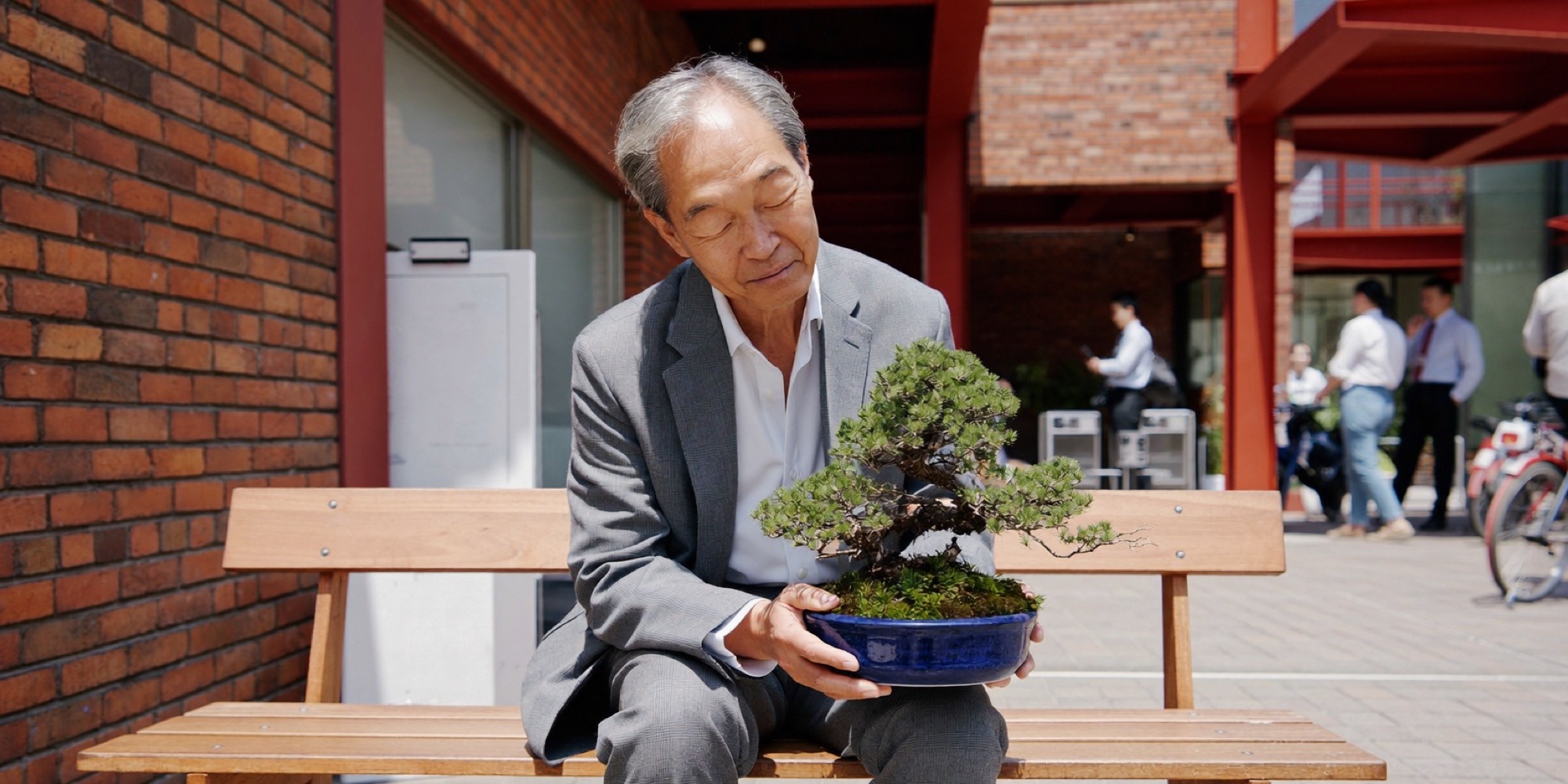
The chart makes pay one of four conditions for a reason to live. Japanese usage does not. In Sony Life’s 2025 survey, work missed the top five reasons people gave. In the 2010 survey the Forum reported, 31% named it.
The government explainer reports that among people aged 65 and over, those who worked only for financial reasons had 1.55 times the risk of functional decline two years later compared with those who worked for ikigai. The explainer does not name the study, so treat the figure as reported.
Read as a career tool, the chart sets a standard few jobs meet: love, mastery, social need and good pay, all at once. Score a steady job against it and a circle is usually missing. The ikigai meaning in Japanese sets no such test.
Careers move more than the chart assumes. Our guide to a career change at 40 cites Bureau of Labor Statistics data showing Americans born from 1957 to 1964 held 12.9 jobs between the ages of 18 and 58. Our piece on a career change at 50 cites an analysis finding 56% of workers over 50 were laid off at least once or left jobs in financially damaging circumstances.
A steadier pattern lets the job pay and keeps the love circle as a small, protected bet. Nassim Taleb’s version of the barbell strategy pairs near-riskless holdings with small bets of large upside; our check found eight of 22 pages give only the bond-market meaning.
The good-at circle takes years to fill, which the chart hides. Robert Greene wrote a whole book on that apprenticeship, Mastery, and two of the seven lists in our guide to Robert Greene books put it first.
Pay is a price, and prices can be wrong in either direction, a theme Michael Lewis keeps returning to; our guide to Michael Lewis books counts 18 titles, with Moneyball and The Big Short splitting six lists.
Keep the two ideas apart. Use the four circles as what they are: Zuzunaga’s purpose exercise, useful for sorting work options. Then keep a separate list in the Japanese sense, the small moments in a week that make you want to get up. Sony Life’s respondents named more than eight on average.
A restructure can take the paid-for circle away in a day, and the people and habits on the short list are still there the next morning. Viktor Frankl, borrowing a line he credits to Nietzsche, held that people can bear almost anything when they have a reason to live; our Man’s Search for Meaning summary found 17 of the 21 most quoted lines credited to him are in the book.
One of the top five answers in the Sony Life survey was talking or keeping in touch with a partner, at 23.3%. For the people side of a working life, our count of Dale Carnegie books found 10 titles, with both Goodreads pages starting at How to Win Friends and Influence People.
For managers, the Japanese sense is the more useful question to ask a team: what gets you in on a Monday? Our guide to John Maxwell books found five of nine lists start with The 21 Irrefutable Laws of Leadership, and suggests a new manager start with The 5 Levels of Leadership instead.
If the chart has you chasing all four circles at once, narrow it. Our summary of The ONE Thing found four of its 14 research claims hold up as the book uses them, and its core advice, one priority with a protected block of time, needs no Venn diagram.
On 23 November 2026 our newsroom read English pages that explain ikigai, drawn from US search results for ikigai and ikigai meaning and from related searches, and counted 21 of them: an encyclopedia, a government magazine, a cultural centre, a business school, magazines, wellbeing apps and named writers’ sites.
For each page we recorded four things. How it frames the four-circle chart: presented as Japanese, flagged as Western or debated, shown with no origin, or left out. Whether it names Marc Winn or Andrés Zuzunaga. Whether it describes how the word is used in Japan. Whether it ties ikigai to longevity, and if so whether it names a study or a source for the claim.
We checked origins against Winn’s 2014 post and his 2025 account, and health claims against the published studies. We excluded pages that did not load: Harvard Medical School’s page, the BBC, Asana and findingbalance.blog refused our tools. We did not count an aggregator of others’ text or a Reddit thread. The full dataset is available on request.
No validated ikigai test appears in the research we read. The Ohsaki study asked a single question, whether people had ikigai in their lives, with yes, uncertain or no as answers. A quiz built on the four circles measures the 2014 chart, so it sorts career options and says little about daily reasons for living.
The Japanese government’s explainer names children, friends, work, hobbies, gardening and art, and profiles a 91-year-old who still grows crops. In Sony Life’s 2025 survey the top answers were good food, travel, hot springs, music and talking with a partner. Ikigai Tribe’s example is an office worker’s first sip of beer after work.
No. Andrés Zuzunaga, a Spanish astrologer, drew it around 2011 as a diagram of purpose, and Marc Winn added the word ikigai in a blog post on 14 May 2014. Winn now calls it a Western adaptation.
Marc Winn put the word ikigai on a Spanish purpose chart in 2014. Six of the 21 pages we read still present that chart as the Japanese idea, and none of those six explains how the Japanese use the word.
Written by
Editor of The Executive Insight. Writes about leadership, decision-making and the parts of building a business that nobody puts in the plan.

Someone hands you a novel and says it is a Reese pick. The Reese Witherspoon book club is Reese’s Book Club, a free monthly club the actor started in 2017 and runs through her media company, Hello Sunshine. Each month she names one book with a woman at the centre of the story. The free […]

Someone at the offsite recommends a book that will change how you see your team, and by the next quarter it is on the shelf with a bookmark at page forty. The psychology books worth an executive’s time are the few that change a decision you make every week: Daniel Kahneman’s Thinking, Fast and Slow, […]

You saw a line about the space between stimulus and response, credited to Viktor Frankl, and now you want the book behind it. This man’s search for meaning summary gives it in a breath: a psychiatrist’s account of the Nazi camps, and his argument that people can bear almost anything when they have a reason […]

You heard a Jim Rohn line at a sales kickoff and want the book it came from. Jim Rohn books are fewer than the shelf suggests: of the 20 most popular titles under his name on Goodreads, six were print books published in his lifetime. […]
Your watch is still nagging at 9pm, 3,000 steps short of a goal you never chose. The 10000 steps a day target began as the name of a 1965 Japanese pedometer, the manpo kei, or “10,000 steps meter”. A 2025 review of 57 studies found […]
You have a team that is stuck, and someone has told you to read Lencioni. His Wikipedia bibliography lists 13 Patrick Lencioni books, from The Five Temptations of a CEO in 1998 to The 6 Types of Working Genius in 2022, and 11 of them […]
You have a client dinner on Thursday and a colleague swears by one author on reading people. Vanessa Van Edwards books number six by our count, and three matter for work: Captivate (2017), Cues (2022) and Conversation (October 2026). For a room full of strangers, […]
Someone at dinner says the richest person on your street is the one with the oldest truck, and the source is a book from 1996. The Millionaire Next Door, by Thomas J. Stanley and William D. Danko, argues that most American millionaires built their wealth […]
The launch slipped a quarter, the board meeting went badly, and a colleague sends you two words by way of comfort: amor fati. The amor fati meaning is love of fate, wanting what happened, losses included, instead of wishing it away. The Latin phrase first […]

You have heard that Warren Buffett drinks five Cokes a day and lets the stock market pick his breakfast. Both are his own words. The Warren Buffett diet, as he tells it, is Coca-Cola, a McDonald’s breakfast, ice cream, potato sticks and steak, settled by […]

You have just been handed a team, and someone on it swears by John Maxwell. John Maxwell books number more than 100 by his own count, and five of the nine lists we counted start with The 21 Irrefutable Laws of Leadership. If you are […]
You have read the famous one, or meant to, and want to know what else is on the shelf. Dale Carnegie books number 10 by our count, from The Art of Public Speaking in 1915 to The Leader in You in 1993. Both Goodreads reader […]

You have a 15-minute talk on Thursday, no slides allowed, and someone tells you to build a memory palace. A memory palace is a route through a place you know well, with each item you need to remember placed as a vivid image at a […]
The weekly Executive Briefing: insights, books, tools, and media opportunities worth your attention — curated and distilled into 5 minutes.

You’re in. Your free guide to the best AI tools is on its way to your inbox, and your first issue will follow soon.
Can’t find the email? Check your Promotions or Spam folder.
Your request has been successfully submitted. Please wait for a reply from our manager, he will contact you as soon as possible.
Your copy of The Executive Insight Book Challenge List is downloading now. Enjoy the list — and while you're here, take a look at our latest interviews.