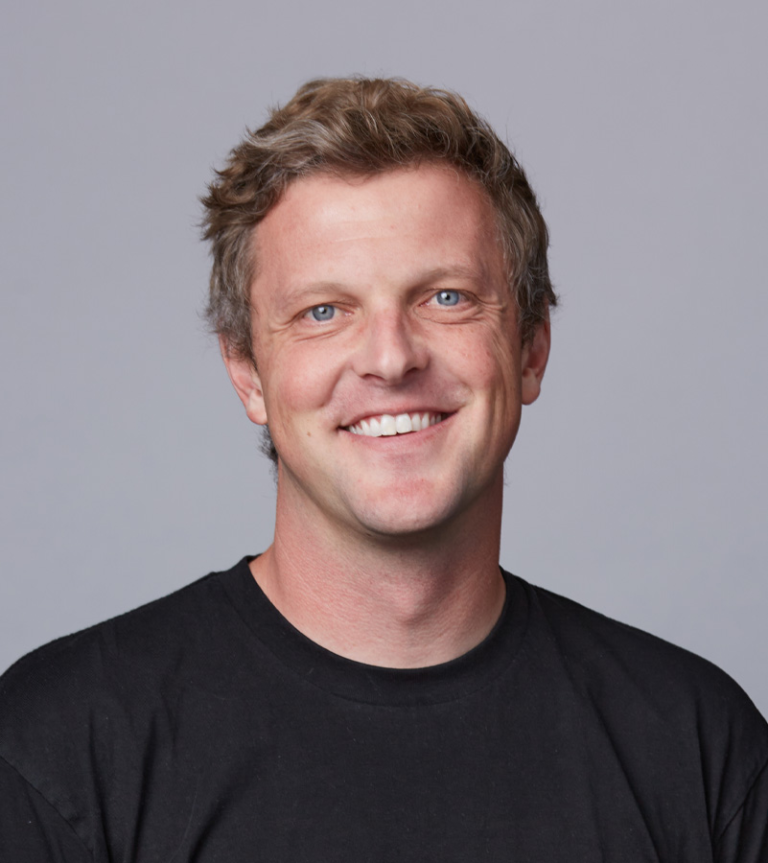
“We try to meet our students where they're at, making the program fun and engaging.”
"We are small-scale, intensive and residential, and those are keys for us."
It’s a small liberal arts college part of the Utrecht University state system. We have about 600 students from over 50 countries and a very small college campus in the middle of Middleburg. If you think of Harry Potter, this is the kind of building and city. We do liberal arts and sciences here. We offer a broad undergraduate liberal arts education in English, and students receive a diploma from Utrecht University.
We have an international orientation. We are small, and that helps because students know the professors. We are also residential, which is kind of an exception in the Netherlands. Students live together, go to class together and socialize together. Students have a very intense undergraduate experience with each other. It’s not uncommon for professors to see their students at the grocery store. We are small-scale, intensive and residential, and those are keys for us.
We offer programs in three major departments: science and engineering, social science and arts, and humanities. Students will put together a collection of courses based on their interests, not just within one department but from different departments. They’ll put together a kind of special program that is suitable for them and that will open doors for them to graduate level.
It’s really important for us here because we have a historical relationship with the sea. There are historical examples of flooding. People in this region are very sensitive to environmental issues. My view is that if we’re going to make a big change in how we think about the environment, it will have to happen in places like here. That’s where we’ll have to start.
We have a sustainability theme, and with the establishment of the Delta Climate Center, an inter-institutional collaboration that is starting now, we hope to offer undergraduates many opportunities to engage in serious discussions in all departments from all disciplinary perspectives.
I teach media in the environment, and I help my students think about uncommon connections between culture and the environment and environmental questions today. Thinking about the future, I think we’re going to develop some really interesting innovative ways to offer a curriculum that speaks to sustainability in a broad sense.
There’s a concept in the environmental humanities called biocentrism. Essentially, that means everything is connected to everything else. We cannot talk about the environment without talking about political systems and full governance structures, as well as issues, concepts and terminology from the natural sciences. For example, I see an artificial separation between the disciplines that we don’t necessarily have to follow. I think it’s okay to cross disciplinary borders. We’re trying to do that.
What’s interesting about environmental humanities is we’re in a region where there are lots of delta works and dikes that have been built over time. We’ve struggled against the sea. It’s important to have these structures, but then, in the environmental humanities, we ask different kinds of questions. What is it about society that we’re saving? So, we engage in these larger, different questions that relate to society at large. I hope that makes sense.
There are many. We offer an English language program. We are bachelors only. Our location within a large state university gives us many advantages. Utrecht University is one of the top 100 universities in the world, and so our students receive a recognized, respected diploma from the university.
At the same time, we are faculty members within the university, and we offer a different kind of program that targets international students. Most of our students coming to campus now are international, and we are proud of that. So, our strength is the fact that we have a top-rated, well-recognized diploma program. Students who may not speak Dutch can come here and study in English and get a great diploma.
It’s hard, normally, in this part of Europe. If you choose a university program, you choose one with a very narrow focus right away. Is it normal to ask an 18 or 19-year-old what they want to do for the rest of their lives? I don’t think so.
As such, we give them more time and flexibility. If you think about the kinds of employees that will be needed in the future, they will need to be flexible. They will need to be able to get information from different sources and put them together across disciplinary lines. We think that a liberal arts and sciences education is maybe the best education for most students so they can adapt to different environments in the future.
We’re located in the center of the city, and it’s actually a really small city. We could consider it a large town. You have this typical Dutch architecture from the past. It’s really interesting because if you start on any street in Middleburg and you follow it, eventually, you will come to campus.
As I said, we have a Harry Potter-like campus. It consists of old buildings and a new building that we built for the science and laboratory engineering program. However, we’re only a very small college, so students have space on campus to study and socialize.
We have several classrooms across the city center. Because we’re such a small university, we can’t have everything in-house, so we have the joint research center. That building is fully equipped with lab facilities, including chemical, engineering and data labs. We use it together with our local University of Applied Sciences and our local vocational school. They will use those lab facilities to work on problems together and come up with solutions and how those can be practically put to work. That’s also one of our important facilities. We also have an official university library where students have access to top-rate research. There are not that many in this country.
We’re awesome, very attractive, have a progressive student population and welcome students of all stripes. What we hear back from parents and students is that it’s a very safe place to send your kid to. I mean, if your kid wants to study abroad, and you want to send them to the Netherlands, you don’t want to send them to Amsterdam or Rotterdam.
I can imagine if your kid is a thousand kilometers or 2,000 kilometers away. Here, you have the benefits of a very intensive honors program in liberal arts and sciences combined with the fact that it’s very small-scale. All students know each other pretty much. It’s 600 people, so the social cohesion is enormous. There are a lot of people looking out after each other, both from the faculty side and from the student side.
As such, it’s a good and safe space for students to have their first studying abroad. Students are not invisible. Students know their professors, and professors know all their students. This is not a place where people will disappear. Students remain on the map, and the focus always remains on the students.
The key message is that we are intense, residential and international, and we want more students. We’re very open to the international population, as we are a small international population ourselves. Anyone who is interested in UCR, feel free to have a look. We have students from over 50 countries. It’s a really dynamic international space.
“We try to meet our students where they're at, making the program fun and engaging.”
“There are over 50 million orphans in Africa, and their potential to become leaders is immense if their suffering is alleviated.”
“Education transforms lives and communities. At Francis Tuttle, we empower learners to create brighter futures through skills and confidence.”
The monthly briefing for executives to stay ahead. Insights, book reviews, and the best tools — all curated and distilled into 5 minutes.
Your request has been successfully submitted. Please wait for a reply from our manager, he will contact you as soon as possible.