Subscribe to outperform
The weekly Executive Briefing: insights, books, tools, and media opportunities worth your attention — curated and distilled into 5 minutes.

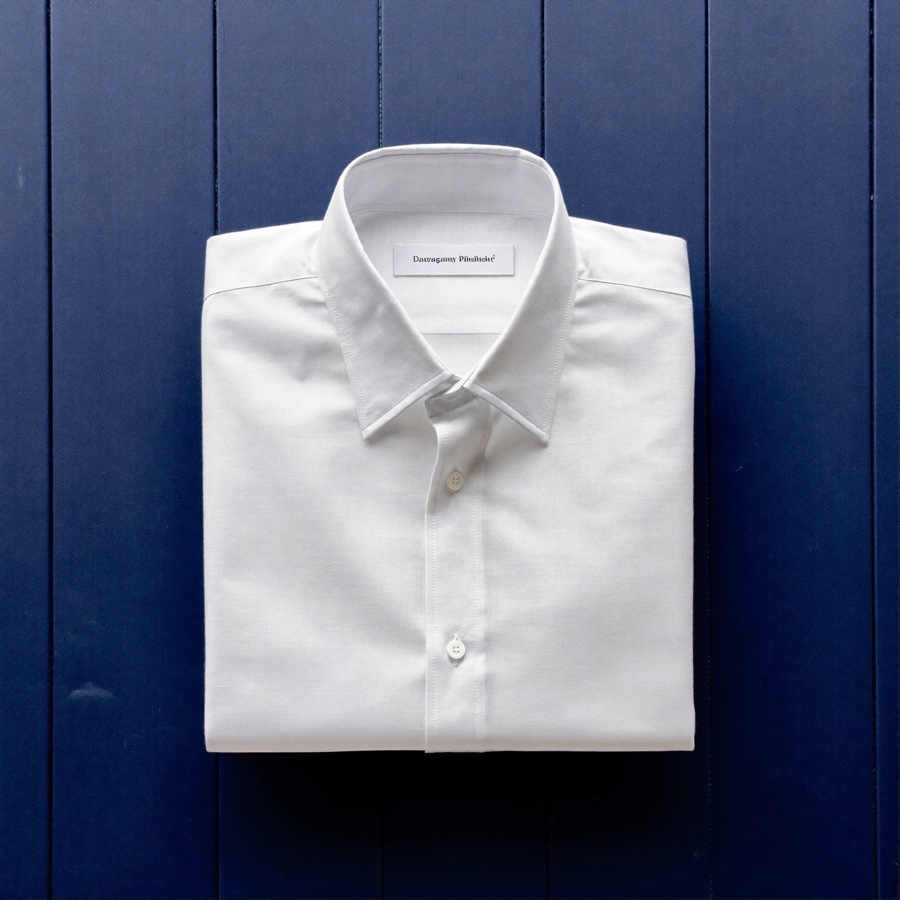

You land at 7 a.m., the meeting is at 9, and the shirt you packed comes out of the case with a crease across the chest that no amount of smoothing will remove. Learning how to fold a business shirt for travel takes ten minutes once, and it saves that morning every time after.
The short version: button the shirt, lay it face down, fold each side and sleeve back toward the centre, then fold the body in thirds from the tail up, so the collar and the front panel stay flat. Pack it on top, inside a thin plastic bag, and hang it in a steamy bathroom when you arrive.
Most creases come from the packing around the fold, so the steps below cover both.
A crease is a sharp bend held under weight for hours. Cotton fibres bent and pressed that way set into the new shape, especially with a little warmth and moisture, which a closed suitcase in a cargo hold provides. Three things decide how bad it gets: how many sharp folds the shirt has, how much weight sits on top of it, and how much the shirt can slide around inside the case.
Every good method attacks those three. Fewer folds, and the ones you make fall where nobody looks. Less weight, because shirts go on top. Less movement, because a full, well-packed case holds everything still.
Fabric matters too. Non-iron cotton, cotton blends with a little stretch, and merino wool recover far better than crisp poplin or linen. If you travel every month, buying your travel shirts in a non-iron finish is the single biggest improvement you can make.
This is the fold shirt shops use, adjusted for a suitcase. Do it on a bed or a clean table.
1. Start with a pressed shirt. A shirt packed wrinkled arrives worse. If it came back from the laundry folded, use that as your starting point.
2. Button it. Do up the top button and at least every second button down the front. Buttoned, the front stays aligned and the placket cannot fold under.
3. Lay it face down. Smooth the back flat with your hands, collar at the top, sleeves out to the sides.
4. Fold the first side in. Take one side of the shirt, about a third of the way across the back, and fold it toward the centre. The fold line should run from the edge of the collar straight down.
5. Fold the sleeve back. Bring that sleeve down along the folded edge so it runs parallel to the side of the body. If the sleeve is long, fold the cuff back up once at the hem.
6. Repeat on the other side. You now have a long rectangle, roughly the width of the collar.
7. Fold the tail up. Fold the bottom third up, then fold again so the hem lands just below the collar. For a deep suitcase, one fold in half is enough. Fewer folds, fewer lines.
8. Turn it over. The front, the collar and the placket face up and flat. Slide a collar stay or a rolled pair of socks inside the collar so it keeps its shape.
Folding the shirt around a sheet of card, the way new shirts are sold, gives an even crisper result. A thin plastic dry-cleaning bag over the folded shirt also helps, because the plastic lets the fabric slide instead of grip and crease when the case moves.
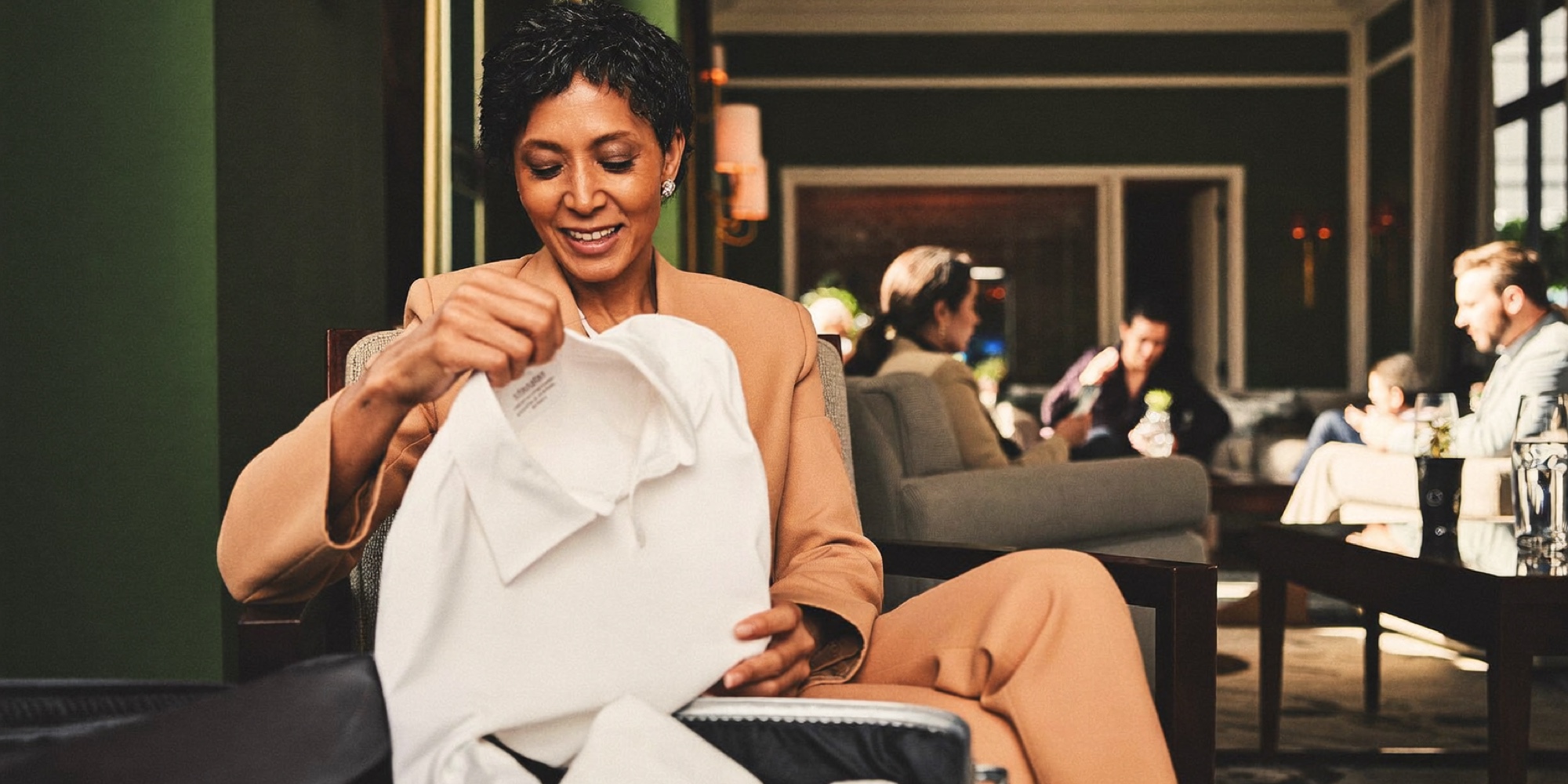
Rolling is the backpacker’s answer, and for T-shirts, knitwear and gym kit it is excellent. It saves space and leaves soft curves instead of hard lines. For a formal shirt it is less reliable, because the roll puts a series of small creases across the front, and the collar loses its shape.
For business shirts the choice runs like this:
The bundle method takes longer to pack and unpack, and it is the best choice when two days of shirts and a suit share one carry-on.
Order matters more than technique. Heavy and shapeless things go at the bottom, near the wheels: shoes in bags, toiletries, chargers, the laptop if it is not in your bag. Then trousers, folded once along the crease line. Then knitwear. Shirts go last, on top, where nothing presses on them.
Fill the gaps. A half-empty case lets everything slide toward one end when it stands upright, and sliding is what turns a fold into a crumple. Socks and belts are good for filling corners.
Pack jackets inside out. Fold the jacket in half lengthways with the lining facing out and the shoulders pushed into each other, then fold once across the middle. The outer cloth is protected, and any crease falls on the lining.

Many US airlines, United among them, limit carry-on bags to 22 by 14 by 9 inches, wheels and handle included. That fits three days comfortably if you wear the bulkiest items on the plane.
Packing the same list every time saves more effort than any folding trick. Keep it in your phone and pack in the same order, the way our guide to productivity hacks recommends turning any repeated job into a fixed routine.
Even a well-folded shirt benefits from twenty minutes on a hanger. Unpack shirts first, before anything else, and hang them.
If a crease survives, hang the shirt in the bathroom, close the door and run the shower hot for ten minutes. The steam relaxes the fibres. Then smooth the crease by hand and let the shirt dry on the hanger. For a stubborn line across the chest, most hotels lend an iron and board on request, and a travel steamer does the same job in a few minutes.
On an early arrival, do all of this the night before. A 7 a.m. landing with a 9 a.m. meeting is easier when the shirt is already hanging and the alarm is set; our guide on how to become a morning person covers the rest of that morning.
Some trips carry more weight than others: a board meeting, a client pitch, a final interview in another city. On those, pack two shirts for the day that matters, wear the less important one on the plane, and press the important one at the hotel even if it looks fine.
If that trip is for a job offer, the shirt is the easy part. Our guide on how to negotiate salary covers the conversation you are flying out to have.
What is the best way to pack dress shirts without wrinkles? Fold them face down with sides and sleeves to the centre, fold the body in thirds, put each in a thin plastic bag, and pack them on top of a full case so nothing slides.
Is it better to roll or fold dress shirts? Fold crisp cotton shirts you will wear with a tie. Roll non-iron and casual shirts. If you are carrying a suit, the bundle method protects both.
How many shirts should I pack for a business trip? One per day, plus one spare if there is an evening event. Wear one on the plane to save space.
Once you know how to fold a business shirt for travel, the method takes about two minutes a shirt. Button it, fold it face down to the width of the collar, fold the tail up, pack it on top in a plastic bag, and hang it the moment you arrive. Do it the same way every trip and the shirt will be the one thing about the morning you do not have to think about.

Written by
Victor Lanza
Editor of The Executive Insight. Writes about leadership, decision-making and the parts of building a business that nobody puts in the plan.
Most personal development books get read once, enjoyed and forgotten by the following quarter. A few are worth a second read, because they change what you do on an ordinary Monday rather than how you feel on a Sunday afternoon. The ten below pass that test. Each one is listed with the decision it helps […]

Most people who want to read more assume the problem is time. Usually it is something smaller: no fixed place in the day for reading, and a habit of finishing books they stopped enjoying fifty pages in. If you want to know how to read more books, start there. Give reading a slot, not a […]

Delve into the rich heritage of Bell Wine Cellars, a family-owned Napa winery, as they unravel the nuances of seven Cabernet Sauvignon clones. Discover a 30-year legacy, unique tastings, and the art of pairing, offering a sensory journey through Napa's diverse terroirs.

The Monday meeting goes quiet when one person speaks, and everyone else looks at the table. Nothing in the comment is quite bad enough to discipline. It is the fourth one this month, and the team is waiting to see whether you noticed. Knowing how […]

It is late, the house is quiet, and three tabs are open. One is a $49-a-month certificate from a company everyone has heard of. One is a bootcamp that promises a new job in sixteen weeks. One is a university program whose price makes you […]
The offer email arrives. The number is fine, maybe slightly less than you hoped, and the recruiter is waiting for an answer. Most people say yes. Knowing how to negotiate salary at this exact point is worth more than at any other moment in the […]

The busiest office workers are interrupted every two minutes during core hours. That figure comes from Microsoft’s own data on how people use its software, and anyone who runs a team will recognise it. Most productivity hacks are written for a calendar you control. The […]

The alarm goes off at six. You hit snooze twice, get up at half past, and spend the first hour of the day feeling like someone else is driving. Most advice on how to become a morning person starts with the alarm: set it earlier […]

A project lands that your team cannot carry. The product launch is in four months, the two engineers you need do not exist on your payroll, and a permanent hire will take most of that time just to find. Staff augmentation is the usual answer: […]

Most people meet Alex Hormozi through a video clip: a muscular man in a T-shirt explaining, with some impatience, why your business is not making money. The books are better than the clips. Alex Hormozi books are short, blunt manuals on three problems every business […]

Most of the decisions that shape a company are made on an ordinary afternoon, between two other meetings, by someone who is slightly tired. Decision making in business mostly happens in small moments: a yes sent from a phone, a hire approved because the role […]

It is a Sunday evening and you are dreading the morning again. Not the workload, which you can handle, but the sameness of it. You have been good at this job for fifteen years and you can picture the next fifteen with no surprises in […]

The email from HR arrives on a Friday afternoon. Your last day is in three weeks, and in the attachment there is a line about what happens to your 401k. Within a day, somebody in your network has suggested an advisor who can “help with […]
The weekly Executive Briefing: insights, books, tools, and media opportunities worth your attention — curated and distilled into 5 minutes.

Welcome to The Executive Insight. Your free AI guide to the best tools is on its way. The first issue arrives soon. Check your promotions tab if it is not in your inbox!
Your request has been successfully submitted. Please wait for a reply from our manager, he will contact you as soon as possible.
Your copy of The Executive Insight Book Challenge List is downloading now. Enjoy the list — and while you're here, take a look at our latest interviews.