Subscribe to outperform
The weekly Executive Briefing: insights, books, tools, and media opportunities worth your attention — curated and distilled into 5 minutes.




Airbyte, the data movement platform used by thousands of companies to move billions of records a day, has launched Airbyte Agents — a new product built around an infrastructure pattern called the Context Store that the company says aims to resolve the root cause of AI agent failures in production environments.
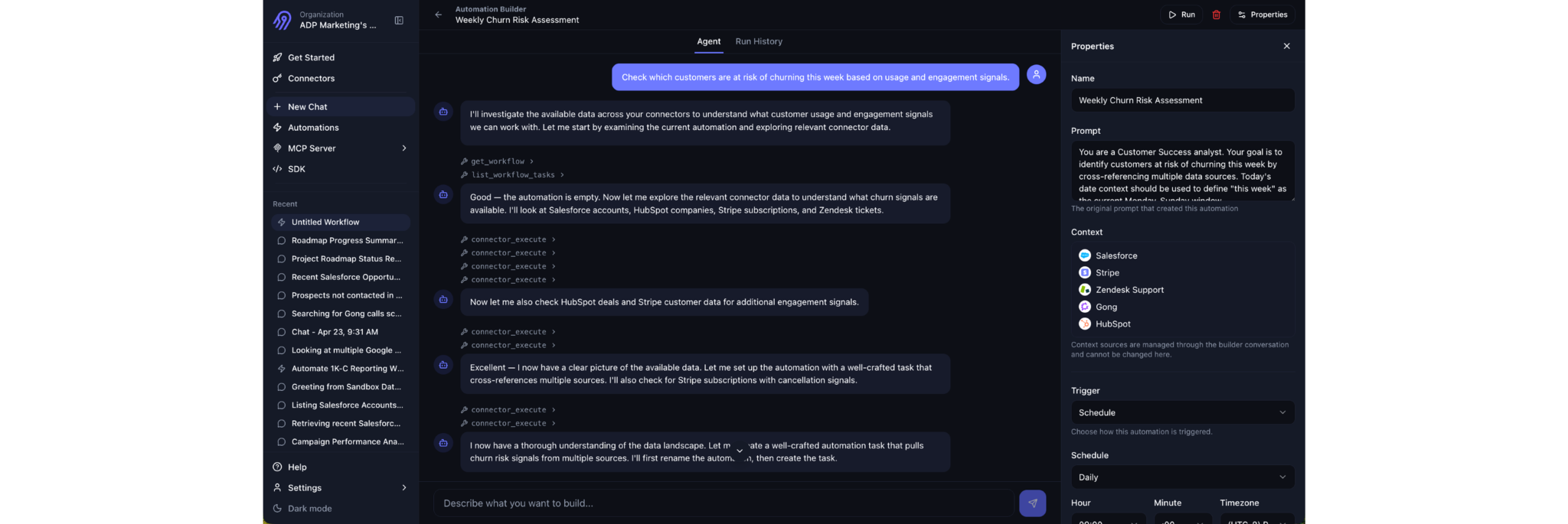
Michel Tricot, CEO and co-founder of Airbyte, argues that the failure is architectural, not computational. When an agent answers a business question — such as the status of a client renewal — it typically makes five or six sequential application programming interface (API) calls across Salesforce, Zendesk, HubSpot, Slack, and contract tools before it can reason over the result.
“The models are smart enough,” says Tricot. “The problem is that we keep handing brilliant reasoning engines terrible data and expecting good results.”
Each sequential call:
Tricot calls this “runtime context assembly” and says it is the central failure mode of enterprise agents today, one that neither better prompts nor orchestration frameworks can fix. He also notes that Model Context Protocol (MCP) does not resolve it: “A stack of MCPs still forces your agent to hunt through systems one at a time, burn tokens on raw data, and miss how any of it connects. MCP gives you access. It does not give you understanding.”
The Context Store inverts this approach. Rather than assembling context at query time, it continuously replicates and pre-indexes data from all business systems into a unified layer where records about the same entity — a customer in Salesforce, their tickets in Zendesk, their contract in billing — are already matched and linked. When an agent queries this store, it makes one call and receives clean, structured data in under a second.
“Your business becomes a living model,” Tricot says. “Every entity, from every system, all in one place. The whole picture stays fresh in the background. Any capable agent can reason across all of it in a single query.”
Tricot says agents using the Context Store make 40% fewer tool calls and consume up to 80% fewer tokens, reducing latency and cost at scale.
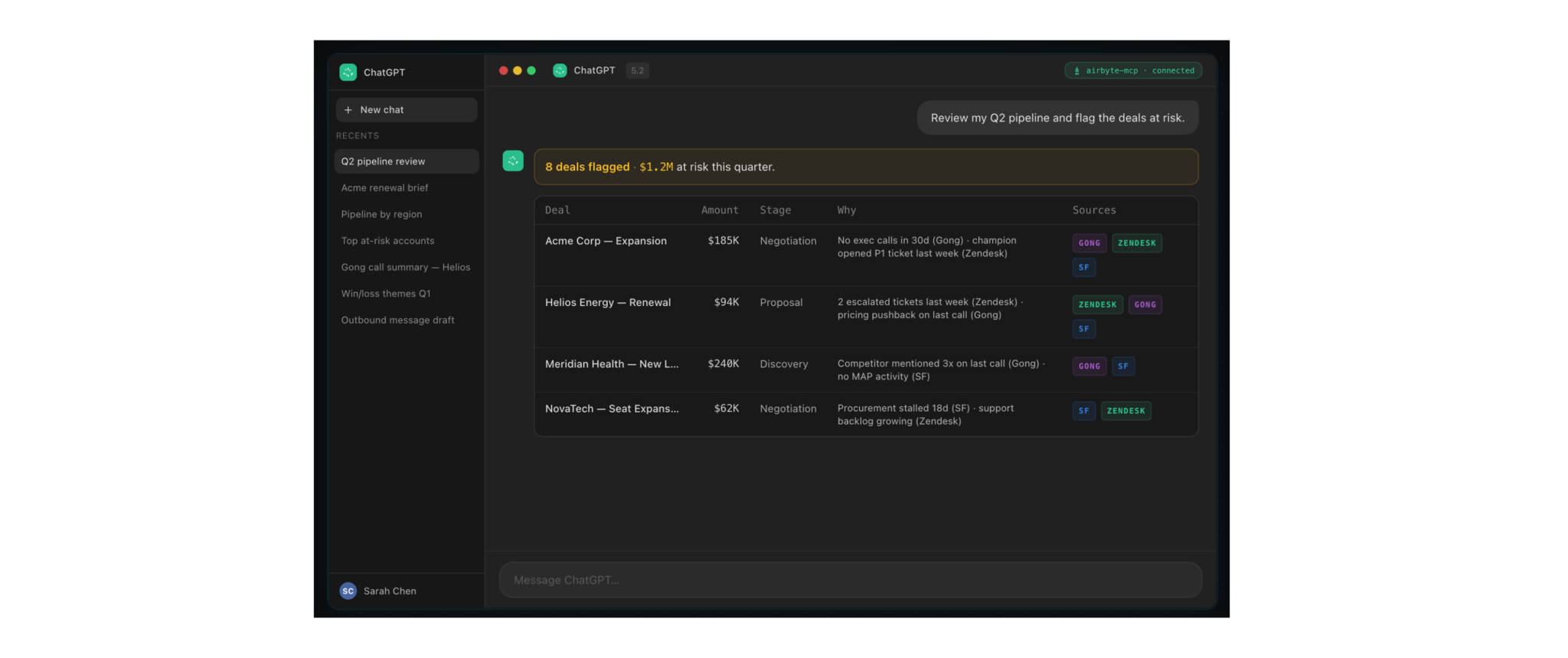
Airbyte Agents ships the Context Store alongside three interfaces: a software development kit (SDK) for engineers, an MCP integration for AI clients such as Claude and ChatGPT, and a no-code builder for business teams. Tricot says the underlying pattern is model-agnostic and expects it to become standard data infrastructure.
“The data industry learned this lesson a decade ago,” he says. “The hardest part of any data problem is never the compute. It’s getting the right data, in the right shape, to the right place, at the right time.”
Airbyte makes data available and actionable to everyone, everywhere. Founded in 2020 by Michel Tricot and Jean Lafleur through Y Combinator (W20), the company established itself as the leading open source data movement platform, with 600-plus connectors. It has built on this foundation as the context layer for production-grade AI agents. Airbyte Agents is generally available now at www.airbyte.com/agents.
Learn more about Airbyte at airbyte.com.

Evercomm begins where climate targets meet industrial reality, translating site-level opportunities into bankable projects.

Furnished Finder is the leading online mid-term rental property platform. Founded in 2014, the company has grown to more than 275,000 paid listings today. Landlords realize excellent returns from an annual subscription fee of only $149, while tenants enjoy no booking or service fees.

As automation reshapes economies worldwide, Global Human Index founder Mario Kempken is building the transparency framework that governments and businesses need now.

A former nurse manager applies for an operations role. Her résumé says “excellent communication skills” and “strong leadership”. So do most of the other applications on the recruiter’s screen. The skills are real, and as written they are invisible. Good transferable skills examples always come […]

The spreadsheet says 52 is possible. You have run it three times, changed the return assumption twice, and it still works. Then come the questions the spreadsheet cannot answer: how to get money out of a 401k seven years early, who pays for health insurance […]

Forty minutes into the meeting, the team is still arguing about which of two suppliers to choose. Both options have been costed twice. Every new argument digs further into the same two answers. Lateral thinking is the habit of stopping at that moment and asking […]

Thursday, 3 p.m. You read the same email for the third time and still could not say what it asks for. You slept six hours last night, and the night before, and you feel fine, mostly. So is 6 hours of sleep enough? For most […]

The Monday meeting goes quiet when one person speaks, and everyone else looks at the table. Nothing in the comment is quite bad enough to discipline. It is the fourth one this month, and the team is waiting to see whether you noticed. Knowing how […]

You land at 7 a.m., the meeting is at 9, and the shirt you packed comes out of the case with a crease across the chest that no amount of smoothing will remove. Learning how to fold a business shirt for travel takes ten minutes […]

It is late, the house is quiet, and three tabs are open. One is a $49-a-month certificate from a company everyone has heard of. One is a bootcamp that promises a new job in sixteen weeks. One is a university program whose price makes you […]

The offer email arrives. The number is fine, maybe slightly less than you hoped, and the recruiter is waiting for an answer. Most people say yes. Knowing how to negotiate salary at this exact point is worth more than at any other moment in the […]

The busiest office workers are interrupted every two minutes during core hours. That figure comes from Microsoft’s own data on how people use its software, and anyone who runs a team will recognise it. Most productivity hacks are written for a calendar you control. The […]

The alarm goes off at six. You hit snooze twice, get up at half past, and spend the first hour of the day feeling like someone else is driving. Most advice on how to become a morning person starts with the alarm: set it earlier […]
The weekly Executive Briefing: insights, books, tools, and media opportunities worth your attention — curated and distilled into 5 minutes.

Welcome to The Executive Insight. Your free AI guide to the best tools is on its way. The first issue arrives soon. Check your promotions tab if it is not in your inbox!
Your request has been successfully submitted. Please wait for a reply from our manager, he will contact you as soon as possible.
Your copy of The Executive Insight Book Challenge List is downloading now. Enjoy the list — and while you're here, take a look at our latest interviews.