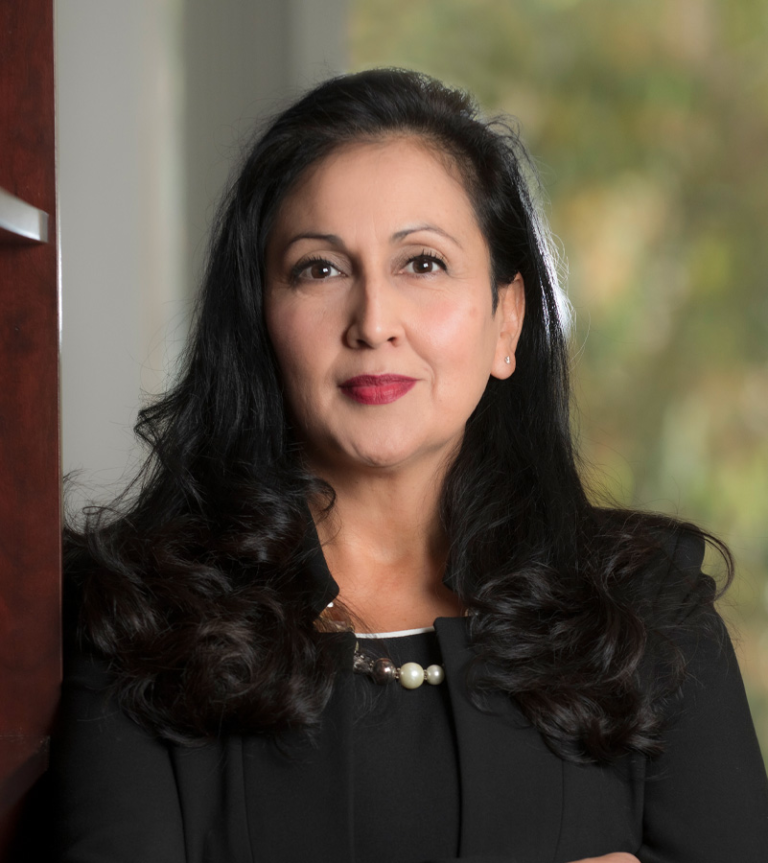
"Being part of a school and university is a privilege and a responsibility to impact both current and future students."

Could you please state your name, position and the name of the institution that you represent?

I’m Frances Contreras, dean of the School of Education at UC Irvine.

Could you please start by giving us a brief introduction to the institution?

UC Irvine is part of a community of UC schools in the UC system. We’re one of 10 campuses, with nine granting undergraduate degrees. UC Irvine is located in Southern California, in Irvine. We are currently designated as both a Hispanic-serving and an Asian-American-serving institution. We are a large public research-intensive university.

What are the keys to the success of your organization?

The keys to success for the School of Education at UC Irvine are rooted in our stakeholders, including faculty, staff and students—who are all committed to educational innovation, transformation and social justice. We maintain an equity lens as a school, striving to better serve the community and the region. Programs and initiatives like OCEAN, the Orange County Educational Advancement Network, set us apart as a school of education that translates cutting-edge research into practice.

Could you go into more detail about your academic programs and the five core concepts of education sciences that you work with?

We serve undergraduate, graduate and doctoral students. We have a thriving PhD program, a Master of Arts in Teaching (MAT) and an undergraduate program in education sciences. UC Irvine was one of the first UC schools to offer an education sciences major. It’s really a feather in our cap to have this as part of the School of Education.

We’re serving PhD and graduate students through our MAT program (Master of Arts in Teaching) and undergraduates in our education sciences program. This reflects our multi-generational approach to educating students.

Regarding the five core concepts for our undergraduate major, they include equity of opportunity, teaching and learning, language and literacy, early childhood education and out-of-school learning. These concepts span how we impact students, from early learning through adulthood. We take a P-20 plus perspective, serving the whole student throughout their educational journey. In doing so, we advance education, foster innovation and raise critical questions about what it means to be a higher education institution that is not only accountable to but also transformative for communities.

What would be your message to students considering a career in teaching, especially given the teacher shortage in America?

At UC Irvine, you’ll definitely receive a well-rounded education. Not only are we impacting the world of theory, but we’re also providing our students with cutting-edge practices that make a difference in the lives of youth. For example, we place our teachers in dual immersion programs where students speak multiple languages. We have partnerships with Asian-language-serving institutions, Spanish-speaking institutions, and schools.

We aim to create an approach for our teachers that emphasizes being part of a larger, global world and recognizing that language is an asset, not a deficit. There’s an added value to linguistic skills and what we’re striving to achieve.

For our future teachers, you’ll become part of a larger community. Our goal is to create a School of Education that serves as an academic home for all teachers in the region—Orange County, California and beyond. We aim to be a resource not only while teachers are candidates but throughout their careers. Whether a teacher or a leader, they can return to our university at any point to find enrichment, tools to thrive and insights into how pedagogy is evolving in the field.

That reminds me of an interview I recently had with another school, where they discussed the benefits of multilingual education and developing global citizens.

We’re ranked globally Number 8 among schools of education, which is an incredible honor. We achieved this ranking through an evaluation by US News & World Report assessing schools of education based on the impact of their faculty.

To be ranked that high globally as a public institution demonstrates the strides we’re making in having a broader impact. The work we’re doing with schools, our researchers and the research agendas of our faculty not only contributes to cutting-edge theory but also informs pedagogy and practice.

Is there anything you’d like to mention regarding innovation or current research?

Yes. I’ll highlight two recent achievements of our school. First, we are partnering with the Santa Ana Unified School District to establish a lab school. We recently signed an agreement with the district to develop an innovative learning site at James Monroe Elementary School, a K-5 dual immersion school that already has a strong foundation. The added value of having a university partner is that we are bringing researchers through OCEAN, the Orange County Educational Advancement Network, to contribute to the project.

Our faculty will help design playgrounds, create cutting-edge lab spaces and rethink how space can support STEM learning and development. This partnership allows us to approach the design of a school from the ground up, even though it is an existing institution that will be expanded with a new facility. It speaks to the district’s faith in our ability to contribute. They want us to think differently about how youth interact and learn, leveraging the strengths of our faculty in STEM, language sciences, linguistic development and early learning. We also have faculty and graduate students researching cutting-edge approaches, including incorporating AI into early learning and Pre-K. This will be our first university-assisted lab school, and it’s a tremendous opportunity to apply lessons from research in a real-world context.

Second, a third of our faculty—16 members—currently have active grants with organizations like the NSF, NIH and private foundations focused on artificial intelligence in education. These faculty members are exploring the role of AI in advancing access and educational opportunities. While much of the public discourse around AI focuses on academic honesty or cheating, our emphasis is on how AI can enable students to advance their learning and expand opportunities.

We are looking at ways to use AI to enhance teacher pedagogy and to create spaces for students who may have been previously underserved, such as those in special education or with individual learning plans. This work highlights the access and opportunity elements of emerging technologies, with our faculty at the forefront of this important and transformative field.

We have faculty like Andres Bustamante and Mark Warshauer working with an academy called El Sol, a private school model. They’re focusing on early learning students, from Pre-K through 3rd grade, advancing AI tools to accelerate literacy development. This involves learning in two languages and fostering cognitive development in multiple languages.

There’s truly some cutting-edge work happening in this space, incorporating AI and multiple languages into learning. It’s not just public schools benefiting, but also charter schools and other models where we can innovate and apply these advancements in different contexts.

Another faculty member, Kylie Pepler, who was one of the founders of Scratch coding, has developed a new application called Story AI. This tool uses AI to help children and students write stories in over 36 languages.

The capacity for incorporating AI into the classroom is incredible. We recently saw a demo of these technologies at a large AI learning summit. Watching my faculty in action, creating prototypes in real time and testing them in schools, was truly inspiring.

We’re already seeing the impact of these technologies, which have the potential to serve as equalizers, opening up opportunities for students and ensuring broader access to education.

What would be your message to potential business partners?

I believe there’s no greater investment that companies, organizations and donors can make than in the future of this country and the communities we’re trying to create and establish. I see this as a long-term investment in generational mobility and a necessary commitment for all of us to have a stake in how the next generation fares.

We all want a civil society, where active members contribute to the social fabric. Some of our partners are already investing in our research; for example, the Chan Zuckerberg Foundation is supporting an AI project. For foundations and corporations considering investing in education, it’s a safe bet to invest in the future.

By investing in teachers, we can make real, meaningful changes today. Our goal is to ensure teachers and students are not burdened by debt and to invest wholeheartedly in their ability to succeed. This approach allows them to focus on making a lasting impact on students and communities.

Is there anything I haven’t asked that you’d like to mention?

One additional element I’d like to highlight is higher education. Across the country and the world, higher education is at a moment where its relevance is being tested. However, universities, schools and the learning that happens within them provide the education and training for the next generations who will go on to lead—whether in government, schools or community organizations. The value of higher education is immense, and I want to emphasize that.

The research we’re conducting in this space focuses on how we serve the next generation of college students, equipping them to be critical thinkers who can approach challenges differently from the generations before them. I firmly believe higher education is not only relevant but also essential for democracies to thrive, for civil discourse to flourish and for fostering healthy, vibrant communities.

What is your vision for UC Irvine’s School of Education over the next 3 to 5 years?

I truly hope to contribute to moving our school forward into its next chapter. That means continually questioning our critical importance, how we partner with other educational institutions and community organizations.

We also need to ask how we’re advancing not only theories and technologies in education but also the discourse on critical topics of the day. Are we contributing to conversations on anti-racist pedagogy? Are we extending theory development? I’d love to continue supporting our faculty as they move further into these spaces.

Being part of a school and university is a privilege, and we must approach that privilege as a responsibility to impact not only our current students but also those who have yet to walk through our halls. We are laying the foundation for innovation, inspiration and overall impact.

Latest From The Executive Insight

  • Education

    A former nurse manager applies for an operations role. Her résumé says “excellent communication skills” and “strong leadership”. So do most of the other applications on the recruiter’s screen. The skills are real, and as written they are invisible. Good transferable skills examples always come […]

    9 min read
  • Wealth

    The spreadsheet says 52 is possible. You have run it three times, changed the return assumption twice, and it still works. Then come the questions the spreadsheet cannot answer: how to get money out of a 401k seven years early, who pays for health insurance […]

    8 min read
  • Mindset

    Forty minutes into the meeting, the team is still arguing about which of two suppliers to choose. Both options have been costed twice. Every new argument digs further into the same two answers. Lateral thinking is the habit of stopping at that moment and asking […]

    9 min read
  • Wellness

    Thursday, 3 p.m. You read the same email for the third time and still could not say what it asks for. You slept six hours last night, and the night before, and you feel fine, mostly. So is 6 hours of sleep enough? For most […]

    9 min read
  • Business

    The Monday meeting goes quiet when one person speaks, and everyone else looks at the table. Nothing in the comment is quite bad enough to discipline. It is the fourth one this month, and the team is waiting to see whether you noticed. Knowing how […]

    9 min read
  • Lifestyle

    You land at 7 a.m., the meeting is at 9, and the shirt you packed comes out of the case with a crease across the chest that no amount of smoothing will remove. Learning how to fold a business shirt for travel takes ten minutes […]

    8 min read
  • Education

    It is late, the house is quiet, and three tabs are open. One is a $49-a-month certificate from a company everyone has heard of. One is a bootcamp that promises a new job in sixteen weeks. One is a university program whose price makes you […]

    8 min read
  • Wealth

    The offer email arrives. The number is fine, maybe slightly less than you hoped, and the recruiter is waiting for an answer. Most people say yes. Knowing how to negotiate salary at this exact point is worth more than at any other moment in the […]

    8 min read
  • Mindset

    The busiest office workers are interrupted every two minutes during core hours. That figure comes from Microsoft’s own data on how people use its software, and anyone who runs a team will recognise it. Most productivity hacks are written for a calendar you control. The […]

    8 min read
  • Wellness

    The alarm goes off at six. You hit snooze twice, get up at half past, and spend the first hour of the day feeling like someone else is driving. Most advice on how to become a morning person starts with the alarm: set it earlier […]

    9 min read