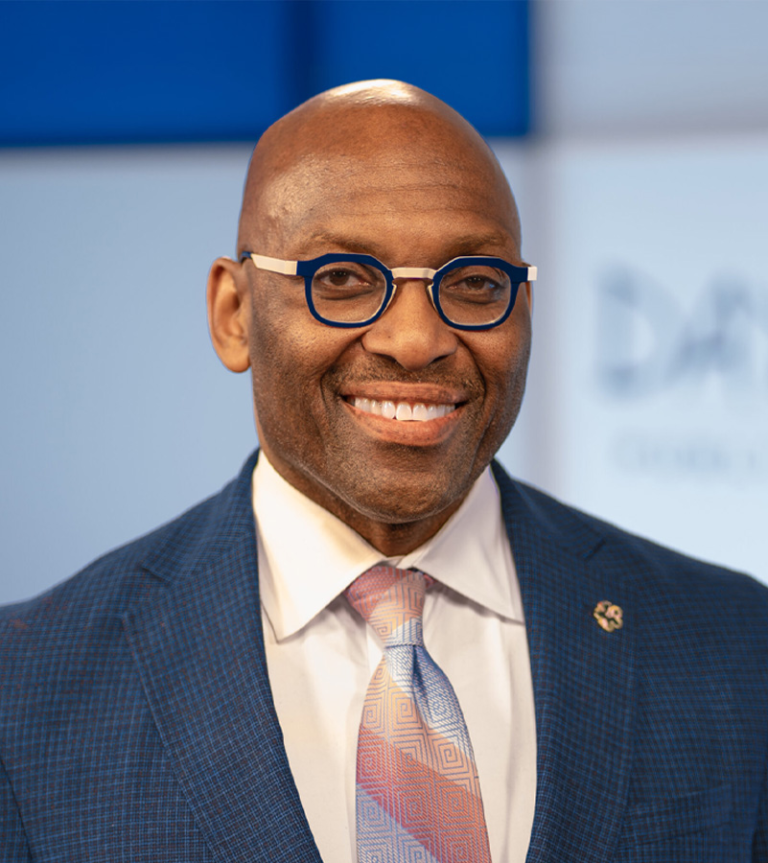
"At Dayton Public Schools, we’re building a lasting system that puts students first, drives innovation, and unites the community to transform education for future generations."

Could you provide an overview of Dayton Public Schools?

Dayton Public Schools serves approximately 13,500 students within a city of about 145,000 residents. We operate on a total budget of around $430 million, with roughly $265 million allocated for our annual operational needs. These funds support our 2,600 employees, making us the second or third-largest employer in the region. Our district includes 28 school buildings across 40 physical sites. To manage this extensive network, our Operations Department collaborates closely with our academic team, ensuring the effective oversight of resources and facilities. I must also commend our treasurer, Madam Abraham, whose stewardship is instrumental in managing and allocating resources effectively.

Could you elaborate on the scope of the district and highlight any recent milestones?

Like most public school districts in Ohio, we serve students from kindergarten through 12th grade. Additionally, we accommodate students with disabilities up to the age of 21. One of our most significant achievements is in Pre-K through third-grade literacy. Among Ohio’s nine urban districts, we were previously ranked last. However, following last year’s assessments, we’ve risen to fourth place, surpassing four other districts. This remarkable progress reflects our commitment to early literacy development. On the Ohio State Report Card, we’ve observed substantial improvements, with gains in 17 out of 29 categories in just our first year as a unified team. This progress underscores the strategic planning and dedication of our educators and administrators. Beyond academics, we’ve expanded extracurricular offerings to enrich student experiences. Enhanced band and choir programs, drill teams, and athletic directors in every building are just a few examples. Our “7-to-7” model ensures comprehensive engagement, providing a structured and supportive environment that extends beyond traditional school hours. We’ve also established transformative partnerships, notably with Omega CDC, a local organization awarded a nearly $30 million grant to fund after-school and weekend programs. This initiative, guided by renowned educator Jeffrey Canada, supports experiential learning and home visits to improve attendance and graduation rates. Infrastructure-wise, we’ve made significant investments, including a $33.5 million renovation of our athletic stadium—the finest high school facility in the state—and a $7.5 million transportation center equipped with state-of-the-art amenities for our staff. These enhancements demonstrate our holistic approach to education, prioritizing academics, operations, and employee well-being.

How does Dayton Public Schools embrace innovation? Can you share specific examples of new initiatives or technologies?

Innovation is central to our mission. A prime example is our exploration of artificial intelligence (AI). This year, we’ve convened a dedicated AI unit to study its potential applications for next year. From streamlining human resources processes to optimizing bus routes and predictive maintenance of facilities, AI offers transformative possibilities. In education, AI can assist teachers with lesson planning, co-teaching, and enhancing students’ critical thinking and writing skills. We aim to position AI not as a tool for shortcuts but as a means to elevate learning and operational efficiency. Another groundbreaking initiative is our effort to define guaranteed experiences for every student from preschool through grade 12. For instance, seventh graders might engage in immersive healthcare experiences with Premier Health, the region’s largest employer. This approach, developed in partnership with Ford Next Generation Learning, ensures equitable access to meaningful, career-oriented opportunities.

What sets Dayton Public Schools apart? How do you navigate competition with other districts?

Our scale and deep community connections are defining strengths. Collaborating closely with the Chamber of Commerce, we’re aligning educational outcomes with career pathways rather than just jobs. A unique advantage is our College and Career Readiness Division, led by the exceptional Erin Dooley, a 40-year veteran of education. This division exclusively focuses on preparing students for post-secondary success, a rarity among school districts. Additionally, we actively engage with urban districts nationwide through the Council of Great City Schools. This collaboration enables us to exchange best practices and address shared challenges, strengthening our strategies.

How does the district foster community collaboration, and how does it benefit students and families?

Community engagement is integral to our success. Just yesterday, I conducted a home visit, meeting with a family to discuss their needs and concerns—a practice embraced by our leadership and Success Coaches. We also run a Family and Community Engagement division, which unites local businesses, clergy, and community leaders to support our schools. Advocacy is another cornerstone of our approach. We champion public education and address systemic inequities, including those posed by certain legislative challenges.

Could you share the core principles that guide Dayton Public Schools’ vision and approach? What would you like the community to remember about your mission?

I’d like to emphasize that our work at Dayton Public Schools is rooted in student-centered actions. For instance, I personally participated in a home visit just last night, underscoring our commitment to directly engaging with families and understanding their needs.

We operate with five guiding principles—the 5 C’s—that shape everything we do:

Customer Service: We prioritize serving our students, families, and the community with excellence and responsiveness.

Collaboration: We build partnerships both internally and externally, fostering teamwork across all levels.

Culture: We maintain a culture of professionalism while focusing intensely on our goals.

Commitment: We expect unwavering dedication from our senior leadership and all staff working with children.

Communication: Clear and actionable communication is essential. We strive to ensure information is effectively shared and understood because so many challenges arise from miscommunication.

These principles set us apart and serve as our compass. What’s particularly rewarding is that the community often holds us accountable using these very principles. Occasionally, someone might write to me saying, “You’re falling short on communication or collaboration.” While such instances are rare, they show that our messaging resonates. People are engaging with our values, which validates their importance.

In the end, I want the community to understand that our work is much bigger than any one individual. It’s about building systems that endure and continually transform education in Dayton, ensuring long-term success for every student.

Latest From The Executive Insight

  • Education

    A former nurse manager applies for an operations role. Her résumé says “excellent communication skills” and “strong leadership”. So do most of the other applications on the recruiter’s screen. The skills are real, and as written they are invisible. Good transferable skills examples always come […]

    9 min read
  • Wealth

    The spreadsheet says 52 is possible. You have run it three times, changed the return assumption twice, and it still works. Then come the questions the spreadsheet cannot answer: how to get money out of a 401k seven years early, who pays for health insurance […]

    8 min read
  • Mindset

    Forty minutes into the meeting, the team is still arguing about which of two suppliers to choose. Both options have been costed twice. Every new argument digs further into the same two answers. Lateral thinking is the habit of stopping at that moment and asking […]

    9 min read
  • Wellness

    Thursday, 3 p.m. You read the same email for the third time and still could not say what it asks for. You slept six hours last night, and the night before, and you feel fine, mostly. So is 6 hours of sleep enough? For most […]

    9 min read
  • Business

    The Monday meeting goes quiet when one person speaks, and everyone else looks at the table. Nothing in the comment is quite bad enough to discipline. It is the fourth one this month, and the team is waiting to see whether you noticed. Knowing how […]

    9 min read
  • Lifestyle

    You land at 7 a.m., the meeting is at 9, and the shirt you packed comes out of the case with a crease across the chest that no amount of smoothing will remove. Learning how to fold a business shirt for travel takes ten minutes […]

    8 min read
  • Education

    It is late, the house is quiet, and three tabs are open. One is a $49-a-month certificate from a company everyone has heard of. One is a bootcamp that promises a new job in sixteen weeks. One is a university program whose price makes you […]

    8 min read
  • Wealth

    The offer email arrives. The number is fine, maybe slightly less than you hoped, and the recruiter is waiting for an answer. Most people say yes. Knowing how to negotiate salary at this exact point is worth more than at any other moment in the […]

    8 min read
  • Mindset

    The busiest office workers are interrupted every two minutes during core hours. That figure comes from Microsoft’s own data on how people use its software, and anyone who runs a team will recognise it. Most productivity hacks are written for a calendar you control. The […]

    8 min read
  • Wellness

    The alarm goes off at six. You hit snooze twice, get up at half past, and spend the first hour of the day feeling like someone else is driving. Most advice on how to become a morning person starts with the alarm: set it earlier […]

    9 min read