Subscribe to outperform
The weekly Executive Briefing: insights, books, tools, and media opportunities worth your attention — curated and distilled into 5 minutes.




Discover Africa writer Thaakiera Ackerdien was on the ground in Zimbabwe’s Matusadona National Park for Discover Africa Safaris, a Cape Town-based operator building tailor-made safari itineraries across Southern and East Africa, as African Parks completed a rare translocation: 17 black rhinos, the first wild rhinos in over a decade, now inside a 175-square-kilometer zone set to expand to 650 square kilometers. What follows is a firsthand account.
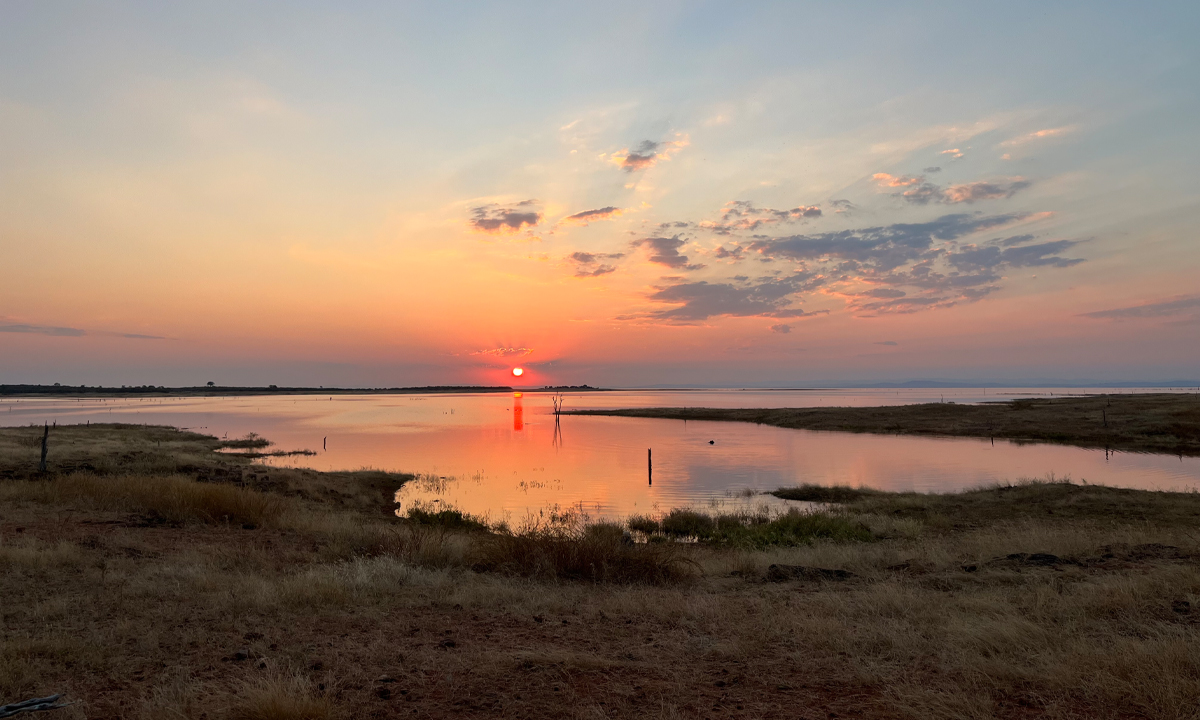
Our safari cruiser was making its way along the rutted tracks toward Jenge Camp in Matusadona National Park when our guide, Spike, stopped the vehicle. He’d noticed fresh footprints in the road — rounded, three-toed, pressed into the red sandy soil. Rhino tracks.
It was a striking find: the park hadn’t recorded a confirmed wild rhino sighting in this area in nearly a decade. Spike radioed park management to investigate, weighing two possibilities: an undetected survivor, or one of the black rhinos African Parks had recently translocated to the area. The answer came back quickly. A female black rhino, translocated just days earlier, had escaped its boma and was now moving through the park on its own.
We followed the prints off the road into the bush, where staff soon waved us ahead: they’d found her. A few meters away, in the tangled shadows, stood the escapee — the first black rhino to walk free on Matusadona soil in over ten years. As my eyes adjusted to her massive grey form, she sank onto her belly, legs tucked beneath her like a cat curled up on a couch. The impression wasn’t danger. It was profound exhaustion — hardly a surprise, after 72 hours spent darted, blindfolded, crated, flown across the country, and woken in an alien landscape surrounded by strangers.
To understand how she ended up there requires looking back three decades, when the Middle Zambezi Valley was one of Africa’s premier black rhino strongholds, before poaching gutted the population. Park manager Mike Pelham remembers it firsthand.
“By 1993, we had 16 rhinos left in the park,” Pelham recalled. “We went to a project called Operation Stronghold, moving out some of these genetics from this area to safeguard them, because at that stage, that poaching wave was so hectic that we thought we were going to lose the whole Zambezi Valley genetics altogether.”
By 2016, the wild black rhino had vanished from Matusadona entirely. African Parks signed a co-management agreement with Zimbabwe’s parks authority in 2019, then spent five years rebuilding security before any rhino could return. Moving wild-caught rhinos over the country’s degraded roads risked a fatal muscle condition, so Pelham — part park manager, part conservation engineer — designed smaller crates, “moon buggies,” to fly two rhinos at a time directly into the park.
“We had to fly them by aeroplane, because the roads in the country are in a bit of a terrible state and you get something called ‘muscle myopathy’ within black rhinos if they sit in crates and are being knocked around for too long. The muscles actually just die on them – and then the animals have to be euthanised,” Pelham explained.
Several of the 17 descend from animals evacuated during Operation Stronghold three decades ago. Pelham called their return one of the most emotional moments of his career.
A day before meeting the escapee, I’d visited the holding bomas at Tashinga, where the newly arrived rhinos were acclimating before release. Up close, the intimidation of standing beside a two-tonne prehistoric mammal gave way to wonder as the rhinos ambled to the fence line, curious rather than defensive. Acclimating wild rhinos calls for the opposite of caution: rangers keep up ordinary activity nearby, so the animals learn to recognize human voices instead of fearing them. Every rhino in the bomas bore one visible sign of that intervention: all 17 had been dehorned at capture, removing the target poachers seek.
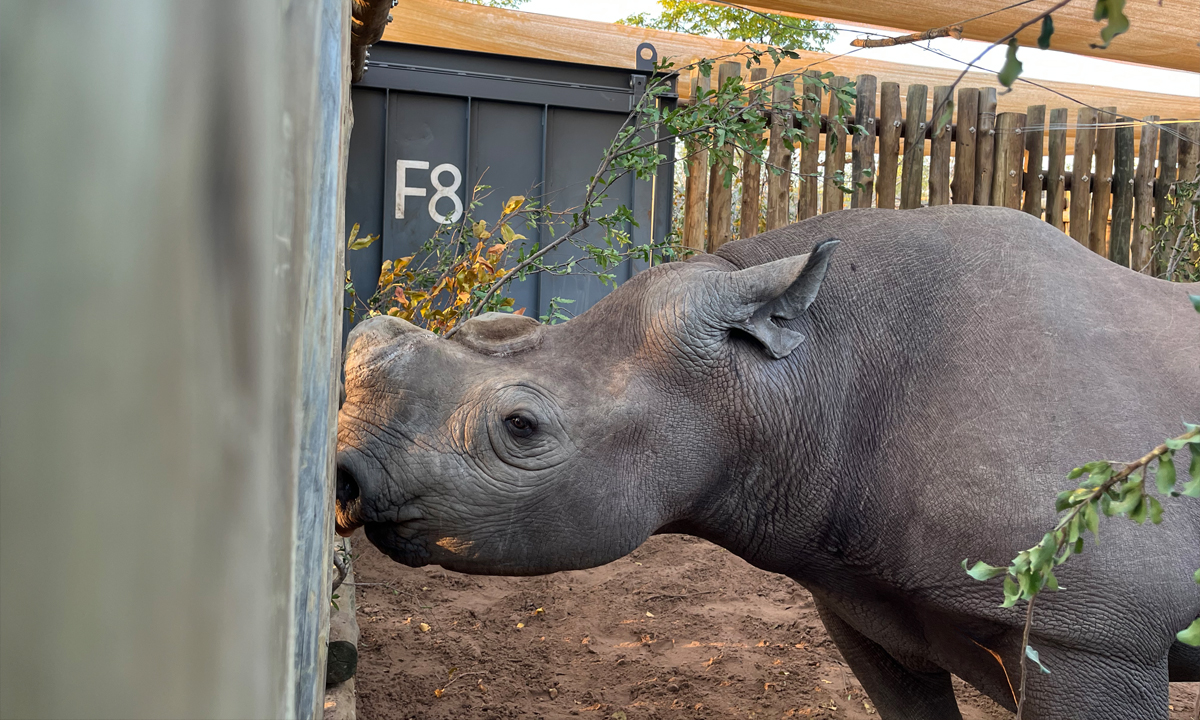
The return isn’t a temporary display. African Parks has built a Phase 1 Intensive Protection Zone covering 175 square kilometers, with a Phase 2 extension planned to reach 650 square kilometers. Its three-wire fence sits at 45, 55 and 65 centimeters off the ground — low enough to stop a rhino, high enough for other wildlife to pass freely. With the ranger corps expanded to 251, Matusadona has gone from a decimated poaching ground to a fortress of rewilding — part of the Kavango Zambezi Transfrontier Conservation Area and a cross-border effort led by Boundless Southern Africa.
The next evening, back at Jenge Camp, Spike brought good news: the escaped female had been returned safely, unharmed. The relief carried a heavier weight.
Modern conservation is a testament to extraordinary human intervention — and also an indictment of human greed. To protect these animals from being slaughtered for their horn, we strip them of the feature that defines them, blindfold them, crate them, and fly them across a country — a costly effort made necessary only because avarice leaves no alternative.
That night, far from any city light, the Zimbabwean sky was extraordinary — millions of stars, the pale dust of the Milky Way spanning horizon to horizon. The escapee resting in the dust was a reminder of the trauma inflicted on the natural world. But her presence, and that of her kin in the bomas, is proof the damage can be repaired — that wildness, fiercely defended, can always find its way home.
Discover Africa Safaris is a Cape Town-based safari operator specializing in tailor-made African safari experiences across Southern and East Africa, co-founded by Andre Van Kets.
Learn more about Discover Africa at discoverafrica.com.

Discover Ker & Downey Africa’s luxury safaris—tailor-made journeys, expert local insight and personalized five-star travel across Africa’s top destinations.

Andre Van Kets built Discover Africa Safaris on tailor-made trips, on-the-ground destination expertise, and long-term relationships with clients and partners across Africa.

eDreams ODIGEO CEO Dana Dunne explains how the travel subscription model delivers predictable revenue, AI-powered personalization, and durable growth in a volatile market.

A former nurse manager applies for an operations role. Her résumé says “excellent communication skills” and “strong leadership”. So do most of the other applications on the recruiter’s screen. The skills are real, and as written they are invisible. Good transferable skills examples always come […]

The spreadsheet says 52 is possible. You have run it three times, changed the return assumption twice, and it still works. Then come the questions the spreadsheet cannot answer: how to get money out of a 401k seven years early, who pays for health insurance […]

Forty minutes into the meeting, the team is still arguing about which of two suppliers to choose. Both options have been costed twice. Every new argument digs further into the same two answers. Lateral thinking is the habit of stopping at that moment and asking […]

Thursday, 3 p.m. You read the same email for the third time and still could not say what it asks for. You slept six hours last night, and the night before, and you feel fine, mostly. So is 6 hours of sleep enough? For most […]

The Monday meeting goes quiet when one person speaks, and everyone else looks at the table. Nothing in the comment is quite bad enough to discipline. It is the fourth one this month, and the team is waiting to see whether you noticed. Knowing how […]

You land at 7 a.m., the meeting is at 9, and the shirt you packed comes out of the case with a crease across the chest that no amount of smoothing will remove. Learning how to fold a business shirt for travel takes ten minutes […]

It is late, the house is quiet, and three tabs are open. One is a $49-a-month certificate from a company everyone has heard of. One is a bootcamp that promises a new job in sixteen weeks. One is a university program whose price makes you […]

The offer email arrives. The number is fine, maybe slightly less than you hoped, and the recruiter is waiting for an answer. Most people say yes. Knowing how to negotiate salary at this exact point is worth more than at any other moment in the […]

The busiest office workers are interrupted every two minutes during core hours. That figure comes from Microsoft’s own data on how people use its software, and anyone who runs a team will recognise it. Most productivity hacks are written for a calendar you control. The […]

The alarm goes off at six. You hit snooze twice, get up at half past, and spend the first hour of the day feeling like someone else is driving. Most advice on how to become a morning person starts with the alarm: set it earlier […]
The weekly Executive Briefing: insights, books, tools, and media opportunities worth your attention — curated and distilled into 5 minutes.

Welcome to The Executive Insight. Your free AI guide to the best tools is on its way. The first issue arrives soon. Check your promotions tab if it is not in your inbox!
Your request has been successfully submitted. Please wait for a reply from our manager, he will contact you as soon as possible.
Your copy of The Executive Insight Book Challenge List is downloading now. Enjoy the list — and while you're here, take a look at our latest interviews.