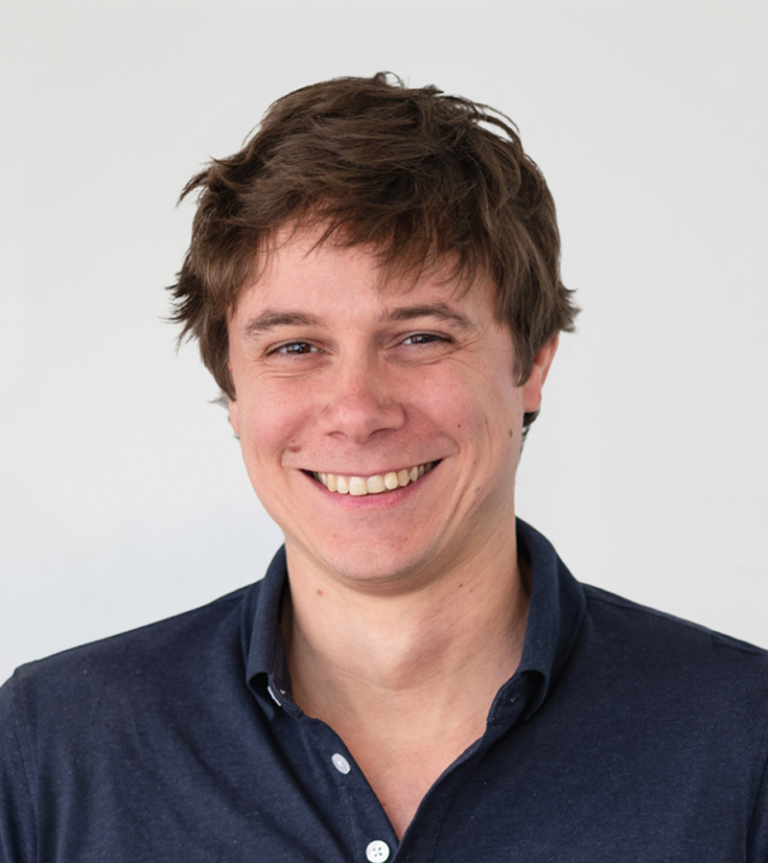
"Guaranteeing access to school is not enough if children and young people do not also have the conditions they need to stay, learn, participate, and develop fully."

What does your organization do, and who is it for?

Cidade Escola Aprendiz is a civil society organization that, for nearly 30 years, has worked to advance the right to Integral Education for children and young people in Brazil through a systemic approach. We produce applied knowledge, develop methodologies, support the design and implementation of public policies, and build networks and strategic alliances to strengthen schools, public education systems, and local territories, so that every child and young person can fully develop, with equity and respect for their individual circumstances and contexts.

What are the main programs, services, or products you offer?

Our work is organized around three main areas: Integral Education, Educational Territories, and Integral Protection. Across these areas, we produce and disseminate knowledge, develop and implement social technologies and methodologies, provide training and technical support to public education systems and governments, strengthen local networks, and support the design and implementation of public policies. We also work in advocacy and communication to bring these issues into the public debate and help strengthen the rights of children and young people.

What's a decision you made that went against how everyone else in your field was doing it — and what did it cost you?

One decision that has shaped our work was to move beyond the idea that educational challenges can be addressed by schools or by the education sector alone. We chose a systemic and intersectoral approach, connecting education with social assistance, health, child protection, communities, local territories, and other public policies responsible for guaranteeing children’s rights.

At the same time, we recognize that educational exclusion is not experienced in the same way by everyone. Race, gender, disability, income, and territorial inequalities intersect and create different barriers and opportunities. An intersectional perspective is therefore essential to understanding who is being excluded and what conditions need to change.

This approach is more complex. It requires more time, dialogue, coordination across sectors, and trust-building, and the results are not always immediate or easy to attribute to a single organization. But it allows us to address the multiple and interconnected factors that determine whether a child or young person can access education, remain in school, learn, have their rights guaranteed, and develop fully.

What's the closest your organization ever came to not making it? What changed?

Our greatest challenge has consistently been financial sustainability. In Brazil, philanthropy still tends to fund highly complex projects with limited resources and short timeframes, while expecting significant results and often remaining closely involved in day-to-day implementation.

But systemic change requires something different: time, sustained investment, flexibility, and trust. One of our main challenges today is therefore to build and diversify a stronger network of international funders who understand this. We have had partnerships of this kind, based on trust and a shared understanding that organizations working on complex social issues need the autonomy and long-term support to adapt, learn, and build lasting change.

For us, financial sustainability is not simply about raising more money. It is about building relationships with funders who understand that systemic change cannot be achieved within a short project cycle.

What does a typical day actually involve that people outside your field would never guess?

What people might not realize is how much of our daily work is about building connections. On any given day, we may be working with a municipal education department, talking to a community organization, supporting a public policy, discussing evidence with researchers, engaging with funders, or bringing different sectors together around the rights of children and young people.

Systemic change involves a great deal of work that is often invisible: listening, negotiating, building trust, translating knowledge into practice, connecting people who do not usually work together, and creating common ground among actors with very different perspectives and responsibilities.

So, perhaps surprisingly, a typical day is less about implementing a single project and much more about creating the conditions for many different actors to work together toward lasting change.

What would you say sets your organization apart from others in your field?

What sets us apart is our systemic approach grounded in equity, combined with almost 30 years of experience connecting practice, knowledge, and public policy. We understand that guaranteeing the right to Integral Education requires looking at children and young people in their entirety, recognizing their different identities, life circumstances, and territories, as well as the inequalities that shape their opportunities.

This means working across sectors and understanding how inequalities related to race, gender, disability, income, and territory intersect. Equity guides not only how we understand these challenges, but also how we design strategies and support public policies to respond to them

Another important aspect is that our knowledge comes from practice. We develop and test methodologies in real contexts together with public education systems, communities, and local organizations, and transform what we learn into knowledge and evidence that can strengthen public policies and broader agendas.

This ability to connect local practice, equity, and systemic change is central to who we are: what we learn in territories informs policy, and what we learn from policy helps us strengthen our work in territories.

If someone came to you wanting to break into your field, what's one thing you'd tell them that nobody tells beginners?

I would tell them that the right to education cannot be separated from other social rights. Guaranteeing access to school is not enough if children and young people do not also have the conditions they need to stay, learn, participate, and develop fully.

That is why an intersectional perspective is so important. Race, gender, disability, income, territory, and other dimensions of inequality intersect and shape each person’s educational experience in different ways. Understanding these intersections helps us identify who is being excluded, why, and what needs to change to effectively guarantee the right to education

Could you share a specific success story or a concrete example of your impact?

One story that represents our work particularly well is that of João Lucas. He was not out of school. He was a member of his school’s student council and became involved in one of the strategies we developed to help other students stay in school.

This was part of “Every Child and Adolescent in School,” a social technology developed by Cidade Escola Aprendiz together with civil society organizations, public officials, and local communities. The methodology is based on listening, participation, and youth leadership to strengthen children’s and young people’s connection with education and address school exclusion.

Through his participation, João Lucas also began to see new possibilities for his own future. He later earned a scholarship to attend high school and, years later, graduated with a Law degree from Insper. Today, he is pursuing postgraduate studies in Social Urbanism.

His story is one among thousands connected to this work. Over 13 years, this collective effort has contributed to bringing around 50,000 children and young people back to school across 55 municipalities, in seven Brazilian states and four regions of the country.

For us, João Lucas’s story is especially meaningful because it shows that impact is not only about bringing children back to school. It is also about listening to young people, recognizing them as active participants in shaping educational solutions, and creating opportunities for them to imagine and build their own futures.

What's the biggest misconception outsiders have about your work?

One of the biggest misconceptions is to confuse Integral Education with full-time education. In Portuguese, the terms are very similar: “Educação Integral” and “Educação em Tempo Integral”, which makes this confusion particularly common in Brazil.

But they mean different things. Full-time education refers primarily to the amount of time a student spends at school. Integral Education is a broader educational approach based on the idea that everyone has the right to develop as a whole person: to acquire knowledge, understand their bodies and emotions, build relationships, access and create culture, and understand and participate in the world around them.

Extending the school day can be an important strategy for Integral Education, but simply spending more time at school does not guarantee an Integral Education. What matters is the quality and purpose of that time and whether the educational experience creates meaningful opportunities for children and young people to learn and develop in all these dimensions.

What would you say to someone considering partnering with, supporting, or joining your organization?

I would say that systemic change cannot be achieved by one organization alone. Almost 30 years of experience have taught us that guaranteeing the right to Integral Education requires bringing together different forms of knowledge, resources, experiences, and perspectives.

So, whether you are a funder, a public institution, a civil society organization, a researcher, or someone considering joining our team, we see partnership as a relationship built on trust, dialogue, and shared responsibility.

If you believe that every child and young person has the right to develop fully, with equity and respect for who they are and where they come from, there is a place for you in this collective effort.

What's your vision for the next 3–5 years?

Over the next three to five years, our vision is to strengthen our role in promoting systemic change, guided by equity, to help guarantee the right to Integral Education across different territories in Brazil.

We want to see stronger public policies, more connected and capable networks, and schools, communities, and public institutions working together to ensure that children and young people can develop fully and have their rights guaranteed.

To achieve this, we will continue connecting practice, knowledge, advocacy, and communication, while strengthening organizations, networks, communities, and public institutions that can sustain change over time.

What would you like readers to take away about the shared responsibility for education?

I would add one idea that is at the heart of our work: schools are central, but they cannot do it alone.

Guaranteeing the right to Integral Education requires us to look beyond the school walls and understand education as a collective responsibility. Families, communities, public policies, civil society organizations, and local territories all have a role to play in creating the conditions for children and young people to learn, be protected, participate, and develop fully.

After almost 30 years of work, this is perhaps one of our strongest convictions: lasting change happens when we connect people, knowledge, policies, and territories around a shared responsibility for children’s and young people’s rights.