Subscribe to outperform
The weekly Executive Briefing: insights, books, tools, and media opportunities worth your attention — curated and distilled into 5 minutes.

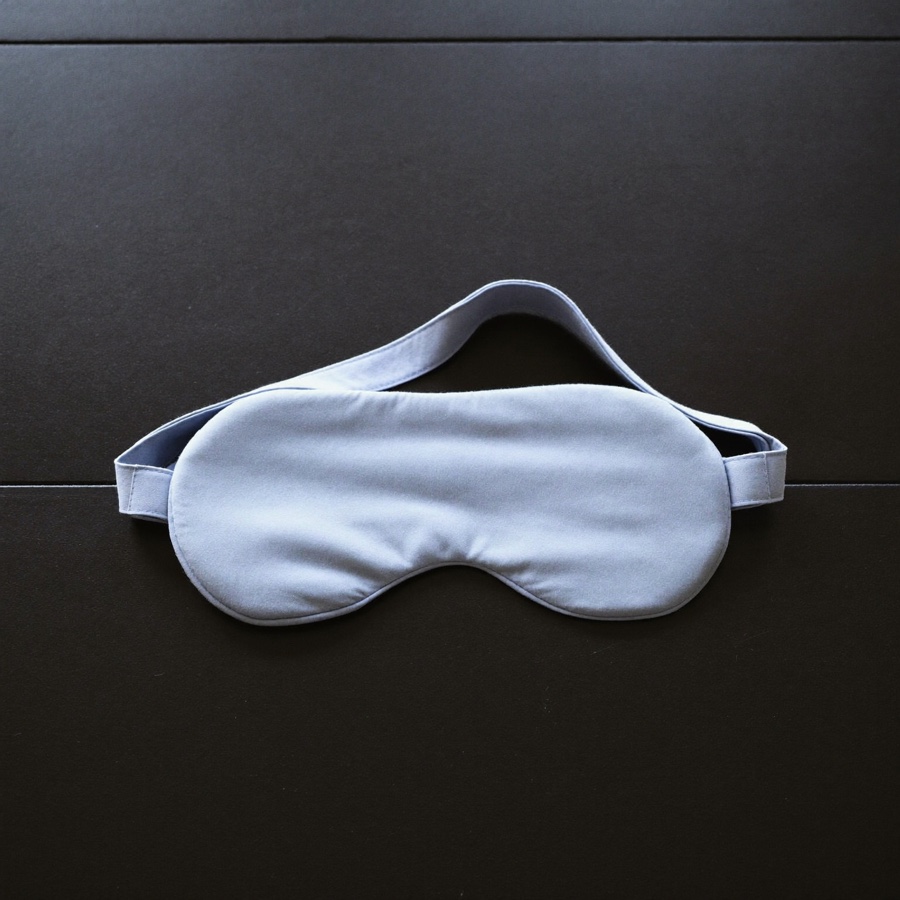

Thursday, 3 p.m. You read the same email for the third time and still could not say what it asks for. You slept six hours last night, and the night before, and you feel fine, mostly. So is 6 hours of sleep enough? For most adults the research says no, and it adds an uncomfortable detail: the people running short are the worst judges of how short they are running.
The short answer: adults need at least seven hours a night, according to both the American Academy of Sleep Medicine and the CDC. One six-hour night costs little. Two weeks of them, in the best-known laboratory study, produced thinking and reaction-time deficits close to those of people kept awake for two full nights, while the six-hour sleepers rated themselves only slightly sleepy.
A small number of people genuinely do well on six hours. They are rare, and most of us who believe we are among them are not.
In 2015 the American Academy of Sleep Medicine and the Sleep Research Society asked a panel of fifteen experts to review the evidence on adult sleep. Their consensus was that adults should sleep seven or more hours a night on a regular basis, and that less is linked to weight gain, diabetes, high blood pressure, heart disease, depression, impaired immune function, more errors and a higher risk of accidents. The CDC uses the same line: at least seven hours.
Plenty of Americans fall short of it. In CDC survey data for 2022, the share of adults reporting less than seven hours a night ranged from 30 percent in Vermont to 46 percent in Hawaii. In some states, short sleep is close to the majority experience.
Seven is a floor, not a target. Many adults feel best on seven and a half to eight. The question for most readers is how far below seven they have drifted, and what that drift is doing.

The study most sleep researchers point to was run by Hans Van Dongen, David Dinges and colleagues at the University of Pennsylvania and published in the journal Sleep in 2003. They put 48 healthy adults, aged 21 to 38, on fixed schedules for two weeks: four, six or eight hours in bed a night. A fourth group was kept awake for three nights in a row.
The results were cumulative and dose-dependent. The eight-hour group held steady. The six-hour and four-hour groups got steadily worse at attention, memory and reaction-time tasks, day after day, with no plateau. By the end of two weeks, restricting sleep to six hours or less had produced deficits comparable to up to two nights of total sleep deprivation.
The sleepiness ratings tell the second half of the story. The restricted groups reported feeling sleepier in the first few days, then their ratings barely moved, even as their test scores kept falling. They adapted to feeling tired. Their brains did not adapt to being tired.
That gap explains why so many people say six hours works for them. The feeling settles at “a little tired” while the performance keeps sliding.
It depends on how often, and on who you are. The research supports a fairly clear picture:
| Situation | Is six hours enough? |
|---|---|
| One night, before an early flight | Yes. You will be a little slower, and a normal night afterwards resets most of it |
| Three or four nights in a row | Not really. The deficit is building, and you will not feel how much |
| Weeks or months as a habit | No. This is the pattern linked to the health risks in the guidelines |
| A genetic short sleeper | Possibly, though true short sleepers are rare |
The short sleepers are real. In 2009, Ying-Hui Fu’s lab at the University of California, San Francisco described a mother and daughter with a mutation in a gene called DEC2 who slept around six hours a night and functioned well. Further mutations have been found since. These people tend to wake early without an alarm, feel rested, and never need to catch up at weekends. If you sleep in on Saturday whenever the diary allows, you are almost certainly not one of them.
Nobody plans a six-hour night. It arrives in pieces. A late dinner with a client, an early flight, an inbox cleared after the children are asleep. Each choice is reasonable, and the total is a sleep schedule nobody would have chosen.
Travel is a common culprit. A 6 a.m. departure means a 4 a.m. alarm, and the night before rarely starts early. Packing the night before helps more than it sounds; our guide on how to fold a business shirt for travel turns that job into ten minutes.
Evening study is another. People switching careers often take courses after the workday ends, which pushes bedtime later. If that is you, look at the course schedule before you sign up; our guide to online courses for career change covers how to fit the hours without borrowing them from sleep.
And stress keeps people up even when they are in bed on time. A difficult situation at work, unresolved, tends to come back at 2 a.m. Dealing with it during the day is better for the team and for your night; our guide on how to manage difficult employees covers the conversation that most managers postpone.
The lab measured attention and reaction time, and those are what decide a meeting. Short sleep makes you slower to catch a detail in a contract, more likely to repeat a question, and quicker to irritation. None of it is dramatic, and all of it is visible to the people you work with.
The decisions that suffer most are the ones that need patience. Negotiations are a good example: the person who stays calm through a long pause usually does better. Our guide on how to negotiate salary depends on exactly that pause, and it is easier to hold after a full night.

The hour has to come from somewhere, and for most people the evening gives it up more easily than the morning.
Fix the wake time first. Get up at the same time every day, weekends included. A fixed wake time anchors your body clock, and bedtime follows it within a week or two. Our guide on how to fix your sleep schedule covers the first week in detail.
Move bedtime by fifteen minutes at a time. An hour earlier overnight rarely works. Fifteen minutes a week usually does.
Get light early, keep it dim late. Daylight in the first hour after waking makes it easier to fall asleep that night. If you want earlier mornings without shorter nights, our guide on how to become a morning person explains how light and wake time work together.
Give the last hour a fixed shape. The same three or four steps every night, with screens put away. A routine works better than willpower at 11 p.m. Our piece on productivity hacks makes the same argument about habits in general: the ones that last have a clear purpose behind them, and a sharper Thursday is a good one.
Treat the extra hour as work time. Seven hours of sleep usually buys back more than an hour of useful attention the next day. Seen that way, going to bed is part of the job.
When the nights run short, most people reach for the same three remedies. Each one helps a little in the moment and costs more later.
More coffee in the afternoon. Caffeine stays active in the body for hours, so a cup at 3 p.m. is still working at bedtime for many people. It covers the tiredness on Thursday and shortens Thursday night. Keep coffee to the morning and early afternoon, and the evening takes care of itself more often than you would expect.
A drink to wind down. Alcohol makes it easier to fall asleep, which is why it feels like it works. Later in the night, as the body processes it, sleep becomes lighter and more broken. You may spend seven hours in bed and wake as if you had slept five.
A long lie-in on Saturday. Sleeping until ten pays back some of the debt and moves your body clock later, so Sunday night is harder and Monday starts with another short night. If you need extra sleep at the weekend, an earlier bedtime does the same job without moving the clock.
None of these is forbidden. The pattern to avoid is using them every day to cover a schedule that does not leave room for seven hours.
Is 6 hours of sleep enough for a teenager? No. The American Academy of Sleep Medicine recommends eight to ten hours for teenagers aged 13 to 18.
Can a nap make up for a six-hour night? A short nap of 10 to 20 minutes in the early afternoon helps alertness for a few hours. It does not replace regular nightly sleep.
Can I catch up on sleep at the weekend? Partly. Extra weekend sleep reduces sleepiness, but research on recovery sleep suggests that a weekend does not fully undo a week of short nights, and sleeping in shifts your body clock later for Monday.
Is 6 hours of sleep enough? For a night, yes. As a habit, the evidence says it costs you more than you notice, and the cost lands on exactly the days you need to be sharp. Fix the wake time, move bedtime fifteen minutes this week, and judge the result by your Thursday afternoon, not by how you feel at 7 a.m.

Written by
Editor of The Executive Insight. Writes about leadership, decision-making and the parts of building a business that nobody puts in the plan.

The first week of the holiday goes well. You sleep ten hours a night, read a novel for the first time in a year, and start to feel like yourself. Then, somewhere around the Sunday before you fly home, the dread comes back. Two weeks after your return, it is as if you never left. […]

Most advice on work life balance is a mood. Take breaks, set boundaries, be present. It is all true, and none of it survives a Tuesday when a client emails at 6pm and a deadline is on Friday. That is why most work life balance examples sound better than they work. The people who hold […]

You open a document to write one paragraph. Four minutes later you are reading an email you did not need to read, with two new tabs open and the paragraph unwritten. If that sounds like most of your working day, you are in good company, and the problem is fixable. Learning how to increase attention […]

A former nurse manager applies for an operations role. Her résumé says “excellent communication skills” and “strong leadership”. So do most of the other applications on the recruiter’s screen. The skills are real, and as written they are invisible. Good transferable skills examples always come […]

The spreadsheet says 52 is possible. You have run it three times, changed the return assumption twice, and it still works. Then come the questions the spreadsheet cannot answer: how to get money out of a 401k seven years early, who pays for health insurance […]

Forty minutes into the meeting, the team is still arguing about which of two suppliers to choose. Both options have been costed twice. Every new argument digs further into the same two answers. Lateral thinking is the habit of stopping at that moment and asking […]

The Monday meeting goes quiet when one person speaks, and everyone else looks at the table. Nothing in the comment is quite bad enough to discipline. It is the fourth one this month, and the team is waiting to see whether you noticed. Knowing how […]

You land at 7 a.m., the meeting is at 9, and the shirt you packed comes out of the case with a crease across the chest that no amount of smoothing will remove. Learning how to fold a business shirt for travel takes ten minutes […]

It is late, the house is quiet, and three tabs are open. One is a $49-a-month certificate from a company everyone has heard of. One is a bootcamp that promises a new job in sixteen weeks. One is a university program whose price makes you […]

The offer email arrives. The number is fine, maybe slightly less than you hoped, and the recruiter is waiting for an answer. Most people say yes. Knowing how to negotiate salary at this exact point is worth more than at any other moment in the […]

The busiest office workers are interrupted every two minutes during core hours. That figure comes from Microsoft’s own data on how people use its software, and anyone who runs a team will recognise it. Most productivity hacks are written for a calendar you control. The […]

The alarm goes off at six. You hit snooze twice, get up at half past, and spend the first hour of the day feeling like someone else is driving. Most advice on how to become a morning person starts with the alarm: set it earlier […]

A project lands that your team cannot carry. The product launch is in four months, the two engineers you need do not exist on your payroll, and a permanent hire will take most of that time just to find. Staff augmentation is the usual answer: […]
The weekly Executive Briefing: insights, books, tools, and media opportunities worth your attention — curated and distilled into 5 minutes.

Welcome to The Executive Insight. Your free AI guide to the best tools is on its way. The first issue arrives soon. Check your promotions tab if it is not in your inbox!
Your request has been successfully submitted. Please wait for a reply from our manager, he will contact you as soon as possible.
Your copy of The Executive Insight Book Challenge List is downloading now. Enjoy the list — and while you're here, take a look at our latest interviews.