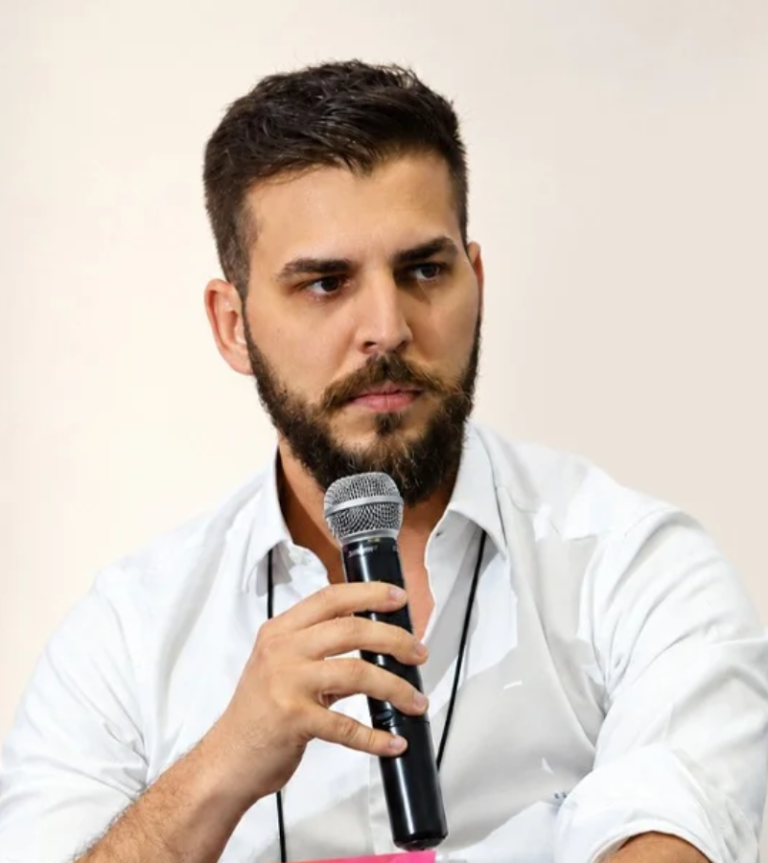
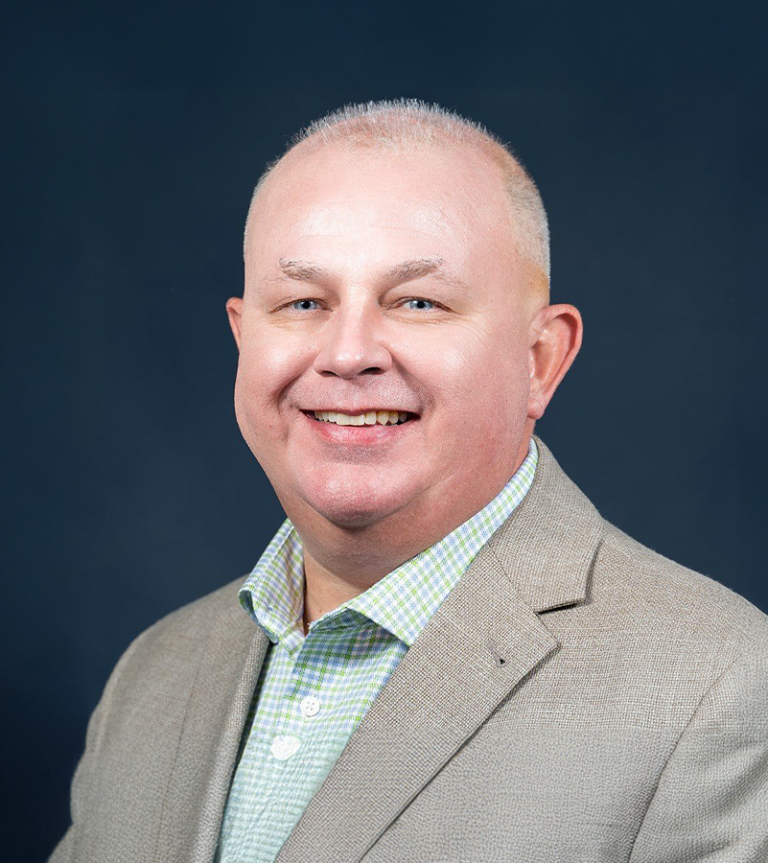
"Critical infrastructure should not be treated as a generic product."

Could you please give us a quick overview of TSEA Energy?

TSEA Energy provides critical energy infrastructure to the market. We serve the global market, but our main focus is the Americas, and our most important market is the US. The company is almost 60 years old and operates factories not just in Brazil but also in the US.

What makes TSEA Energy different from other companies building critical energy infrastructure?

It starts with the choices we made about how to compete. This is a very selective market because of the complex engineering involved, and today TSEA competes with most of the listed companies in the sector. They are big players.

Our strategy is that we don’t compete on volume. TSEA operates like an engineering boutique, because our reality is different from these huge companies. We don’t have 25 factories around the world or 45,000 employees, so our focus is not on filling up factories. We have one factory and around 2,000 employees. Our positioning is to be a selective company.

That is what drives our made-to-measure approach. We understand the customer’s systems and needs, and we engineer the solution to those needs, because we believe critical infrastructure should not be treated as a generic product.

We have four business units, but the most important one is power transformers. Power transformers have always been the backbone of the energy grid. What has changed in the last five years is how they are seen: as strategic, as the core of that backbone. Everybody is talking about AI, economic expansion, data centers and EVs, but for any of that to become a reality, a power transformer must deliver the energy. It is a critical product for entire nations.

It is also a product nobody sees. We are not talking about the small ones; we are talking about the big ones. It is complex and highly tailored, which means production cannot be scaled through full automation. It depends on people, not just in the engineering design but also in the manufacturing.

TSEA has delivered more than 5,500 transformers. What have you learned from working on such long-lasting equipment?

There are no shortcuts in this market. Power transformers are built to operate for 30 or 40 years, and some have been operating for more than 100. In such an engineering-driven business, evidence matters, details matter, and every decision we make in every phase of manufacturing matters.

We have a responsibility not just to the customer but also to society and to the asset owner, so we must think long term at every step.

It seems like a huge number, but 80 to 85% of those units are different products. It is the same solution with different designs and different manufacturing. We can’t simply replicate what we did 40 years ago, and that is true not just for us but for the whole market.

So the first lesson is to think long term. The second is people: we must have the right people in the right positions. We also believe second-to-none quality is a principle of our business. We can take risks in strategy, innovation and growth. But we don’t compromise on quality or reliability. There is no cutting corners to get a better result next quarter. This is an asset that may still be operating decades from now, long after the people who manufactured it have left the company.

How are energy companies changing the way they maintain and upgrade older infrastructure?

The power transformer is equipment that has barely changed since the first one. Even visually, it has been a similar product for the last 150 years. What has changed is the market.

To deliver energy from point A to point B, you must have a power transformer. You cannot develop renewable sources or power data centers and EV fleets without a power transformer connecting both points. That is the first driver. And unlike PV power plants, wind turbines or data centers, power transformers are very difficult to scale, so supply does not follow these trends one for one.

The second driver is that grid infrastructure has become obsolete around the world, not just in the US but also in Brazil and in Europe. The average age of installed assets is around 35 years. We need more energy and better energy, and we have old assets. Today, the market and investors realize how strategic this equipment is as the backbone of the grid.

Utilities and other power-system operators are evaluating their most critical assets, identifying system constraints, prioritizing replacements and securing equipment ahead of anticipated demand. Long manufacturing lead times make early planning and close supplier relationships essential.

What made TSEA develop its vegetable oil voltage regulator?

To be transparent, I would not call it a breakthrough innovation, because vegetable oils have existed in the power industry for a long time. We developed a voltage regulator with vegetable oil to meet specific customer needs. Vegetable oil is more environmentally friendly, although with either vegetable or mineral oil, the oil is never supposed to leak.

We don’t innovate for the sake of innovation. It is innovation with purpose. That was the reason behind investing significantly, not just in changing the manufacturing process but also in testing the equipment before sending it to the customer and installing it on site.

Could you tell us about your recent projects and future plans?

Our company has been growing very fast over the last five years, and we have a clear vision of the future. Because it is a tailored product, everything we sell today will be delivered over the next three to four years.

Our main goal is to keep our focus on the US, the biggest market in the world for this equipment. Not on the market as a whole, but on the customers we decide to serve. That means serving those customers better and increasing our capacity when we can, while positioning ourselves as an engineering boutique.

For us, growth is not simply about increasing production capacity. It’s about being deliberate in where we compete and ensuring that our engineering capabilities create meaningful value for our customers.

That visibility allows us to invest better. Over the last 12 months, we have invested approximately $230 million to expand our capacity, because we know what is coming. A significant portion of this investment will build a new power transformer factory complex here in Brazil.

Even with our capacity fully occupied through 2029, we stay very close to our customers to understand their long-term needs, up to 2035, and anticipate them with the right engineering for their systems.

Our goal is for TSEA to thrive well beyond its 100th anniversary. We probably won’t be here to see it, but our goal is to hand over the company in better shape than it was given to us. That is the philosophy of the whole company, and long-term thinking is a sustainable strategy for any business.

When the power system faces an unexpected problem, what does TSEA focus on first?

First, we’re not supposed to face problems, which is why we must be very diligent with our product. But when a critical infrastructure asset does have a problem, speed matters more than anything.

Our customers are usually large utilities serving millions of users, data centers, or independent power producers generating energy. The impact of downtime or a failure in the grid is asymmetric. So our priority is speed: understanding the problem, taking ownership and reacting correctly.

There is no secret sauce. It comes down to strong engineering discipline and a solid partnership with the customer. These are what allow the company to respond properly when problems do happen.

What is one lesson from your career that changed your approach?

Long-term thinking is not just a philosophy for personal success. In our business, the product makes it a necessity. Reputation, trust and the future are the three pillars for building companies that are here to last.

There is a strong parallel between the products we build and the way we build our business. If our products are expected to last for decades, our customer relationships, reputation and principles should be built with the same horizon.

This shapes not only how we work internally but also how we structure and maintain our customer relationships: thinking about customers’ needs, anticipating them, understanding when we can support them, and exceeding their expectations.

There is no secret. We must come in every day, do the work, follow those principles and keep a customer-centric mindset, and the company will be built to last. Short-term issues are part of the game, but when you’re here for the long run, they don’t define you.

How has TSEA's ownership history shaped the company?

For most of its history, the company was backed by Japanese ownership, and in 2018 it moved to Brazilian ownership. We have combined the best of both cultures, along with the American perspective we brought in when we developed our go-to-market strategy. Japanese discipline, Brazilian craftsmanship and American ambition: together, those three things are the best definition of TSEA today.

What is the main message you would like leaders and the broader community to take away from TSEA Energy?

Publications such as the New York Times and the Wall Street Journal have been covering critical infrastructure, because everybody is talking about AI and EVs but forgetting that these sectors cannot exist without power transformers. And this equipment is not trivial to manufacture.

Authorities and customers agree that the next 10 years will be a game changer for the whole industry, as old assets are replaced and demand grows. This is not a market of serial production. It is about engineering design, a tailor-made manufacturing process and a very close, direct relationship with the customer.

The long-term thinking this business demands applies not just to an executive career, but to every employee. Working here has changed how I think about decisions.


Latest From The Executive Insight