Subscribe to outperform
The weekly Executive Briefing: insights, books, tools, and media opportunities worth your attention — curated and distilled into 5 minutes.



You have a client dinner on Thursday and a colleague swears by one author on reading people. Vanessa Van Edwards books number six by our count, and three matter for work: Captivate (2017), Cues (2022) and Conversation (October 2026). For a room full of strangers, read Captivate. For how you come across in meetings and on calls, read Cues.
She sells all three as science, so we checked the science. Our newsroom traced 16 research claims, from the publisher’s sample of Cues and from her TEDx talk, to the studies behind them. Our guide to Dale Carnegie books covers the older half of this shelf: 10 titles, with How to Win Friends and Influence People first on both Goodreads pages we counted. For the wider shelf, start with our ranking of the best books for entrepreneurs, sorted by the problem each one fixes.
| Book | First published | Read it when |
|---|---|---|
| You’re Grounded! (as Vanessa Van Petten) | 2007 | You parent a teenager and want a teenager’s view |
| Do I Get My Allowance Before or After I’m Grounded? (as Vanessa Van Petten) | 2011 | The same problem, in a fuller book from a major publisher |
| Human Lie Detection and Body Language 101 | 2013 | You want a short primer on reading nonverbal behaviour |
| Captivate | 2017 | You walk into rooms full of strangers: networking, interviews, pitches |
| Cues | 2022 | Meetings, video calls and presentations decide how you come across |
| Conversation | 2026 | Small talk stalls and working relationships never go deeper |
Of 16 claims we traced on 23 November 2026 in Cues and Vanessa Van Edwards’ TEDx talk, six match a published study fitting her description, five overstate one, three have no traceable source and two rest on her own lab.
The claims that hold describe a finding we could match to a published study, at the size the study found. Surgeons’ voice tone and lawsuits, skydivers’ sweat, karaoke singers who called their nerves excitement: each matches the description of a published paper. The claims that stretch take a real study and make it bigger. The 93% divorce figure came from a model built on several measures, while Cues credits it to a single cue.
The sample chapter carries no note numbers, and the book’s notes begin on page 279, outside it. So for each claim we matched the closest published study and say which one in the table. Two claims rest on her own lab, Science of People, whose TED talk study names 760 volunteer raters and calls itself proprietary research. Three had no source we could find.
The book count gave a smaller finding. Wikipedia lists four of her books. It leaves out Conversation, published on 6 October 2026, and You’re Grounded!, which the Santa Monica Daily Press dated to June 2007, when the author was 22 and wrote as Vanessa Van Petten.
Here are the Vanessa Van Edwards books in order of first publication: You’re Grounded! (2007), Do I Get My Allowance Before or After I’m Grounded? (2011), Human Lie Detection and Body Language 101 (2013), Captivate (2017), Cues (2022) and Conversation (2026). The first two carry her birth name, Vanessa Van Petten. Portfolio published the last three.
| Book | First published | Name on the book | Pages (edition checked) | Publisher | Source |
|---|---|---|---|---|---|
| You’re Grounded!: How to Stop Fighting and Make the Teenage Years Easier | 2007 | Vanessa Van Petten | 140 (2007 newspaper profile) | Not shown on the listings we read (ISBN 9780595438754) | ValoreBooks |
| Do I Get My Allowance Before or After I’m Grounded? | 2011 | Vanessa Van Petten | 288 (trade paperback) | Plume | Publishers Weekly |
| Human Lie Detection and Body Language 101 | 2013 | Vanessa Van Edwards | 164 (paperback) | CreateSpace Independent Publishing Platform | Biblio |
| Captivate: The Science of Succeeding with People | 2017 | Vanessa Van Edwards | 320 (hardcover, 25 April 2017) | Portfolio | Porchlight Books |
| Cues: Master the Secret Language of Charismatic Communication | 2022 | Vanessa Van Edwards | 320 (hardcover, 1 March 2022) | Portfolio | Penguin Random House |
| Conversation: How to Connect with Anyone & Make Every Interaction Count | 2026 | Vanessa Van Edwards | 320 (hardcover, 6 October 2026) | Portfolio | Penguin Random House |
The five editions with a catalogue page count run to 1,412 pages. Captivate’s 2018 paperback is longer, 352 pages on the publisher’s page. Wikipedia names Plume for the 2011 book, written under her maiden name, and gives her birth name as Vanessa Lynn Van Petten, born on 17 May 1985.
That date ties her to the first book. A November 2007 Santa Monica Daily Press profile describes a 22-year-old Van Petten whose 140-page You’re Grounded! came out that June, after her graduation.
Ten claims come from the introduction and first chapter of Cues, in the sample Penguin publishes. Six come from You Are Contagious, her TEDxLondon talk, in the published transcript. Each row gives the claim in our words, the study we matched and our verdict.
| Claim (our words) | Where she makes it | Closest published source (our identification) | Verdict |
|---|---|---|---|
| A leader’s charisma can be judged from five seconds of footage | Cues, p. 5 | Tskhay, Zhu and Rule, Leadership Quarterly, 2017: silent 5-second clips | Matches the study that fits her description |
| One cue predicts which couples split, with 93% accuracy | Cues, p. 5 | Gottman and Levenson, Journal of Marriage and the Family, 2000: a model of several measures | Says more than the study |
| Voice tone predicts which doctors get sued more | Cues, p. 5 | Ambady and colleagues, Surgery, 2002: surgeons’ voice tone | Matches the study that fits her description |
| Observers predict which speed daters swap numbers from silent cues | Cues, p. 5 | Place and colleagues, Psychological Science, 2009: clips had sound | Says more than the study |
| Voters judge who is dominant in one minute of political exchange | Cues, p. 5 | None found; the nearest, a Kent State voice analysis, measured candidates, not voters | No source found |
| Nonverbal signals are 65 to 90 percent of communication | Cues, p. 6 | No study gives the range; the nearest, Albert Mehrabian’s, applies only when words and nonverbal signals conflict, says Psychology Today, and her own site calls such percentages mostly myths | Says more than the study |
| A Princeton study found charismatic people blend warmth and competence | Cues, p. 9 | Fiske, Cuddy and Glick, Trends in Cognitive Sciences, 2007: a review, charisma not measured | Says more than the study |
| Warmth and competence account for 82% of our impressions | Cues, p. 10 | Same paper: 82% of the variance in perceptions of everyday social behaviours | Matches the study that fits her description |
| 86% of MindUP children boost their well-being and 83% their social behaviour | Cues, p. 15 | None found for the percentages; MindUP’s homepage gives the 7 million reach but neither percentage | No source found |
| Doctors rated low on warmth, not on mistakes, are sued more (JAMA) | Cues, p. 15 | Levinson and colleagues, JAMA, 1997: primary care only | Says more than the study |
| The most-viewed TED speakers used 465 hand gestures, the least-viewed 272 | TEDx talk | Science of People, its own proprietary study | Her own unpublished study |
| The brain gives hand gestures 12.5 times more weight | TEDx talk | None found | No source found |
| Skydivers’ sweat activates fear responses in people who smell it | TEDx talk | Mujica-Parodi and colleagues, PLoS ONE, 2009: amygdala activation | Matches the study that fits her description |
| A Finnish study found real smiles lift mood and fake ones do not | TEDx talk | Surakka and Hietanen, International Journal of Psychophysiology, 1998 | Matches the study that fits her description |
| Singers who said they were excited scored 80%, those who said they were anxious 53% | TEDx talk | Brooks, Journal of Experimental Psychology: General, 113 participants | Matches the study that fits her description |
| Her lab coded 500 speed networkers for body language and volume | TEDx talk | No published paper found | Her own unpublished study |

Six of the 16 research claims behind Vanessa Van Edwards books hold up: charisma judged from five-second clips, surgeons’ voice tone and lawsuits, the 82% figure for warmth and competence, skydivers’ sweat, real against fake smiles, and calling nerves excitement. For each we found a published study that matches her description, at the size she gives. The weaker claims inflate a real finding.
The divorce claim shows how. Cues credits the 93% to “one single cue”. The 2000 paper that fits her figure, by John Gottman and Robert Levenson, reached 93% with a model combining marital satisfaction, thoughts of divorce and the emotional tone of two conversations. A University of Washington release puts the sample at 79 couples followed for 14 years.
The JAMA claim stretches the same way. The study that fits it, Wendy Levinson’s 1997 paper, recorded 59 primary care doctors and 65 surgeons. Primary care doctors who had never been sued oriented patients, used humour and spent longer with them, 18.3 minutes against 15. The surgeons showed no such link, and the release does not say the study measured medical mistakes.
The speed-dating study that best fits her line ran with sound, in German, for observers who did not speak it. Their guesses about women’s interest were just above chance. Observers could hear tone and rhythm, if not words, which makes for a smaller claim than silent cues predicting a phone number.
The 65 to 90 percent figure has the weakest footing. No study we found gives that range, and the Science of People site itself, updated on 24 September 2024, says the popular body language percentages are mostly myths. Our check of Never Split the Difference summaries found 11 of 24 repeating Albert Mehrabian’s 7-38-55 rule as fact, a rule he limits to feelings and attitudes.
Numbers drift from their source the way phrases do. Our trace of amor fati found seven of 22 pages presenting Nietzsche’s phrase as Stoic without naming him. The Princeton line in Cues is a gentler case: Susan Fiske was at Princeton, but the 2007 paper that best fits the line is a review of how people judge others, and charisma is not what it measured.
Six of 16 sits close to other popular books we have checked. Our The ONE Thing summary found four of 14 research claims holding fully, and our memory palace check found eight of 16 claims tracing to a study or Roman text. Famous routines vary: eight of 21 claims about the Brad Pitt Fight Club workout have no source, while 14 of 20 on the Warren Buffett diet are in his own words.
The Captivate book is Vanessa Van Edwards’ 2017 guide to first impressions and working a room, 320 pages in hardcover from Portfolio. Its publisher promises a predictable map of every party and networking event, a way to speed-read facial expressions and advice on how to talk to anyone, for use in negotiations, interviews and pitches.
Read it if your problem is the first five minutes with someone new: a conference reception, a first client lunch, a panel interview. It is her most-rated book, with 9,381 ratings at an average of 4.09 on her Goodreads author page on 23 November 2026, more than twice the count for Cues.
Treat its conversation advice as worth testing. The publisher’s description says certain words release dopamine in listeners. In the TEDx talk, the evidence offered for better openers was her own lab’s study of 500 speed networkers and a line she credited to Dr. John Medina. We found no published paper for the 500.
Carnegie’s advice covers the same ground with fewer claims to check. Our How to Win Friends and Influence People summary counted 30 principles: eight about avoiding or softening criticism and four about handing over the floor or the credit. If crowded rooms drain you, our networking tips for introverts argue for fewer, longer conversations and a follow-up within 48 hours.
Cues by Vanessa Van Edwards is her 2022 book on the signals people send through body language, voice, word choice and appearance, 320 pages from Portfolio. Publishers Weekly counts more than 40 cues in four groups, nonverbal, vocal, verbal and imagery, and splits them into warm cues, which signal likability, and competent cues, which signal capability.
This is the book for a manager. Its chapters cover how leaders hold themselves, how to look and sound more authoritative, how to sound likeable, how to spot someone acting in bad faith and how to build a visual presence.
Ten of our 16 claims come from its opening pages: three match the study that fits her description, five say more than the study found and two have no source. The useful reading is to keep the frame and test the percentages. Use it with John Maxwell’s books, where our count of nine lists found new managers better served by The 5 Levels of Leadership than by the book five lists put first.
Cues can also make a team too quick to read meaning into a flat voice or folded arms. Our trace of Hanlon’s razor, which nine of 25 pages tie to its 1980 source, is the counterweight: a colleague’s cold tone may be tiredness or error rather than hostility.
We found no peer-reviewed version. The finding that the most-viewed TED speakers used 465 hand gestures in 18 minutes, against 272 for the least-viewed, comes from Science of People, whose page calls it proprietary research. It names 760 volunteer raters and the person who verified the statistics, but no journal.
The page puts the most popular talks at an average of 7,360,000 views and the least popular at 124,000. In 2017 a post on the statistician Andrew Gelman’s blog quoted the site’s figures and drew comments questioning whether the work had been published anywhere. The figures are a correlation from one lab’s ratings, and we found no source for the TEDx line that the brain gives hand gestures 12.5 times more weight.
For the opening of a talk, our trace of the make your bed speech found eight of 17 pages keeping Admiral McRaven’s ten lessons in his own words. Quote your opening line from the source itself.
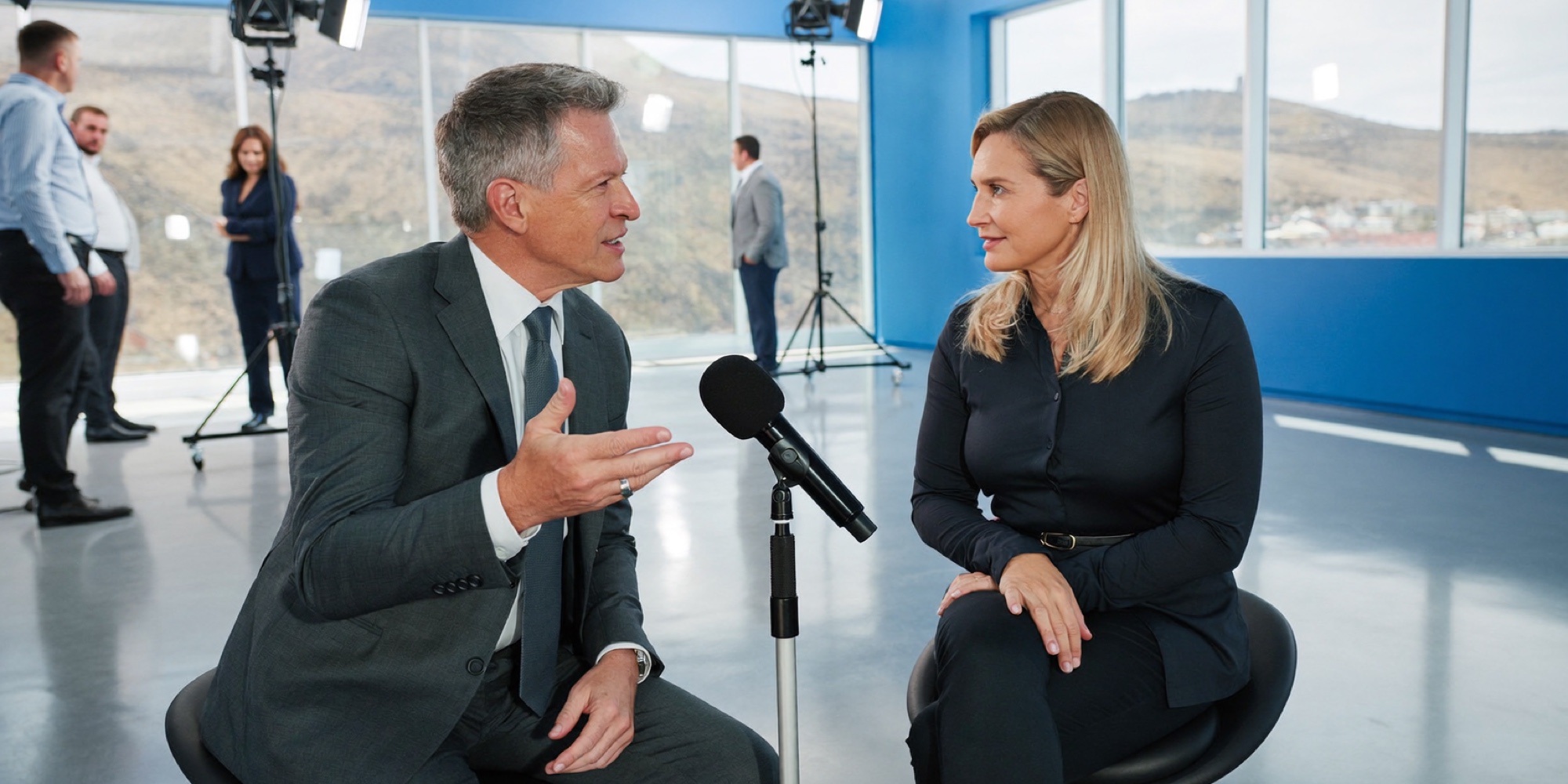
Vanessa Van Edwards’ new book is Conversation: How to Connect with Anyone and Make Every Interaction Count, published by Portfolio on 6 October 2026 at 320 pages. The publisher’s page calls it an instant New York Times bestseller and pitches it at breaking the ice, building relationships for work and life, and sounding authoritative without a script.
Read it if the first meeting goes fine and nothing follows: the contact who never becomes a working relationship, the team that talks only about tasks. The publisher says it is grounded in decades of research but gives no study counts.
It had 228 Goodreads ratings at 4.20 on 23 November 2026. We did not trace its claims, because we found no publisher sample to read.
Human Lie Detection and Body Language 101 is the 2013 primer she published through CreateSpace, 164 pages, on reading nonverbal behaviour and spotting deception. It holds 216 Goodreads ratings at 3.98, the lowest average of her four books under this name.
The two earlier books are about teenagers. Publishers Weekly described the 2011 Plume title as a research-informed look at teen life by an author who was neither a parent nor a teen. Neither is a work book. Read them only if a teenager at home is the problem.
Read Cues first if you manage people or present, because its warmth and competence frame comes from the 2007 review behind the 82% figure, which held up in our trace, and it covers meetings, voice and video calls. Read Captivate first if your problem is networking events, interviews or pitches. Read Conversation when introductions go well and nothing follows them.
Read all three the way Nassim Taleb’s barbell treats money: most of your weight on the claims that hold, small bets on the rest. Our check of the barbell strategy found eight of 22 pages giving only the bond version, so even that idea needs its source.
If what you want is to read people more accurately, add a book that argues from history. Our guide to Robert Greene books points anyone who keeps misreading people to The Laws of Human Nature. If you want to see how markets and teams misprice things, our guide to Michael Lewis books covers 18 titles and six lists.
On 23 November 2026 we compiled Vanessa Van Edwards’ books from her Wikipedia bibliography, her Goodreads author page and her publisher’s pages. Years, publishers and pages come from the catalogue and publisher pages linked in the table, except the 2007 book’s page count, which comes from the newspaper profile. The 2007 book was tied to her through a 2007 newspaper profile and the birth name and date on Wikipedia. Box sets, translations and audio editions were excluded.
For the claims, we took every research claim that names a study, an institution or a number from the Cues sample, the introduction and first chapter, and from the transcript of her TEDxLondon talk. That gave 16. We left out teasers that name no finding, such as a line about jurors, and two named ideas that are research programmes rather than single findings, Paul Ekman’s universal expressions and the facial feedback hypothesis.
We also left out a line credited to John Medina, because it names a researcher but no study or number. Each claim was matched to the closest published study, read in its abstract or a university or publisher release, and given one of four verdicts: matches the study that fits her description, says more than that study, no source found, or her own unpublished study.
The book’s notes fall outside the sample, so each match is our own identification of the study. The full dataset, with the supporting text and source for every row, is available on request.
It is Conversation: How to Connect with Anyone and Make Every Interaction Count, which came out from Portfolio on 6 October 2026 at 320 pages in hardcover. Its publisher calls it an instant New York Times bestseller. It is about small talk and deeper working relationships, and on 23 November 2026 it had 228 Goodreads ratings at 4.20.
Six by our count on 23 November 2026. Two came out under her birth name, Vanessa Van Petten: You’re Grounded! in 2007 and Do I Get My Allowance Before or After I’m Grounded? in 2011. Four carry Van Edwards: Human Lie Detection and Body Language 101, Captivate, Cues and Conversation. Wikipedia lists four.
For a manager, Cues. Readers rate it slightly higher, 4.20 against 4.09 on Goodreads on 23 November 2026, though Captivate has more than twice the ratings. Cues covers meetings, voice and video, and its central frame comes from the 2007 review behind its best-supported figure. Captivate suits someone whose problem is meeting strangers.
Take the warmth and competence frame, try the techniques, and check any percentage before it goes on a slide.

Written by
Editor of The Executive Insight. Writes about leadership, decision-making and the parts of building a business that nobody puts in the plan.

Most people asking how to write better do not have a vocabulary problem. They write emails that get misread, proposals that get skimmed, and updates nobody acts on, and they assume the fix is more sophisticated language. It is almost always the opposite. Unclear writing is nearly always unclear thinking wearing a suit. The long […]

Miriam School and Learning Center is a K-12 educational institution that draws on more than six decades of experience to provide highly personalized education to neurodiverse learners.

CareerBox has placed more than 70,000 young people from South Africa's townships into BPO careers through a demand-led training model — and the numbers are reshaping how major employers think about inclusive hiring.

You heard a Jim Rohn line at a sales kickoff and want the book it came from. Jim Rohn books are fewer than the shelf suggests: of the 20 most popular titles under his name on Goodreads, six were print books published in his lifetime. […]

Your watch is still nagging at 9pm, 3,000 steps short of a goal you never chose. The 10000 steps a day target began as the name of a 1965 Japanese pedometer, the manpo kei, or “10,000 steps meter”. A 2025 review of 57 studies found […]
You have a team that is stuck, and someone has told you to read Lencioni. His Wikipedia bibliography lists 13 Patrick Lencioni books, from The Five Temptations of a CEO in 1998 to The 6 Types of Working Genius in 2022, and 11 of them […]

A colleague sends you the four-circle chart before your career review: what you love, what you are good at, what the world needs, what you can be paid for. The ikigai meaning in Japanese is simpler. Ikigai means a reason for living, often a small […]

Someone at dinner says the richest person on your street is the one with the oldest truck, and the source is a book from 1996. The Millionaire Next Door, by Thomas J. Stanley and William D. Danko, argues that most American millionaires built their wealth […]

The launch slipped a quarter, the board meeting went badly, and a colleague sends you two words by way of comfort: amor fati. The amor fati meaning is love of fate, wanting what happened, losses included, instead of wishing it away. The Latin phrase first […]

You have heard that Warren Buffett drinks five Cokes a day and lets the stock market pick his breakfast. Both are his own words. The Warren Buffett diet, as he tells it, is Coca-Cola, a McDonald’s breakfast, ice cream, potato sticks and steak, settled by […]

You have just been handed a team, and someone on it swears by John Maxwell. John Maxwell books number more than 100 by his own count, and five of the nine lists we counted start with The 21 Irrefutable Laws of Leadership. If you are […]
You have read the famous one, or meant to, and want to know what else is on the shelf. Dale Carnegie books number 10 by our count, from The Art of Public Speaking in 1915 to The Leader in You in 1993. Both Goodreads reader […]

You have a 15-minute talk on Thursday, no slides allowed, and someone tells you to build a memory palace. A memory palace is a route through a place you know well, with each item you need to remember placed as a vivid image at a […]
The weekly Executive Briefing: insights, books, tools, and media opportunities worth your attention — curated and distilled into 5 minutes.

You’re in. Your free guide to the best AI tools is on its way to your inbox, and your first issue will follow soon.
Can’t find the email? Check your Promotions or Spam folder.
Your request has been successfully submitted. Please wait for a reply from our manager, he will contact you as soon as possible.
Your copy of The Executive Insight Book Challenge List is downloading now. Enjoy the list — and while you're here, take a look at our latest interviews.