Subscribe to outperform
The weekly Executive Briefing: insights, books, tools, and media opportunities worth your attention — curated and distilled into 5 minutes.

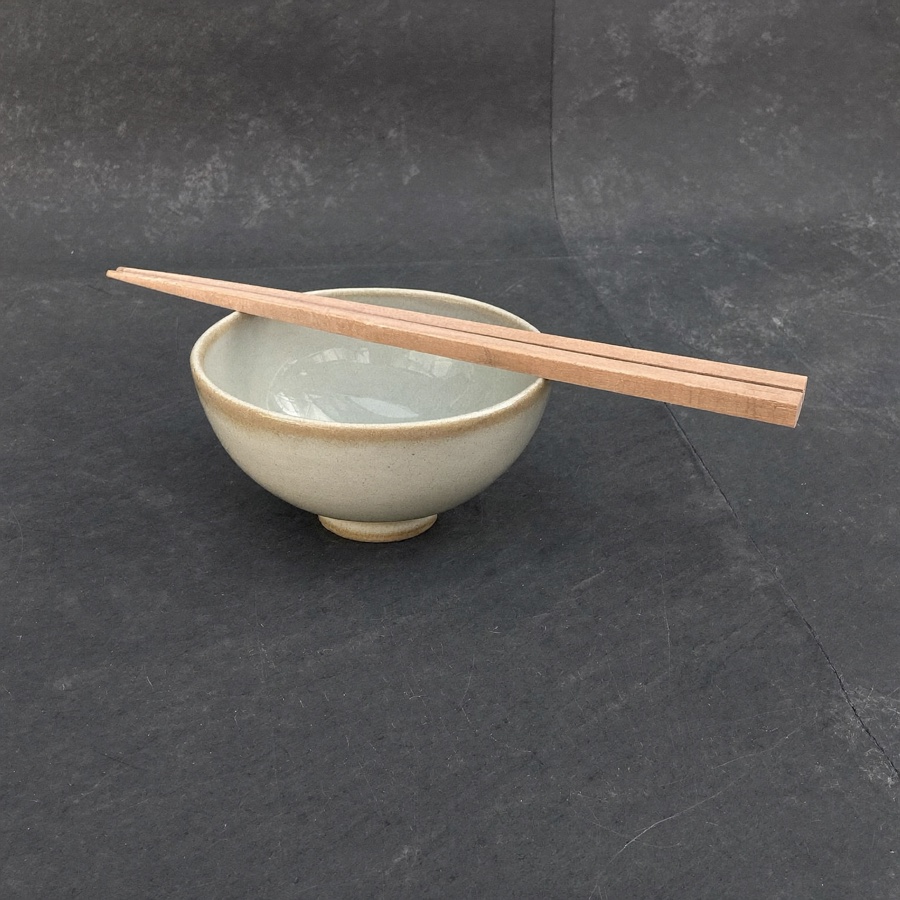

Your host at a Tokyo client lunch sets down his chopsticks with food still in the bowl: hara hachi bu. Hara hachi bu means eating until you are eight parts in ten full. English pages sell it as Okinawa’s longevity secret. The oldest versions we traced are a Zen text from about 1300 and a 1713 health manual.
Our newsroom read 14 popular English pages on the practice, logged 29 claims about its origin, Okinawan diets and lifespans and how fullness works, and checked each against the studies, Japanese sources and latest official counts.
Japanese health ideas often reach English with a better story attached. Our trace of the ikigai meaning found six of 21 pages presenting a four-circle chart, labelled in 2014, as a Japanese idea. Our check of 10,000 steps a day found the target began as the name of a 1965 Japanese pedometer, and that 13 of 23 popular claims trace to a study or guideline.
Of 29 claims about hara hachi bu on 14 popular pages, checked on 23 November 2026, six trace to a study or primary text, 13 have no source, seven are out of date and three overstate.
The most repeated claim is the origin. Eight of the 14 pages call the practice Confucian or credit it to Confucius. Seven give no text for it. The one that does, Big Think, quotes two lines of the Analects that counsel against eating to excess. Neither line mentions eight parts in ten.
Three pages put Okinawan intake at about 1,800 to 1,900 calories a day, in the present tense. The comparison Wikipedia cites from a 2007 study dates from about 1950, when Okinawans ate 1,785 calories against 2,068 for Japan as a whole.
Four claims on three pages put Okinawa first in the world for long life. In 2020 Okinawan men ranked 43rd of 47 Japanese prefectures for life expectancy, and the 2026 centenarian count left Okinawa out of the top five.
| Topic | Claims | Traced | No source | Overstated | Out of date |
|---|---|---|---|---|---|
| Where it comes from | 13 | 4 | 8 | 1 | 0 |
| What Okinawans eat | 5 | 1 | 0 | 1 | 3 |
| Okinawan life expectancy and centenarians | 5 | 0 | 1 | 0 | 4 |
| How long fullness takes to register | 4 | 0 | 4 | 0 | 0 |
| Calorie restriction and long life | 2 | 1 | 0 | 1 | 0 |
| Total | 29 | 6 | 13 | 3 | 7 |
Hara hachi bu is a Japanese instruction to stop eating at about 80 percent full. The full proverb, hara hachi bun me, translates as eat until you are eight parts out of ten full, according to Wikipedia. It sets a feeling of fullness as the stopping point and names no calorie count.
In Okinawa the phrase is said before meals, according to Blue Zones and Tatler Asia. The Okinawa Centenarian Study’s study page, which reports examining more than 900 centenarians, calls it a cultural form of calorie control.
We found no Confucian text that gives the 80 percent rule. Eight of the 14 pages call it Confucian, and the only one to quote a source, Big Think, offers two Analects lines on not eating to excess. The earliest versions we traced are a Zen text from about 1300 and a Japanese health manual of 1713.
Big Think in 2018 called it “a teaching attributed to Confucius” and conceded its origins are hard to pin down. Its two Analects lines have Confucius never eating his fill beside a mourner and refusing to eat in excess. Both counsel restraint. Neither gives a fraction.
The other seven pages state the label and stop. Five call it Confucian-inspired, The Conversation calls it a Confucian teaching and Eat This, Not That calls it a saying by Confucius.
The Zen source is older and more exact. In The Three Pillars of Zen, Philip Kapleau records the teacher Hakuun Yasutani citing the Zazen Yojinki, a text from around 1300, which told students to eat no more than “eighty percent of their capacity,” according to Wikipedia. The page adds that the proverb reinforced it.
The health manual came four centuries later. Kaibara Ekiken’s Yojokun, published in 1713, urges readers to eat a balanced diet and stop at eight-tenths full, as the Japanese magazine Serai summarised it in December 2023. The Japan Foundation for Aging and Health dates the book to 1712, and says he wrote it at 83 and lived to 85.
NextShark and Upworthy both credit the book. Upworthy adds that its author lived to 83. Wikipedia dates his life from December 1630 to October 1714, which makes 83 by the Western count, while the foundation gives 85.
Cleveland Clinic’s 2019 page says the practice “originated in the city of Okinawa,” with no source.
The Blue Zones Okinawa story is Dan Buettner’s account of Okinawa as one of the places where people live longest, set out in his 2008 book The Blue Zones, according to Wikipedia. His website presents hara hachi bu as a “cultural practice of calorie restriction and mindful eating” and part of the reason Okinawa has so many centenarians.
That Blue Zones page, dated December 2017 under Buettner’s name, says Okinawans eat about 1,900 calories a day, have the world’s highest life expectancy after 65 and the world’s highest share of centenarians. It cites no study for any of the three.
The research underneath is the Okinawa Centenarian Study. A 2006 review in Biogerontology argued that older Okinawans probably followed mild calorie restriction for about half their adult lives. A 2014 review in Current Opinion in Clinical Nutrition and Metabolic Care put it at about 10 to 15 percent and concluded it likely contributed to their long lives, which supports the Blue Zones line.
All 29 claims, with our verdict and what we checked each against.
| Page | Claim (our words) | Verdict | Checked against |
|---|---|---|---|
| Wikipedia | A Confucian-inspired teaching | No source | No Confucian text with an 80 percent rule found |
| Wikipedia | Okinawans typically eat 1,800 to 1,900 calories a day | Out of date | 1,785 calories, circa 1950 |
| Blue Zones | A Confucian-inspired adage said before meals | No source | No Confucian text with an 80 percent rule found |
| Blue Zones | Okinawans eat about 1,900 calories a day | Out of date | 1,785 calories, circa 1950 |
| Blue Zones | Okinawans over 65 have the world’s highest life expectancy | Out of date | Men 43rd of 47 prefectures in 2020 |
| Blue Zones | Okinawa has a higher share of centenarians than anywhere | Out of date | Not in Japan’s top five, 2026 |
| Blue Zones | Calorie restriction is part of the reason for Okinawa’s centenarians | Traced | 2014 review: mild restriction likely contributed |
| CNBC | A Confucian-inspired phrase | No source | No Confucian text with an 80 percent rule found |
| CNBC | The brain takes 15 to 20 minutes to register fullness | No source | No study named |
| CNBC | Okinawa has 68 centenarians per 100,000 people | No source | No year or source given |
| The Conversation, via ScienceAlert | Comes from a Japanese Confucian teaching | No source | No Confucian text with an 80 percent rule found |
| The Conversation, via ScienceAlert | Evidence suggests it can cut daily calorie intake | Traced | 2015 survey of 330 adults |
| Tatler Asia | A Confucian-inspired practice, recited in Okinawa | No source | No Confucian text with an 80 percent rule found |
| HeraldNet | A Confucian-inspired adage | No source | No Confucian text with an 80 percent rule found |
| Eat This, Not That | An ancient saying by Confucius | No source | No Confucian text with an 80 percent rule found |
| Eat This, Not That | It takes almost 20 minutes to feel full | No source | A dietitian quoted, no study named |
| Big Think | A teaching attributed to Confucius, with two Analects lines | Overstated | The lines counsel moderation and give no fraction |
| Big Think | A 14th-century Zen text advised eating no more than 80 percent | Traced | Kapleau’s record of the Zazen Yojinki |
| Big Think | Okinawa has the world’s longest life expectancy | Out of date | Men 43rd of 47 prefectures in 2020 |
| NextShark | Dates to the Edo period and Kaibara’s book | Traced | Yojokun, 1713 |
| Upworthy | Comes from a 300-year-old book by Kaibara | Traced | Yojokun, 1713 |
| Upworthy | The book’s author lived to 83 | Traced | Born December 1630, died October 1714 |
| Upworthy | Okinawans eat about 1,900 calories a day | Out of date | 1,785 calories, circa 1950 |
| Cleveland Clinic | Originated in the city of Okinawa | No source | Earliest texts found: Zen, about 1300; Yojokun, 1713 |
| Dr Mark Hyman | Men who always practise it eat 500 fewer calories | Overstated | Measured gap about 450, men, one survey |
| Adventist Record | Okinawa has a higher share of centenarians than anywhere | Out of date | Not in Japan’s top five, 2026 |
| Adventist Record | The body takes 20 minutes to register enough | No source | No study named |
| ActiveSG Circle | Stomach stretch receptors take about 20 minutes to signal | No source | No study named |
| ActiveSG Circle | Calorie restriction reliably prolongs life | Overstated | Human trial measured risk factors only |
Thirteen of the 29 claims give nothing a reader could check. Eleven of those 13 are the Confucius label and the 20-minute line, repeated from page to page in nearly the same words.
The pattern is familiar from other borrowed ideas. Our trace of amor fati found seven of 22 pages presenting Nietzsche’s phrase as Stoic without naming him. Our check of the memory palace found eight of 16 popular claims trace to a study or Roman text, and five say more than the evidence.
Around 1950, Okinawans ate about 1,785 calories a day against 2,068 for Japanese people as a whole, according to dietary data summarised on Wikipedia’s Okinawa diet page, which cites a 2007 paper by Willcox and colleagues in the Annals of the New York Academy of Sciences. That is about 14 percent less, measured more than 70 years ago.
Three pages give a figure close to it as though it described today. Wikipedia says Okinawans “typically consume about 1,800 to 1,900” kilocalories a day, Blue Zones says about 1,900 and Upworthy repeats it. We counted all three as out of date.
The plate was different too. Circa 1950 the Okinawan diet held 30 percent of the sugar and 15 percent of the grains of the average Japanese diet, which makes it hard to credit the stopping rule alone.
Diet stories about named people drift the same way. Our check of the Tom Brady diet traced 15 of 20 famous rules to Brady or his chef, and he has since broken four.
No. Okinawa longevity has slipped since 2000. Okinawan men fell to 26th of 47 prefectures that year, according to Wikipedia, and to 43rd in 2020, as the South China Morning Post reported from that year’s survey. Okinawan women, top seven times between 1975 and 2005, were 16th in 2020.
Nippon.com’s tables from health ministry data put Okinawan men’s 2020 life expectancy at 80.73 years, fifth lowest in Japan. Wikipedia credits the decline to many factors, including Westernization.
The centenarian count has moved too. On 1 September 2026 Japan had 107,677 centenarians, and the five prefectures with the most per 100,000 residents were Shimane, at 186.7, then Kochi, Tottori, Kagoshima and Nagano, according to health ministry figures reported by Nippon.com. Okinawa was not among them.
Blue Zones, Big Think and the Adventist Record still put Okinawa first in the world. CNBC gives 68 centenarians per 100,000 with no year or source.
Old findings get retold as current. Our check of The Millionaire Next Door, 30 years on, found six of its 11 headline claims held against later data, and four, including its famous net worth formula, remain untested.
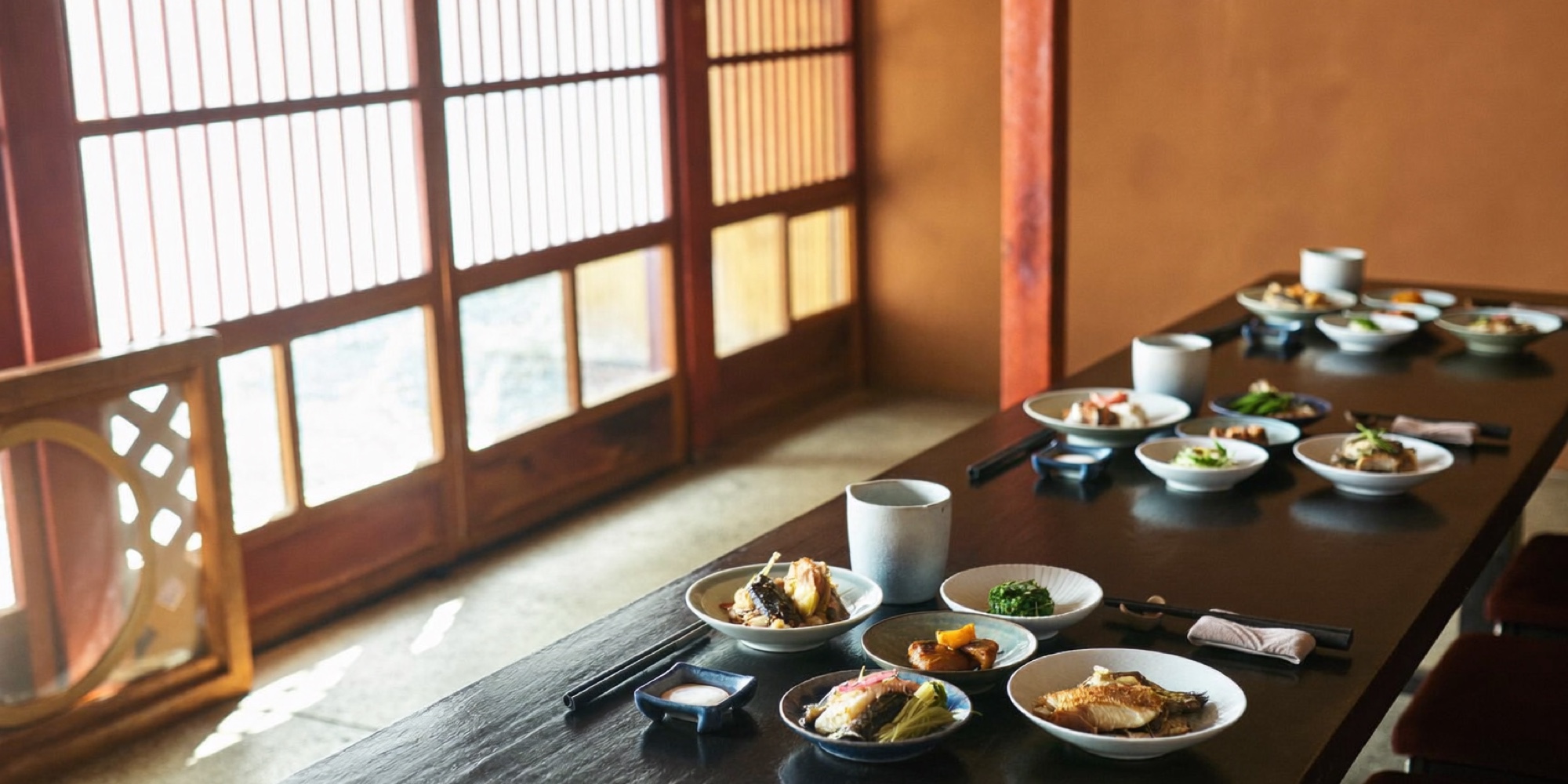
Barely. The one study of the rule itself that we found surveyed 330 users of a health-management website in November 2012. Men who said they always ate until 80 percent full took in 1,997 calories a day on average, against 2,449 for men who rarely or never did, Fukkoshi, Akamatsu and Shimpo reported in Eating Behaviors in 2015.
That is a gap of about 450 calories, among men, in a survey that cannot show cause. Dr Mark Hyman’s site rounds it up to 500, which we counted as overstated. The dietitian Aisling Pigott, writing in The Conversation in 2025, says the evidence suggests the practice can cut intake and calls the research limited.
An older survey looked at the opposite habit. Among 3,287 Japanese adults, those who said they ate until full had about twice the odds of being overweight, 2.00 for men and 1.92 for women, Maruyama and colleagues reported in the BMJ in 2008. Eating until full and eating quickly together raised the odds about threefold.
We found no trial that assigned people to stop at 80 percent. The nearest test of eating less is CALERIE, a two-year trial in 218 healthy adults whose participants aimed to cut intake by 25 percent and managed 12 percent, the NIH said in 2015. It missed its primary metabolic endpoints but moved risk factors for age-related disease. A later analysis, reported in 2019 in the NIH Record, found they kept off about 10 percent of their weight and improved blood pressure and cholesterol.
CALERIE measured risk factors, not lifespan. The evidence on calorie restriction longevity in people stops short of years lived, and the NIH said more had to be learned before any dietary advice. ActiveSG Circle’s line that calorie restriction is a reproducible way of prolonging life is the third overstated claim in our sample.
Four pages in our sample say fullness takes about 20 minutes to register, and none names a study. CNBC says research shows 15 to 20 minutes, ActiveSG Circle credits the stomach’s stretch receptors, Eat This, Not That quotes a dietitian and the Adventist Record states it outright. We marked all four untraced.
A 2010 Harvard Health post by Ann MacDonald explains that the brain relies on signals from digestive hormones, and that eating too fast may not give them time to work. It gives no number of minutes.
Popular books stretch research the same way. Of 16 claims we traced in Cues and the TEDx talk behind our guide to Vanessa Van Edwards books, six match a published study as she describes it, and five overstate one.
We give no diet advice. The evidence is narrow: in one survey men who stopped at 80 percent ate less, and in another people who ate until full were more often overweight. Okinawa’s long lives belonged to a generation with a different diet.
What a working life can borrow is the form of the rule, a stopping point set in advance and said aloud before the meal. Of 20 claims about the Warren Buffett diet we traced, 14 are in his own words, including the McDonald’s breakfast he picks from three prices.
The opposite is a full protocol. Bryan Johnson’s Blueprint runs to 53 steps a day by our count, and 14 of them name nothing to buy.
Check a story before you repeat it. Our guide to Michael Lewis books counts 18 titles, with Moneyball and The Big Short splitting six lists. Sayings outgrow their sources: of the 20 most popular titles under Jim Rohn’s name on Goodreads, six were print books from his lifetime, our count of Jim Rohn books found.
For the people around the table, our count of Dale Carnegie books found 10 titles, with both Goodreads reader pages starting at How to Win Friends and Influence People. Five of nine lists in our guide to John Maxwell books start with The 21 Irrefutable Laws of Leadership, and 11 of the 13 Patrick Lencioni books teach through a fable.
On 23 November 2026 our newsroom read 14 English pages on hara hachi bu from US search results for the phrase and related searches: an encyclopedia, the Blue Zones site, a hospital health library, a Singapore sport portal, magazines, news sites and a doctor’s site. We logged 29 checkable claims on origin, Okinawan calories and longevity, fullness timing and calorie restriction.
A claim was traced if a study, official count, primary text or reference work supports it as stated; no source if the page gives none and we found none; overstated if a real source says less; out of date if it described an earlier period and the latest official figures differ.
We read The Conversation’s piece through its ScienceAlert republication because the original would not load, and excluded Women’s Health, which refused our tools. Claims about Japan in general and tips with no factual content were left out. The full dataset is available on request.
The one study of the rule we found, a 2012 survey of 330 users of a health-management website, found that men who always ate until 80 percent full took in about 450 fewer calories a day than men who rarely or never did. It was a survey, so it cannot show cause.
No. In Japan’s count of 1 September 2026, the prefectures with the most centenarians per 100,000 people were Shimane, Kochi, Tottori, Kagoshima and Nagano, and Okinawa was not in the top five. Okinawan men ranked 43rd of 47 prefectures for life expectancy in 2020.
The earliest written 80 percent rule we traced is in the Zazen Yojinki, a Zen text from around 1300, as Philip Kapleau recorded it. Kaibara’s Yojokun repeated the advice to stop at eight-tenths full in 1713. We found no Confucian text that gives the figure.
Eight of the 14 pages credit Confucius without a text, and the 1,785-calorie figure behind the Okinawa story was measured around 1950.
Written by
Editor of The Executive Insight. Writes about leadership, decision-making and the parts of building a business that nobody puts in the plan.

You have heard that Warren Buffett drinks five Cokes a day and lets the stock market pick his breakfast. Both are his own words. The Warren Buffett diet, as he tells it, is Coca-Cola, a McDonald’s breakfast, ice cream, potato sticks and steak, settled by the age of six. Some of the rest came from […]

You have seen the schedule pinned to a productivity blog: up at four, write, run, bed at nine. It belongs to Haruki Murakami, and it travels with Murakami What I Talk About When I Talk About Running, his 2007 memoir. The clock times come from a 2004 interview, and he keeps them only while writing […]
The honest answer to how to increase willpower is that you mostly cannot, at least not in the way the question assumes. What you can do is arrange your day so that you rarely need it. The people who look disciplined are usually not resisting more than you are. They have fewer things to resist. […]
You have heard Jay Shetty on a podcast and want one of his books on your desk before a hard quarter. There are two Jay Shetty books, Think Like a Monk (2020) and 8 Rules of Love (2023), both from Simon & Schuster. For work, […]

Someone on your sales floor keeps quoting Jordan Belfort, and you want to know which book they mean. There are four Jordan Belfort books: two memoirs, a sales manual and an investing guide. Six of the nine lists we counted start with The Wolf of […]

It is three on a Tuesday, your calendar has a rare empty hour, and sitting still feels like a mistake. Dolce far niente is the Italian name for the opposite feeling: pleasant idleness, enjoyed without guilt. Merriam-Webster dates its first known use in English to […]
Someone in the meeting reels off the quarter’s figures without notes, and a colleague says she has a photographic memory. Photographic memory, the ability to recall a page or a scene in exact detail long after seeing it, has never been shown in a healthy […]
Two numbers followed her through the obituaries. Forbes put Dolly Parton net worth at $450 million, in an estimate dated 3 June 2025, and Celebrity Net Worth says $650 million. Most of either figure rests on two things she built and kept: half of the […]
You heard a Jim Rohn line at a sales kickoff and want the book it came from. Jim Rohn books are fewer than the shelf suggests: of the 20 most popular titles under his name on Goodreads, six were print books published in his lifetime. […]

Your watch is still nagging at 9pm, 3,000 steps short of a goal you never chose. The 10000 steps a day target began as the name of a 1965 Japanese pedometer, the manpo kei, or “10,000 steps meter”. A 2025 review of 57 studies found […]
You have a team that is stuck, and someone has told you to read Lencioni. His Wikipedia bibliography lists 13 Patrick Lencioni books, from The Five Temptations of a CEO in 1998 to The 6 Types of Working Genius in 2022, and 11 of them […]
A colleague sends you the four-circle chart before your career review: what you love, what you are good at, what the world needs, what you can be paid for. The ikigai meaning in Japanese is simpler. Ikigai means a reason for living, often a small […]
You have a client dinner on Thursday and a colleague swears by one author on reading people. Vanessa Van Edwards books number six by our count, and three matter for work: Captivate (2017), Cues (2022) and Conversation (October 2026). For a room full of strangers, […]
The weekly Executive Briefing: insights, books, tools, and media opportunities worth your attention — curated and distilled into 5 minutes.

You’re in. Your free guide to the best AI tools is on its way to your inbox, and your first issue will follow soon.
Can’t find the email? Check your Promotions or Spam folder.
Your request has been successfully submitted. Please wait for a reply from our manager, he will contact you as soon as possible.
Your copy of The Executive Insight Book Challenge List is downloading now. Enjoy the list — and while you're here, take a look at our latest interviews.