Subscribe to outperform
The weekly Executive Briefing: insights, books, tools, and media opportunities worth your attention — curated and distilled into 5 minutes.

It is three on a Tuesday, your calendar has a rare empty hour, and sitting still feels like a mistake. Dolce far niente is the Italian name for the opposite feeling: pleasant idleness, enjoyed without guilt. Merriam-Webster dates its first known use in English to 1814, and the closest Latin parallel is a letter Pliny the Younger wrote around 107 AD.
Most pages that explain it go further. Our newsroom read 18 of them and logged 26 claims about where it comes from, what Eat Pray Love did with it and what it does for your health. We checked each one against dictionaries, Pliny’s letter in Latin and in a public-domain translation, and Italian-language sources we translated ourselves.
Of 26 claims about dolce far niente on 18 popular pages we read on 23 November 2026, 10 trace to a dated source, three are overstated, 12 have no source we could find and one is contradicted.
All six claims about Eat Pray Love hold up: Elizabeth Gilbert’s memoir came out in 2006, and the film, which uses the phrase in a barber-shop scene, followed in 2010. The memoir’s own line on it uses a sister phrase, il bel far niente. Four of the 14 claims about origin and age also trace, including the Italian magazine Panorama’s note that Pliny wrote about the pleasure of doing nothing in the first century.
Health is where the sourcing runs out. Five claims tie the idea to wellbeing, a lower risk of burnout or a longer life, and none names a study we could check. Seven of the 14 origin claims have no source either: Lord Byron, Casanova twice, the Renaissance, Rome, centuries of Italian practice and a Cicero line with no work named.
The contradicted claim, from The Business Standard, calls dolce far niente a Latin proverb. The words are Italian, and Pliny’s Latin uses different ones.
Famous phrases collect grander parents than they earned. Our trace of amor fati found seven of 22 pages handing Nietzsche’s phrase to the Stoics without naming him. Our check of the ikigai meaning found six of 21 pages presenting a 2014 Venn diagram as a Japanese idea.
| What we counted | Result |
|---|---|
| Claims traced to a dated source | 10 of 26 |
| Claims overstated | 3 of 26 |
| Claims with no source we could find | 12 of 26 |
| Claims contradicted | 1 of 26 |
| Origin and age claims that trace | 4 of 14 |
| Eat Pray Love claims that trace | 6 of 6 |
| Health claims that trace | 0 of 5 |
| Pages saying Italians rarely use the phrase | 4 of 18 |
| Pages presenting it as something Italians say or live by | 5 of 18 |
The dolce far niente meaning is pleasant idleness enjoyed without guilt. Merriam-Webster defines it as “pleasant relaxation in carefree idleness” and gives the literal Italian as “sweet doing nothing”. Dictionary.com renders the words as “(it is) sweet to do nothing”. In English it names a mood, close to a holiday afternoon with nothing booked.
The Merriam-Webster entry lists the first known use as 1814. Wiktionary calls the phrase borrowed from Italian and quotes W. S. Gilbert’s comic opera Iolanthe, from 1882. An 1890s edition of Brewer’s Dictionary of Phrase and Fable files far niente as an “Italian phrase”, glosses it as “The Latin otium”, and defines dolce far niente as the sweet enjoyment of having nothing to do, a holiday.
The English gloss most pages use, the sweetness of doing nothing, is a loose rendering of three words: dolce, sweet; far, to do; niente, nothing.
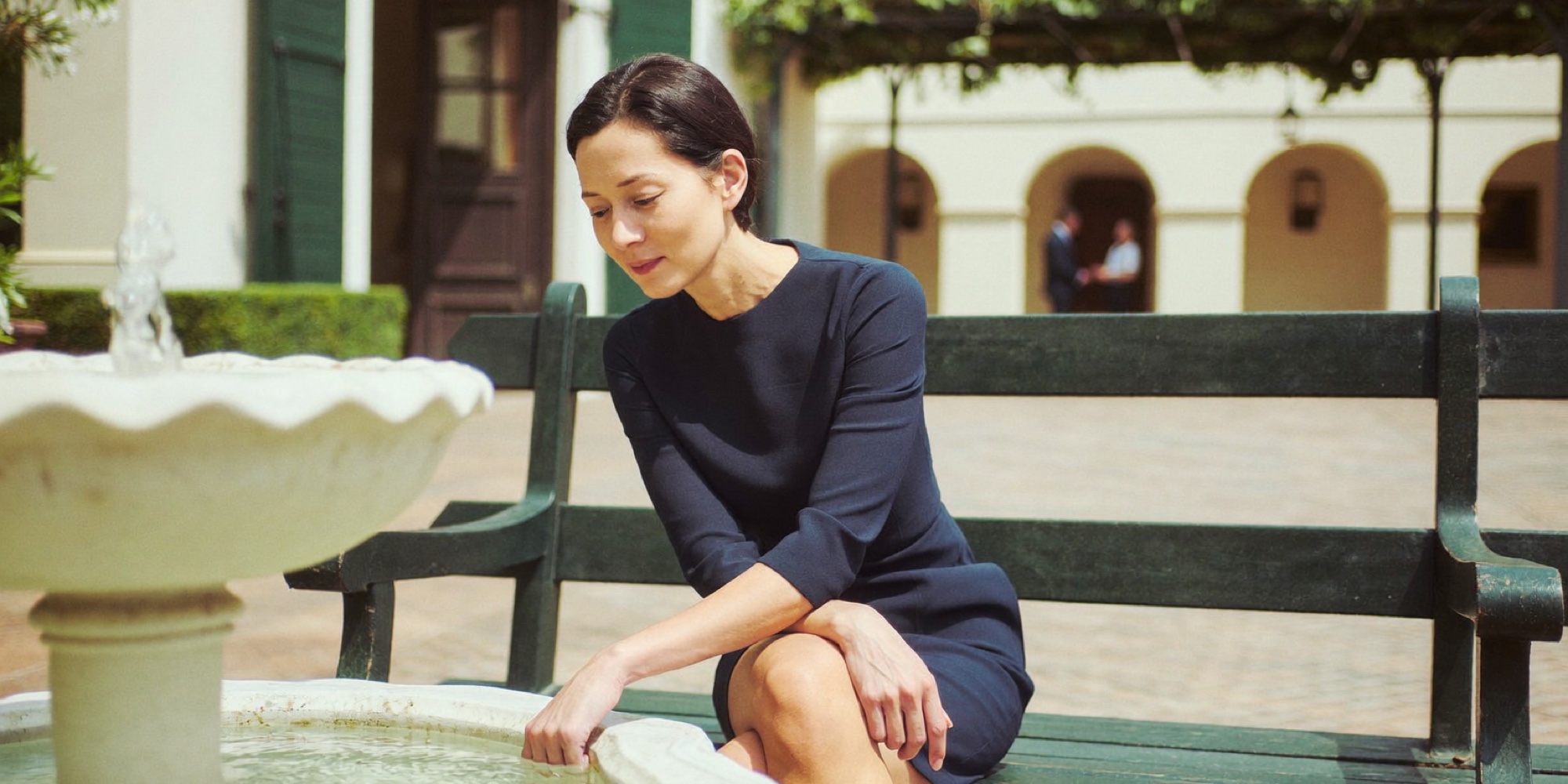
Dolce far niente comes from Italian, and English writers took it up in the early 19th century. The idea is far older. Around 107 AD, Pliny the Younger wrote to his friend Cornelius Ursus that he had long been too busy to know idleness, or that lazy but delightful state of doing nothing.
The letter is the ninth in Book 8 of his collected letters. In the Latin text at The Latin Library, the key clause reads “illud iners quidem, iucundum tamen nihil agere nihil esse”. The public-domain translation on Roman Letters, J. B. Firth’s of 1900 as reproduced by Attalus, dates the letter to about 107 AD and renders it as a “lazy but delightful state of inactivity where you hardly know you exist”.
Pliny was complaining. The letter opens with him saying it seems ages since he picked up a book or a pen. His pleasant idleness was something his friends’ business had taken from him.
The Italian words arrive much later, and outsiders recorded them first. A contributor to the Etymonline forum found Jean-Jacques Rousseau praising “le précieux far niente” in French, in a work written from 1776 to 1778. The same post cites a note in Etymonline’s entry, credited there to a writer named Walsh, that no major Italian author seems to use the phrase.
Italian writers did use it. The writer Antonio Caccianiga, who lived from 1823 to 1909, called a book of Venetian scenes Il dolce far niente, and Project Gutenberg holds the Italian text. Italiani.it, an Italian site, places the first traces of the expression in the accounts of foreign travellers in the 18th and 19th centuries, which fits the dictionary dates.
Origin stories drift the same way elsewhere. Our check of the memory palace found eight of 16 popular claims trace to a study or a Roman text, and five say more than the evidence.
The table lists every claim we logged, the page that makes it and how it checked out.
| Page | Claim | Mark |
|---|---|---|
| The Business Standard | A Latin proverb | Contradicted |
| The Business Standard | Origins traced back to ancient Rome | Overstated |
| The Business Standard | Studies show breaks improve focus and cut stress | No source |
| AARP | Pliny the Younger wrote of missing doing nothing | Traced |
| AARP | Term credited to Lord Byron | No source |
| AARP | Term credited to Casanova | No source |
| Panoramitalia (Globe and Mail) | First in print in Casanova’s memoirs | No source |
| International Living | A Cicero line on idling, no work named | No source |
| International Living | Roman otium passed down over 2,000 years | Overstated |
| Meer | Dates back to the Italian Renaissance | No source |
| Meer | Promotes wellbeing, creativity and productivity | No source |
| The Statesman | Part of the Italian secret to living longer | Overstated |
| The Varsity | Rome is the birthplace of the idea | No source |
| Culture Trip | Ingrained in the Italian psyche | No source |
| Culture Trip | A famous scene in Eat Pray Love (2010) | Traced |
| The Gentleman’s Journal | Italians invented idleness as an art centuries earlier | No source |
| Gratsi | Italy among the least at risk of burnout in Europe | No source |
| Italiani.it | First traces in 18th and 19th century travellers’ accounts | Traced |
| Panorama | The theme goes back to Pliny in the first century | Traced |
| Panorama | A temporary stand-by is good for the brain | No source |
| We the Italians | Related to the Roman idea of otium | Traced |
| Flashpack | Quotes Gilbert’s memoir on doing nothing | Traced |
| 203 Challenges | Made famous by the Eat Pray Love book and film | Traced |
| Daily Italian Words | A memorable scene in the Eat Pray Love film | Traced |
| LibreTexts (De Anza College) | Eat Pray Love (2010) tied it to Italian life | Traced |
| Psychology Today | The writer met the idea through Eat Pray Love | Traced |
Lifestyle stories grow as they are retold. Of 20 claims about the Warren Buffett diet we traced, 14 are in his own words, and his no-water story grew with each telling.
Eat Pray Love gave dolce far niente its modern audience. Elizabeth Gilbert’s memoir came out in 2006, and the film starring Julia Roberts followed in 2010. In its barber-shop scene, as Daily Italian Words describes it, her tutor explains the phrase and his friend teases Americans for working too hard to enjoy life. Six of our 18 pages make a claim about the book or the film, and all six check out.
The film opened in the United States on 13 August 2010. Culture Trip calls the scene famous, and its headline calls the idea the Italian art of doing nothing.
The memoir’s own Italian is a sister phrase, il bel far niente, according to a list of the book’s lines in BC Living. Flashpack quotes Gilbert’s line on it: “The beauty of doing nothing is the goal of all your work.”
An Italian course at De Anza College, published on LibreTexts, makes the useful correction. Such portrayals, it says, can suggest “that Italians naturally live without hurry or pressure”. It adds that attitudes to work and rest vary within Italy.
The version Pliny wanted cost nothing. Most millionaires in Thomas Stanley’s research spend well below their income; our summary of The Millionaire Next Door found six of the book’s 11 headline claims still hold against later data, though whether the habits cause the wealth is untested.
Some do. Il dolce far niente is correct Italian, and a 19th-century Italian writer used it as a book title. But four of our 18 pages say Italians rarely use the phrase, while five present it as something Italians say or live by.
The doubters include Daily Italian Words, which says the phrase is rarely used by Italians in a serious context and more often heard from English speakers. In Flashpack, the Sardinian travel writer Claudia Tavani says she would hardly call it a thing in Italy at the moment.
Italian-language writing is cooler still. Panorama’s 2025 piece says idleness is usually seen as a waste of time, in our translation. It lists Italian words for idlers, from scansafatiche to fannullone, and offers Domenico De Masi’s “ozio creativo”, creative idleness, which mixes work, study and play.
Panorama also prints Pliny’s line in Italian, ending “pur beato non fare e non essere nulla”. In our translation: yet blissful doing and being nothing. A 2021 review in L’Unione Sarda of Jenny Odell’s How to Do Nothing describes the guilt that arrives when we catch ourselves happy on a sofa, and the myth that only useful things deserve to exist, in our paraphrase.
National habits show up better in hours than in slogans. Our guide to the countries with the best work life balance uses the OECD’s measures, where only 0.3% of Dutch employees work 50 or more hours a week, the lowest rate in the OECD.
The travellers Italiani.it describes saw Italians idling in company, chatting unhurriedly in squares. Our count of Dale Carnegie books found 10 titles, both Goodreads pages led by How to Win Friends and Influence People. In Vanessa Van Edwards’ books, we found six of 16 research claims fit a published study.

Research says most people find doing nothing harder than they expect, and that free time helps only up to a point. In a 2014 study in Science, 12 of 18 men and 6 of 24 women gave themselves at least one electric shock during a short spell alone with nothing to do but think, after saying they would pay to avoid one.
The paper, by Timothy Wilson and colleagues, ran 11 studies. People typically did not enjoy spending six to 15 minutes in a room by themselves with only their thoughts. At home, 32% admitted cheating with music, a phone or by getting up.
Nicholas Buttrick and colleagues repeated the study with 2,557 participants at 12 sites in 11 countries, published in the Journal of Personality and Social Psychology in 2019. In every country, people assigned to do an everyday activity enjoyed it more than people asked to think for pleasure.
People also invent reasons to stay busy. Christopher Hsee, Adelle Yang and Liangyan Wang gave students a 15-minute break and a choice of where to drop off a survey for a sweet, as Chicago Booth Review describes. Only 32% chose the 12- to 15-minute walk when both spots offered the same sweet, and about 59% when the far one offered a different sweet.
The walkers reported feeling happier. The Association for Psychological Science quoted Hsee on the 2010 paper: “We have excessive energy and we want to avoid idleness.”
Free time has a ceiling too. Marissa Sharif, Cassie Mogilner and Hal Hershfield analysed 21,736 Americans in the American Time Use Survey and 13,639 working Americans. Wellbeing rose with free time, levelled off at about two hours a day and began to fall after five, according to the American Psychological Association.
In their experiments, more free time lowered wellbeing only when people spent it unproductively.
For scale, the Bureau of Labor Statistics’ American Time Use Survey for 2025 puts average leisure at 5.2 hours a day, half of it watching TV. The two measures differ, so the comparison is rough.
Health promises outrun their sources here too. Our check of 10,000 steps a day traced the target to the name of a 1965 Japanese pedometer and found 13 of 23 popular claims tie to a study or guideline.
The research gives a manager two working rules. People avoid idleness and invent busywork to escape it, so a short idle block has to be booked on purpose. And free time has a ceiling: in the survey data, wellbeing levels off at about two hours a day and falls after five, a drop the experiments found only when the time went on unproductive things.
Pliny’s version is the useful one, a short and deliberate gap after a hard stretch. The walk without a podcast counts, and so does the train ride with nothing to answer.
Cal Newport makes a related case in a rule he calls embrace boredom. Our Deep Work summary found only four of 13 summaries lay out all four of his rules. Eckhart Tolle allows for the calendar too; our Power of Now summary found seven of 16 summaries mention clock time, his carve-out for planning.
The excuse version is easy to spot. An evening lost to scrolling is the kind of unproductive time that, in Sharif’s experiments, turned extra free time into lower wellbeing. A team that postpones a hard call in the name of balance is avoiding a decision.
Our guide to John Maxwell books found five of nine lists start with The 21 Irrefutable Laws of Leadership, and suggests a new manager begin with The 5 Levels of Leadership. If a stuck team is the problem, our guide to Patrick Lencioni books found The Five Dysfunctions of a Team has 146,169 Goodreads ratings, more than his other 12 books combined.
Our guide to Jim Rohn books suggests 7 Strategies for Wealth & Happiness if money and time are your problem. If your idle hour lands on a long flight, our guide to Michael Lewis books counts 18 titles, with Moneyball and The Big Short splitting six lists.
On 23 November 2026 our newsroom read English and Italian pages that explain dolce far niente, drawn from US search results for the phrase and related searches, and counted 18 of them: magazines, newspapers, travel and language sites, a college course and personal essays. We logged 26 claims about the phrase’s origin and age, Eat Pray Love, Italian culture and health.
We marked a claim traced if it matched a dated source we fetched, overstated if a source exists but the claim goes further, no source if neither the page nor our search turned one up, and contradicted if a dated source says otherwise. Statements about whether Italians use the phrase were tallied separately and not marked.
We checked origins against Merriam-Webster, Dictionary.com, Wiktionary, an 1890s edition of Brewer’s dictionary and Pliny’s letter. Italian quotations are our translation. Dictionaries were the yardstick, not counted. Wikipedia’s page under the phrase covers a 1928 Finnish poem; Etymonline refused our tools. The full dataset is available on request.
Dictionary.com respells it dawl-che fahr nyen-te. Merriam-Webster’s American pronunciation gives niente three syllables, roughly nee-EN-tee.
La dolce vita means the sweet life. Merriam-Webster defines dolce vita as “a life of indolence and self-indulgence” and dates its first known English use to 1961, the year after Federico Fellini’s film La Dolce Vita opened in Italy. Dolce far niente is a moment of idleness; la dolce vita is a whole way of living.
No. Pliny wrote in Latin, around 107 AD, about a lazy but delightful state of doing nothing, in Book 8, letter 9 of his letters. The Italian phrase came much later, and its first known use in English is 1814.
Pliny missed his lazy hours because he had gone a long time without them. The free-time research agrees with him about the dose: in the American survey data, wellbeing rises to about two hours a day and starts to fall after five.
Written by
Editor of The Executive Insight. Writes about leadership, decision-making and the parts of building a business that nobody puts in the plan.
The Winston Churchill daily routine ran against the clock most people keep: breakfast and dictation in bed, a bath, a long lunch, an afternoon sleep, a second bath, a late dinner, and work that ended between one and four-thirty in the morning. The exact hours shifted between his Chartwell years and the war. Timetables like […]
You send a message to a colleague in Amsterdam at seven in the evening, and the reply arrives at nine the next morning, complete and on time. If you have wondered which countries with best work life balance are getting this right, the most reliable comparison comes from the OECD’s Better Life Index. On its […]
You land at 7 a.m., the meeting is at 9, and the shirt you packed comes out of the case with a crease across the chest that no amount of smoothing will remove. Learning how to fold a business shirt for travel takes ten minutes once, and it saves that morning every time after. The […]
You have heard Jay Shetty on a podcast and want one of his books on your desk before a hard quarter. There are two Jay Shetty books, Think Like a Monk (2020) and 8 Rules of Love (2023), both from Simon & Schuster. For work, […]
Your host at a Tokyo client lunch sets down his chopsticks with food still in the bowl: hara hachi bu. Hara hachi bu means eating until you are eight parts in ten full. English pages sell it as Okinawa’s longevity secret. The oldest versions we […]
Someone on your sales floor keeps quoting Jordan Belfort, and you want to know which book they mean. There are four Jordan Belfort books: two memoirs, a sales manual and an investing guide. Six of the nine lists we counted start with The Wolf of […]
Someone in the meeting reels off the quarter’s figures without notes, and a colleague says she has a photographic memory. Photographic memory, the ability to recall a page or a scene in exact detail long after seeing it, has never been shown in a healthy […]
Two numbers followed her through the obituaries. Forbes put Dolly Parton net worth at $450 million, in an estimate dated 3 June 2025, and Celebrity Net Worth says $650 million. Most of either figure rests on two things she built and kept: half of the […]
You heard a Jim Rohn line at a sales kickoff and want the book it came from. Jim Rohn books are fewer than the shelf suggests: of the 20 most popular titles under his name on Goodreads, six were print books published in his lifetime. […]
Your watch is still nagging at 9pm, 3,000 steps short of a goal you never chose. The 10000 steps a day target began as the name of a 1965 Japanese pedometer, the manpo kei, or “10,000 steps meter”. A 2025 review of 57 studies found […]
You have a team that is stuck, and someone has told you to read Lencioni. His Wikipedia bibliography lists 13 Patrick Lencioni books, from The Five Temptations of a CEO in 1998 to The 6 Types of Working Genius in 2022, and 11 of them […]
A colleague sends you the four-circle chart before your career review: what you love, what you are good at, what the world needs, what you can be paid for. The ikigai meaning in Japanese is simpler. Ikigai means a reason for living, often a small […]
You have a client dinner on Thursday and a colleague swears by one author on reading people. Vanessa Van Edwards books number six by our count, and three matter for work: Captivate (2017), Cues (2022) and Conversation (October 2026). For a room full of strangers, […]
The weekly Executive Briefing: insights, books, tools, and media opportunities worth your attention — curated and distilled into 5 minutes.

You’re in. Your free guide to the best AI tools is on its way to your inbox, and your first issue will follow soon.
Can’t find the email? Check your Promotions or Spam folder.
Your request has been successfully submitted. Please wait for a reply from our manager, he will contact you as soon as possible.
Your copy of The Executive Insight Book Challenge List is downloading now. Enjoy the list — and while you're here, take a look at our latest interviews.