Subscribe to outperform
The weekly Executive Briefing: insights, books, tools, and media opportunities worth your attention — curated and distilled into 5 minutes.



You have 45 minutes before the first call and a watch that keeps telling you to slow down. Zone 2 training is steady aerobic exercise at an effort you can hold for an hour while still speaking in full sentences, which most published guides put at 60 to 70 percent of maximum heart rate.
Peter Attia, the physician and podcast host, recommends three to four hours a week. The US government asks for 150 to 300 minutes of moderate activity in total. On 8 November 2026 our newsroom read 17 zone 2 guides, Attia’s own pages and the official guidelines, and counted how each defines the zone and how much it asks for.
Of 17 zone 2 training guides we read, 14 define the zone as 60 to 70 percent of maximum heart rate; of the nine that give session length and frequency, eight start below the 150-minute US guideline floor.
The guides agree on how the zone feels. All 17 describe some form of conversation test and nine tie the zone to lactate. Nine hand you 220 minus your age to estimate maximum heart rate, one offers sex-specific equations, and seven give no formula. The 180-minus-age rule published by Phil Maffetone appears in none of them.
They disagree on the dose, mostly by leaving it out. Nine give both a session length and a weekly frequency. At the low end, eight of those nine come to less than 150 minutes a week; at the top end, eight clear it. Only one states a weekly zone 2 total.
Zone 2 training is aerobic exercise at the highest steady effort you can hold without lactate building up in the blood. In practice it is a brisk walk, an easy jog, or a bike or rower at a pace you could keep for an hour, breathing harder than at rest but still able to talk in full sentences.
The Cleveland Clinic puts it this way: “In zone 2, your heart rate is at 60% to 70% of what your maximum heart rate could reach during an activity.” REI runs higher, at about 65 to 75 percent. WHOOP uses 60 to 70 percent of heart rate reserve (maximum minus resting), though a later line gives 60 to 70 percent of max.
The sport scientists draw the line elsewhere. A 2025 commentary in the International Journal of Sports Physiology and Performance, by 14 authors, concluded that zone 2 “should preferably be performed at intensities located immediately below the first lactate or ventilatory threshold”. The panel added that the expected adaptations “might not be unique to zone 2”.
James Clear’s case for systems, covered in our Atomic Habits summary, matters more here than any definition: the dose that counts is the one you repeat on a wet Tuesday in February.
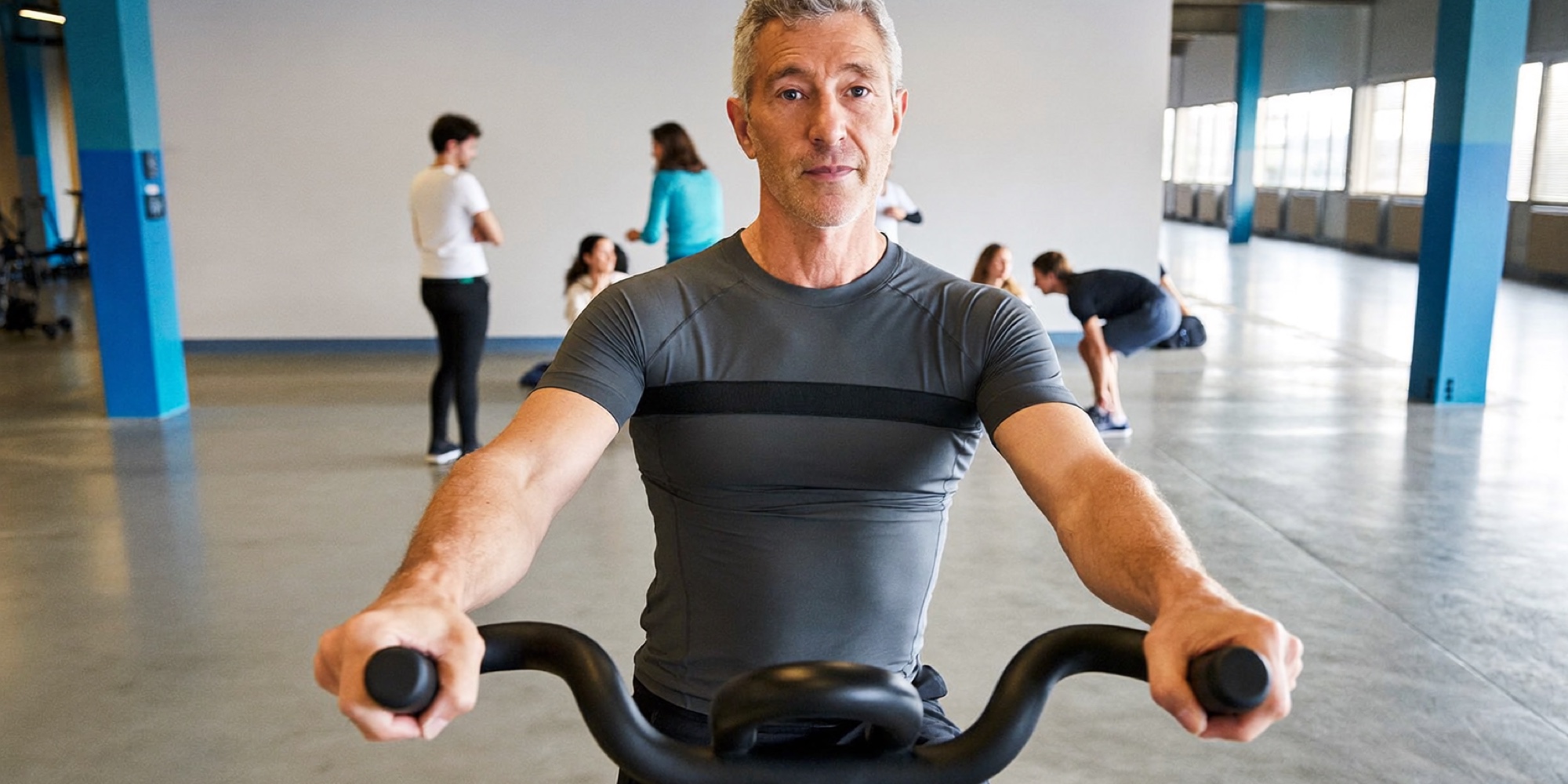
Use the talk test. Move at a pace where you can speak a full sentence without gasping but could not comfortably sing. If you have to pause mid-sentence for breath, slow down. Then check a heart rate reading of roughly 60 to 70 percent of your estimated maximum, and trust the sentence when the two disagree.
Every guide in our sample describes a version of this. HPRC, the US military’s human performance resource, describes “a pace where you can carry on a conversation even though your breathing is heavier”. University Hospitals in Ohio says you can speak “three to five words without taking a breath, but you’re unable to sing.”
One guide breaks ranks. Gymshark says that in zone 2 “you can talk to your friend or sing along to your favorite song as you go”. The CDC’s page on measuring intensity draws the opposite line for moderate effort: “a person doing moderate-intensity aerobic activity can talk, but not sing, during the activity.” If you can sing, you are probably going too easy.
Nine guides give you 220 minus your age. Marathon Handbook offers sex-specific equations, 208.609 minus 0.716 times age for men. REI advises against age-based formulas and says, “There is no universal max heart rate.” Maffetone’s 180 Formula says “subtract your age from 180”, then adjust.
Run the numbers for a 50-year-old man. On 220 minus age, the top of zone 2 is 119 beats a minute. On Marathon Handbook’s equation it is 121. On the 180 Formula, before adjustment, the ceiling is 130. An 11-beat spread for the same person is why the sentence you can or cannot finish is the better instrument.
Attia lands in the same place. His free article on zone 2 says “fitness trackers’ heart rate zones are too inconsistent between users and between exercise types”, and describes zone 2 as an effort at which you can still speak in complete sentences, “but you’d rather not carry on a conversation”.
Block the slot first. Our piece on Cal Newport’s time blocking covers why a block on the calendar survives the week when an intention does not, and our morning exercise routine fits 20 to 30 minutes before the first meeting.
The Peter Attia zone 2 protocol is about four sessions a week, three to four hours in total, at the highest effort that keeps blood lactate below 2 millimoles per litre. His show notes add two hard zone 5 sessions and three to five strength sessions a week, and suggest that beginners start at about two hours a week.
The figures come from his show notes for an episode on zone 2 and zone 5 training: “Peter does zone 2 about four times per week”, “Ideally: 3-4 hours per week”, and “For a beginner: ~2 hours a week is a good place to start”. They add that “you probably can’t do too much zone 2” and set his target as a finger-stick lactate reading of 1.8 or 1.9. His AMA 19 page defines zone 2 as the highest output you can sustain “while keeping your lactate level below two millimole per liter”.
Four sessions adding to three or four hours works out at 45 to 60 minutes each, by our arithmetic, before the zone 5 and strength work.
The half that travels less is on the free page. With six hours a week, Attia would recommend “roughly four of those hours in Zone 2 and two in higher intensity work.” With two hours, he writes, “I might skip a dedicated Zone 2 training altogether”, and run two high-intensity sessions, each opening with 10 to 15 minutes of zone 2 as a warm-up.
Only one of our 17 guides mentions him, a Houston community centre page that spells his name Atia. Beside the Mark Wahlberg morning routine, a workout by four after a wake time as early as 2:30, his week looks modest. Beside the Robin Sharma 5 AM Club, whose 20/20/20 formula gives exercise 20 minutes, it looks enormous: 20 minutes on five mornings is 100 minutes, under the federal floor.
The table is the dataset behind the headline. “Weekly minutes” is our arithmetic, session length times weekly frequency at the low and high ends, where the guide gives both. The last three rows are references outside every count.
| Guide | Type | HR band | Lactate | Max HR formula | Session | Per week | Weekly minutes |
|---|---|---|---|---|---|---|---|
| Houston Methodist | Hospital | 60 to 70% | No | 220 minus age | Not stated | Not stated | Cites 150 guideline |
| Levels | Health tech | 60 to 70% | Yes | 220 minus age | 20+ min | Not stated | Cites 150 guideline |
| HPRC | Government | 60 to 70% | No | None | 30 to 60 min | 2 to 3 | 60 to 180 |
| Gymshark | Retailer | 60 to 70% | No | 220 minus age | 45 to 60+ min | 3 to 4 | 135 to 240 |
| ROUVY | Cycling app | 60 to 70% | Yes | 220 minus age | 60 to 120 min | 3 to 4 | 180 to 480 |
| Cleveland Clinic | Hospital | 60 to 70% | No | 220 minus age | 30+ min | Not stated | Cites 150 guideline |
| REI | Retailer | 65 to 75% | Yes | None, advises against | 20 to 60 min | 2 to 3 | 40 to 180 |
| WHOOP | Wearable maker | 60 to 70% of reserve | Yes | Heart rate reserve | 45 to 60 min | 3 to 4 | 135 to 240 |
| Marathon Handbook | Running media | 60 to 70% | Yes | Sex-specific | Not stated | Not stated | 60 to 75% of running volume |
| University Hospitals | Hospital | 60 to 70% | No | 220 minus age | Not stated | Not stated | Not stated |
| Runstreet | Run coach | 60 to 70% | No | None | 15 to 60 min | 2 to 5 | 30 to 300 |
| ERJCC Houston | Community centre | 60 to 70% | Yes | None | 45 min | 2 to 3 | 90 to 135 |
| Live Science | Science media | 60 to 70% | Yes | 220 minus age | Not stated | Not stated | 80% of training in zones 1 and 2 |
| Juniper | Weight-loss programme | 60 to 70% | No | 220 minus age | 30+ min | 2 to 4 | 60 to 300; states 3 to 5 hours, start at 2 |
| IDEA | Trainer association | None given | Yes | None | Not stated | 1 to 2 | Not stated |
| Rogue Fitness | Equipment maker | 60 to 70% | Yes | None | 30 to 90 min | 2 to 4 | 60 to 360 |
| The Manual | Lifestyle media | 60 to 70% | No | 220 minus age | Not stated | Not stated | “Most of your weekly training” |
| Peter Attia (reference) | Physician, podcast | None, lactate under 2 mmol/L | Yes | None | Not stated | About 4 | 180 to 240 ideal, 120 to start |
| HHS guidelines (reference) | Government | Moderate, 3 to under 6 METs | No | None | Any | Spread through week | 150 to 300 |
| Maffetone 180 Formula (reference) | Coach | Ceiling of 180 minus age | No | 180 minus age | Not stated | Not stated | Not stated |
The hospital pages say least about dose: Houston Methodist and the Cleveland Clinic borrow the 150-minute guideline, and University Hospitals names no amount. ROUVY, writing for cyclists, is the only guide whose low end clears 150 minutes, and ERJCC Houston is the only one whose high end stays under it.
The US Physical Activity Guidelines ask adults for 150 to 300 minutes a week of moderate-intensity aerobic activity, or 75 to 150 minutes of vigorous activity, plus muscle strengthening on two or more days. The World Health Organization sets the same floor, and the American College of Sports Medicine’s 30 minutes on five days adds up to it.
The second edition of the HHS guidelines says adults “should do at least 150 minutes (2 hours and 30 minutes) to 300 minutes (5 hours) a week of moderate-intensity” activity, and adds: “Additional health benefits are gained by engaging in physical activity beyond the equivalent of 300 minutes”. The WHO fact sheet refers to “the global recommendations of at least 150 minutes of moderate-intensity physical activity per week”. The ACSM guidelines page asks for moderate activity “for a minimum of 30 minutes on five days per week”.
Zone 2 sits inside what the guidelines call moderate, and the Cleveland Clinic says so directly. Attia’s ideal of three to four hours is 180 to 240 minutes, in the upper half of the 150 to 300 band. His beginner’s two hours is 120 minutes, below the floor, though his week adds hard sessions, and the guidelines let 75 vigorous minutes stand in for 150 moderate ones.
A reader who follows HPRC’s lowest setting, two sessions of 30 minutes, logs 60 minutes and finishes the week 90 short of the federal minimum. A reader who follows Attia’s full protocol is doing the government’s number at one intensity and checking it with a blood meter.
HHS adds a caution most consumer guides skip: “Adults with chronic conditions or symptoms should be under the care of a health care provider.” Only two of our 17 guides advise seeing a professional, The Manual and Houston Methodist, each for people with health conditions. If you have a heart condition, or any chronic condition or symptoms, check with your doctor before you start training to a number.

They agree on the feel, an effort at which you can still talk. They agree on direction: HHS says benefits continue beyond 300 minutes and Attia says you probably cannot do too much zone 2. And both put strength work in the week, two or more days in the guidelines, three to five sessions in Attia’s notes.
They part on precision. The guidelines count any moderate movement, including the walk from the car park. Attia counts continuous sessions held below a lactate reading. The guidelines are satisfied by five 30-minute brisk walks, which can hide inside a commute. Attia’s version needs four blocks of roughly 45 to 60 minutes.
The same test applies to any published protocol, including Andrew Huberman’s morning routine: what does it cost in hours, and do you have them? The Simon Sinek golden circle adds the earlier question, what the training is for. For general health, the guidelines’ dose is the one the federal panel wrote down. For an endurance event, Attia’s precision starts to earn its hours.
Start from the hours you can defend every week and let the zone 2 minutes follow. The two-hour executive should take Attia’s advice for a two-hour week, two hard sessions that open with a zone 2 warm-up, and add brisk walking up to 150 minutes. The four-hour executive can run his protocol as written. Neither needs a lactate meter to begin.
The case for counting minutes is in the table. Eight of the nine guides that give session length and frequency allow a week below the official floor at their low end.
The case against is in the table too. The guidelines count moderate and vigorous minutes, not zones, and 150 mixed minutes is a different week from four continuous hours below threshold. For endurance performance, follow the guides written for athletes: Marathon Handbook asks for at least 60 to 75 percent of weekly running volume in zone 2, and ROUVY for 60 to 80 percent of endurance volume.
The dose that survives starts small, the logic of the Dave Ramsey baby steps. The Let Them theory summary helps when a colleague’s six-hour training week makes your 150 minutes feel thin, and our review of the Mel Robbins books covers The 5 Second Rule, which is about getting to the bike at all.
Our piece on the Tony Robbins books argues that an exhausted reader gets more from rest than from a chapter on changing state, and a zone 2 plan stacked on five hours of sleep has the same problem. Our guides on deep sleep and stress tolerance cover the other half of the week.
The Tim Ferriss cold email template argues for the shortest message that earns a reply. The cardio version is the smallest week you will repeat, and on the evidence we read that week is 150 minutes at a pace where you can still talk.
On 8 November 2026 we took the US top results for “zone 2 training” from OpenSEO and read the five guides among them we could reach that day (Houston Methodist, Levels, Gymshark, HPRC and ROUVY), then added 12 hospital, retailer, media, coach and programme guides found through search, 17 in all. A video, a Peter Attia page and six other ranking pages were excluded or could not be read. For each guide we recorded its heart rate band, lactate and talk test mentions, any maximum heart rate formula, session length, weekly frequency and any stated weekly total. A guide counts for lactate only if it ties lactate to zone 2. Weekly minutes are our arithmetic, session length times frequency at the low and high ends. Attia’s three pages, the HHS, CDC, WHO and ACSM guidelines, the Maffetone formula and the 2025 commentary sit outside the counts. The full dataset, with a supporting quote and source for every row, is available on request.
Fourteen of the 17 guides we read define zone 2 as 60 to 70 percent of maximum heart rate. For a 50-year-old using 220 minus age, that is 102 to 119 beats a minute. The formulas are rough estimates, so check the reading against the talk test: full sentences, no singing.
Peter Attia’s protocol is three to four hours a week in about four sessions, starting at about two hours. The US guidelines ask for 150 to 300 minutes of moderate activity a week, and zone 2 counts toward that. The guides in our sample that give a session and a frequency range from 30 to 480 minutes a week.
Close to it. HHS defines moderate effort as the equivalent of brisk walking, 3.0 to under 6.0 METs, and the CDC’s test is that you can talk but not sing, which fits the conversation test every guide in our sample describes. Attia defines it more tightly, by a blood lactate reading under 2 millimoles per litre, which needs a meter.
Pick the weekly number you can keep, hold the pace at which you can still finish a sentence, and leave the lactate meter until the talk test stops being enough.

Written by
Editor of The Executive Insight. Writes about leadership, decision-making and the parts of building a business that nobody puts in the plan.

You have read the same email four times and still cannot say what it asks. Stress leave from work in the US usually runs through the FMLA, which gives eligible employees up to 12 weeks off, unpaid and job-protected, for a serious health condition. In 13 states and DC, a state program can also pay […]

The last call ends at ten, the inbox is cleared by half past eleven, and the alarm is still set for six. If you are wondering how to get more deep sleep on a schedule like that, the answer starts with timing: most deep sleep happens in the first part of the night, so the […]

Most advice on work life balance is a mood. Take breaks, set boundaries, be present. It is all true, and none of it survives a Tuesday when a client emails at 6pm and a deadline is on Friday. That is why most work life balance examples sound better than they work. The people who hold […]

Two founders have told you to read Zero to One, and a third has sent a list of 30 titles Peter Thiel supposedly recommends. Start with the facts on Peter Thiel books. He has written two, Zero to One and The Diversity Myth, and only […]

You have heard Jocko Willink on a podcast and want one of his books on your desk by Monday. There are 12 Jocko Willink books, and nine of the 10 rankings we checked say start with Extreme Ownership. If you already run a team, start […]
You have been handed a business you do not understand and a board date in three weeks. The Feynman technique is a way to learn it fast: pick the subject, explain it in plain words to someone new to it, find where the explanation breaks, […]

A colleague has just told you that your house is a liability, and the line comes from a book first published in 1997. Here is the rich dad poor dad summary in one breath: the rich buy assets that pay them, the middle class buy […]

You have 40 minutes on a train and a manager who keeps quoting this book at you. Here is the atomic habits summary that fits the journey: James Clear argues that results come from systems, that a habit runs on cue, craving, response and reward, […]
The alarm on the schedule says 2:30 and the bedtime says 7:30, and the second number is the one nobody screenshots. The Mark Wahlberg morning routine, in his own accounts, is a wake time between 2:30 and 4:00, prayer, a cold plunge, a workout by […]

You have a buyer’s attention and a pitch that opens with a belief, because the Simon Sinek golden circle says people buy why you do it. We read 20 big-company About pages: eight start with a why, 12 with a what, none with a how. […]

Someone on your team has started saying “let them” in meetings, and you want to know whether the book behind it is the one to read. Start with The Let Them Theory if the problem is other people, and The 5 Second Rule if the […]

The plan you wrote at eight was dead by the ten o’clock call, and you still have the planner open. Cal Newport time blocking is the fix for that feeling. Give every working minute a job, and when the day breaks the plan, redraw it. […]

The car needs a gearbox and the quote is $2,800. The Dave Ramsey baby steps are a fixed order for such moments: save $1,000, clear every debt except the mortgage, build three to six months of expenses, invest 15% of income, fund college, pay off […]
The weekly Executive Briefing: insights, books, tools, and media opportunities worth your attention — curated and distilled into 5 minutes.

Welcome to The Executive Insight. Your free AI guide to the best tools is on its way. The first issue arrives soon. Check your promotions tab if it is not in your inbox!
Your request has been successfully submitted. Please wait for a reply from our manager, he will contact you as soon as possible.
Your copy of The Executive Insight Book Challenge List is downloading now. Enjoy the list — and while you're here, take a look at our latest interviews.