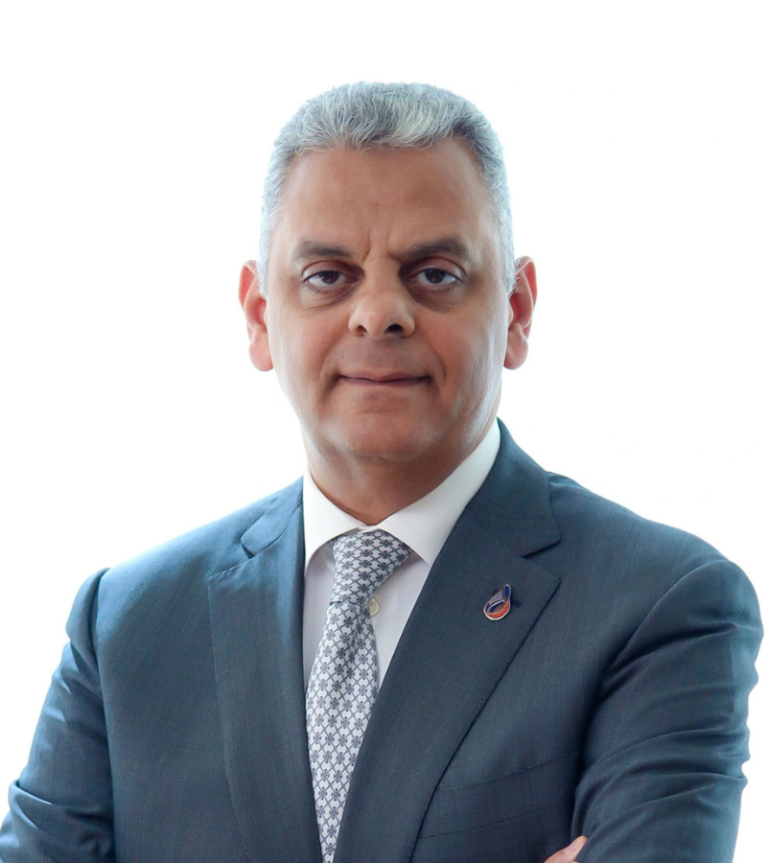
"You can have the best investment, you can have the best infrastructure, but if it's not embedded within the culture of the company, this is not going to work."

What makes GIG Egypt different from other insurance companies in Egypt today?

GIG Egypt is genuinely different in the Egyptian insurance market, starting with our people. We have a very talented, well-trained staff, and we run programs to build capacity both within the company and outside it, in the local and international markets. We care about our staff a great deal. A good number of our people study at the Chartered Insurance Institute, and that access isn’t limited to a select few; it’s open to anyone on staff who wants it, along with support for studying in other areas too, in addition to the soft and technical training we already provide.

The second thing is how much we care about our clients. We settle claims quickly, we don’t sit on payments or responses, and we use every tool available to reach clients the moment they have a claim, so they know we’re standing with them. That’s given us a different flavor from other players in the market.

The third is digital transformation. Everyone talks about it, but we’ve genuinely adopted strong models around it. One example: on motor insurance, we developed a way to survey a car online for underwriting and claims, without needing to physically inspect the vehicle. We took that idea to the Financial Regulatory Authority’s sandbox for new ideas, went through their review and made the modifications they asked for, and it went live about a month ago. We’re proud to be the first insurance company in Egypt to adopt that model.

And finally, we’re part of GIG Group, one of the largest insurance groups in the Middle East, and we consider ourselves one of its five largest companies. That relationship gives us strong reinsurance capacity, led by Hannover Re, which gives us real muscle to support big, sophisticated business and large accounts in the Egyptian market. Taken together, that gives us a genuinely differentiated position here.

What change in customer expectations is having the biggest impact on insurance in Egypt?

Insurance penetration in Egypt is still low, under 1 percent of GDP, around 0.9 percent. So a large part of what we focus on, including through my role at the Federation, is attracting people to insurance in the first place.

One thing we’ve done is publish a weekly newsletter with technical information on new coverage ideas and products that could work in the Egyptian market. We’ve issued more than 400 of them so far, and it benefits underwriters, claims assessors, and clients alike. We’ve also agreed with the regulator on an 18-month, roughly $3 million marketing campaign focused purely on communicating the value of insurance to the public, across social media, news, and television.

Beyond that, we’re working on two specific fronts. One is life insurance: helping younger Egyptians understand that saving a modest amount consistently, even starting in their twenties, can build a meaningful fund over 20 to 25 years. The other is micro-insurance, a market that essentially didn’t exist here before we began developing it in 2017. We joined the Microinsurance Network in Brussels and drew on experience from Africa and India to reach people who’d never had access to insurance before, a population of roughly 25 to 30 million in Egypt. These are products people can buy for the equivalent of about $3 a year. Since 2017, we’ve grown that to around 10 million clients holding a micro-insurance product, which we consider a real achievement.

What recent GIG Egypt achievement are you most proud of, and why does it matter to you?

In figures, we’re the only company in the market that has consistently kept a strong combined ratio, which measures claims, acquisition costs and management expenses against premium income. Anything under 100 percent means you’re profitable on the underwriting itself, before investment income. We run between 75 and 85 percent, which makes us the market leader on technical profit.

What makes me proud isn’t a single good year; it’s that we’ve sustained this for ten years running, and it’s something the wider GIG Group recognizes as well.

What is one lesson from your work at GIG that changed the way you think about insurance?

Two things, honestly: digital transformation and cybersecurity. We weren’t paying enough attention to either for a long time, since day-to-day business tends to pull focus elsewhere. But cybersecurity has become our first priority. Attacks are happening everywhere, against companies and individuals alike, and that message came directly from our board and from our ultimate parent company, Fairfax. We’ve invested significantly in building infrastructure that keeps the company protected.

But the bigger lesson is that you can have the best investment and the best infrastructure, but if it isn’t embedded in the culture of the company, it isn’t going to work. Today, across all 350 of our employees, cybersecurity awareness is genuinely part of how we operate, not just a policy on paper.

It’s also made me think differently about AI. It’s good for the development of every industry, insurance included, but it carries real risk. If you adopt AI without paying serious attention to cybersecurity alongside it, that’s a significant hazard you’re taking on without realizing it.

Can you tell us a bit more about your future plans for GIG?

We plan to keep investing in digital transformation and in digital marketing, to stay close to our clients and grow penetration in the communities we serve. Beyond that, we’re continuing our core strategy rather than changing direction: building a strong, sustainable insurance portfolio, meaning one that retains clients, pays claims reliably, and remains profitable.

We’re also looking at expansion within Egypt. The New Administrative Capital is one example; with major banks, embassies and government bodies moving there, we’re seriously planning a branch to be close to them and meet their insurance needs. Even with how much business has moved online, we believe Egypt isn’t yet at a point where physical proximity to clients stops mattering, so staying close to them is still part of our plan.