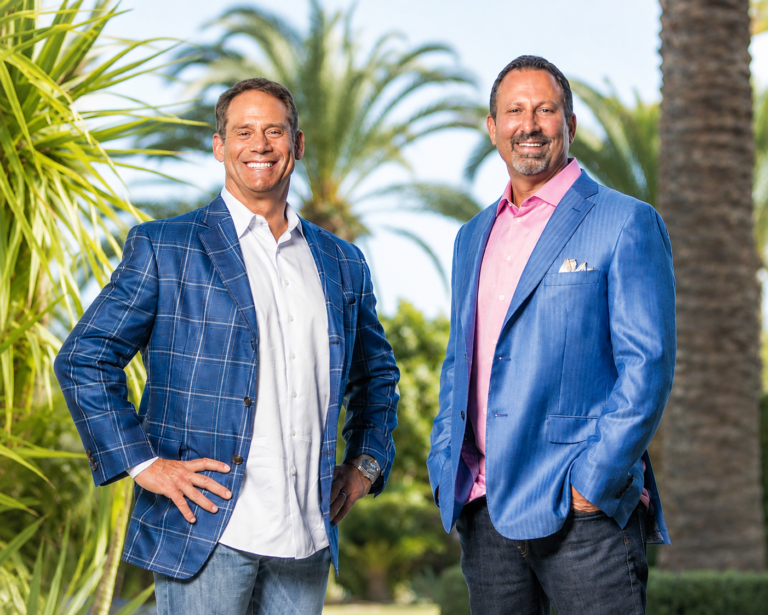
"A firm genuinely present in a community is a firm that understands that community."
What have been the key factors behind the firm’s success and continued growth?
The success and growth of Lerner and Rowe Injury Attorneys are a result of doing right by people. Under founding partners Glen Lerner and Kevin Rowe, the firm’s attorneys and staff work from the view that a client is doing them the favor: choosing this firm means trusting it with something that matters. That applies across the board, from a whiplash injury caused by a fender bender to the loss of a family member after a catastrophic incident. Do that consistently and people talk.
Technology is another factor. Client-facing convenience matters — clients can sign documents from their phone and meet by video instead of driving across town — but the larger investment has gone into the tools that develop evidence, because those are what change what a case is worth.
A third factor is trust. It is built through results, experience, and a dedication to making a positive impact on the communities a firm serves. The firm has recovered billions for clients nationwide, both through negotiations across the table and in front of juries. Its track record includes a $4.23 million jury verdict in an Arizona case involving a driver who ran a red light, a $962,500 settlement and a $1 million settlement for two injury clients in Indiana, along with more than $1 million reinvested in Northwest Indiana and Chicagoland communities over the past decade.
The fourth factor is presence. The firm invests directly in the communities it serves, both on its own and through its nonprofit arm, Lerner and Rowe Gives Back.
None of these four factors works alone. Clients choose a firm they trust, and trust is built through results — results that take real resources and attorneys who know how to use them.
What are the firm’s core practice areas, and what legal services does it provide?
Personal injury and wrongful death are the core of the practice, including auto, motorcycle, and truck accidents, pedestrian and bicycle injuries, premises liability, nursing home abuse, and catastrophic injury cases involving traumatic brain and spinal cord trauma.
The firm also has an established mass tort and product liability practice covering dangerous drugs and defective medical devices, along with newer multi-jurisdiction class actions in areas the law is still catching up to, including gaming addiction and social media harm cases, some involving a young person’s death. That work can run for years, requires substantial technical development, and is coordinated across courts in multiple states.
Every personal injury case is handled on contingency, so clients pay nothing unless compensation is recovered. Most cases resolve through negotiation or mediation, but every case is prepared as though it is going to trial. What determines the final recovery is the work done long before anyone talks about settling: the evidence gathered in the first weeks, how thoroughly the file is developed, and whether the insurance company believes the firm will take it in front of a jury if the offer does not reflect the harm. Carriers know which firms settle and which firms fight, and that is how the firm gets clients the most compensation it can.
How has the industry evolved, and what sets Lerner and Rowe Injury Attorneys apart?
The whole practice looks different than it did ten years ago, and most of the change is technological.
Start with how clients reach the firm. People expect the same responsiveness from a law firm that they get from a bank or a doctor’s office — text updates, documents they can sign from their phone, and a video call instead of a drive across town. Almost the entire industry now runs on cloud systems, e-signature, and video conferencing, and that is a real gain for injured people. “Someone recovering from surgery shouldn’t have to sit in a waiting room to hire a lawyer,” says Kevin Rowe, Founding Partner of Lerner and Rowe Injury Attorneys.
The same tools work behind the scenes. Records requests, medical documentation, and case files move faster than they did even five years ago, which can shorten the time it takes to resolve a claim. For someone with medical bills arriving every week, that difference is not abstract.
The courts changed too, though more selectively than people assume. Status conferences, mediations, and many expert depositions can happen remotely now, saving clients money and moving cases faster. But the profession has held onto in-person proceedings for the things that decide cases. Surveys of injury lawyers show most still want jury trials and key depositions in the room — a witness is hard to read through a screen.
Then there is the evidence itself, which has gone almost entirely digital: electronic logging and engine data in trucking cases, dashcams, phone records, vehicle telematics, and scene reconstruction and imaging that help a jury understand an injury rather than just hear it described. There is more proof available now than there has ever been, but it can be overwritten, so how fast a firm moves in the first days matters more than it used to.
What has not changed is the moment an insurance company decides a claim is worth less than it is. That is still where cases are won and lost, and where top firms stand out. Some take the quick offer. Lerner and Rowe’s team carefully evaluates each client’s claim to establish fair compensation and fights to get it.
How has the firm expanded across multiple states, and where is the future growth?
Lerner and Rowe Injury Attorneys has offices across Arizona, Nevada, Washington, New Mexico, Illinois, Indiana, and Tennessee, with attorneys licensed in California, Oregon, Texas, and other states nationwide. Arizona remains its largest state of operation, with the most current growth in Northwest Indiana. The firm’s Merrillville office has been open for more than a decade, and its Valparaiso office opened in September 2024, expanding access to its legal services in Lake and Porter counties.
In Lake and Porter counties, the firm pairs its Merrillville and Valparaiso offices with the same digital tools used firmwide, giving clients local, in-person access to its legal team along with video consultations and electronic document signing for managing a case without unnecessary travel.
Whether through a direct donation from the law firm itself or through its nonprofit arm, Lerner and Rowe Gives Back, the firm’s charitable giving has grown alongside its casework, surpassing $1 million in cumulative giving across Northwest Indiana and Chicagoland over the past decade, most of it going to organizations serving children and families. In Arizona, its annual golf tournament has raised more than a million dollars, and the nonprofit has granted more than $500,000 to Arizona organizations so far in 2026. In Northwest Indiana, the firm’s annual Cornhole Tournament in Crown Point raised approximately $70,000 in 2026 alone, with proceeds going back into the Northwest Indiana and Chicagoland communities.
“When the firm enters a market, the community work starts alongside the casework rather than after it has established itself. A firm genuinely present in a community, at the schools and the fairs and the fundraisers, is a firm that understands that community,” says Glen Lerner, Founding Partner of Lerner and Rowe Injury Attorneys.
Growth only means something if the communities the firm moves into are better off because it is there.
How does the firm build trust and ensure the highest level of representation?
The firm believes clients deserve straightforward answers, consistent communication, and a clear understanding of where their case stands.
That means setting realistic expectations from the beginning and being honest about both the strengths and challenges of a case. The team stays in regular contact with clients, provides updates as the case moves forward, and ensures calls are returned by someone familiar with the details of the claim.
The firm also takes on the day-to-day work that can become overwhelming after an injury, including communicating with insurance adjusters, collecting medical records, addressing medical bills and liens, and handling the administrative details that keep a case moving. Clients can focus on their recovery while the legal team handles the process.
That commitment extends to the legal work itself. The team thoroughly investigates each case, develops a strategy based on the facts and evidence, and prepares every case with the understanding that it may need to go to trial. The firm also conducts mock trials to test case theories, gauge potential damages, identify weaknesses, and refine its trial strategy.
When a case resolves, the firm takes the time to walk clients through the financial details, including the total recovery, case costs, medical liens, any negotiated reductions, and the client’s final amount.
Ultimately, the goal is simple: every client should feel informed, supported, and confident that their case is receiving the attention it deserves, regardless of its size or complexity.
Explore other interviews
-
Banking & Financial Services27 October 2025
-
Education
“Our mission is to drive innovation through evidence-based programs and partnerships that ignite the potential of students, educators, and communities.”
5 February 2026 -
Nonprofit & Social Services
“Our approach is a better investment than incarceration and residential care.”
4 June 2026