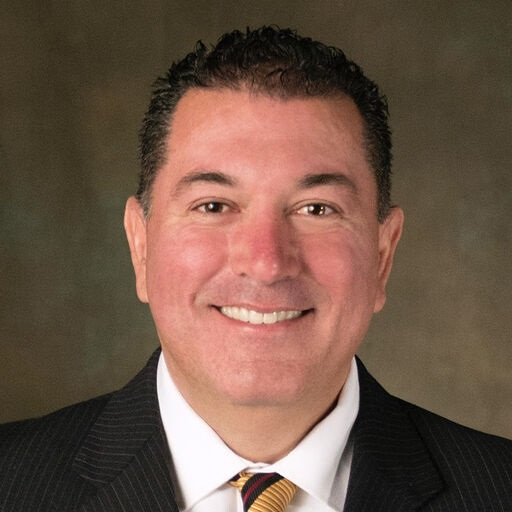
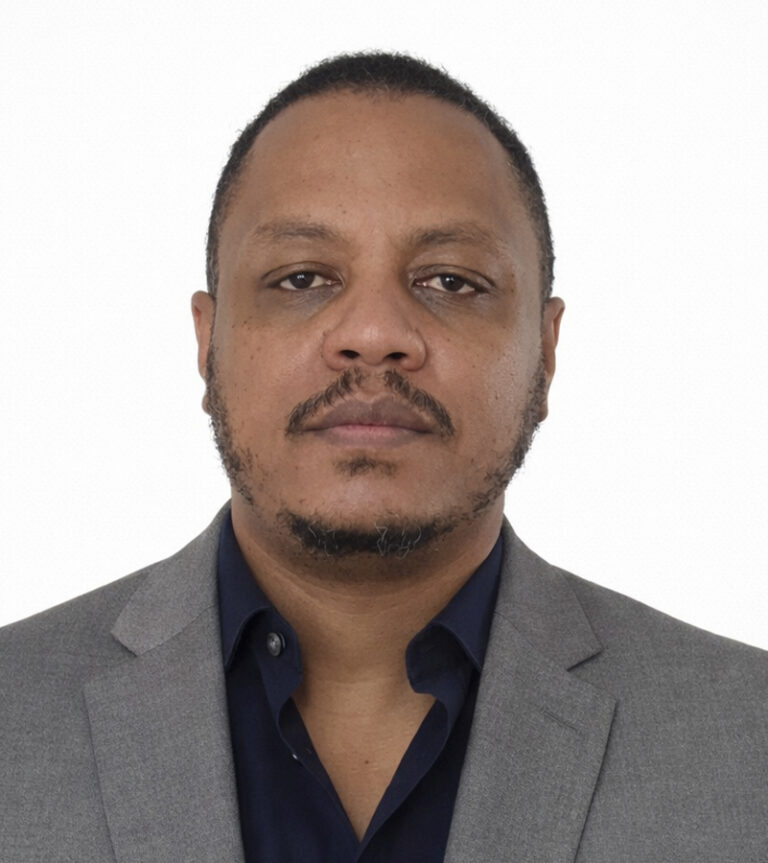
"The impact of microfinance is not measured only by the amount of money we lend, but also by the lives, families, and livelihoods that we help protect and rebuild."

What does your organization do, and who is it for?

We are a deposit-taking microfinance institution in Rwanda, regulated by the National Bank of Rwanda and registered with the Rwanda Development Board. We provide financial and non-financial services to the productive sector, with a particular focus on agriculture and underserved populations, especially women and youth.

What are the main programs, services, or products you offer?

Our services include providing loans to SMEs: Agricultural loans, transport, tourism, business loans and group lending and mobilizing savings and deposits: Term deposits, Demand deposits and savings-deposits from the public.

What's a decision you made that went against how everyone else in your field was doing it — and what did it cost you?

It is decision to open new field offices in the rural area, while the rest of people in the same sector enjoyed to open businesses in the cities. The coast was adaptation to the environment and community mobilization to uphold financial services and products.

What's the closest your organization ever came to not making it? What changed?

The decision to establish field offices in rural areas was a deliberate strategic choice, distinguishing INKUNGA FINANCE Plc from the prevailing trend of financial institutions concentrating their operations in urban centers. This approach reflected the institution’s commitment to adapting its operations to the local environment and addressing the financial needs of underserved communities. By maintaining a strong presence in rural areas, INKUNGA FINANCE Plc has been able to mobilize communities and extend appropriate financial services and products to low-income households, farmers, women, youth, and other underserved segments of the population.

What does a typical day actually involve that people outside your field would never guess?

A typical day in my work involves much more than what people outside the microfinance sector might imagine. While people may think that our work is mainly about granting loans and collecting savings, a significant part of my day is spent understanding communities, meeting clients and stakeholders, reviewing operations, addressing regulatory and governance matters, and ensuring that our financial and non-financial services remain relevant to the people we serve.

Because INKUNGA FINANCE Plc has a strong presence in rural areas, particularly among farmers, women, youth, and small businesses, I often have to look beyond financial figures and understand the realities behind them. A farmer’s ability to repay a loan, for example, may depend on the agricultural season, market access, weather conditions, or the ability to sell produce at a fair price.

Another part that people may not expect is the amount of community mobilization and problem-solving involved. We work through groups and partnerships to reach people who may have limited access to formal financial services. This means listening to communities, understanding their needs, adapting our products, strengthening financial literacy, and finding practical ways to bring services closer to them.

At the management level, my day also involves balancing many different responsibilities at once regulatory compliance, governance, staff performance, risk management, technology, partnerships, funding, and the long-term sustainability of the institution.

Ultimately, what people outside the field may never guess is that microfinance is as much about understanding people and their environment as it is about managing money. Every financial decision has a human story behind it, and our responsibility is to make sure that financial services contribute meaningfully to people’s economic opportunities and livelihoods.

What would you say sets your organization apart from others in your field?

We also believe that financial inclusion is not only about providing loans or collecting deposits. We complement our financial services with financial literacy, business coaching, community mobilization, and other non-financial support designed to help clients use financial services productively and sustainably.

Our approach is therefore built around proximity, inclusion, and adaptation to the needs of the communities we serve. Rather than expecting rural communities to adapt to conventional financial services, we strive to adapt our services and delivery channels to their economic realities. This combination of rural outreach, group-based financial inclusion, agricultural and SME financing, and non-financial support is an important part of what distinguishes INKUNGA FINANCE Plc.


If someone came to you wanting to break into your field, what's one thing you'd tell them that nobody tells beginners?

I would tell him or her that investing in microfinance is not primarily about pursuing financial returns; it is also about having a passion for financial inclusion and contributing to meaningful socio-economic impact. It is an investment in people, communities, and opportunities particularly for those who are underserved or have limited access to formal financial services.

Could you share a specific success story or a concrete example of your impact?

It is the story of a widow who had once enjoyed a relatively stable life with her husband. Together, they were able to ensure food security for their family and pay school fees for their children. Unfortunately, her husband passed away unexpectedly, leaving her with outstanding bank debt, children still in school, and no prior experience in running a business including the business her husband had left behind.

Her situation quickly became a source of concern within the community. Some of her neighbors even mocked her, saying that she would soon struggle to feed her children and that they would be forced to leave school because of the financial difficulties facing the family.

At INKUNGA FINANCE Plc, we believe that our relationship with clients goes beyond financial transactions. We stand with them during difficult moments and seek solutions that protect their livelihoods and dignity.

When our team visited her to offer condolences, we also handed her an envelope containing a message of reassurance. We explained that the loan taken by her late husband was covered by insurance and that she therefore did not have to worry about repaying the outstanding loan.

She was deeply surprised and relieved. She then asked whether she could take over her husband’s business and continue working with INKUNGA FINANCE Plc. We accompanied and supported her throughout the transition, helping her gain the confidence and capacity needed to manage the business successfully.

She eventually became capable of running the business independently, allowing her family’s life to continue with minimal disruption. She was able to keep her children in school; two of them eventually completed university, while the others completed high school.

For me, this story captures the true meaning of financial inclusion. The impact of microfinance is not measured only by the amount of money we lend, but also by the lives, families, and livelihoods that we help protect and rebuild.

What's the biggest misconception outsiders have about your work?

The biggest misconception outsiders have about our work is that the microfinance sector is less economically viable and inherently riskier than other areas of financial services. In reality, microfinance plays a critical role in advancing socio-economic development and promoting financial inclusion.

What would you say to someone considering partnering with, supporting, or joining your organization?

I would tell them that partnering with, supporting, or joining INKUNGA FINANCE Plc means becoming part of an institution whose purpose goes beyond financial transactions. We are committed to expanding access to financial and non-financial services, particularly for underserved communities, farmers, women, youth, and small businesses.

Our work is rooted in the belief that financial inclusion can be a powerful driver of socio-economic development. We do not simply provide loans or collect savings; we work alongside communities, understand their realities, support their businesses and livelihoods, and help them build greater economic resilience.

For a partner or supporter, this means an opportunity to contribute to meaningful and measurable impact at community level. For someone considering joining our organization, it means becoming part of a team where your work can directly influence people’s lives and create opportunities for families and communities that may otherwise remain excluded from formal financial services.

At the same time, we recognize that impact must go hand in hand with financial sustainability, good governance, responsible risk management, and professionalism. We therefore welcome people and partners who share this long-term vision: to build a financially sustainable institution while making a tangible contribution to financial inclusion and socio-economic advancement.

What's your vision for the next 3–5 years?

Over the next three to five years, my vision is for INKUNGA FINANCE Plc to become a recognized center of microfinance excellence and a reference institution for financial inclusion, green finance, and community impact in Rwanda.

We want to build an institution that is not only financially sustainable and professionally governed, but also deeply connected to the communities we serve. Our ambition is to expand responsible access to financial and non-financial services, particularly for underserved communities, farmers, women, youth, and SMEs, while using digital solutions to make these services more accessible, efficient, and affordable.

We also intend to position green finance as an important part of our growth strategy by supporting environmentally sustainable businesses and investments, particularly in areas such as agriculture, forestry, and other productive activities that contribute to resilient livelihoods and environmental sustainability.

Ultimately, I want INKUNGA FINANCE Plc to be known not simply as a microfinance institution, but as an institution that demonstrates how financial sustainability, innovation, financial inclusion, and measurable community impact can work together. Our goal is to create a model of microfinance excellence that can serve as a reference in Rwanda and inspire broader socio-economic transformation.

Latest From The Executive Insight

  • Wealth

    The offer email arrives. The number is fine, maybe slightly less than you hoped, and the recruiter is waiting for an answer. Most people say yes. Knowing how to negotiate salary at this exact point is worth more than at any other moment in the […]

    8 min read
  • Mindset

    The busiest office workers are interrupted every two minutes during core hours. That figure comes from Microsoft’s own data on how people use its software, and anyone who runs a team will recognise it. Most productivity hacks are written for a calendar you control. The […]

    8 min read
  • Wellness

    The alarm goes off at six. You hit snooze twice, get up at half past, and spend the first hour of the day feeling like someone else is driving. Most advice on how to become a morning person starts with the alarm: set it earlier […]

    9 min read
  • Business

    A project lands that your team cannot carry. The product launch is in four months, the two engineers you need do not exist on your payroll, and a permanent hire will take most of that time just to find. Staff augmentation is the usual answer: […]

    10 min read
  • Lifestyle

    Most people meet Alex Hormozi through a video clip: a muscular man in a T-shirt explaining, with some impatience, why your business is not making money. The books are better than the clips. Alex Hormozi books are short, blunt manuals on three problems every business […]

    9 min read
  • Editorial

    Most of the decisions that shape a company are made on an ordinary afternoon, between two other meetings, by someone who is slightly tired. Decision making in business mostly happens in small moments: a yes sent from a phone, a hire approved because the role […]

    9 min read
  • Education

    It is a Sunday evening and you are dreading the morning again. Not the workload, which you can handle, but the sameness of it. You have been good at this job for fifteen years and you can picture the next fifteen with no surprises in […]

    9 min read
  • Wealth

    The email from HR arrives on a Friday afternoon. Your last day is in three weeks, and in the attachment there is a line about what happens to your 401k. Within a day, somebody in your network has suggested an advisor who can “help with […]

    9 min read
  • Mindset

    The biggest client calls at nine on a Monday to say they are leaving. By ten, two things need to happen. Someone has to work out what the lost revenue does to payroll, which projects pause and who tells the team what. And someone has […]

    11 min read
  • Wellness

    You open a document to write one paragraph. Four minutes later you are reading an email you did not need to read, with two new tabs open and the paragraph unwritten. If that sounds like most of your working day, you are in good company, […]

    8 min read