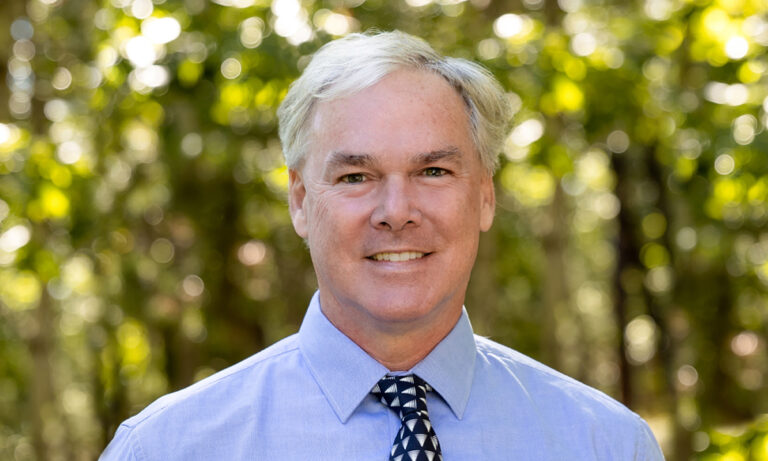
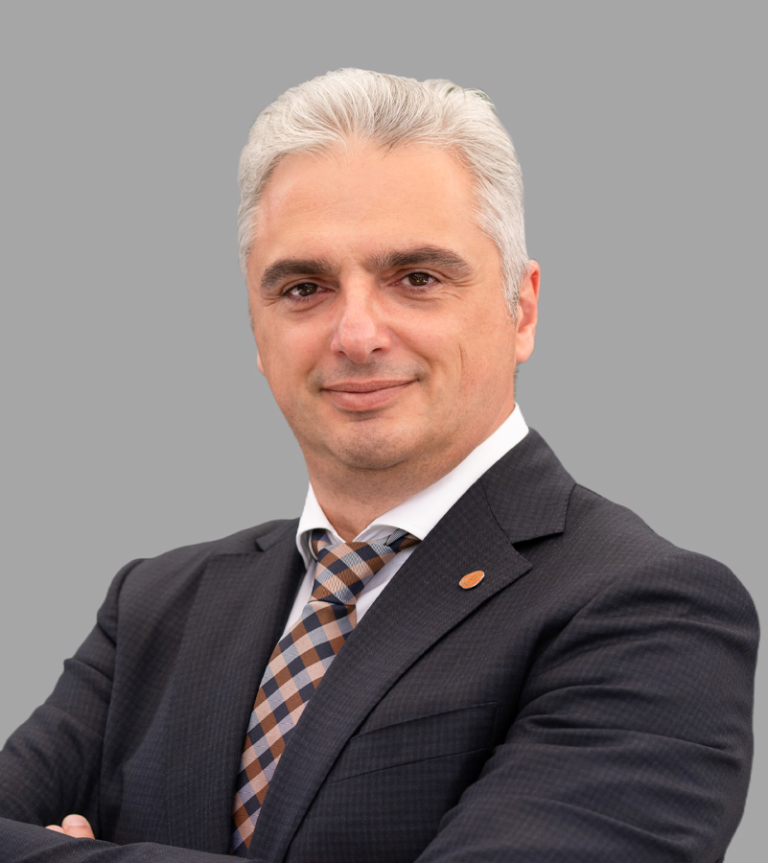
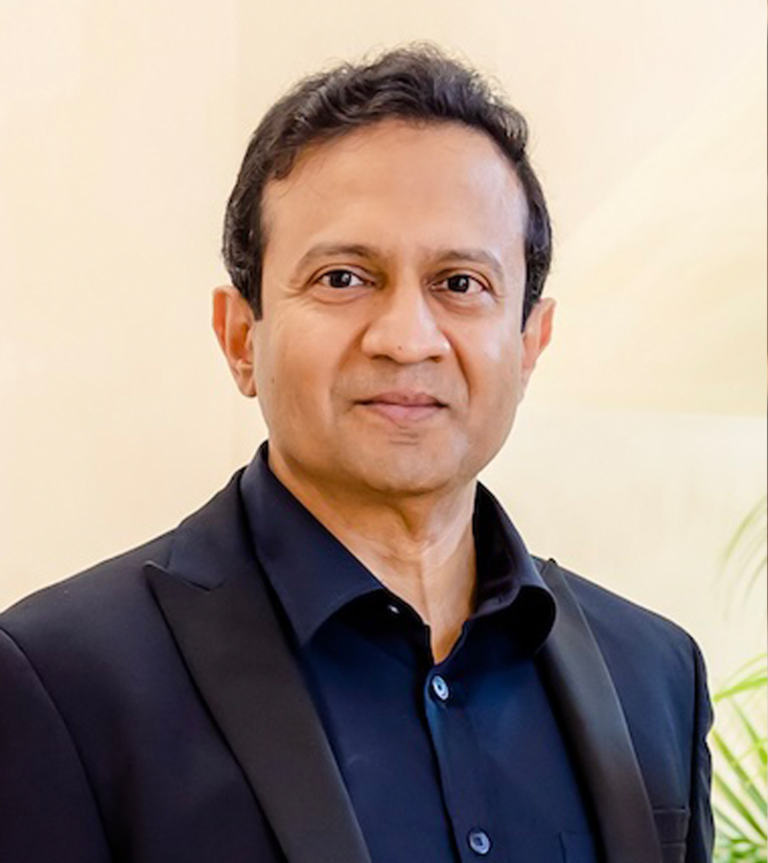
"We believe students do their best work when they are known well, supported as individuals and given room to discover what genuinely interests them."

What are the key factors behind Ross School’s success, and what has helped the school grow over the years?

Ross was founded on the belief that education should prepare students not just for the world as it exists today, but for a world that will continue to change. That requires more than mastering a set of facts. Students need to be curious, adaptable, creative, collaborative and confident enough to tackle problems they have never encountered before.

That philosophy continues to drive Ross. We give students a strong academic foundation while creating meaningful opportunities to apply what they are learning, through experiential and project-based learning, STEAM and STEM, global experiences, the arts, athletics and interdisciplinary studies. Just as importantly, students are known as individuals. They have the support and freedom to explore their interests, take intellectual risks and develop a path that is genuinely their own.

We believe that combination of rigor, relevance and individual attention is what families increasingly value and what has allowed Ross to grow while remaining true to its founding vision.

What are Ross School’s main educational programs and offerings, and what makes its approach to learning distinctive?

Ross combines a rigorous academic program with extensive opportunities for students to learn by doing. Our students don’t simply study concepts in isolation; they are encouraged to make connections across disciplines and apply what they know to real questions and challenges.

Through STEAM and STEM, students move from ideas to action, combining science, technology, engineering, mathematics, creativity and design to solve problems and create tangible outcomes.

Experiential learning is central to the Ross experience, and Field Academy takes that approach beyond the classroom. Students travel to and learn in different environments and communities, encountering the cultures, ecosystems, economies and challenges they are studying firsthand.

And throughout the Upper School, students have opportunities to pursue increasingly independent work. The Senior Project is a particularly important example: students identify a question or idea that matters to them, conduct research, work with outside experts and resources, develop new skills and ultimately create an original piece of work. It brings together curiosity, independence, creativity, persistence and communication, while often helping students discover what they want to pursue next.

What sets Ross School apart from other independent day and boarding schools, and what are its main strengths?

The biggest difference is that Ross doesn’t define excellence as following one prescribed path. We believe students do their best work when they are known well, supported as individuals and given room to discover what genuinely interests them.

That means two Ross students can have very different academic experiences and both be successful. One might pursue visual art at a high level; another might become deeply engaged in how the climate is impacting local ecosystems; another might discover a passion through Field Academy or athletics. Students have the opportunity to go deep rather than simply check boxes.

That individualized approach also changes the role of the teacher. Teachers are not just delivering a curriculum; they are helping students understand how they learn, what challenges them, what excites them, and where they can go next. The result is students who are not only academically prepared, but increasingly confident in who they are and what they want to contribute.

Ross has become so much more than a school to our family – it has truly become an extension of our family. There is a level of care here that feels incredibly special and rare. Teachers know and care for my children whether they’ve taught them directly or not, and because of that, my kids feel deeply seen, known, and safe. As a parent, there is nothing more meaningful.

– From Parent Shirley Roseman. Her kids are in Grade 3 and Grade 6.

What is the current scope of Ross School’s growth and development, both in the U.S. and internationally?

Ross serves a diverse community of day and boarding students from across the United States and from 25 different countries around the world. Our international and domestic boarding programs are designed to create a strong sense of belonging while giving students meaningful independence.

Rather than a traditional large dormitory model, Ross boarding students live in smaller, family-style houses with other students and faculty. That creates close relationships and a community that feels more like home, while giving students access to the academic, cultural and recreational opportunities of the Hamptons and proximity to New York City.

Ross School is an independent Early Childhood–Grade 12 school located in the Hamptons, approximately two hours east of New York City.

How does Ross School attract and support students and families, and how does it build strong relationships with its wider community?

For families, it starts with something very simple: we know our students. Individual attention allows teachers and coaches to understand not only what a student is learning, but how they learn best, what motivates them and where they need support. That gives students the confidence to take risks, make mistakes and try things that may be outside their comfort zone.

That philosophy extends across the school. Students find community through academics, athletics, the arts, clubs and residential life. They develop relationships with teachers and coaches who know them well and can help them grow over time.

For younger students, even the physical environment is designed around this philosophy. The Lower School campus gives children space to explore, build, create, move and connect with nature, because we believe the environment in which children grow is itself part of their education.

What are Ross School’s key priorities for the future, and how does the school plan to continue evolving its educational approach?

Our priority is to keep asking what students will need to thrive in a world we cannot fully predict.

The answer is not simply more technology or more courses. It is helping young people become lifelong learners who can adapt, think critically and creatively, work across disciplines, collaborate with others and turn ideas into action.

We will continue evolving the curriculum and expanding opportunities for experiential learning, global education and independent work, while preserving the things that make Ross distinctive: individual attention, strong relationships and the freedom for students to develop their own interests and sense of purpose.

Ultimately, we want students to leave Ross prepared for college and careers, but also prepared for a much bigger challenge: navigating a changing world with curiosity, confidence and a clear sense of who they are.

Latest From The Executive Insight

  • Lifestyle

    Most personal development books get read once, enjoyed and forgotten by the following quarter. A few are worth a second read, because they change what you do on an ordinary Monday rather than how you feel on a Sunday afternoon. The ten below pass that […]

    9 min read
  • Education

    You ask an AI for a statistic and it hands you one, with a footnote. You click the footnote and the number is not on the page. That is where the Perplexity vs ChatGPT choice really begins. Perplexity is built to find sources and put […]

    9 min read
  • Wealth

    The first meeting usually goes pleasantly. The office is warm, the adviser is good company, and by the end you have talked about your children, your plans for retirement and the house you might sell one day. What you have rarely done is ask the […]

    8 min read
  • Mindset

    You have two offers on the table, or two candidates, or two ways to spend the next year, and you have been going round in circles for a week. What you are looking for is a decision making framework, something that turns the loop into […]

    9 min read
  • Wellness

    The first week of the holiday goes well. You sleep ten hours a night, read a novel for the first time in a year, and start to feel like yourself. Then, somewhere around the Sunday before you fly home, the dread comes back. Two weeks […]

    9 min read
  • Editorial

    Most advice on how to manage stress at work treats stress as a personal failing: breathe better, sleep more, download an app. Those help at the edges. They leave untouched the thing that makes work stressful for most people, which is having a lot asked […]

    8 min read
  • Business

    Most people asking how to become a consultant already have the hard part: years of doing something well inside a company. What they lack is a way to sell it. Consulting is a business built on a narrow promise, and the people who struggle usually […]

    8 min read
  • Lifestyle

    Is an online MBA worth it? For a working professional who wants the knowledge and the credential without giving up a salary, it can be one of the better deals in higher education. For someone who wants to change careers, it is often the weaker […]

    8 min read
  • Education

    AI consulting for small businesses has become a crowded market in about two years. Agencies that built websites now sell AI audits. Freelancers who learned prompting last spring sell implementation packages. Most owners who get a pitch have no way to judge it, because they […]

    8 min read
  • Wealth

    Will AI replace financial advisors? For the part of the job most clients think they are paying for, the portfolio, it largely has. Software has been picking funds, rebalancing and harvesting tax losses for over a decade, for a fraction of what an advisor charges. […]

    8 min read