
The four hours AI saves a manager on a performance review were never the four hours that mattered.
In a survey of more than 1,300 managers by Resume Builder, 94% reported using AI to create employee development plans, 91% to assess performance, and 88% to write performance improvement plans. A majority also used it in decisions about raises, promotions, layoffs, and terminations. Seventy-one percent said they were confident in AI’s ability to make fair and unbiased judgments about employees. Separately, a December 2025 Gartner survey of more than 1,600 respondents found managers saved roughly four hours across the performance management process when using AI.
Those hours are real, and for managers already stretched thin, they’re not nothing. But look at what they were spent on: drafting. Assembling a year of scattered notes into paragraphs that read cleanly. That’s the part AI is genuinely good at, and it’s also the part that was never the actual difficulty.
Feedback isn’t hard because writing is hard. It’s hard because telling someone a true thing about their performance, to their face, risks the relationship — and every manager knows it. What AI has quietly done is remove the wrong friction. It’s now considerably easier to produce a document about someone’s performance, and no easier at all to say the sentence that would change it. A polished, evenly-toned, thoroughly-hedged review is precisely what avoidance has always wanted and rarely had time to produce. That gap — between feedback that has been documented and feedback that has actually been delivered — is exactly what Kim Scott takes on in Radical Candor. Her framework runs on two axes: how much you care personally about the person, and how willing you are to challenge them directly. Do both and you get radical candor. Challenge without caring and you get obnoxious aggression. Do neither and you get manipulative insincerity.
The quadrant Scott found most managers living in is the fourth: caring genuinely about someone while withholding the direct feedback they need — what she calls ruinous empathy. It’s the trap precisely because it doesn’t feel like a failure. It feels like decency. The origin of the framework is a moment from her time at Google, when Sheryl Sandberg pulled her aside after a presentation that had gone well and told her about a verbal tic that was undermining how she came across — then connected her with someone who could help fix it. Scott’s account of why it worked is worth sitting with: it wasn’t the bluntness, it was that the bluntness was obviously in service of her, and came with concrete help attached. Her diagnostic is a single question a manager can ask before any hard conversation — am I softening this because it will land better for them, or because it will be more comfortable for me?
The cost of staying quiet isn’t abstract, either. Gallup and Workhuman, tracking more than 3,400 employees over two years, found that people who strongly agree they receive valuable feedback from the people they work with are five times as likely to be engaged, 57% less likely to be burned out, and 48% less likely to be job hunting. Ruinous empathy doesn’t just fail to help — it’s a slow leak on all three, and the manager practicing it usually never connects the resignation to the conversation that never happened.
Two ideas worth carrying into the boardroom: Silence is a decision, and it has a cost you never see on a report. Ruinous empathy protects a relationship in the moment and quietly denies someone the information they’d need to be better a year from now — and the bill usually comes due at a promotion cycle or an exit interview, long after anyone connects it back. And judge feedback by what changed, not by what was written. A review nobody can act on isn’t feedback, it’s documentation. The useful audit isn’t whether reviews were completed on time; it’s whether anyone can name a specific thing they did differently because of one.
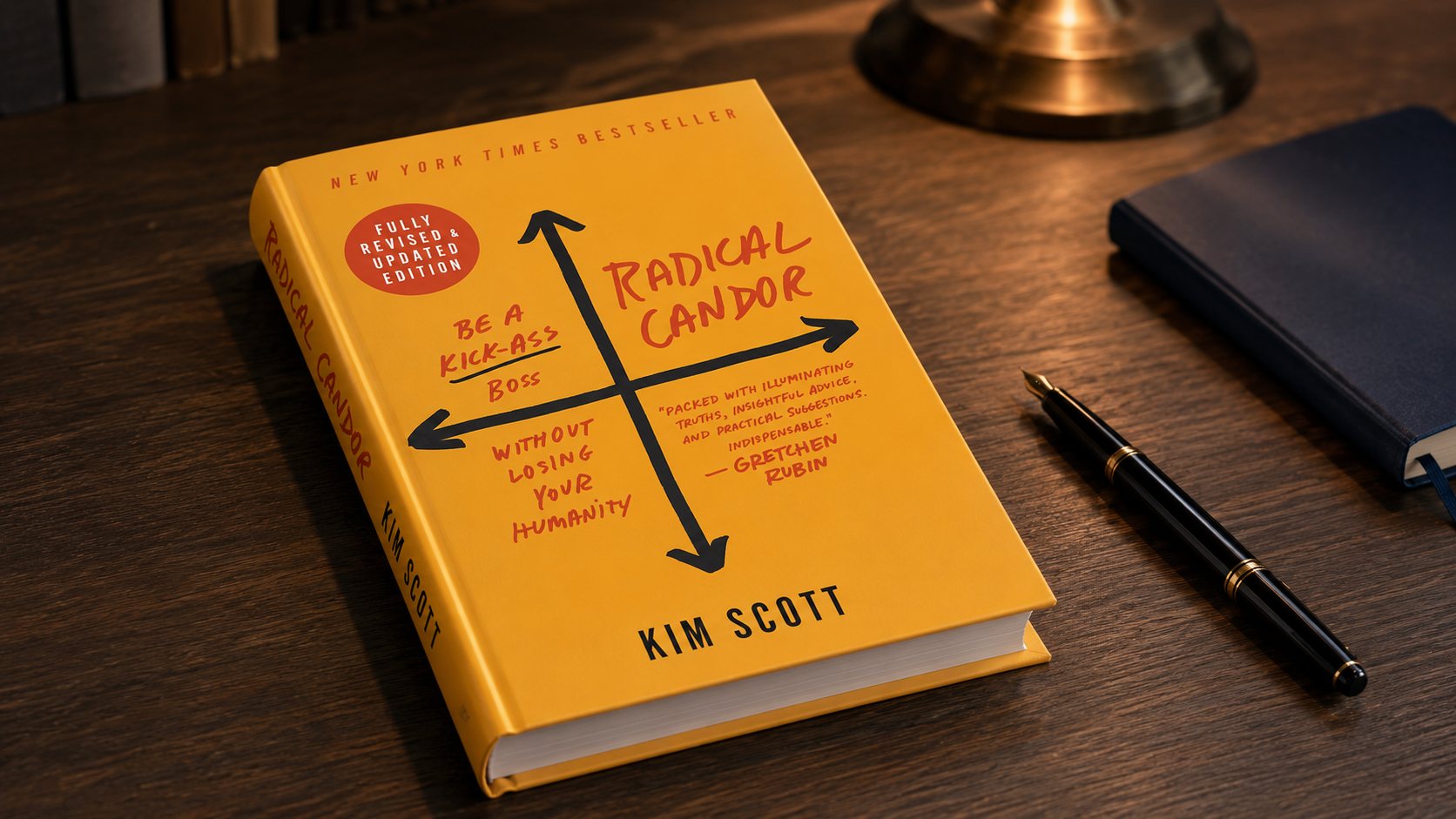
Best for: Leaders who suspect their organization is too polite to be honest, rather than teams looking for a performance review template. Reading commitment: About six hours, practical and story-driven, built around a framework you’ll remember after one pass.
That shift — from producing a document about someone to arriving at a conversation with something specific to say — is exactly the gap Lattice is built around. Rather than treating the review as a once-a-year writing task, it maintains a continuous record: feedback captured close to the work, structured 1:1 agendas, goals tracked as they move. Its AI layer summarizes that accumulated history so a manager walks into the conversation holding actual examples from March rather than an impression formed in November — which matters, given how many managers admit their assessments are dominated by whatever happened most recently.
It also won’t make anyone braver, and that’s the honest limit. The same drafting assistance can be used to generate a fluent, agreeable review that says nothing at all — ruinous empathy with better prose. The tool supplies the record and the structure; the willingness to use them has to come from somewhere else, and it usually comes from what a leadership team visibly tolerates. But for managers whose feedback is vague because they genuinely can’t remember the specifics, it removes the excuse that has always been easiest to hide behind.
There’s also a chance to put your own thinking in front of a wider audience: this issue brings an exclusive feature placement in Fortune, arranged through TEI’s media relationships. Fortune carries real weight with boards, investors, and senior candidates — audiences that judge a leadership team less by what it announces than by how honestly it appears to operate internally, which is exactly the distinction this issue is about. TEI’s team handles the interview, drafting, and placement end to end.
Interested? Talk to our team to learn more about this opportunity and discuss the details. Schedule a call through our Calendly, or simply reply to this email and we’ll be happy to assist.
Take with you: What’s the one thing you know about someone on your team that you still haven’t told them — and how long have you known it?
The Executive Insight — 169 Madison Ave STE 11570, New York, NY, 10016