
The value of a reserve is not the money sitting there. It is the number of choices you still have on the morning something goes wrong.
Start with what happens when the buffer is thin. The Federal Reserve’s 2026 Small Business Credit Survey, based on 6,525 responses from small employer firms collected between September and November 2025, found that 60% of firms had applied for financing in the previous year, most commonly to cover operating expenses rather than to grow. Of those applicants, 42% received the full amount they asked for. Twenty-two percent received nothing. Among firms carrying debt, 59% had secured it with a personal guarantee.

The survey doesn’t say those firms lacked reserves, so treat this as a picture of the fallback rather than proof of cause. But it is a sobering one. When cash runs short, the response is an application: slower than a decision, decided by someone else, fully successful less than half the time, and often backed by the owner’s own house. The business hasn’t run out of options. It has run out of options it controls.
There is a second cost, and it arrives before any money changes hands. In 2013, researchers published a study in Science on what financial pressure does to thinking. Shoppers asked to consider a large hypothetical car repair performed worse on cognitive tests than those facing a small one, but only if they were poorer. A companion study of Indian sugarcane farmers found the same people scored worse before harvest than after. The authors compared the effect to losing a night’s sleep.
One caution covers all of this: the research is about household poverty, not business, and parts of the scarcity literature have faced replication challenges since, so read it as suggestive rather than settled. Still, the mechanism is familiar. A shortfall doesn’t wait politely while you think. It sits in the room during the pricing conversation, the hiring decision, and the negotiation with the client who pays late, and it argues for whichever option ends the discomfort soonest.
Morgan Housel’s The Psychology of Money is built around this point, which is why it is a book about behavior rather than arithmetic. His term is room for error, and his case for it isn’t that it improves returns. It is that it lets you endure outcomes you failed to predict. In his telling, a plan only has value if it can survive contact with reality. A reserve exists because the forecast will be wrong in a way you didn’t model.
He is also clear about what the money buys. The highest dividend money pays, in his account, is control over your time: doing what you want, when you want, for as long as you want. For an owner, that looks like turning down the client who treats your team badly, taking four more weeks to hire properly, or declining the project priced below cost. Those aren’t luxuries. They decide what the business becomes, and they are all unavailable to a company with three weeks of cash.
Two changes follow.
Define the reserve in weeks, and keep it somewhere inconvenient. A balance means nothing on its own. Divide the cash by what the business spends in a week and you get the number that matters: how long you could keep operating while deciding what to do. Hold it in a separate account, because a buffer sitting in the account you pay bills from is just a balance you haven’t spent yet.
Decide in advance what the reserve is for, and check what it bought. Most owners say reserves are for emergencies, which quietly means disasters rather than decisions. Write down the two or three things it exists to make possible, such as declining underpriced work or waiting for the right hire. Then ask once a quarter: what did having this let us say no to? If the answer is nothing, the reserve is funding anxiety rather than judgment.
Read The Psychology of Money →
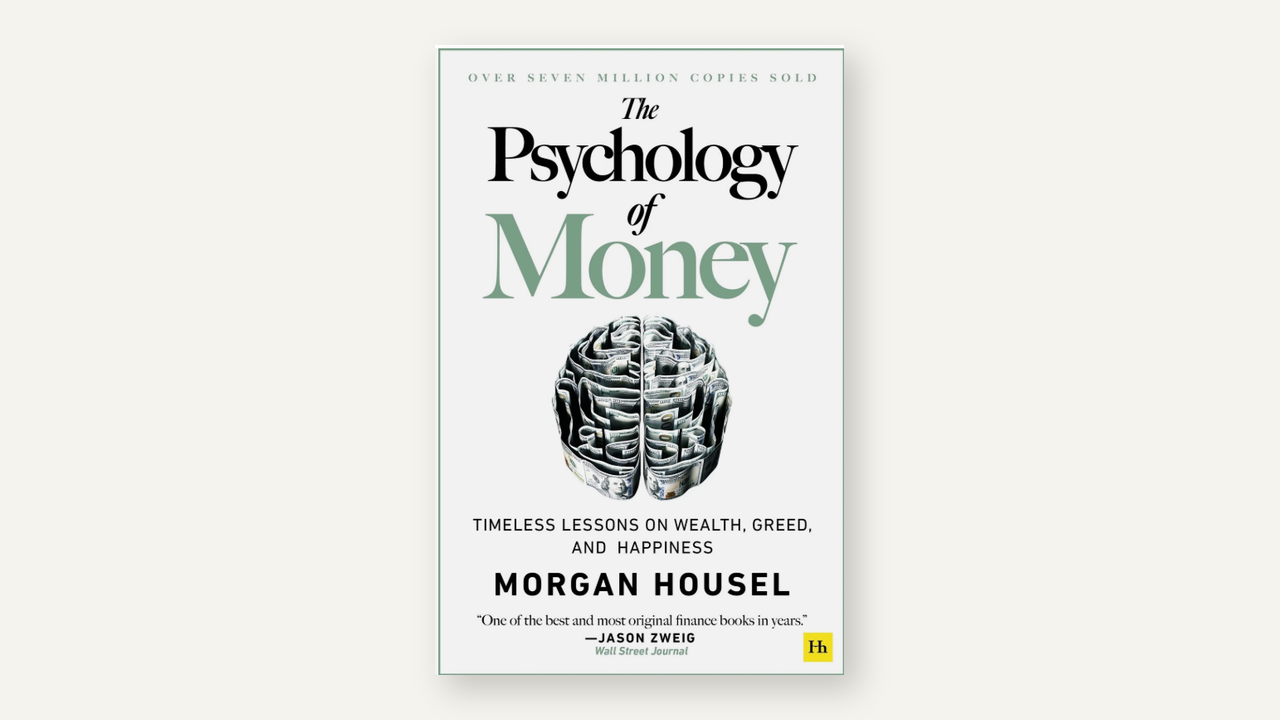
Best for: Owners who know the number in the account but have never turned it into a number of weeks.
Reading commitment: About five hours, in short standalone essays that are easy to read in pieces.
Working out your runway is the part that gets postponed, because it usually means a spreadsheet nobody maintains. Accounting software can now do a basic version for you.
Xero’s analytics tools are one example. They project cash in and out from invoices and bills already recorded, and the Analytics Plus version adds scenario modeling. You can ask what happens if a major client pays 30 days late, or revenue falls by a quarter for three months, and see which week the line crosses zero. QuickBooks has a comparable planner.
Three limits matter. It only knows what is in the system, so a business that reconciles quarterly gets a confident picture of stale data. Forecast horizons and Analytics Plus availability vary by plan, so confirm what yours includes before relying on it. And it is arithmetic, not judgment: it won’t tell you your largest client is quietly unhappy. What it does is turn a vague sense of being covered into a date you can decide against.
Take with you: If revenue fell by a third for three months starting today, which decisions would still be yours to make?
TEI offers a feature placement in TIME, arranged through our media relationships. TIME reaches a general audience rather than a financial trade readership, which suits a story about the judgment behind how a business is run. To discuss, book time on our Calendly or reply to this email.
The Executive Insight, 169 Madison Ave STE 11570, New York, NY, 10016