
The leverage in a negotiation almost never comes from what you say. It comes from what you find out.
In July 2026, Gartner projected worldwide end-user spending on AI models and platforms at $64 billion for the year — up 63.4% from $39 billion in 2025, with spending on generative AI models alone forecast to grow 117%. It sits inside a software market approaching $1.4 trillion. Gartner’s own analyst framed the shift plainly: AI budgets are coming under far greater scrutiny, with attention moving to usage efficiency, cost control, and outcomes a buyer can actually measure.
Here’s the part that should concern a CFO. Gartner’s CIO survey work has organizations setting aside roughly 9% of their IT budget purely to absorb price increases on software they already own. That’s not new capability. That’s the same tools, renegotiated upward, in contracts whose pricing has quietly shifted from per-seat to per-consumption — a structure where the invoice grows precisely as adoption succeeds. These are among the largest commitments a leadership team will make this decade, and most of them get decided in one meeting where each side arrives with a position and defends it. The buyer wants a discount. The vendor wants a longer term. They meet somewhere in the middle, everyone signs, and nobody has learned what the other party was actually constrained by — which is where the real terms were available the whole time.
That 9% isn’t a market condition, then. It’s the price of walking into a room knowing exactly what you want and almost nothing about the person across the table.
Chris Voss built an entire career closing exactly that gap — between negotiating positions and understanding interests — and Never Split the Difference is the record of how. Voss spent his career as the FBI’s lead international kidnapping negotiator, in situations where splitting the difference isn’t an option and where the entire task is finding out what the other side genuinely needs before deciding what to offer. The title is the argument: a compromise both parties dislike is not a good outcome, it’s the outcome you get when neither side did the work of understanding the other.
His mechanism is tactical empathy, and it’s less soft than it sounds. Labeling — naming the other side’s position out loud before they have to defend it — consistently defuses it. Mirroring their last few words invites them to keep talking, and they usually reveal something. Calibrated questions beginning with “how” or “what” hand the problem to the other side rather than issuing a demand: asked how they’re supposed to work within a constraint, a counterparty will frequently solve it themselves. And his most counterintuitive claim is about the word “no.” Most negotiators chase agreement and treat refusal as failure. Voss treats “no” as the point where the counterparty feels safe enough to say what they actually think — which means the conversation has finally started.
Two ideas worth carrying into the boardroom: The goal of the first conversation is information, not agreement. Anyone who enters a renewal knowing what they want to pay and nothing about the vendor’s quarter, quota structure, or renewal exposure is negotiating against themselves. And replace demands with calibrated questions. “That price doesn’t work for us” invites a counter-offer. “How are we supposed to justify a 30% increase on the same functionality?” makes the constraint theirs to solve, and the answer tells you where the flexibility actually sits.
Read Never Split the Difference →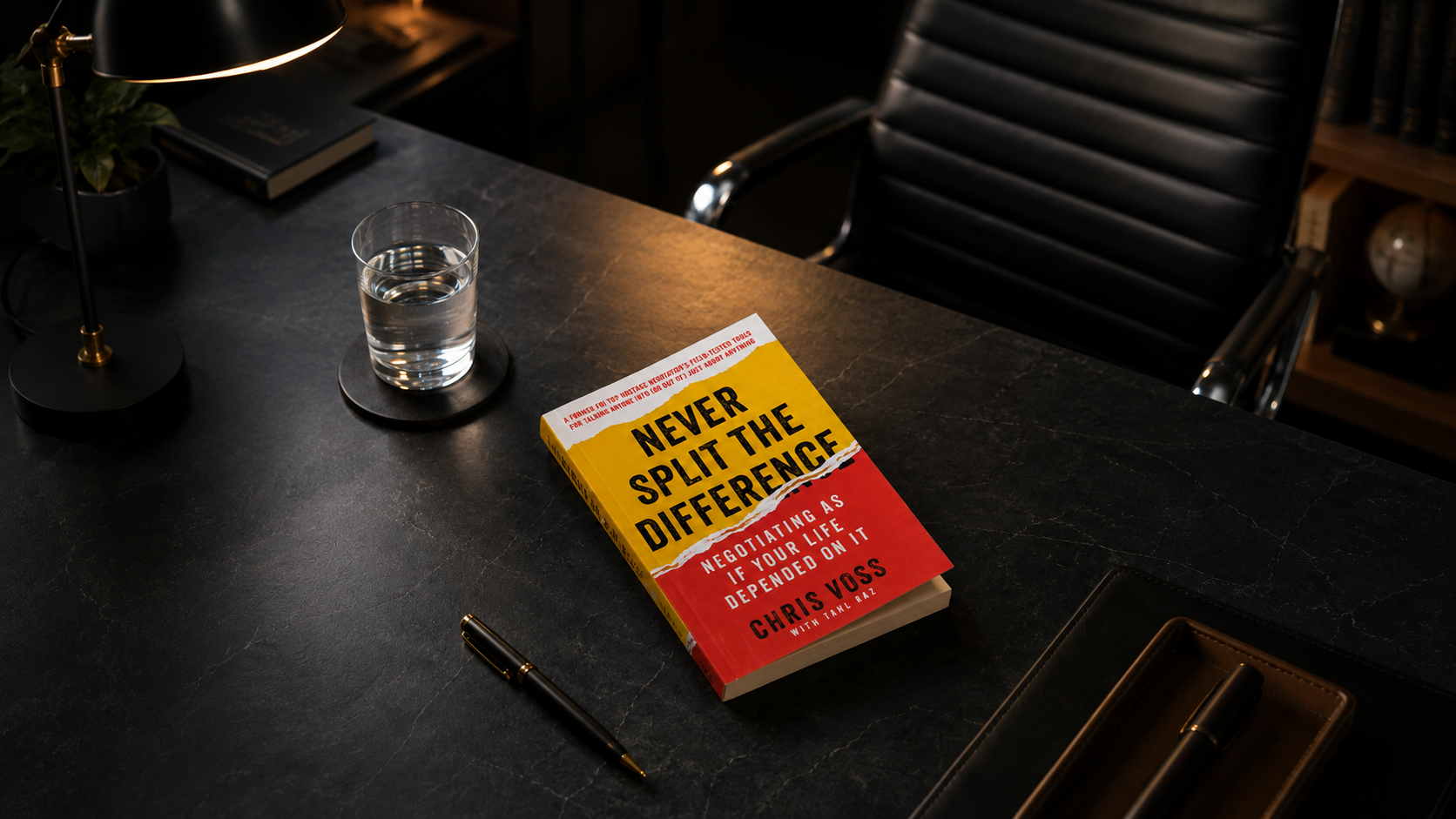 Best for: Leaders who negotiate high-stakes agreements occasionally rather than professionally. Reading commitment: About six hours, fast and story-driven, built on hostage cases rather than business theory.
Gong exists for exactly that shift — from what got reported after a conversation to what was actually said during it. It’s a revenue intelligence platform originally built for sales teams, but the mechanism transfers directly to procurement and vendor management: capture the calls, meetings, and email around a renewal, and analyze them for detected objections, sentiment shifts, talk-time ratios, and how much of the conversation was spent gathering information versus defending a position. Its manager view is arguably the more useful half, surfacing behavioral patterns across a team that no individual call review would reveal — including which people spend their time asking and which spend it telling.
The limitations are real. Reviewers put it at the high end of the market on price, with meaningful onboarding time. A small team negotiating one renewal a year won’t generate enough conversation volume for the pattern detection to mean anything — this is a tool for an organization running enough vendor and customer conversations to have a pattern worth detecting in the first place. It also raises a genuine question about recording sensitive commercial conversations, which is a policy decision before it’s a software one. But for leaders who suspect their picture of a negotiation is a summary of a summary, it replaces recollection with record.
This issue also comes with a chance to put your own thinking in front of a wider audience — an exclusive feature placement in AP News, arranged through TEI’s media relationships. AP News carries global reach and institutional credibility, particularly with investors and partners assessing how a leadership team handles commitments of real consequence, which is exactly the subject of this issue. TEI’s team handles the interview, drafting, and placement end to end.
Want in? Tell our team and we’ll walk you through it — schedule a call through our Calendly, or just reply to this email.
Take with you: In your last major negotiation, how much of what you learned about the other side came from the conversation — and how much did you assume before it started?
The Executive Insight — 169 Madison Ave STE 11570, New York, NY, 10016