A complaint is not a measurement. It is the one account that survived the effort of being made.
The National Customer Rage Study, now in its eleventh wave and modeled on a White House study first run in 1976, found that 77% of American customers had a problem with a product or service in the past year. The more revealing numbers are about what happened next. Sixty-eight percent described complaining as effortful. Sixty-four percent of those with a problem felt rage, and 50% raised their voice, a record high. Only 40% of people who did complain were delighted or completely satisfied with how it was resolved.

Read those together and two filters plausibly sit between your customers and you. The first is effort. Complaining costs time and nerve, so the people who do it are the ones with enough at stake, or enough temperament, to pay that cost. The second is emotion. Someone who has decided to spend the effort has often had time to rehearse the account, so what arrives at your desk can be both rare and edited. The study measures how customers feel and what they do, not how complainers differ from those who stay quiet, so both filters are inferences rather than findings.
There is a third filter, and it is growing. In the same study, 24% of complainants had posted about the problem on social media, up from 14% in earlier waves, and 43% of those posts got no response from the company. The complaint is increasingly not addressed to you at all.
The step from here is an inference too, but a reasonable one: if the version that reaches you is filtered this heavily, the version that doesn’t almost certainly differs from it.
David McRaney spent How Minds Change on the question of what gets a person to say, and sometimes reconsider, what they actually think. His starting point is that facts rarely do it. People try to fit new information into what they already believe, and only when that fails does anything shift. Arguing speeds up the fitting rather than the shifting.
What does work, in the methods he follows, is a sequence rather than a case. Deep canvassing, developed by a Los Angeles campaigning group, begins by building rapport and asking permission to explore someone’s reasoning. It asks for a number, a rating of how strongly the person holds a position, then asks what sits behind the number, and listens to the personal experience that comes out without correcting it. McRaney also describes SURFPAD, a term from Pascal Wallisch’s research team for what happens when a situation is ambiguous: people fill the gaps with their own prior experience, and end up genuinely certain about readings that differ sharply from each other. Two people can describe the same service failure accurately and not be describing the same event.
None of this was designed for customer feedback, and the canvassers were working on social attitudes rather than invoices. But the mechanism is the one in play when a customer says “it was a bit expensive” and means something else entirely, and the sequence transfers.
Two changes follow for an owner.
Ask for a number, then ask what sits behind it. “How likely would you be to use us again?” gives you a figure, which is mildly useful. “What would have made that one point higher?” gives you the thing they would never have raised unprompted, because it is now easier to answer than to deflect. The number is not the point. It is the doorway.
Don’t defend in that conversation. The moment you explain the delay or justify the price, you have turned it into a negotiation, and the customer reverts to the polite version. The first conversation exists to collect the real account. The fix comes afterwards, and the customer will believe it more if they never had to argue for it.
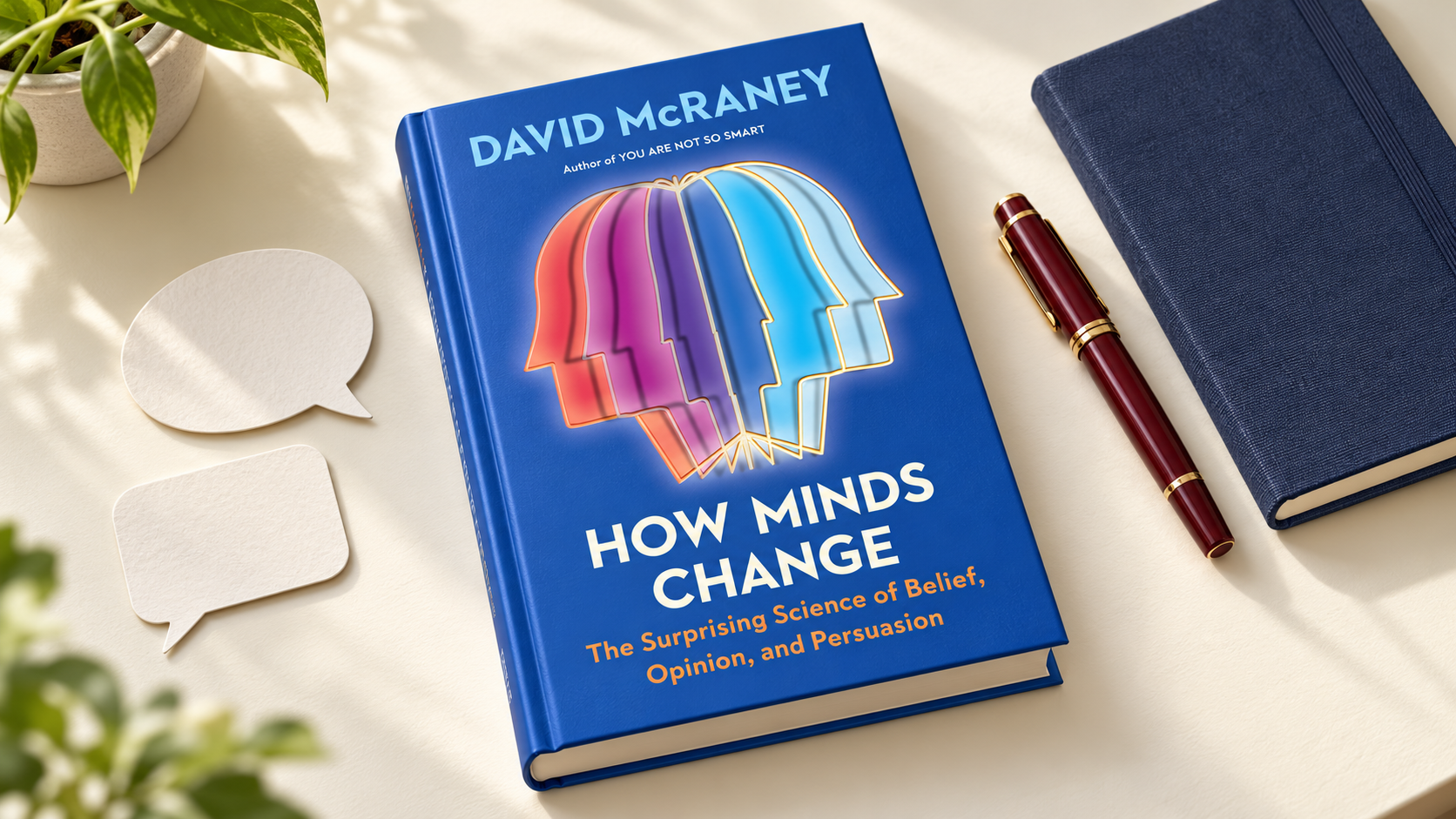
Best for: Owners who keep hearing the same tidy reasons and suspect they are not the real ones. Reading commitment: About seven hours, narrative and research-led rather than a set of scripts.
Both changes depend on remembering what was said, and memory is the weak link. The version of a conversation you carry into the following week has already been shaped by what you hoped to hear. The obvious answer is to record the call, but that brings consent rules in many places, and through 2026 a wave of biometric privacy claims in the US has been aimed squarely at AI meeting assistants. The quieter answer is to write the conversation up yourself the same day, in the customer’s own words and quoting where you can, then let AI read across the write-ups.
Gemini Notebook, which Google renamed from NotebookLM in July 2026, is built for that. You create a notebook, add your own notes along with support emails, reviews and anything else in writing, then ask questions across the whole set: what do people say about the handover, what has come up more than twice this quarter. Answers carry inline citations back to the passage they came from, so you can check the actual wording instead of trusting a summary of it.
The limits are worth knowing. It only knows what you put into it, so writing up each conversation is the real work and the tool is the easy part. It also preserves your account of a conversation, not the conversation itself, so a write-up still carries some of what you were hoping to hear. It answers only from the notebook you have open and cannot search across notebooks, there are caps on sources per notebook and on how much you can use it, and a citation tells you where something came from without guaranteeing the summary around it is right. Anything you add about customers is data going into a Google account, so it is worth checking what your plan and settings allow before putting anything sensitive in.
TEI offers a feature placement in USA Today, arranged through our media relationships. USA Today reaches customers and employees rather than a trade readership, which suits a story about how a business listens rather than one about what it sells. If you want the details, grab a time on our Calendly or reply to this email.
Take with you: Of the last five customers who quietly stopped buying, how many told you the real reason, and how would you know if they hadn’t?
The Executive Insight, 169 Madison Ave STE 11570, New York, NY, 10016