The person getting the most out of AI on your team is often the one who is best at explaining what they need.
In a 2025 paper, Christoph Riedl of Northeastern University and Ben Weidmann of University College London analyzed data from 667 people who solved problems in math, physics, and moral reasoning, first alone and then with an AI model. The AI helped a lot: GPT-4o raised performance by 29 percentage points. The bigger finding was about who gained most. Solving problems alone and solving them with AI turned out to be two different skills, and what predicted the second was perspective-taking: how well someone could figure out what the other side of a conversation understood and adjust to it. People strong at that did better with AI but not noticeably better alone.

In other words, being good with AI is less about knowing how the technology works and more about giving it the context, the goal, and the details a smart newcomer wouldn’t know. That is a communication skill, and a rare one. Section’s AI Proficiency Report, released in June 2026 and based on 5,026 U.S. knowledge workers, found only 5.5% met its standard for proficiency. Just 21% could write an effective prompt, and only 3.8% could write workable instructions for a custom AI assistant, the kind a whole team can use. More than a third had received no AI training at all.
In a large company, those numbers become a training budget and a Head of AI. In a business of twenty people, they usually mean one person has quietly figured it out, often whoever writes the clearest emails, while everyone else uses AI to rewrite a paragraph. The usual response, handing AI to the most technical person or buying a course on prompt tricks, targets the wrong skill. And the person who does know is rarely asked to show anyone how.
Annie Murphy Paul’s The Extended Mind explains why that knowledge stays locked up. Building on a 1998 idea from philosophers Andy Clark and David Chalmers, she argues that thinking doesn’t happen only inside the head. We think with our bodies, our surroundings, and other people, and the most capable thinkers use those resources well rather than relying on raw brainpower. Paul calls the opposite habit being “brainbound.”
The first idea that applies to AI is offloading. People think better when they get ideas out of their heads and onto a page or into a conversation, where they can be examined. A good AI user does exactly that: they spell out the goal, the audience, and the constraints. The second is thinking with experts. Experts organize knowledge in ways that make much of it invisible, even to themselves, so they struggle to explain what they do. Paul’s answer is cognitive apprenticeship: the expert models the work out loud, supports the learner, then steps back. It’s the opposite of sending someone a finished result and hoping they absorb the method.
For an owner, that means two changes.
Look for the explainers, not the engineers. The person who writes a clear handover note or briefs a new hire well is likely your strongest AI user, or soon will be. Before giving AI to whoever seems most technical, look at who already makes other people’s work easier to understand.
Ask your best user to show the method, not the output. Sharing a good AI-written proposal teaches nothing. Watching someone set up the request, explain the context, and push back on a weak first answer teaches the skill. Let them model it, sit with others while they try, then step back.
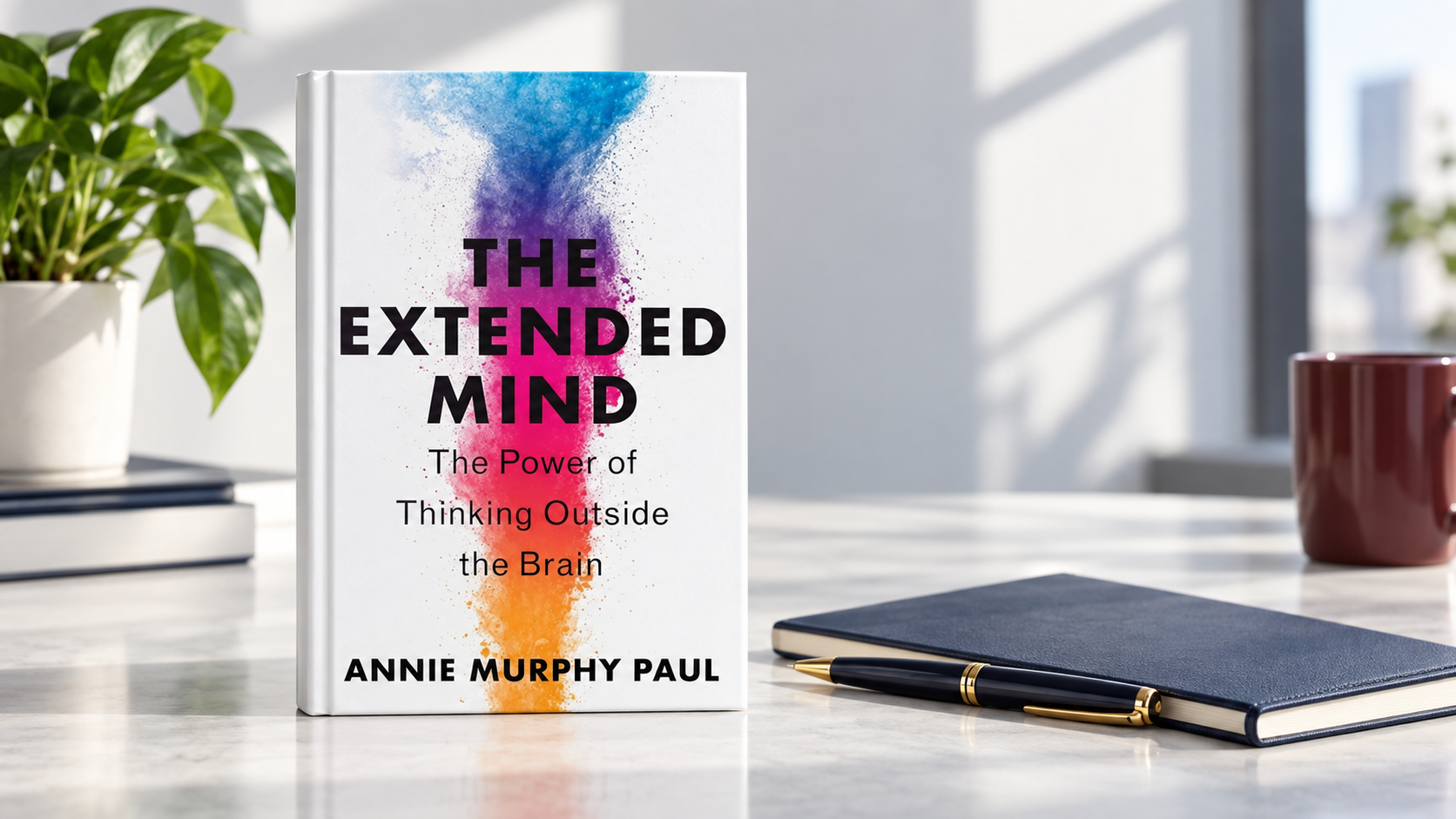
Best for: Owners who want their team to think better with AI, not just use it more often. Reading commitment: About eight hours, research-rich, with ideas you can apply the same week.
Watching someone work only reaches the people in the room. For businesses on Google Workspace, Gems in Google’s Gemini app turn your best user’s thinking into something the whole team can use. A Gem is a custom AI assistant: someone writes the instructions once, covering context, tone, steps, and what to avoid, and can attach Drive files such as a pricing sheet or style guide. Gems can be shared across a company like any Drive file, so your best AI user builds a “quote follow-up” Gem and everyone else starts from their approach instead of a blank box. It’s included in Google Workspace business plans, so many small teams have nothing new to buy.
It has real limits. A Gem is a snapshot: it carries one person’s instructions and repeats their blind spots until someone updates it. It passes along the method, not the judgment, so it works best alongside the show-your-work habit, not instead of it. It also only works on Google Workspace, though Microsoft 365 and ChatGPT offer similar options. But if your best AI user could leave at any point, it’s a practical way to keep what they know in the business.
Owners who figure this out early tend to have good stories about how work is changing inside their companies. TEI has an opening for a paid feature placement in Business Insider, arranged through our media relationships. Business Insider’s readers follow how teams are changing the way they work, and a profile there puts your company in front of future hires, partners, and customers. TEI’s team handles the interview, drafting, and placement from start to finish.
If that sounds interesting, grab a time on our Calendly or reply to this email, and we’ll share the details.
Take with you: If your best AI user left tomorrow, how much of what they know would leave with them?
The Executive Insight, 169 Madison Ave STE 11570, New York, NY, 10016