Subscribe to outperform
The weekly Executive Briefing: insights, books, tools, and media opportunities worth your attention — curated and distilled into 5 minutes.



The Medical University of South Carolina (MUSC) has established itself as a trailblazer in health care innovation, shaping the future of medicine through an unrelenting commitment to discovery, education and patient care. As the only comprehensive academic health system in the state, MUSC carries the weight of a 200-year legacy. Yet, it is the institution’s forward-thinking approach that is driving unprecedented growth and impact, both locally and nationally.
“We’re changing the future of health care through discovery and innovation,” says MUSC President Dr. David Cole, a practicing physician and surgeon with over 30 years of health care experience. “We envision leading health innovation for the lives we touch, addressing effectively many of the intractable challenges in health care, from health disparities to poor access and outcomes.”
At its core, MUSC’s role as an academic health system sets it apart. While community health systems provide essential care, MUSC adds a crucial dimension: educating the next generation of health care professionals and advancing cutting-edge research. With six colleges, 37 degree programs, over 3,000 students and more than 900 residents and fellows—about half of all those currently training in the state—MUSC educates health care providers across every dimension.

One of MUSC’s most significant differentiators is its culture of innovation. Its research program is the largest in the state, having secured more than $360 million in external funding last year alone.
“When we think of innovation, we want our students to find ways to use it to transform both how they learn and how they deliver health care,” says Dr. Lisa Saladin, executive vice president for academic affairs and provost of MUSC. “We want all of our students and faculty to be part of that movement.”
MUSC’s leadership has created a structure that promotes and facilitates new ideas, ensuring that groundbreaking research and practices move quickly from the lab to patient care. It has formalized its commitment to innovation with initiatives like the Chief Innovation Officer and Associate Provost for Education Innovation positions, faculty innovation ambassadors in each college and even a “Shark Tank”-style competition to bring new ideas to life.
This commitment has led to some remarkable outcomes. For instance, MUSC students who won South Carolina’s statewide innovation competition developed a device aimed at improving survival rates for patients experiencing cardiac arrest. They found a way to channel more blood to the brain and heart instead of the extremities during a heart attack. The students have patented the invention, secured angel investors and formed a company to bring their life-saving idea to market. With 55 such startup companies launched by faculty and students and hundreds of patents already filed, the institution’s innovation ecosystem is robust.
MUSC is also taking progressive steps in embracing AI to revolutionize both education and health care delivery. Since 2018, the academic health system has partnered with Clemson University on an AI hub, which supports faculty and student research. From machine learning models for heart transplants to AI-driven disease modeling for outbreak preparedness, MUSC is at the forefront of using technology to tackle complex health care challenges. These initiatives complement the university’s wide array of other dynamic endeavors, including digital dentistry, precision medicine and genetic counseling.
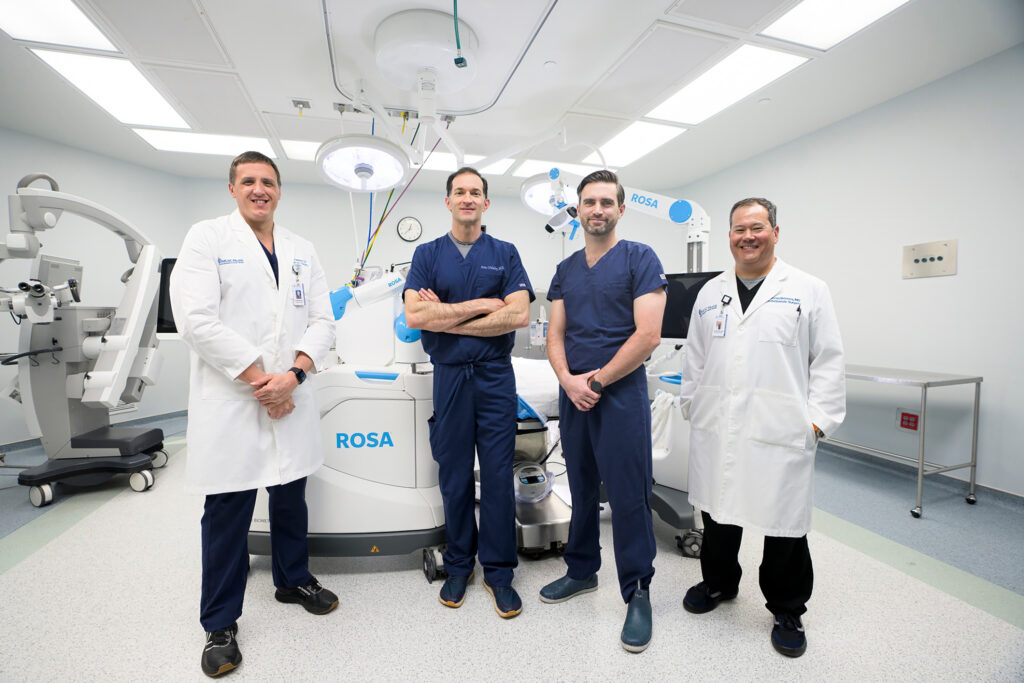
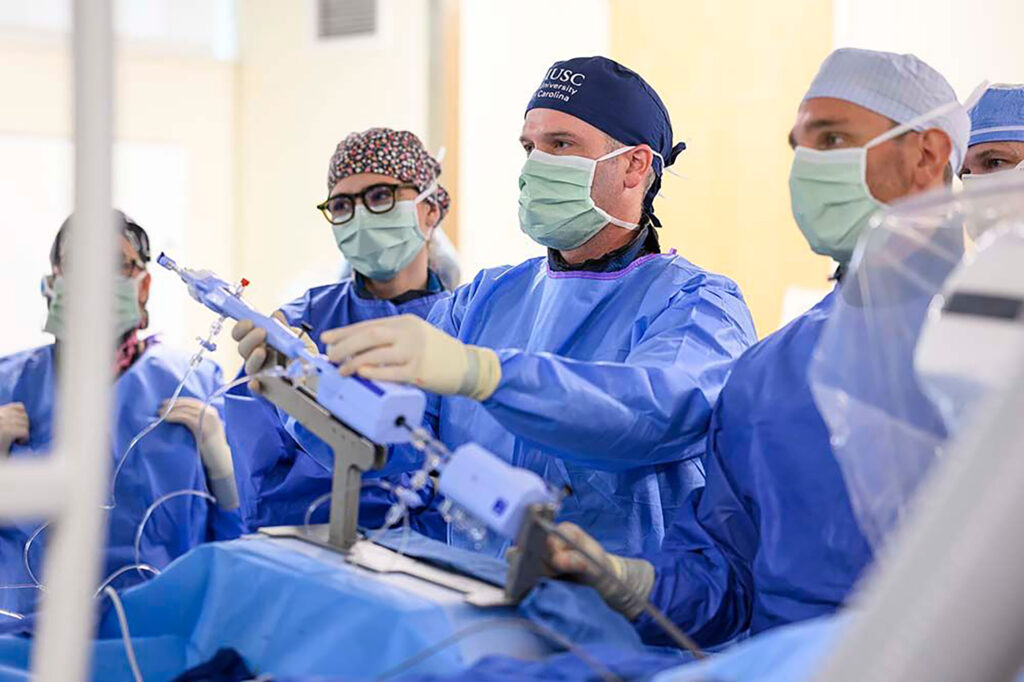
MUSC’s passion for discovery and innovation has spread beyond South Carolina. Recently, the university hosted a conference for about 250 faculty members, addressing the use of AI in education and setting the groundwork for a strategic plan to integrate the technology into its practices. Dr. C. Edward Watson, vice president for digital innovation at the American Association of Colleges and Universities, was so impressed by MUSC’s initiatives that he requested the institution host a national conference on AI in education in 2025.
Cole also emphasizes the academic health system’s goal, in collaboration with existing and future partners, to build an innovation district, a concept that mirrors innovation hubs across the country anchored by academic health systems. This initiative would attract partnerships with industry leaders, educational institutions and communities. MUSC envisions this district as a nationwide destination for cutting-edge health care research and clinical practice, further enhancing its ability to impact health outcomes through national caliber programs.
As the university celebrates its bicentennial this year, it sets its sights on a bolder strategic vision. By setting long-term goals, including improving South Carolina’s health outcomes to rank within the top 20 in the nation and positioning MUSC as a top 20 academic health system, the institution is demonstrating its commitment to progress. These goals are ambitious, but they reflect the momentum MUSC has built over recent years, as well as its potential to shape the future of health care both regionally and nationally.
“We’ve almost quadrupled in size over the last seven years, transforming into a $7 billion organization,” notes Cole, who began his role as MUSC president in 2014. “We realized that in order to serve South Carolina effectively, we needed to expand beyond Charleston and create partnerships across the state and even farther.”
Learn more about The Medical University of South Carolina (MUSC) at musc.edu.

For over 30 years, JMG (formally known as Jobs for Maine’s Graduates) has been at the forefront of addressing Maine's growing workforce challenges, offering equitable solutions to economically disadvantaged and underserved students.

Teaching Channel by K12 Coalition is an online professional learning platform that supports teachers through its video library, professional development courses and coaching collaboration tools.
Founded in 1966, the Colorado State University College of Business has been guided by the idea that business can change lives. In 2019, it embarked on a transformative journey entitled “Business for a Better World” – a mission deeply embedded in every facet of the institution.

A former nurse manager applies for an operations role. Her résumé says “excellent communication skills” and “strong leadership”. So do most of the other applications on the recruiter’s screen. The skills are real, and as written they are invisible. Good transferable skills examples always come […]

The spreadsheet says 52 is possible. You have run it three times, changed the return assumption twice, and it still works. Then come the questions the spreadsheet cannot answer: how to get money out of a 401k seven years early, who pays for health insurance […]

Forty minutes into the meeting, the team is still arguing about which of two suppliers to choose. Both options have been costed twice. Every new argument digs further into the same two answers. Lateral thinking is the habit of stopping at that moment and asking […]

Thursday, 3 p.m. You read the same email for the third time and still could not say what it asks for. You slept six hours last night, and the night before, and you feel fine, mostly. So is 6 hours of sleep enough? For most […]

The Monday meeting goes quiet when one person speaks, and everyone else looks at the table. Nothing in the comment is quite bad enough to discipline. It is the fourth one this month, and the team is waiting to see whether you noticed. Knowing how […]

You land at 7 a.m., the meeting is at 9, and the shirt you packed comes out of the case with a crease across the chest that no amount of smoothing will remove. Learning how to fold a business shirt for travel takes ten minutes […]

It is late, the house is quiet, and three tabs are open. One is a $49-a-month certificate from a company everyone has heard of. One is a bootcamp that promises a new job in sixteen weeks. One is a university program whose price makes you […]

The offer email arrives. The number is fine, maybe slightly less than you hoped, and the recruiter is waiting for an answer. Most people say yes. Knowing how to negotiate salary at this exact point is worth more than at any other moment in the […]

The busiest office workers are interrupted every two minutes during core hours. That figure comes from Microsoft’s own data on how people use its software, and anyone who runs a team will recognise it. Most productivity hacks are written for a calendar you control. The […]

The alarm goes off at six. You hit snooze twice, get up at half past, and spend the first hour of the day feeling like someone else is driving. Most advice on how to become a morning person starts with the alarm: set it earlier […]
The weekly Executive Briefing: insights, books, tools, and media opportunities worth your attention — curated and distilled into 5 minutes.

Welcome to The Executive Insight. Your free AI guide to the best tools is on its way. The first issue arrives soon. Check your promotions tab if it is not in your inbox!
Your request has been successfully submitted. Please wait for a reply from our manager, he will contact you as soon as possible.
Your copy of The Executive Insight Book Challenge List is downloading now. Enjoy the list — and while you're here, take a look at our latest interviews.