Subscribe to outperform
The weekly Executive Briefing: insights, books, tools, and media opportunities worth your attention — curated and distilled into 5 minutes.


In a lab nestled within Singapore’s innovation district, predictive models are being fine-tuned to help cities around the world make smarter decisions—from managing energy consumption to optimizing healthcare systems. But these aren’t just theoretical models; they are “digital twins” that fuse physics and AI to create virtual replicas of complex physical systems designed to simulate real-world conditions and guide decision-making. The project was born out of a bold Franco-Singaporean experiment known as the DesCartes program.


At the heart of this effort is CNRS@CREATE, the unique overseas subsidiary of France’s National Centre for Scientific Research (CNRS). “This is more than an adventure—it’s a big project with big perspectives,” says Professor Dominique Baillargeat, Director and CEO of CNRS@CREATE. “We believe the only way to push research forward is through collaboration. There are no boundaries in science.”
Launched in 2019 under Singapore’s Campus for Research Excellence and Technological Enterprise (CREATE) initiative, CNRS@CREATE was established to deepen scientific cooperation between France and Singapore. The move wasn’t incidental: CNRS has maintained a significant presence in Singapore since 2007, with four of its 80 global international research labs located in the city-state. This foundation paved the way for CNRS to join CREATE, under the National Research Foundation of Singapore, as a platform for higher-impact, applied research.
The results are already apparent. From hybrid AI systems integrating physics for better urban planning to next-generation robotics, CNRS@CREATE has aligned its research efforts with Singapore’s strategic goals. “We focus on topics where Singapore seeks strong societal impact—AI, quantum technologies, decarbonization,” explains Prof. Dominique. “The idea is to build research of excellence that can quickly be applied and tested in real settings.”
A cornerstone of CNRS@CREATE is the DesCartes program, an ambitious initiative that fuses AI and physics to improve predictive decision-making across sectors. It’s directed by Prof. Francisco Chinesta of the Arts et Métiers Institute of Technology in Paris, where he teaches computational science. Though incubated in Singapore, the program’s reach is rapidly expanding. Collaborations are already underway with partners in France, Spain and Brazil. ASEAN countries like Vietnam, Thailand and Indonesia may follow.
“The systems we develop here are meant to be scalable,” says Prof. Dominique, who also teaches at the University of Limoges. “That’s why we’re actively exploring regional partnerships using this approach.”
Beyond academia, CNRS@CREATE is deeply embedded in Singapore’s ecosystem, working with over a dozen industrial partners and major government agencies such as HTX (Home Team Science and Technology Agency), EMA (Energy Market Authority), SMI (Singapore Maritime Institute) and DSO National Laboratories. “We now have about 15 ongoing industrial collaborations,” Prof. Dominique says. “Whether it’s French companies based in Singapore or local institutions, everyone shares a commitment to transforming research into practical solutions.”
But perhaps the most enduring legacy of CNRS@CREATE lies in the culture it promotes—a global, boundaryless vision of science. “In today’s world, there’s a tendency for countries to turn inward,” Prof. Dominique reflects. “But science cannot thrive behind walls. CNRS@CREATE is proof that when nations open up and work together, they can create something that genuinely improves lives.”
In the end, CNRS@CREATE is not just a research hub—it’s a blueprint for how international partnerships can deliver meaningful change. From Singapore to Paris, Valencia to Guimarães, passing by São Paulo: it’s a story of science without borders—and a future shaped by shared innovation.
Learn more about CNRS@CREATE at www.cnrsatcreate.cnrs.fr.

Harris is a leading national mechanical contractor specializing in design and engineering, construction, building automation, service, manufacturing, conveyors and end-to-end building systems. Since its founding in 1948, the company has grown to 14 regional offices with over 2,000 talented employees.

Michel Tricot, CEO and co-founder of Airbyte, argues that AI agents fail not because models lack intelligence, but because they assemble context at runtime. His proposed fix: a Context Store that pre-builds a unified layer of business data, cutting tool calls by 40% and token consumption by 80%.

Mirantis helps organizations build and run cloud-native infrastructure and applications at scale.
Write down twenty-five things you want from your career. Circle five. Then treat the other twenty as the enemy. That is the Warren Buffett 5 25 rule in one breath, and the third step is the one almost everyone skips, because it asks you to […]

It is eleven at night and you are reading the same paragraph for the third time. The board pack is due Monday, two people on your team handed in notice this month, and every piece of advice you have found on burnout self-care starts with […]

An executive with twenty years of experience and 2,000 connections opens LinkedIn twice a month. The profile photo is from a previous job. The last post was a company announcement the marketing team asked everyone to share. Meanwhile a competitor’s founder, with half the experience, […]

Forty minutes into the commute, the episode ends. It was interesting. Somebody successful described their morning routine, recommended three books and said discipline matters. By lunch you could not name one thing you will do differently. The best podcasts for personal development leave you with […]

A former nurse manager applies for an operations role. Her résumé says “excellent communication skills” and “strong leadership”. So do most of the other applications on the recruiter’s screen. The skills are real, and as written they are invisible. Good transferable skills examples always come […]

The spreadsheet says 52 is possible. You have run it three times, changed the return assumption twice, and it still works. Then come the questions the spreadsheet cannot answer: how to get money out of a 401k seven years early, who pays for health insurance […]

Forty minutes into the meeting, the team is still arguing about which of two suppliers to choose. Both options have been costed twice. Every new argument digs further into the same two answers. Lateral thinking is the habit of stopping at that moment and asking […]

Thursday, 3 p.m. You read the same email for the third time and still could not say what it asks for. You slept six hours last night, and the night before, and you feel fine, mostly. So is 6 hours of sleep enough? For most […]
The Monday meeting goes quiet when one person speaks, and everyone else looks at the table. Nothing in the comment is quite bad enough to discipline. It is the fourth one this month, and the team is waiting to see whether you noticed. Knowing how […]
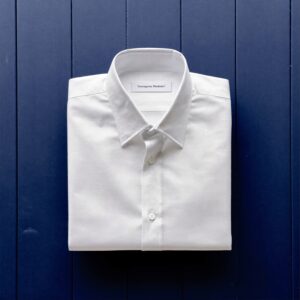
You land at 7 a.m., the meeting is at 9, and the shirt you packed comes out of the case with a crease across the chest that no amount of smoothing will remove. Learning how to fold a business shirt for travel takes ten minutes […]
The weekly Executive Briefing: insights, books, tools, and media opportunities worth your attention — curated and distilled into 5 minutes.

Welcome to The Executive Insight. Your free AI guide to the best tools is on its way. The first issue arrives soon. Check your promotions tab if it is not in your inbox!
Your request has been successfully submitted. Please wait for a reply from our manager, he will contact you as soon as possible.
Your copy of The Executive Insight Book Challenge List is downloading now. Enjoy the list — and while you're here, take a look at our latest interviews.