Subscribe to outperform
The weekly Executive Briefing: insights, books, tools, and media opportunities worth your attention — curated and distilled into 5 minutes.

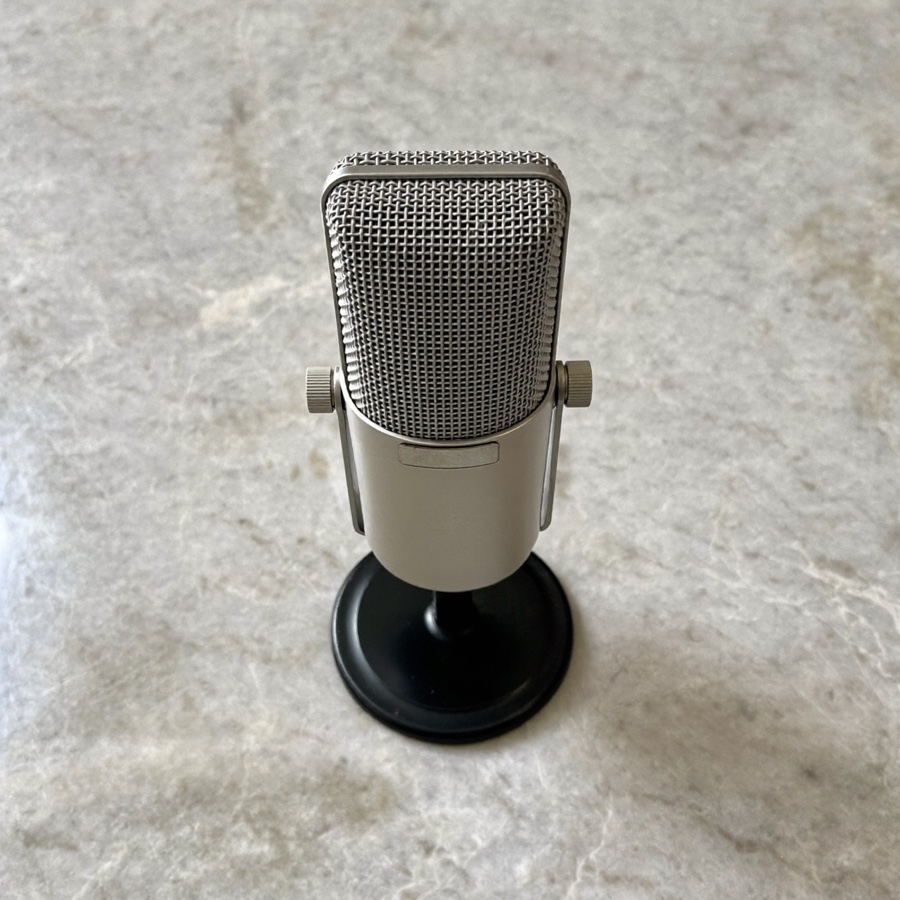

Forty minutes into the commute, the episode ends. It was interesting. Somebody successful described their morning routine, recommended three books and said discipline matters. By lunch you could not name one thing you will do differently. The best podcasts for personal development leave you with a decision, a question or a habit you can try that week. Most leave you with a pleasant feeling and nothing else.
The short answer: choose two or three shows that match one thing you want to improve, such as decisions, health, money or how you lead, and drop the rest. Listen with a question in mind, write down one idea after each episode, and try it within a week. Twelve shows worth trying are below, sorted by what they help with.
The choice of show matters less than how you listen, which is covered after the list.
Podcasts fit the time that cannot be used for anything else: the commute, the gym, the flight, the walk. That is why so many people listen. Edison Research’s Infinite Dial 2025 found that 55 percent of Americans aged 12 and over consume a podcast at least monthly, and 70 percent have done so at some point.
The same convenience is the weakness. Listening while doing something else means the ideas pass through without landing. A podcast competes with whatever your hands and eyes are doing, and a good episode can be forgotten by the next stop.
The fix is to treat a podcast like a book you are reading for a reason. Pick fewer shows, and listen to them on purpose.
The list below favours shows with a long archive and hosts who do their homework. Long-running shows have one big advantage over new ones: you can search years of past episodes for the exact problem you have this month, from hiring to sleep to pricing, instead of waiting for this week’s guest to touch on it. Start with the archive, then follow the new episodes if the show earns it.

| Podcast | Host | Best for |
|---|---|---|
| The Knowledge Project | Shane Parrish | Better decisions and mental models |
| Hidden Brain | Shankar Vedantam | Understanding why people behave as they do |
| WorkLife | Adam Grant | Work, motivation and managing people |
| Freakonomics Radio | Stephen Dubner | Thinking about incentives and evidence |
| Huberman Lab | Andrew Huberman | Sleep, light, exercise and focus |
| The Tim Ferriss Show | Tim Ferriss | How high performers actually work |
| The Diary of a CEO | Steven Bartlett | Long conversations with founders and experts |
| How I Built This | Guy Raz | Founder stories, including the bad years |
| Acquired | Ben Gilbert and David Rosenthal | Long histories of great companies |
| Masters of Scale | Reid Hoffman | Growing a business and a team |
| The Daily Stoic | Ryan Holiday | Short daily reflections on discipline |
| ChooseFI | Brad Barrett and Jonathan Mendonsa | Saving, investing and early retirement |
The Knowledge Project is long-form interviews with investors, executives and researchers about how they make decisions. Shane Parrish asks good follow-up questions and does not let guests stay at the level of slogans. It pairs well with our guide to lateral thinking, because many guests describe exactly the moment they changed the question instead of the answer.
Hidden Brain turns psychology research into stories. Shankar Vedantam is a former journalist, and each episode explains one finding about human behaviour and what it means for everyday life. Hidden Brain’s archive is searchable by topic, which makes it easy to start from a problem you have.
Freakonomics Radio looks at the incentives behind ordinary choices. It is useful training for anyone who has to ask why a system produces the results it does.
WorkLife, from TED, is the organisational psychologist Adam Grant on what makes work better or worse. The episodes on feedback and difficult colleagues are good listening before a hard conversation; our guide on how to manage difficult employees covers the practical side.
Masters of Scale and How I Built This are both founder interviews, with different strengths. Masters of Scale builds each episode around one idea about growth. How I Built This tells the whole story of a company, and the most useful parts are usually the near-failures.
Acquired runs to several hours per episode, each a full history of one company. It is the closest a podcast comes to a business school case, and better for a long flight than a short commute.
Huberman Lab is hosted by Andrew Huberman, a neuroscientist at Stanford. His episodes on sleep, morning light and exercise are detailed and practical. Treat supplement advice on any health show as a starting point for a conversation with your doctor. If you are cutting sleep to fit everything in, read our analysis of whether 6 hours of sleep is enough first.
The Tim Ferriss Show interviews high performers from many fields about routines, tools and habits. The archive is huge. Search it for the guests whose work you know, instead of starting with the newest episode.
ChooseFI covers saving, investing and financial independence, with a strong early-retirement audience. It is good on the mechanics, and it pairs with our guide on choosing a financial advisor for early retirement when the plan gets complicated.
The Diary of a CEO is Steven Bartlett’s long interviews with founders, scientists and public figures, often personal and emotional. The Daily Stoic is the opposite: a few minutes a day on one Stoic idea, read by Ryan Holiday. It suits people who want a short daily habit.

Listen with a question. Before you press play, decide what you want from the episode: one tactic for running meetings, one idea about sleep. You will notice the answer when it comes.
Write one line afterwards. A voice memo or a note on your phone, within ten minutes of finishing. One idea, in your words. Without that step, most of what you heard is gone by the evening.
Try it within a week. An idea you act on becomes yours. An idea you only agreed with fades.
Download before you travel. Flights are the best listening time most executives have, and in-flight connections are unreliable. Download a few long episodes the night before, in the same ten minutes you spend packing; our guide on how to fold a business shirt for travel covers the rest of that job.
Speed up, carefully. Listening at 1.25 or 1.5 times speed fits more into the commute. Slow down for the episodes that matter.
The people who get the most from podcasts for personal development tend to attach listening to something they already do every day. The commute is the obvious slot. The gym is another, and so is the walk after lunch. A fixed slot means you choose the episode on purpose instead of letting the app choose for you.
Match the show to the slot. Short daily shows suit a ten-minute walk. Interview shows suit a forty-minute commute. The three-hour company histories belong on a flight or a long drive, where you can give them attention.
Keep a short queue. Three or four episodes chosen in advance beat a feed of two hundred unplayed ones, which turns listening into a backlog to clear. Once a week, look at what is waiting and delete anything you would not choose today.
Leave some silence too. Not every commute needs an episode. Some of the best thinking happens in the gaps, when your mind is free to connect what you heard last week with the problem in front of you this week. If every spare minute is filled with someone else’s voice, there is no room for that.
Finally, review the shows every few months. Ask what you changed because of each one. If the honest answer for a show is nothing, unsubscribe and try another. A personal development habit should be judged by the same standard as any other investment of time: what it returns.
Podcasts are good at ideas and perspective. They are poor at building a specific skill, because nobody checks whether you learned anything. If you want a new capability, such as data analysis or project management, a structured course with an exam or a project works better; our guide to online courses for career change covers which ones employers count, and our piece on transferable skills examples shows how to prove what you already have.
Watch for the point where listening replaces doing. Ten hours of founder interviews a week can feel like progress while nothing in your own work changes. If that sounds familiar, cut back to one show and put the time into the project.
What is the best podcast for personal development? The one that matches what you want to change. For decisions, The Knowledge Project. For understanding people, Hidden Brain. For health, Huberman Lab.
How many podcasts should I follow? Two or three. More than that and you skim them all.
Are podcasts better than books for personal development? They are easier to fit into a day. Books usually go deeper, and many of the best podcast guests have written one. When an episode changes how you think, read the guest’s book next.
Good podcasts for personal development share one trait: you can name something you did differently after listening. Pick two shows that match what you want to improve, listen with a question, write one line afterwards, and try it within the week.

Written by
Editor of The Executive Insight. Writes about leadership, decision-making and the parts of building a business that nobody puts in the plan.

You land at 7 a.m., the meeting is at 9, and the shirt you packed comes out of the case with a crease across the chest that no amount of smoothing will remove. Learning how to fold a business shirt for travel takes ten minutes once, and it saves that morning every time after. The […]

Most people who want to read more assume the problem is time. Usually it is something smaller: no fixed place in the day for reading, and a habit of finishing books they stopped enjoying fifty pages in. If you want to know how to read more books, start there. Give reading a slot, not a […]

Most personal development books get read once, enjoyed and forgotten by the following quarter. A few are worth a second read, because they change what you do on an ordinary Monday rather than how you feel on a Sunday afternoon. The ten below pass that test. Each one is listed with the decision it helps […]
Write down twenty-five things you want from your career. Circle five. Then treat the other twenty as the enemy. That is the Warren Buffett 5 25 rule in one breath, and the third step is the one almost everyone skips, because it asks you to […]

It is eleven at night and you are reading the same paragraph for the third time. The board pack is due Monday, two people on your team handed in notice this month, and every piece of advice you have found on burnout self-care starts with […]

An executive with twenty years of experience and 2,000 connections opens LinkedIn twice a month. The profile photo is from a previous job. The last post was a company announcement the marketing team asked everyone to share. Meanwhile a competitor’s founder, with half the experience, […]

A former nurse manager applies for an operations role. Her résumé says “excellent communication skills” and “strong leadership”. So do most of the other applications on the recruiter’s screen. The skills are real, and as written they are invisible. Good transferable skills examples always come […]

The spreadsheet says 52 is possible. You have run it three times, changed the return assumption twice, and it still works. Then come the questions the spreadsheet cannot answer: how to get money out of a 401k seven years early, who pays for health insurance […]

Forty minutes into the meeting, the team is still arguing about which of two suppliers to choose. Both options have been costed twice. Every new argument digs further into the same two answers. Lateral thinking is the habit of stopping at that moment and asking […]

Thursday, 3 p.m. You read the same email for the third time and still could not say what it asks for. You slept six hours last night, and the night before, and you feel fine, mostly. So is 6 hours of sleep enough? For most […]

The Monday meeting goes quiet when one person speaks, and everyone else looks at the table. Nothing in the comment is quite bad enough to discipline. It is the fourth one this month, and the team is waiting to see whether you noticed. Knowing how […]
You land at 7 a.m., the meeting is at 9, and the shirt you packed comes out of the case with a crease across the chest that no amount of smoothing will remove. Learning how to fold a business shirt for travel takes ten minutes […]

It is late, the house is quiet, and three tabs are open. One is a $49-a-month certificate from a company everyone has heard of. One is a bootcamp that promises a new job in sixteen weeks. One is a university program whose price makes you […]
The weekly Executive Briefing: insights, books, tools, and media opportunities worth your attention — curated and distilled into 5 minutes.

Welcome to The Executive Insight. Your free AI guide to the best tools is on its way. The first issue arrives soon. Check your promotions tab if it is not in your inbox!
Your request has been successfully submitted. Please wait for a reply from our manager, he will contact you as soon as possible.
Your copy of The Executive Insight Book Challenge List is downloading now. Enjoy the list — and while you're here, take a look at our latest interviews.