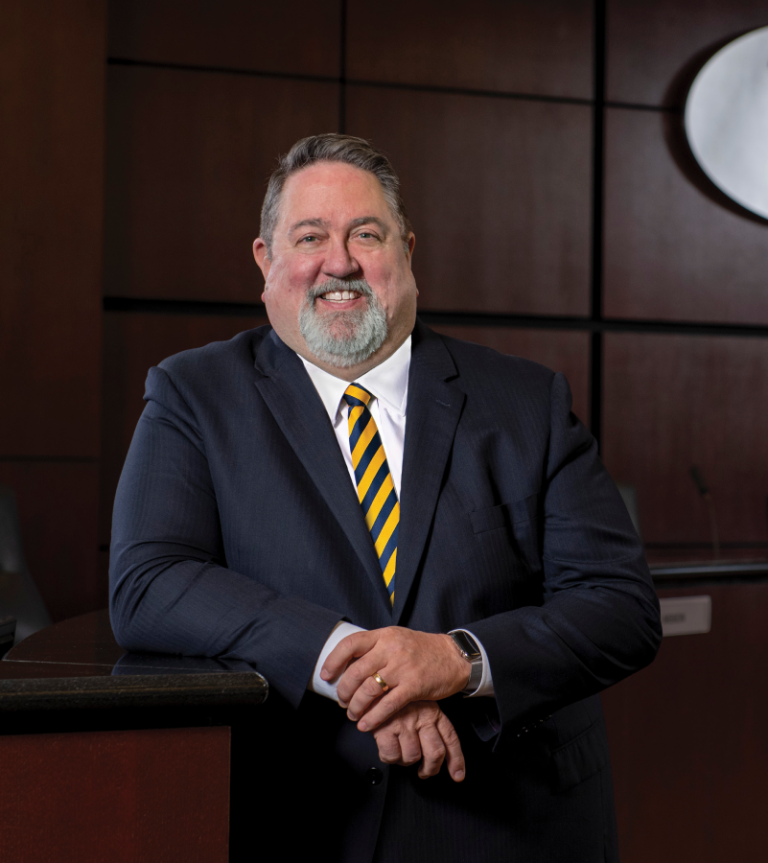
"We believe that the role of the professional educator, college and university is to help students achieve their goals, not force our goals on them while they're trying to do that."

To begin with, could you give us a brief introduction to where Collin stands today?

Collin College is a four-year college located in North Texas and north of Dallas.

It is in its 40th year of existence, as we started in 1985. Citizens here and what then was a bedroom community in Dallas among the four major cities here, namely, Plano, McKinney, Allen and Frisco, back in 1985, wanted to have their own community college. It started with the idea that it would have a campus in McKinney, which is the county seat, and then moved on to Plano and Frisco, which it did in 1988 and 1990, respectively.

From a humble beginning, we now boast almost 60,000 students. We are very proud of having the 11 campuses and centers that we currently operate, trying to reach out and serve all the students who live and work in this incredibly vibrant, fast-growing area. In fact, Holland County is one of the fastest-growing areas in the United States. Eight or so people are moving here every single day, so it’s kind of an exciting time to be here.

What would you say have been the keys to the success of the college in the last 10 years?

I could sum it up in one word: “relevant.” It’s listening to the community and understanding the needs of the businesses and citizens here. We have multiple different tracks and paths. Students can come here, get a certificate and go right into the workforce. Our students come here and get their first two years of college, and they can transfer to any major university, public or private.

We have partnerships with all major universities in Texas and many out-of-state universities so students can find a path that works for them and is relevant to them. Employers are looking to hire people in automotive, trade, construction management, banking or insurance. We have students coming out of programs with the necessary skills to fill the employment needs of the businesses and industries around us.

Another area I think that’s important, and it all hinges upon listening to the needs and becoming relevant, and being nimble to meet the needs, is we’re a major player in our healthcare community. Our healthcare community hires many of our graduates. We have clinical relationships with most of the 15 major hospitals in the area. It’s a very robust partnership. If I were to think of two words to describe the success over the last 10 years, it’s relevance and developing partnerships that help bring those courses to relevance and fruition.

Are there any specific programs that you would like to highlight at this time?

In 2017, the Texas State Legislature and the Governor signed into law the ability for us to offer back large degrees. At that time, it was limited to three. In 2019, they modified it and limited it to five. We’ve already launched our first four, and we’re about to launch our fifth.

The first was a bachelor’s of science in nursing. We have a massive nursing shortage in Texas, and we’re very, very proud of that program, which has just grown exponentially. The second program was a bachelor of applied technology in cybersecurity. This is another hot field, and we’ve got over a thousand students in the pipeline for that bachelor’s degree.

The third was in construction management. I attended the first graduation ceremony or the coining ceremony for that. That major and every one of the graduates already had six-figure jobs in the construction industry before they graduated. Then, our fourth was developed in concert with the Hospital CEOs across the district. It’s a clinical operations management batchers, and it’s been very well received. The fifth is in development, but it’s going to be a bachelor of applied science in software development.

We just launched the Texas A&M University Engineering Academy last February 14th of this year and had over 150 applicants in the first 45 days. I don’t know the exact number today, but it’s between 30 and 40 students, and they become Texas Aggies. At the same time, they become Collin Cougars.

They do the first two years here, and by doing that, they save $40,000 and become engineers. They walk into the Tech Stadium campus for up to two years. It takes their last two years, and away they go. That’s part of an academic alliance. We’re bringing low-cost back to our programs through the region at a pace that’s just really impressive. I’m very, very proud of the team for the work they’ve done to make that happen.

What would you say are your competitive strengths as an educational institution?

We’re not going to sit and talk about something for a long, long time. We’re going to be nimble. We’re going to get the facts. We need to move forward, and we’ve got a board that fully expects us to take action and be action-oriented. That’s a mentality. It’s an urgency because what we’re doing is important.

We’re tax-supported, as we’ve got the second-lowest tax rate. Across all 50 community colleges in Texas, we’re second lowest in the state. And we have the lowest tuition for our classes. With those price points and the quality that we’ve been able to develop with an amazing faculty, I think those are tremendous competitive advantages, especially if we combine them with that sense of urgency.

I believe another key to your success is the Technical Campus, which is quite impressive. Could you tell us a little bit more about it and the role of innovation at Collin College?

The Technical Campus is a small miracle, just like the Wylie campuses and two smaller campuses, the Farmersville and Celina campuses, because they were all developed and staffed during the COVID-19 pandemic. It was a true challenge.

However, the Technical Campus was the manifestation of the board’s desire to ensure that every student in Collin County, regardless of their interest, had a home at Collin College. We wanted to ensure that there were majors that would allow students to go directly into the workforce. The campus is 340,000 square feet. It cost 177 million to build, and it’s built on 32 acres, 28 of which are buildable. It’s got some amazingly unique features above and beyond the great programs that are there.

It’s home to the Allen Independent School District’s Dual Credit Academy. On the first floor of one of our buildings, on 44,000 square feet, they’re doing nothing but helping students earn an associate degree before they graduate high school. It’s home to the Academic Alliance.

I just spoke about the Tech Stadium Engineering Academy. It’s also home to a tremendous effort to educate students across multiple high-need fields. That includes some in the medical field, but it also includes things like construction management, which we’ve mentioned, as well as electrical plumbing. You name it: HVAC, welding and automotive. It’s just an amazing facility. It’s been a big success, as it’s been our fastest-growing campus, as a matter of fact.

Are you looking to attract potential business partners for collaborations and to develop joint venture programs?

It’s a great question. Every one of those programs that I’ve mentioned has advisory committees made up of individuals from the business community to help us ensure that those programs are relevant and producing the skill sets needed by the industry. We have those partnerships. We’re always talking to folks and trying to continue to build those partnerships. So, I think the answer is absolutely yes.

Is there any specific area where you are looking for partners?

Yes, we’re starting to think about our next bachelor’s degrees, which will require legislative approval. We’re talking to major bank CEOs, and we’re looking at degrees in banking, finance and insurance, as those sectors are growing exponentially here in the area.

I would like to ask you as well about the potential message for donors and the community.

We like your money. Bring it in barrels and wheelbarrows, and bring it soon. Now, in all seriousness, we’ve got tremendous support within our community. We do a community survey every couple of years. We’re very proud of the community support, which is exhibited in the number of scholarships we’re able to give through our foundation. As far as community giving is concerned, we’re very blessed.

What is the key message that you would like to send about Collin College?

We’re in the education business, not the political business. The college doesn’t weigh in on matters of great political debate or get involved in some of the political squabbles of the day. We have a singular focus: educating students. We’re not trying to educate them to be left or right politically. We’re trying to help them develop critical skills and expose them to things that help them make their own decisions.

The role of the professional educator, the role of the professional college and university, is to help students achieve their goals, not force our goals on them while they’re trying to do that.

I’m very, very proud of our faculty. We have a tremendously professional faculty.

They’re student-centric and student-oriented, and they want to see those students succeed. At the end of the day, our goal is to help students achieve their goals and dreams.

By the way, we have some students who haven’t yet set goals and dreams. Our mission is also to help them walk that path and figure out what they want to be when they grow up. Every one of us, especially me, has had mentors along the way. The unsung heroes have helped us achieve our goals. If I were to ask you to name an unsung hero, somebody that’s not on your resume, you’ve got someone in your line who helps you to get where you are to be successful. We all do. We want to be that someone for those students who haven’t yet decided on their path and to help guide them along the way. We’ve got a fantastic team doing that. That’s very important to me.

What is your vision for the college in the next 3 to 5 years? What’s coming?

It’s so exciting. We’re in the middle of the second year of our seven-year master strategic plan. We’re getting ready to build an almost 80 million dollar Health Science building on one of our campuses to expand our reach into areas where the hospitals and the medical facilities are located. We need some help here. We’re looking at an aviation college at one of the local airports that’s going to offer majors in mechanics and flight training. So, we’re very, very excited about those two things. We’re also excited to expand our academic alliance. We want to offer more bachelor’s degrees.

A big one for us is trying to solve the teacher shortage. As such, we’re starting to develop a perspective for university partners to come in and help us put together degree plans and take people who are maybe teachers, aids or paraprofessionals in the K-12 environment and help them to achieve the ability to be a classroom teacher if they want to do that. Those kinds of partnerships are very exciting to me, and all those things are in the pipeline today around the corner, so I’m very excited about them.

Latest From The Executive Insight

  • Education

    A former nurse manager applies for an operations role. Her résumé says “excellent communication skills” and “strong leadership”. So do most of the other applications on the recruiter’s screen. The skills are real, and as written they are invisible. Good transferable skills examples always come […]

    9 min read
  • Wealth

    The spreadsheet says 52 is possible. You have run it three times, changed the return assumption twice, and it still works. Then come the questions the spreadsheet cannot answer: how to get money out of a 401k seven years early, who pays for health insurance […]

    8 min read
  • Mindset

    Forty minutes into the meeting, the team is still arguing about which of two suppliers to choose. Both options have been costed twice. Every new argument digs further into the same two answers. Lateral thinking is the habit of stopping at that moment and asking […]

    9 min read
  • Wellness

    Thursday, 3 p.m. You read the same email for the third time and still could not say what it asks for. You slept six hours last night, and the night before, and you feel fine, mostly. So is 6 hours of sleep enough? For most […]

    9 min read
  • Business

    The Monday meeting goes quiet when one person speaks, and everyone else looks at the table. Nothing in the comment is quite bad enough to discipline. It is the fourth one this month, and the team is waiting to see whether you noticed. Knowing how […]

    9 min read
  • Lifestyle

    You land at 7 a.m., the meeting is at 9, and the shirt you packed comes out of the case with a crease across the chest that no amount of smoothing will remove. Learning how to fold a business shirt for travel takes ten minutes […]

    8 min read
  • Education

    It is late, the house is quiet, and three tabs are open. One is a $49-a-month certificate from a company everyone has heard of. One is a bootcamp that promises a new job in sixteen weeks. One is a university program whose price makes you […]

    8 min read
  • Wealth

    The offer email arrives. The number is fine, maybe slightly less than you hoped, and the recruiter is waiting for an answer. Most people say yes. Knowing how to negotiate salary at this exact point is worth more than at any other moment in the […]

    8 min read
  • Mindset

    The busiest office workers are interrupted every two minutes during core hours. That figure comes from Microsoft’s own data on how people use its software, and anyone who runs a team will recognise it. Most productivity hacks are written for a calendar you control. The […]

    8 min read
  • Wellness

    The alarm goes off at six. You hit snooze twice, get up at half past, and spend the first hour of the day feeling like someone else is driving. Most advice on how to become a morning person starts with the alarm: set it earlier […]

    9 min read