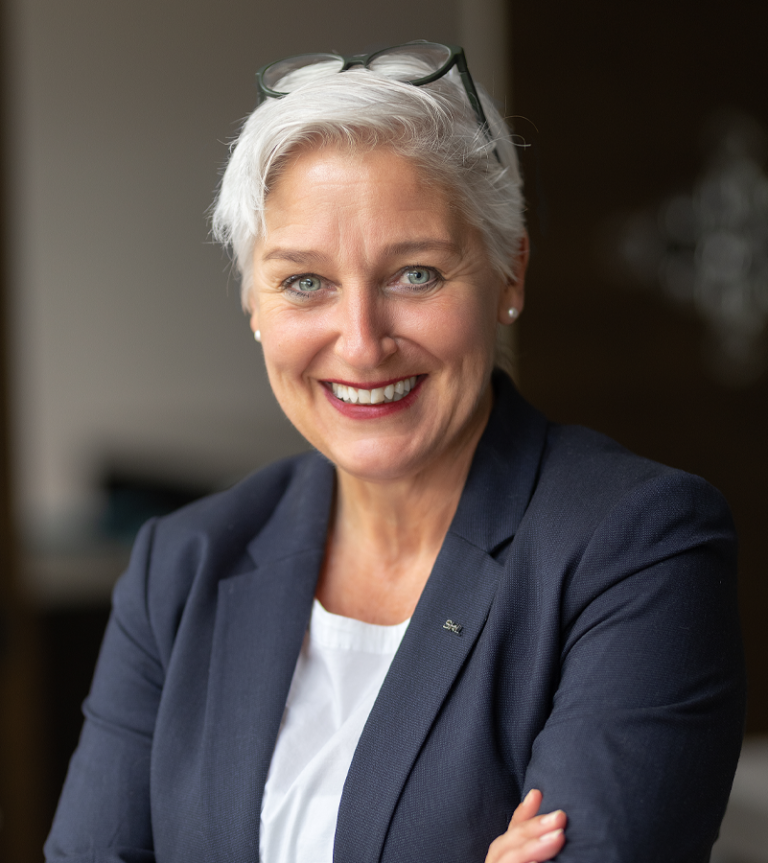
"We believe every child can succeed, academically and socially, and provide a nurturing, world-class education regardless of their challenges."

Could you start by introducing Neighborhood Charter Schools and what makes them unique?

Neighborhood Charter Schools is a charter school organization based in New York City. We operate two locations: one in Harlem, Manhattan, which serves students from Kindergarten through 8th grade, and another in the Bronx, currently a Kindergarten through 6th grade school, which will expand to include 7th and 8th grades in the next two years. We are a public school and receive public funding. We accept any child from New York City who applies and is selected.

Our school serves a diverse population, with a significant portion of students receiving individualized educational programs (IEPs). We also have about 15% of our student body diagnosed with autism, and we are seeing a growing number of multilingual learners—students who are acquiring English as a new language.

At Neighborhood Charter Schools, we are proud of our inclusive environment and welcome all children from across New York City.

What do you consider to be the key factors behind the success of your institution?

The cornerstone of our success has been the creation of a welcoming, inclusive environment. We recognize that many of our students require special education services, and we’ve made it a priority to ensure we have the necessary staffing to support their diverse needs.

A critical aspect of our model is having two teachers in each classroom. This co-teaching approach, which we refer to as Integrated Co-Teaching (ICT), helps reduce the student-to-teacher ratio and allows us to provide individualized attention to students, which is essential for their academic success. We also have a range of support services, including speech-language pathologists, counselors, and occupational and physical therapists, all of which ensure students receive the services they need to thrive.

Beyond academic support, we emphasize joy in the classroom. While we maintain high academic standards, we also want students to enjoy their school experience, socialize with their peers, and develop strong interpersonal skills.

Parent engagement is another crucial component of our success. We ensure that families understand how we support their children’s learning and maintain strong communication. By fostering a strong school-home connection, we help ensure the success of our students.

Which programs or initiatives at Neighborhood Charter Schools would you like to emphasize?

As I mentioned, one of our key initiatives is co-teaching. Every classroom is co-taught by two educators, allowing us to address the individual needs and learning styles of our students. This is a significant investment and takes careful financial planning, but it’s been integral to our success.

We also have a robust Related Services program, which provides students with necessary therapies such as speech and occupational therapy, as well as counseling and physical therapy. This helps us ensure that every child has access to the services they need to excel.

In addition to academic support, we place a strong emphasis on building social skills. Our social thinking program, led by speech-language pathologists and supported by teachers, helps students with IEPs develop critical social and communication skills.

We are also deeply committed to building a strong connection with families. We offer parent training sessions and regular communication to ensure parents understand the curriculum, how to support their children at home, and feel confident in our school’s approach.

None of this would be possible without the faculty. Can you tell us about the faculty and staff at Neighborhood Charter Schools?

We take great pride in the diversity of our teaching staff, which reflects the diversity of our student body. Our teachers come from a wide variety of backgrounds, and we ensure that our staff is racially diverse, so students can see themselves represented in their teachers. This commitment to diversity and equity is central to our mission.

Our teachers come from many different professional backgrounds. Some have followed traditional teaching preparation routes, while others bring unique skills from fields like science, math, and writing. Regardless of their background, we provide ongoing professional development to help our teachers design strong lessons and meet the needs of our diverse learners.

Academic leaders work closely with teachers on a daily basis to provide support, ensuring that they are equipped to address the challenges in their classrooms. This continuous professional support helps our teachers grow and ensures that our students receive the best possible education.

(Interviewer) It sounds like you have a challenging yet nurturing environment for both teachers and students.

Yes, we have a very inclusive approach. We don’t screen applicants or exclude anyone based on their background or needs. Our student body is diverse, reflecting all the children of New York City, and this diversity brings both joy and challenges.

Our staffing model is designed to meet the unique needs of every child. Having two teachers in the room allows for effective team teaching and provides the support necessary to address any challenges that may arise. This approach helps ensure that every student receives the individualized attention they need, while also fostering a nurturing and collaborative classroom environment.

(Interviewer) For parents, this must be such a blessing.

Yes, our model is incredibly reassuring for parents, particularly those with children who have IEPs or other challenges. Parents know their children are not only safe and well-cared for but also receiving a high-quality education. We offer a variety of support services, including orientations and parent training sessions, to help families feel confident in their partnership with us.

The parents we work with often have complex needs, and we strive to provide the resources and support that allow them to collaborate effectively with us in ensuring their children’s success.

What would be a potential message that you might have for donors who are considering collaborating with you?

I think the key message is that there are many schools, not just in New York City but across the country, where students are not being properly supported or where the educational approach doesn’t meet their needs. Our school is different. We’re committed to educating all children, regardless of their background or challenges. We pride ourselves on our inclusivity, especially with our ASD (Autism Spectrum Disorder) program, which supports autistic children.

We are planning to expand. As I mentioned earlier, our Bronx location will grow from a K-6 to a K-8 school in the next two years, and we’re working toward eventually offering high school education as well. This expansion is something our families want and need. Many of them stay with us for years, but when their children reach high school age, they often encounter a different set of challenges in other schools. Our goal is to offer a continuity of education from Kindergarten all the way through 12th grade, helping students successfully graduate high school and pursue higher education.

We’re looking to expand because our families have expressed a desire for it, and there’s a clear demand for this kind of education. Our students thrive in an environment where they are understood, where bullying is not tolerated, and where differences are celebrated. That’s why our expansion is so important to us.

One important point I would like to emphasize is that we rely solely on regular state funding, just like other public schools. We are not supported by private investors or external donors. Our schools are located in underrepresented, economically challenged neighborhoods such as West Harlem and the South Bronx, where schools often face considerable financial and resource limitations. Despite the lack of extra funding and resources, we remain steadfast in our commitment to providing a world-class education for our students. Many of our families come from disadvantaged backgrounds, and while we don’t receive the same attention as schools in wealthier areas, we are fully dedicated to the communities we serve. Our vision is to continue expanding and to welcome even more families from across New York City, ensuring that every child receives the support and inclusive environment they deserve.

What is the final message you’d like to convey to the broader community regarding the mission of Neighborhood Charter Schools?

I would say the best message to the community is that we are an organization that cares deeply about the children we serve. We believe that all children, regardless of their background or challenges, can learn and succeed in school, both academically and socially.

For families who are overwhelmed by the challenges of raising a child, especially one with special needs, our school offers a place where children can receive a world-class education in an environment that is both nurturing and empathetic. We are committed to providing the support these families need and to ensuring that every child is able to reach their full potential.

Latest From The Executive Insight

  • Education

    A former nurse manager applies for an operations role. Her résumé says “excellent communication skills” and “strong leadership”. So do most of the other applications on the recruiter’s screen. The skills are real, and as written they are invisible. Good transferable skills examples always come […]

    9 min read
  • Wealth

    The spreadsheet says 52 is possible. You have run it three times, changed the return assumption twice, and it still works. Then come the questions the spreadsheet cannot answer: how to get money out of a 401k seven years early, who pays for health insurance […]

    8 min read
  • Mindset

    Forty minutes into the meeting, the team is still arguing about which of two suppliers to choose. Both options have been costed twice. Every new argument digs further into the same two answers. Lateral thinking is the habit of stopping at that moment and asking […]

    9 min read
  • Wellness

    Thursday, 3 p.m. You read the same email for the third time and still could not say what it asks for. You slept six hours last night, and the night before, and you feel fine, mostly. So is 6 hours of sleep enough? For most […]

    9 min read
  • Business

    The Monday meeting goes quiet when one person speaks, and everyone else looks at the table. Nothing in the comment is quite bad enough to discipline. It is the fourth one this month, and the team is waiting to see whether you noticed. Knowing how […]

    9 min read
  • Lifestyle

    You land at 7 a.m., the meeting is at 9, and the shirt you packed comes out of the case with a crease across the chest that no amount of smoothing will remove. Learning how to fold a business shirt for travel takes ten minutes […]

    8 min read
  • Education

    It is late, the house is quiet, and three tabs are open. One is a $49-a-month certificate from a company everyone has heard of. One is a bootcamp that promises a new job in sixteen weeks. One is a university program whose price makes you […]

    8 min read
  • Wealth

    The offer email arrives. The number is fine, maybe slightly less than you hoped, and the recruiter is waiting for an answer. Most people say yes. Knowing how to negotiate salary at this exact point is worth more than at any other moment in the […]

    8 min read
  • Mindset

    The busiest office workers are interrupted every two minutes during core hours. That figure comes from Microsoft’s own data on how people use its software, and anyone who runs a team will recognise it. Most productivity hacks are written for a calendar you control. The […]

    8 min read
  • Wellness

    The alarm goes off at six. You hit snooze twice, get up at half past, and spend the first hour of the day feeling like someone else is driving. Most advice on how to become a morning person starts with the alarm: set it earlier […]

    9 min read