Subscribe to outperform
The weekly Executive Briefing: insights, books, tools, and media opportunities worth your attention — curated and distilled into 5 minutes.




As enterprises work to quickly adapt in this rapidly evolving age of AI, experts say that AI-powered Global Capability Centers (AI-GCCs) are now essential for businesses of any size, whether they have a few hundred or thousands of employees.
Global Capability Centers (GCCs), sometimes called captives, global in-house centers, shared service or tech hubs, or Centers of Excellence, are fully owned parts of a company that focus on high-value work like engineering, data and AI, design, finance, risk, and customer experience in locations with strong talent and lower costs. Unlike outsourcing, a GCC is run by the company itself, keeping its own culture, intellectual property (IP), plans, and security, but set up where the skills and costs are most favorable.
“Think of AI-GCC as an AI-powered solutions factory that can substantially scale your enterprise capability,” explains Anil Chintapalli, Chairman of People360, Managing Partner at Human Capital Development, and Strategic Advisor to McKinsey & Company. Over the past decade, People360 has helped successfully operationalize over 40 GCCs, utilizing an industrialized operating blueprint to help enterprises expediently establish and cost-effectively operate GCCs. “AI-GCC should ship outcomes (such as product features, models, analytics, know-your-customer decisions, and anti-money laundering decisions), not just deliver cost savings and can service the entire gamut of all your enterprise needs at an accelerated speed to market (and of course, with significant cost optimization): procurement, finance and accounting, human resources, information technology, sales and marketing operations, and so on.”
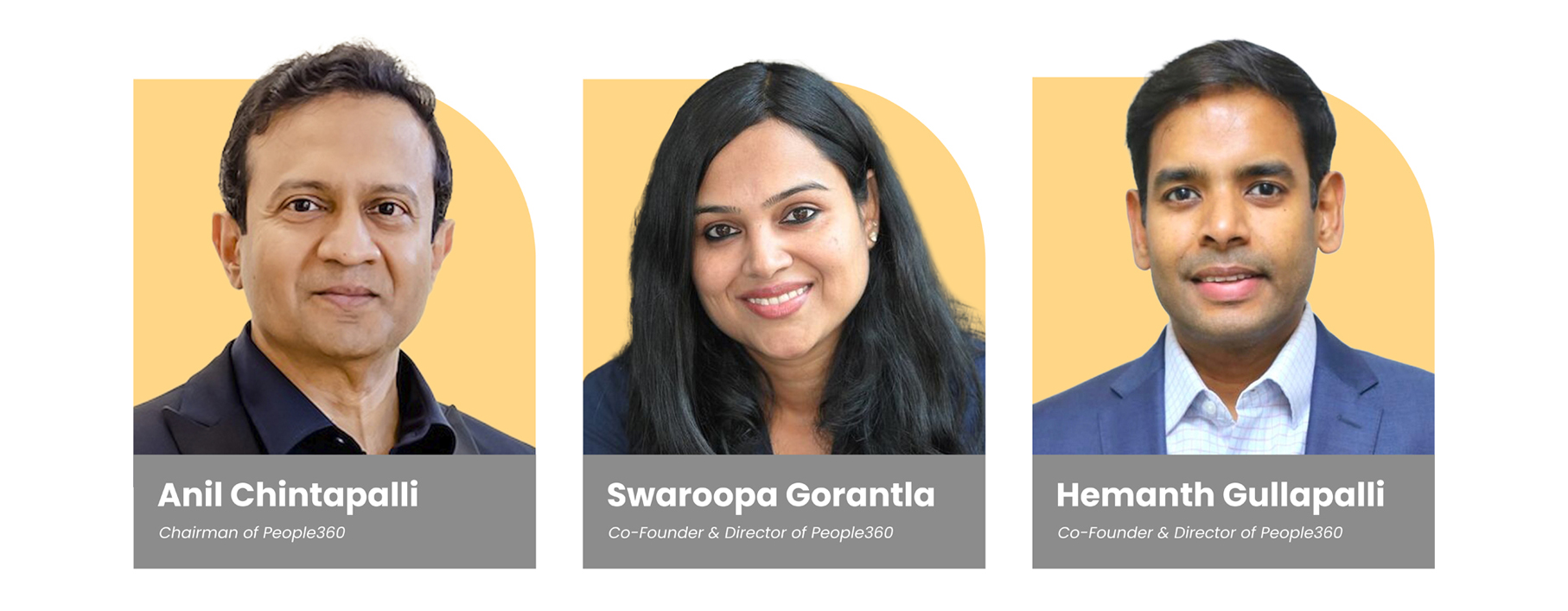

According to Hemanth Gullapalli, Co-founder and Director of People360, the value drivers of AI-GCC are:
1. Speed and focus: Integrated cross-functional technology and operations teams work directly on your business goals (and quantifiable business outcomes), rather than just focusing on traditional service level agreements. This leads to faster project cycles and fewer handoffs.
2. Structural cost advantage: Achieve reductions in total cost of ownership (TCO) between 45% and 65% by creating and managing agentic workforce organizations that have highly optimized team structures and business processes. Importantly, People360’s proprietary operating model (IP) enables enterprises to have a GCC operational within 4-6 months.
3. Talent access at scale: Tap into deep talent pools for AI, cybersecurity, and digital infrastructure and operations. In certain locations, the quality of new hires for specific (niche) skills is higher than what you could find locally for the same cost.
4. IP and security control: Your data remains secure within company boundaries, minimizing third-party risk.
5. Resilience: Using multiple hubs allows for continuous operations around the world and helps diversify against geopolitical risks.
6. AI at scale: AI-GCCs are ideal for managing AI platforms, data governance, and model development.
According to Swaroopa Gorantla, Co-founder and Director of People360, AI-GCCs deliver maximum value in:
In this increasingly volatile market environment, as enterprises strive to navigate increasing pressure to innovate faster while controlling costs, industry experts highlight that a select group of specialist firms such as People360 can help enterprises build and operate AI-GCCs. Importantly, AI-GCC reduces reliance on third-party vendors for AI development, thereby mitigating IP and security risks for an enterprise. With global regulations tightening, keeping data processing and AI development within a captive GCC environment ensures better compliance than outsourcing to third-party service providers.
An AI-GCC is thus a strategic asset that delivers competitive advantage and operational resilience, while mitigating execution risk resulting in substantive shareholder value creation.
Learn more about People360 at people360d.com.

Human Capital Development is a leading institution offering a new alternative for deploying large-scale private capital for achieving triple bottom line returns.

Uzbekistan-based studio EVEGOPLAYON has reached an even split between hard-surface and character art within two years, COO Valentin Tsaranov says.

Jerome Tuguin, CEO of Personal Collection Direct Selling, is scaling a Philippine direct-selling company by treating dealers as entrepreneurs and betting that trust, not just revenue, can thrive as the company expands into Malaysia.

Write down twenty-five things you want from your career. Circle five. Then treat the other twenty as the enemy. That is the Warren Buffett 5 25 rule in one breath, and the third step is the one almost everyone skips, because it asks you to […]

It is eleven at night and you are reading the same paragraph for the third time. The board pack is due Monday, two people on your team handed in notice this month, and every piece of advice you have found on burnout self-care starts with […]

An executive with twenty years of experience and 2,000 connections opens LinkedIn twice a month. The profile photo is from a previous job. The last post was a company announcement the marketing team asked everyone to share. Meanwhile a competitor’s founder, with half the experience, […]

Forty minutes into the commute, the episode ends. It was interesting. Somebody successful described their morning routine, recommended three books and said discipline matters. By lunch you could not name one thing you will do differently. The best podcasts for personal development leave you with […]

A former nurse manager applies for an operations role. Her résumé says “excellent communication skills” and “strong leadership”. So do most of the other applications on the recruiter’s screen. The skills are real, and as written they are invisible. Good transferable skills examples always come […]

The spreadsheet says 52 is possible. You have run it three times, changed the return assumption twice, and it still works. Then come the questions the spreadsheet cannot answer: how to get money out of a 401k seven years early, who pays for health insurance […]

Forty minutes into the meeting, the team is still arguing about which of two suppliers to choose. Both options have been costed twice. Every new argument digs further into the same two answers. Lateral thinking is the habit of stopping at that moment and asking […]

Thursday, 3 p.m. You read the same email for the third time and still could not say what it asks for. You slept six hours last night, and the night before, and you feel fine, mostly. So is 6 hours of sleep enough? For most […]

The Monday meeting goes quiet when one person speaks, and everyone else looks at the table. Nothing in the comment is quite bad enough to discipline. It is the fourth one this month, and the team is waiting to see whether you noticed. Knowing how […]

You land at 7 a.m., the meeting is at 9, and the shirt you packed comes out of the case with a crease across the chest that no amount of smoothing will remove. Learning how to fold a business shirt for travel takes ten minutes […]
The weekly Executive Briefing: insights, books, tools, and media opportunities worth your attention — curated and distilled into 5 minutes.

Welcome to The Executive Insight. Your free AI guide to the best tools is on its way. The first issue arrives soon. Check your promotions tab if it is not in your inbox!
Your request has been successfully submitted. Please wait for a reply from our manager, he will contact you as soon as possible.
Your copy of The Executive Insight Book Challenge List is downloading now. Enjoy the list — and while you're here, take a look at our latest interviews.