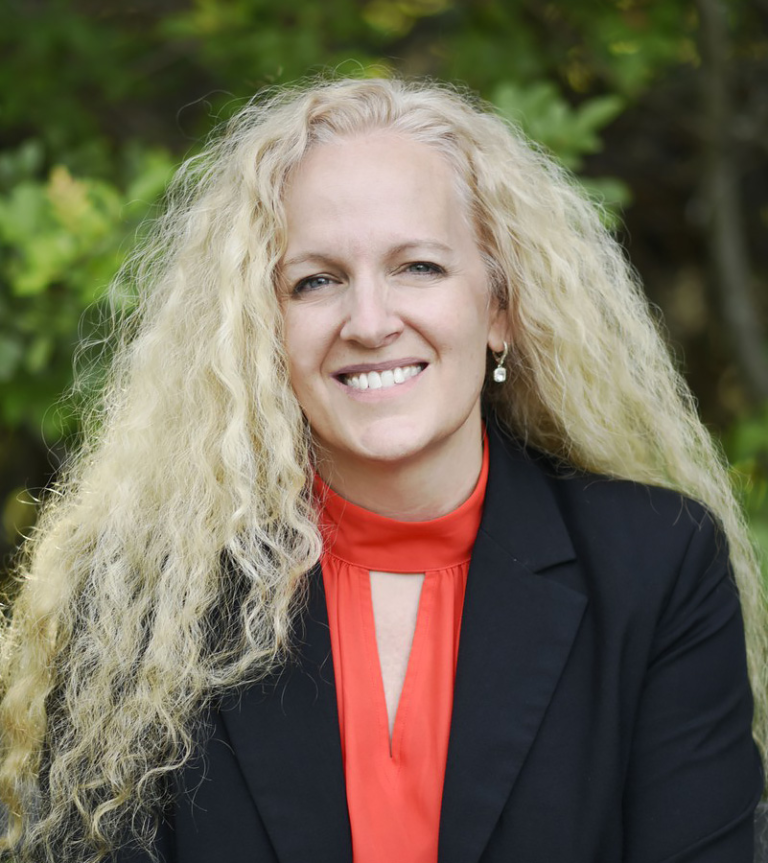
"At Plato, we emphasize and promote parental involvement because it benefits the child, school and family."

Could you please state your name, position and the name of the institution that you represent?

I am Amy Hayes, chief of schools for Plato Academy Schools Corporation.

Could you please give us an introduction to Plato Academy as of today?

Plato Academy started in 2004. The Panhellenic Foundation in Clearwater, Florida, wanted a school opportunity for Greek students. There’s a large Greek population in Tarpon Springs, and they wanted an opportunity where kids could go and learn not only the Greek language but also the Greek culture and heritage and have a Hellenic foundation.

It started with one school, and over the years—we’ve now been in business for 20 years—we have grown from that one school to nine public charter schools here in the Tampa Bay area. We’re in three different school districts: mainly in Pinellas County, but we also have a school in Pasco County and one in Hillsborough County.

The focus of our charter is the philosophy of Plato and teaching through the Socratic method. So, students receive a very rigorous academic focus but with a strong emphasis on building their character and their ability to question things for themselves. They learn through the experience of questioning and interacting with various types of learning opportunities.

What would you say have been the keys to the success of Plato Academy?

Honestly, it’s the people who are part of it. Plato Academy wouldn’t be the success it is today without the administrators and teachers in our programs. We have some of the most dedicated individuals working for us. We have over 500 teachers and staff, many of whom have been with us since the beginning. At our 20-year gala, we celebrated teachers who have 15 or more years of experience with Plato. That longevity makes a huge impact on the schools and families because they see the same teachers and programs year after year.

When there’s a high turnover rate in a school, there’s also a turnover of ideological concepts. But with a consistent group of people, we’ve stayed true to our original intent: teaching the Greek language and culture. The Greek language is the foundation of many other languages, as well as key components of math, science and other fields. The Greek culture is fundamental to understanding how societies and governments work today. Teaching students about those roots is a rewarding experience.

Could you tell us more about your programs, especially in areas like art, music and technology?

We have an advanced academic focus. For example, our kindergarten students are learning first-grade standards and concepts, and second-graders are learning third-grade material. We offer accelerated math starting in third grade, so students progress faster and are prepared for high school-level courses by middle school.

Most of our programs are K-8, but we recently opened our first high school at our Tampa location. When students leave our middle schools, they typically earn three to four high school credits, including foreign language credits in Greek.

At Plato Academy, our students get to wear costumes authentically made in Greece and learn Greek dance, performance and oration. From kindergarten onward, they are taught Greek songs and both the Greek and American national anthems, which they sing every day in school.

This cultural emphasis extends to the arts. Last year, an art museum in Athens provided our students with kits to create their own museum objects and a corresponding book. These creations were sent back to Athens and are now on display in an art museum in Greece. It was an incredibly exciting opportunity for our students, and another location within our academy is now planning to take on a similar project.

Technology has also always been a strong point for us. When COVID hit and schools were scrambling to figure out how to implement online learning, we were already doing it. Being ahead of the curve in technology has allowed us to provide our students with diverse and advanced learning opportunities consistently.

What role does innovation play at Plato Academy?

Innovation is the ultimate question every year, especially here in Florida, where the legislature is constantly opening up opportunities for schools and providing parents with more choices. When we first started in the Tampa Bay area, we were the school of choice. Parents lined up around the door, and we didn’t have enough seats for all the kids. Today, we still have a robust waitlist, but there are now micro-schools, private schools and voucher systems giving families more options.

What sets us apart is our unique way of engaging students. Our classrooms are not typical. Students interact deeply with their learning, their peers and their teachers, learning how to learn for themselves. We’re always looking for ways to innovate. For example, we’re exploring an online Greek language program to offer advanced courses like Greek 3 and Greek 4. We also have partnerships with the Greek government, which sends teachers from Greece to teach Greek language and culture. Additionally, we’re considering introducing ancient Greek to our lower grades, as it’s the root of so many languages.

For our gifted learners, we offer programs like “Odyssey of the Mind.” Last year, our St. Pete location won at the world championships. These opportunities allow our students to express creativity and explore learning methods that go beyond traditional approaches.

What would be your key message to parents considering Plato Academy?

My message to parents is not just for those with Plato but also for those with any school: be involved in your child’s education. Volunteer at school and show your child that their education is important to their future. Studies show that when parents are actively involved, their children perform better academically, have better behavior and develop stronger character and integrity. Unfortunately, today’s busy American life often leaves parents less involved. At Plato, we emphasize and promote parental involvement because it benefits the child, school and family. Regardless of the school a parent chooses, I hope they make that commitment.

What is your vision for the next three to five years?

We aim to continue being innovative. We’re Cognia-accredited and are exploring potential private school opportunities alongside our charter schools. This could allow us to diversify and create new programs. For instance, we’re considering programs in AI and career and technical education to provide students with specialized skills.

We’ve also been speaking with people in other states to see if our model would work for their communities. There are Greek communities nationwide, but we’re also open to adapting our model to fit other needs. Our goal is to provide every opportunity possible to the kids of Tampa Bay, and potentially beyond, in Florida or even out of state.

Is there anything I haven’t asked that you’d like to mention?

I want to highlight the Plato Education Foundation, a nonprofit that drives our mission and supports the academic, athletic and cultural programs of our schools. Its board primarily consists of people from Greece, helping bridge the gap and reinforcing Greek language and culture in our arts programs.

Plato Academy is tuition-free. We are here to educate kids, take care of them and help them achieve the success they deserve as they grow into adults. Many alumni return to tell us how their education at Plato made high school easier for them. Some even come back to substitute teach. When students return to your school, you know you’re doing something right.

What is your key message for our readers?

I go back to the importance of parents being involved. At Plato Academy, we follow Plato’s philosophy: “Do not train a child to learn by force or harshness, but direct them to it by what amuses their minds, so that you may better be able to discover with accuracy the peculiar bent of the genius of each child.”

If parents embrace that philosophy, helping their children thrive and encouraging them to investigate and learn, it makes a profound difference. I may be old school—I grew up running around outside and exploring the world around me. With social media and everything else today, I don’t think kids get that same opportunity. I don’t want future generations to lose the ability to think critically, question the world and figure things out for themselves.

Our philosophy ensures that kids continue to do just that. It’s how we achieve innovation in the world. It’s how civilizations have grown to what they are today. That’s why we have global markets. It’s why we can put a giant airplane in the sky and have it actually fly. These achievements are possible because people questioned, asked and figured things out. It’s critical that we, as a civilization, don’t lose that ability.

Latest From The Executive Insight

  • Education

    A former nurse manager applies for an operations role. Her résumé says “excellent communication skills” and “strong leadership”. So do most of the other applications on the recruiter’s screen. The skills are real, and as written they are invisible. Good transferable skills examples always come […]

    9 min read
  • Wealth

    The spreadsheet says 52 is possible. You have run it three times, changed the return assumption twice, and it still works. Then come the questions the spreadsheet cannot answer: how to get money out of a 401k seven years early, who pays for health insurance […]

    8 min read
  • Mindset

    Forty minutes into the meeting, the team is still arguing about which of two suppliers to choose. Both options have been costed twice. Every new argument digs further into the same two answers. Lateral thinking is the habit of stopping at that moment and asking […]

    9 min read
  • Wellness

    Thursday, 3 p.m. You read the same email for the third time and still could not say what it asks for. You slept six hours last night, and the night before, and you feel fine, mostly. So is 6 hours of sleep enough? For most […]

    9 min read
  • Business

    The Monday meeting goes quiet when one person speaks, and everyone else looks at the table. Nothing in the comment is quite bad enough to discipline. It is the fourth one this month, and the team is waiting to see whether you noticed. Knowing how […]

    9 min read
  • Lifestyle

    You land at 7 a.m., the meeting is at 9, and the shirt you packed comes out of the case with a crease across the chest that no amount of smoothing will remove. Learning how to fold a business shirt for travel takes ten minutes […]

    8 min read
  • Education

    It is late, the house is quiet, and three tabs are open. One is a $49-a-month certificate from a company everyone has heard of. One is a bootcamp that promises a new job in sixteen weeks. One is a university program whose price makes you […]

    8 min read
  • Wealth

    The offer email arrives. The number is fine, maybe slightly less than you hoped, and the recruiter is waiting for an answer. Most people say yes. Knowing how to negotiate salary at this exact point is worth more than at any other moment in the […]

    8 min read
  • Mindset

    The busiest office workers are interrupted every two minutes during core hours. That figure comes from Microsoft’s own data on how people use its software, and anyone who runs a team will recognise it. Most productivity hacks are written for a calendar you control. The […]

    8 min read
  • Wellness

    The alarm goes off at six. You hit snooze twice, get up at half past, and spend the first hour of the day feeling like someone else is driving. Most advice on how to become a morning person starts with the alarm: set it earlier […]

    9 min read