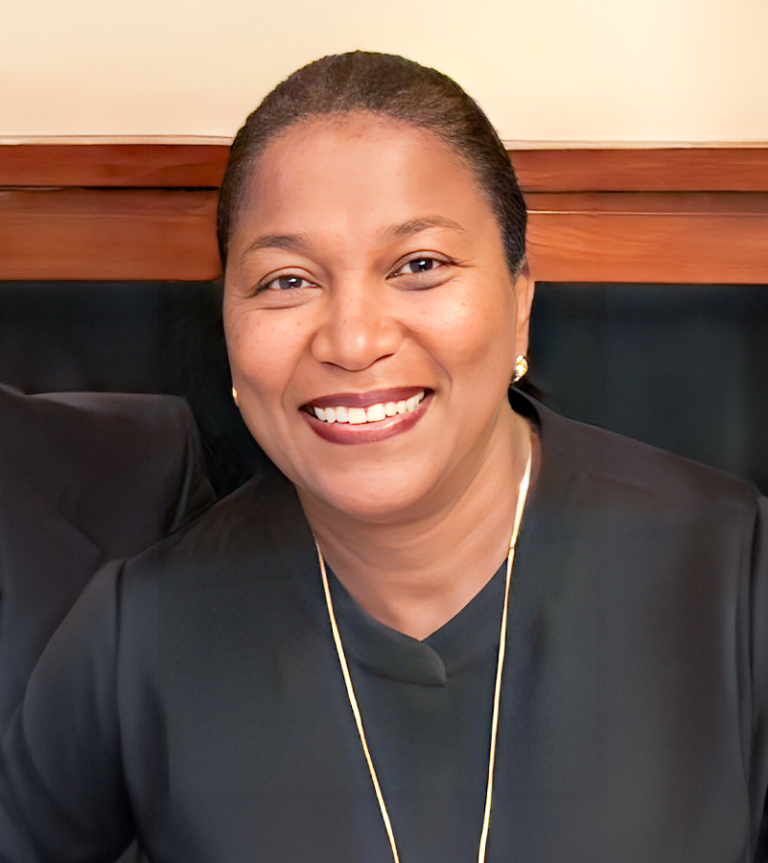
"Our mission is based on the ideal of an open society: a society that prioritizes free inquiry, democracy, social justice and equity."

Could you give us an overview of Central European University as it stands today?

Established in 1991, and now based in Vienna, Austria, Central European University (CEU) brings together 1,400 graduate and undergraduate students from over 100 countries and 180 full-time faculty into a close-knit, cosmopolitan community engaged in research-based teaching and learning as well as collaboration across disciplines.

CEU combines the best of American and European academic traditions with all instruction and administration done in English.

All CEU degree programs are accredited in the United States and Austria. There are programs in the humanities and social sciences as well as in cognitive science and data and network science. A deeply interdisciplinary approach permeates all aspects of learning and research.

What are the university’s keys to success?

CEU’s mission is based on the ideal of an open society: a society that prioritizes free inquiry, democracy, social justice and equity. The university offers affordable graduate and undergraduate education to students, most of whom receive some financial support.

CEU’s research is world-class — the university has regular success in winning competitive European research grants worth millions of Euros.

Small class sizes (between 12 and 20 students) allow for intensive mentoring by professors, who sometimes involve students in their own research projects. More locally, the university contributes to and participates in the academic as well as the cultural life of Vienna, Austria, and Budapest, Hungary, where it has a small campus.

What are your key programs and offerings?

CEU offers PhD, one and two-year master’s and undergraduate programs. When it was originally founded in Budapest, CEU offered only graduate programs, but it  launched three interdisciplinary undergraduate programs after the move to Vienna from Budapest in 2020:

  1. BA in Culture, Politics and Society (CPS)
  2. BA in Philosophy, Politics and Economics (PPE)
  3. BA/BSc in Data Science and Society (DSS)

According to the 2023 QS World University Rankings by Subject, two CEU programs rank among the top 50 worldwide, with a further four in the top 100. Its rankings in Politics and International Studies as well as Philosophy remained among the best 50, with Politics and International Studies at rank 26 and Philosophy at rank 34. Anthropology, History, Social Policy and Administration and Sociology also remain in the top 100 ranking category. In Austria, three of our programs were named number one, six were ranked at 2, and one was ranked at 3.

CEU faculty and students address some of today’s biggest intellectual challenges, including: bioethics and corporate responsibility, climate change and environmental security, media freedom and data privacy, gentrification and urbanization, minority- and gender-rights policies, terrorism and human security, the role of knowledge and truth in contemporary society, economic inequalities and labor market transformations, disinformation and social media, geopolitical challenges and rising authoritarianism.

What’s the role of innovation in Central European University’s business and operations?

CEU has a unique funding model: its main supporter is the Open Society Foundations, but it has had remarkable success acquiring competitive research funding during its short history. For the 2023-2024 Academic Year, CEU attracted 148,692,839 euros in new external grants.

CEU retains its campus in Budapest but does not offer degree programs there. Instead, it operates three unique institutions: an Institute for Advanced Study, an Institute for the Study of Democracy, and the Open Society Archive, an irreplaceable record of the history of Eastern Bloc countries and their resistance to tyranny.

CEU has a tradition of responding to humanitarian and social problems in the region: for example, it created the online Invisible University for Ukraine (IUFU) after the war started in 2022. For its innovative and responsive approach, the IUFU program was awarded the 2024 Brown Democracy medal, which honors the best work advancing democracy in the United States and internationally and has been awarded the second-place prize in the 2024 MacJannet Prize for Global Citizenship, which recognizes exceptional student community engagement initiatives.

CEU also has a long history of giving free educational support to the underprivileged and oppressed Roma minority in Central and Eastern Europe.

What is the competitive landscape within the education sector and the Central European University’s strengths?

CEU’s highly diverse student body is its most important asset. The university’s faculty also comes from around the world and adds to the highly international community. Our 7:1 student-to-faculty ratio ensures a dynamic environment for collaboration and debate. And finally, although there are many English-language degree programs in continental Europe, there are very few research-driven universities that function entirely in the English language. This linguistic focus makes the CEU’s extraordinary international profile possible.

Latest From The Executive Insight

  • Education

    A former nurse manager applies for an operations role. Her résumé says “excellent communication skills” and “strong leadership”. So do most of the other applications on the recruiter’s screen. The skills are real, and as written they are invisible. Good transferable skills examples always come […]

    9 min read
  • Wealth

    The spreadsheet says 52 is possible. You have run it three times, changed the return assumption twice, and it still works. Then come the questions the spreadsheet cannot answer: how to get money out of a 401k seven years early, who pays for health insurance […]

    8 min read
  • Mindset

    Forty minutes into the meeting, the team is still arguing about which of two suppliers to choose. Both options have been costed twice. Every new argument digs further into the same two answers. Lateral thinking is the habit of stopping at that moment and asking […]

    9 min read
  • Wellness

    Thursday, 3 p.m. You read the same email for the third time and still could not say what it asks for. You slept six hours last night, and the night before, and you feel fine, mostly. So is 6 hours of sleep enough? For most […]

    9 min read
  • Business

    The Monday meeting goes quiet when one person speaks, and everyone else looks at the table. Nothing in the comment is quite bad enough to discipline. It is the fourth one this month, and the team is waiting to see whether you noticed. Knowing how […]

    9 min read
  • Lifestyle

    You land at 7 a.m., the meeting is at 9, and the shirt you packed comes out of the case with a crease across the chest that no amount of smoothing will remove. Learning how to fold a business shirt for travel takes ten minutes […]

    8 min read
  • Education

    It is late, the house is quiet, and three tabs are open. One is a $49-a-month certificate from a company everyone has heard of. One is a bootcamp that promises a new job in sixteen weeks. One is a university program whose price makes you […]

    8 min read
  • Wealth

    The offer email arrives. The number is fine, maybe slightly less than you hoped, and the recruiter is waiting for an answer. Most people say yes. Knowing how to negotiate salary at this exact point is worth more than at any other moment in the […]

    8 min read
  • Mindset

    The busiest office workers are interrupted every two minutes during core hours. That figure comes from Microsoft’s own data on how people use its software, and anyone who runs a team will recognise it. Most productivity hacks are written for a calendar you control. The […]

    8 min read
  • Wellness

    The alarm goes off at six. You hit snooze twice, get up at half past, and spend the first hour of the day feeling like someone else is driving. Most advice on how to become a morning person starts with the alarm: set it earlier […]

    9 min read