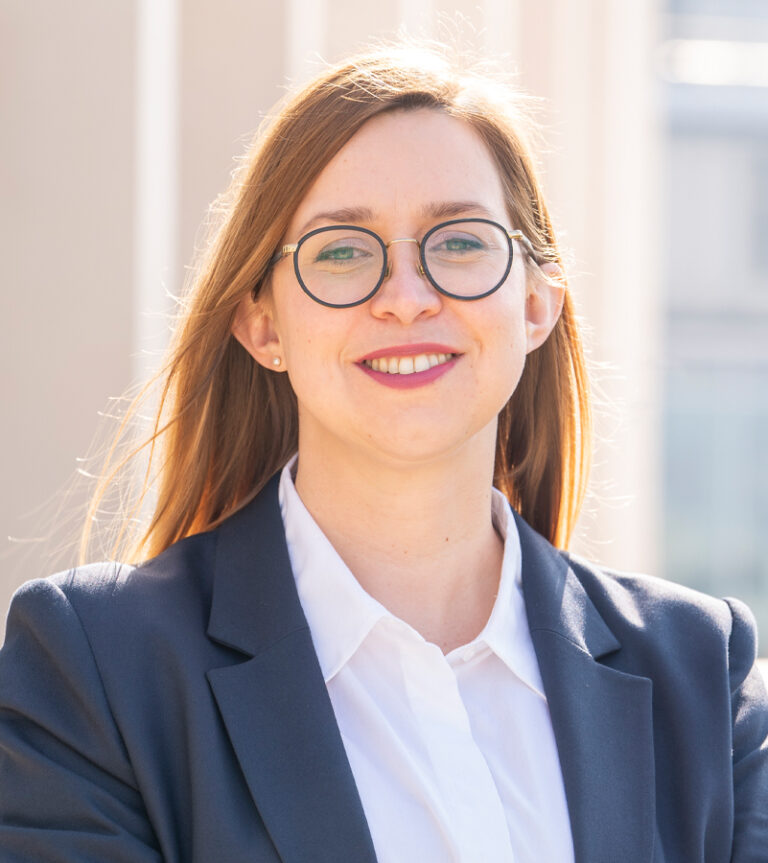
"This is not charity; this is a sustainable, market-based financing solution that can deliver high impact at scale."

Could you please give us a quick overview of Chancen International?

Chancen International is a social enterprise focused on solving the “learning-to-earning” journey for young people. We ensure that young people can access high-quality education that leads to employment. We do this by financing their education upfront, and then they repay once they secure a job and begin earning a stable income.

What has driven Chancen International’s success in expanding access to education?

A major factor is our understanding of the learning-to-earning ecosystem and our ability to de-risk it. We carefully select high-quality education providers through a rigorous due diligence process that evaluates employment and income opportunities for graduates before they even begin studying.

This gives us a strong understanding of future earning potential, which allows us to provide financing responsibly. Young people we finance experience meaningful returns on investment because their income can increase up to three times the national median. As a result, repayment rates are strong because students see real economic value in their education.

Another contributor to our success is our ecosystem-based approach. We work closely with education providers, investors, governments, legal systems, and private-sector employers to ensure young people are developing skills relevant to labor market demand.

When we first started, many people thought the idea was unrealistic. But we believed that if we created real value for young people, the model could work.

How would you describe your core business today and your offerings?

Our primary goal is to help young people achieve higher lifetime income potential.

Our core business begins with selecting high-quality education providers. These range from short courses and boot camps to technical and vocational institutions, colleges, and bachelor-level programs. The selection process is demand-driven and based on where jobs are growing.

Once we select an education provider, we work directly with students through an application process. We monitor their progress while they study, provide financial literacy training, and manage repayments after graduation.

It is very much a business-to-consumer model. We engage deeply with our members to support a smoother learning-to-earning journey.

What sets Chancen International apart from traditional financing options?

One major difference is that our model is outcomes-based. Repayment is tied to achieving a better employment outcome, such as a higher-paying job or increased income. Traditional student financing often ends once the loan is issued. Our success depends on whether students succeed professionally.

The second difference is how we assess risk. Traditional financial institutions rely on credit history, family background, or guarantees. We evaluate future earning potential instead. That means we can finance students from households earning as little as two dollars per day because we focus on the value of the education pathway rather than existing wealth.

In many African countries, government financing programs restrict what students can study. Our model allows students to pursue fields they are genuinely interested in, which often improves engagement and long-term outcomes.

How are you expanding across markets and growing your impact?

We have now reached 10,000 students across Rwanda, Kenya, South Africa, and Ghana. More than 2,600 students are actively making repayments, and our repayment rate is above 95%. Demand consistently outpaces supply — our existing pipeline covers only around half of the applicants we receive.

We are also seeing strong repayment performance overall, which allows us to repay impact investors while generating modest returns.

Importantly, more than 60% of the students we finance are women, and that is by design rather than accident. We remove the collateral requirement that often locks women out of education financing, we allow repayment pauses in cases of hardship or unpaid maternity leave, and we factor potential career breaks into our underwriting and repayment terms. We also provide wraparound services — training, networking, and job boards — to support the transition into employment. As a result, 93% of our employed female graduates earn above the minimum wage, and 88% maintain strong repayment standings.

By 2029, we aim to scale to 60,000 young people across our existing and new markets. At that scale, we expect to deploy approximately $130 million in student financing, and we want this outcomes-based model to become a recognized asset class that local financial institutions can eventually adopt and market at scale.

Our broader goal is to demonstrate that young people are investable and that education financing can function as a sustainable market-based solution.

How do you engage with students, institutions, and investors?

We reach students through grassroots marketing, including radio campaigns, community organizations, churches, and local community halls. More than 80% of our current student base comes from rural areas.

Educational institutions either approach us because students request our financing product, or we proactively identify schools that align with labor market demand, such as green skills and green technology training.

On the investor side, we work with partners across the United States, Europe, the United Kingdom, and Singapore. Most of these relationships come through impact investing networks focused on financial inclusion and youth livelihoods.

We also work closely with UBS’s Optimus Foundation network to connect with investors interested in supporting scalable education financing models.

What is the main message you would like leaders and the broader community to take away from Chancen International?

We believe this is the next major opportunity in education financing. We have proven a strong foundation and demonstrated that this model creates value not only for young people, but also for investors and educational institutions. Our next phase is focused on scaling that impact further.

Noel, Chancen International: What resonates most strongly is that this is ultimately a message of possibility. Conversations around youth unemployment and the future of work in Africa are often pessimistic, but we believe there is a viable and scalable solution. This model helps young people move from poverty into education and employment while also responding to Africa’s demographic growth and workforce needs.

One important point is that this should not be viewed as a charity model. We have raised approximately $30 million in impact investment from around 20 investors to finance 10,000 students, demonstrating real investor confidence in the model.

As development funding and traditional aid become more constrained globally — including recent USAID cuts — there is increasing demand for sustainable, market-based solutions. This model is designed to operate at scale while still delivering meaningful social and economic outcomes.

It is not charity — it is a market-based financing solution that demonstrates young people are investable and capable of generating strong long-term returns through education and employment.

Latest From The Executive Insight

  • Lifestyle

    Most personal development books get read once, enjoyed and forgotten by the following quarter. A few are worth a second read, because they change what you do on an ordinary Monday rather than how you feel on a Sunday afternoon. The ten below pass that […]

    9 min read
  • Education

    You ask an AI for a statistic and it hands you one, with a footnote. You click the footnote and the number is not on the page. That is where the Perplexity vs ChatGPT choice really begins. Perplexity is built to find sources and put […]

    9 min read
  • Wealth

    The first meeting usually goes pleasantly. The office is warm, the adviser is good company, and by the end you have talked about your children, your plans for retirement and the house you might sell one day. What you have rarely done is ask the […]

    8 min read
  • Mindset

    You have two offers on the table, or two candidates, or two ways to spend the next year, and you have been going round in circles for a week. What you are looking for is a decision making framework, something that turns the loop into […]

    9 min read
  • Wellness

    The first week of the holiday goes well. You sleep ten hours a night, read a novel for the first time in a year, and start to feel like yourself. Then, somewhere around the Sunday before you fly home, the dread comes back. Two weeks […]

    9 min read
  • Editorial

    Most advice on how to manage stress at work treats stress as a personal failing: breathe better, sleep more, download an app. Those help at the edges. They leave untouched the thing that makes work stressful for most people, which is having a lot asked […]

    8 min read
  • Business

    Most people asking how to become a consultant already have the hard part: years of doing something well inside a company. What they lack is a way to sell it. Consulting is a business built on a narrow promise, and the people who struggle usually […]

    8 min read
  • Lifestyle

    Is an online MBA worth it? For a working professional who wants the knowledge and the credential without giving up a salary, it can be one of the better deals in higher education. For someone who wants to change careers, it is often the weaker […]

    8 min read
  • Education

    AI consulting for small businesses has become a crowded market in about two years. Agencies that built websites now sell AI audits. Freelancers who learned prompting last spring sell implementation packages. Most owners who get a pitch have no way to judge it, because they […]

    8 min read
  • Wealth

    Will AI replace financial advisors? For the part of the job most clients think they are paying for, the portfolio, it largely has. Software has been picking funds, rebalancing and harvesting tax losses for over a decade, for a fraction of what an advisor charges. […]

    8 min read