Subscribe to outperform
The weekly Executive Briefing: insights, books, tools, and media opportunities worth your attention — curated and distilled into 5 minutes.

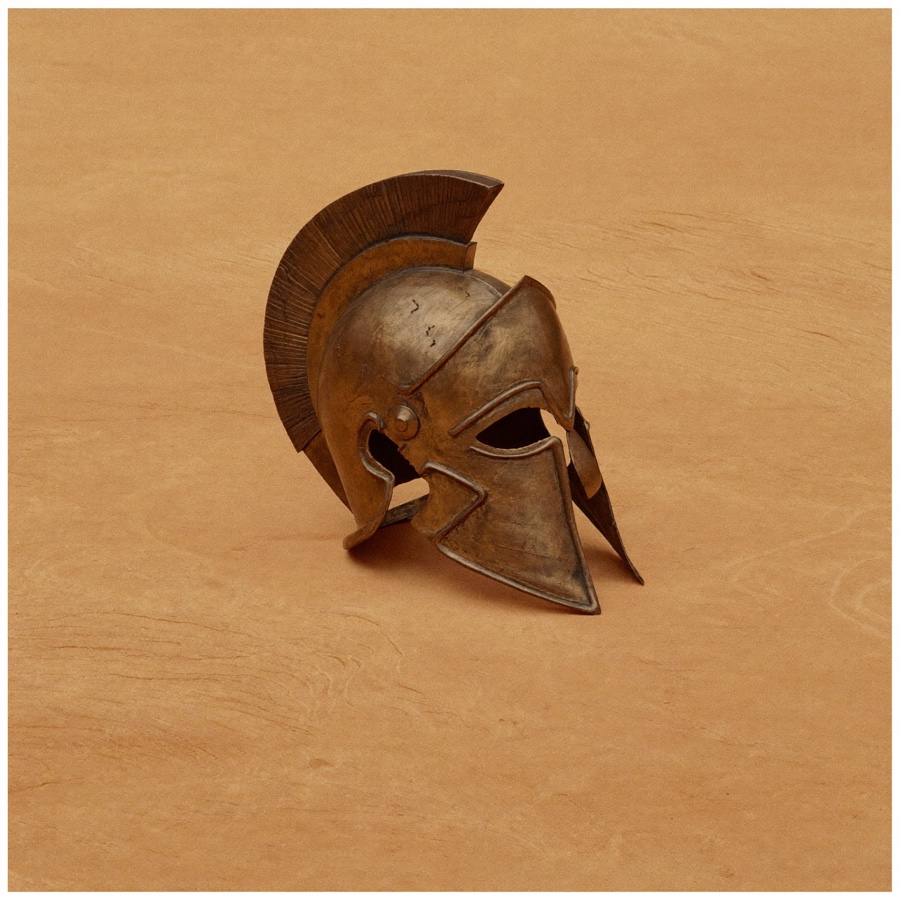

You are about to paste it into a slide, a team email or a toast. The Theodore Roosevelt Man in the Arena passage is two sentences, 141 words in all, from “Citizenship in a Republic”, an address he gave at the Sorbonne in Paris on 23 April 1910. Most copies online are a few words off the 1910 book.
Our newsroom read 32 pages that print it, from presidential archives to leadership blogs. We set each beside the text in African and European Addresses, the 1910 book of his speeches from that tour, and recorded every changed word and every missing clause.
Of 32 pages printing Theodore Roosevelt’s Man in the Arena passage that we read on 14 November 2026, three match the 1910 book text word for word, 16 print a close variant, and 11 cut or reword it.
The 16 share one text, and it departs from the book at three points. The book has “who errs, and comes short again and again”; they print “who errs, who comes short”. The book has “the great enthusiasms”; they drop “the”. The book ends on souls “who know neither victory nor defeat”; they end on souls “who neither know”. Two more pages, the Theodore Roosevelt Center among them, mix the two readings.
Those differences are small and they are old. The American Presidency Project, whose text matches the 1910 book, says its three early sources “do not always agree in many small details”. The common variant is the one printed by the Theodore Roosevelt Association and by the page that held first place in Google’s US results on 14 November 2026. We treat both as fair copies.
The other 11 pages go further. Eight change his words and three cut the passage short. Six print “comes up short”. Four end on souls who “knew neither victory nor defeat”, in the past tense. All 11 lose at least one clause, and 10 of them lack the same one: “but who does actually strive to do the deeds”.
Famous lines drift this way. Our trace of the Mike Tyson everyone has a plan line found 21 of 24 pages printing a punch where he said hit in 1987. Our count of Mark Cuban net worth pages found 21 crediting Forbes and none showing the figure Forbes displayed that day.
It is two sentences from “Citizenship in a Republic”, the address Theodore Roosevelt gave at the Sorbonne in Paris on 23 April 1910, the year after he left the presidency. The first sentence dismisses the critic. The second, 112 words long, gives the credit to the person who does the work and risks failing at it.
Here it is as the 1910 book prints it.
“It is not the critic who counts; not the man who points out how the strong man stumbles, or where the doer of deeds could have done them better.”
“The credit belongs to the man who is actually in the arena, whose face is marred by dust and sweat and blood; who strives valiantly; who errs, and comes short again and again, because there is no effort without error and shortcoming; but who does actually strive to do the deeds; who knows the great enthusiasms, the great devotions; who spends himself in a worthy cause; who at the best knows in the end the triumph of high achievement, and who at the worst, if he fails, at least fails while daring greatly, so that his place shall never be with those cold and timid souls who know neither victory nor defeat.”
Lawrence F. Abbott, who edited the book, described the moment in his introduction. The passage, he wrote, “was delivered with real eloquence, and aroused a long-continued storm of applause.” Abbott quoted its last words the way his book prints them: “cold and timid souls who know neither victory nor defeat”.
Roosevelt gave the passage no name. The word arena appears nowhere else in the address, on our check of the American Presidency Project text. The Theodore Roosevelt Center says the speech “is popularly known as” The Man in the Arena.
The table counts all 32 pages at each point. “Not printed” means the page cut that part.
| Point in the passage | 1910 book | Common variant | Other wording | Not printed |
|---|---|---|---|---|
| After “who strives valiantly” | “who errs, and comes short”: 3 pages | “who errs, who comes short”: 20 pages | “errs and comes up short”: 6 pages; “errs and comes short”: 2 pages | 1 page |
| Before “the great devotions” | “the great enthusiasms”: 12 pages | “great enthusiasms”: 18 pages | None | 2 pages |
| The last clause | “who know neither victory nor defeat”: 5 pages | “who neither know victory nor defeat”: 18 pages | “who knew neither”: 4 pages; “know neither victory or defeat”: 1 page | 4 pages |
Four of the 11 share the same five changes, among them “error or shortcoming” and “knew neither”. Farnam Street printed that version in 2009, The Startup CEO blog in 2013, the University of Strathclyde in 2023 and a newsletter in 2026.

The table lists every page: which text it prints, whether all of the passage is there, the date it gives for the speech and whether it names “Citizenship in a Republic”.
| Page | Text printed | Whole passage | Date given for the speech | Names the speech |
|---|---|---|---|---|
| American Presidency Project | 1910 book | Yes | 23 April 1910 | Yes |
| Theodore Roosevelt Center | Mixed | Yes | 23 April 1910 | Yes |
| World Future Fund | Common variant | Yes | 23 April 1910 | Yes |
| Theodore Roosevelt Presidential Library | Common variant | Yes | 23 April 1910 | Yes |
| Theodore Roosevelt Association | Common variant | Yes | 23 April 1910 | Yes |
| LeadershipNow (The Leading Blog) | 1910 book | Yes | Indirect | Yes |
| Gracious Quotes | 1910 book | Yes | 23 April 1910 | Yes |
| Buckley School of Public Speaking | Common variant | Yes | 23 April 1910 | Yes |
| WorldAtlas | Reworded | No | 23 April 1910 | Yes |
| Apple Seeds | Cut | No | 23 April 1910 | Yes |
| Farnam Street | Reworded | No | None | Yes |
| Mental Floss | Common variant | Yes | 23 April 1910 | Yes |
| Entrepreneur | Cut | No | None | No |
| The Startup CEO blog | Reworded | No | 23 April 1910 | Yes |
| All Things Distributed | Common variant | Yes | None | No |
| University of Strathclyde | Reworded | No | 1910 only | No |
| CEOWORLD Magazine | Common variant | Yes | None | Yes |
| Wikipedia | Common variant | Yes | 23 April 1910 | Yes |
| Public Discourse | Common variant | Yes | 23 April 1910 | Yes |
| Front Porch Republic | Common variant | Yes | 23 April 1910 | Yes |
| Alexander Jarvis | Common variant | Yes | 23 April 1910 | Yes |
| The Art of Manliness | Common variant | Yes | None | Yes |
| American Literature | Common variant | Yes | 23 April 1910 | Yes |
| Goodreads | Common variant | Yes | None | No |
| Nostalgia and Inspiration (Blogs.Harvard archive) | Reworded | No | None | No |
| Medium (Brent Stoller) | Common variant | Yes | 23 April 1910 | Yes |
| WIST Quotations | Reworded | No | 23 April 1910 | Yes |
| TechCrunch | Common variant | Yes | 1910 only | No |
| The Secretan Center | Reworded | No | None | No |
| The Jagged Word | Mixed | Yes | 23 April 1910 | Yes |
| Charterhouse | Cut | No | None | No |
| Differentiators | Reworded | No | 23 April 1910 | No |
Twenty of the 32 give the full date, 23 April 1910. Two give only the year, one points to it by saying “one hundred years ago today”, and nine give no date at all. None gave a wrong date, and none placed the speech anywhere other than Paris.
Twenty-three name the Sorbonne or Paris, and 23 name the speech by its title. Nine never give its title. One of them, an Entrepreneur column, calls the whole address “The Man In the Arena” speech.
Truncation is the larger problem. Twenty-one pages print the whole passage. Of the 11 that do not, four mark the gap with an ellipsis and seven drop clauses silently, with nothing to show the reader that words are missing.
Most of it is about the duties of an ordinary citizen. Roosevelt argued that a republic depends on the quality of its average citizen, ranked character above mind and body, warned against the cynic and the doctrinaire alike, and asked for people with high ideals who can also get practical things done.
The famous passage sits in the ninth paragraph on the American Presidency Project page. It is the turn in an argument about cynicism. Shortly before it he says: “The poorest way to face life is to face it with a sneer.” Then he describes the critic’s job: “The role is easy; there is none easier, save only the role of the man who sneers alike at both criticism and performance.”
The sentence straight after the passage is aimed at his own audience of scholars. “Shame on the man of cultivated taste who permits refinement to develop into a fastidiousness that unfits him for doing the rough work of a workaday world.”
From there the address widens. “The average citizen must be a good citizen if our republics are to succeed.” He ranks the qualities he wants: “But above mind and above body stands character”. He refuses to make winning the test: “To judge a man merely by success is an abhorrent wrong”. And he asks for results: “The citizen must have high ideals, and yet he must be able to achieve them in practical fashion.”
Readers who meet only the Theodore Roosevelt Man in the Arena passage miss that argument. In our reading of the Steve Jobs Stanford speech, 12 of 15 summaries kept the closing slogan and two quoted his line on starting over. Our check of 7 Habits of Highly Effective People summaries found 18 that keep the habit names and three that name the tool for Habit 6.
Very well, by the accounts printed that year. Abbott put the audience in the Sorbonne amphitheatre at “probably three thousand people” and called the lecture “a complete success”. A fortnight later an American officer living in Paris wrote to him that the newspaper Le Temps had printed 57,000 free copies for every schoolteacher in France and many others.
Mental Floss, drawing on newspapers of the day, reports that “fully 25,000 persons packed the streets” around the hall and that “Several times the applause lasted two minutes”.
Roosevelt himself was puzzled by the scale of the welcome. According to the Buckley School of Public Speaking, he told Henry Cabot Lodge that the French reaction had been a little hard for him to understand.

Because it does two jobs. It gives a person who has just failed in public a dignified way to say so, and it gives anyone starting something a reason to discount commentary from people who are not doing the work. Presidents, athletes, founders and researchers have each used it for one of those two purposes.
Richard Nixon used it for the first. In his resignation address of 8 August 1974, in the PBS transcript, he said: “Sometimes I have succeeded and sometimes I have failed, but always I have taken heart from what Theodore Roosevelt once said about the man in the arena”. His version has “who errs and comes short again and again” and stops at “daring greatly”. The cold and timid souls are left out.
Sport has used it too. Wikipedia’s entry on the speech records that Nelson Mandela gave a copy to Francois Pienaar, captain of South Africa’s rugby team, before the 1995 World Cup, that LeBron James has had #ManInTheArena written on his shoes, and that Tom Brady named a documentary series after it. Our piece on LeBron James net worth covers what James built off the court.
Brene Brown took a book title from it. Writing for the Global Leadership Network in 2017, she said of the speech: “It came into my life when I was struggling and desperately needed a new frame”. It “inspired me and the book title”, she wrote, meaning Daring Greatly.
Founders use it for the second job. Matt Blumberg headed a 2013 post “Best CEO/Entrepreneur Quote Ever, By a Mile”. TechCrunch wrote in 2011 that the Israeli investor Yossi Vardi “often quotes” it. The same year Werner Vogels of Amazon Web Services, on his blog All Things Distributed, printed the passage in full and closed with a line of his own: “It is the customer who counts, not the critic.”
Roosevelt did not tell his audience to ignore criticism. The speech is itself a long criticism, of cynics, of wealth piled up without benefit to the nation, of phrase-makers and of a press he accuses of “Mendacity, slander, sensationalism”. He aims at the person who sneers “alike at both criticism and performance” and builds nothing.
Steve Herz made the case against the popular reading in Entrepreneur in 2020, under the headline “Theodore Roosevelt Was Wrong. Critics Do Count.” His conclusion is that “the right critic does count.” Vogels drew the same line in 2011 when he wrote of the need to “distinguish valid customer feedback from an echo-chamber”.
The passage is also no licence to count effort as success. It honours the person who “does actually strive to do the deeds”, the clause that 10 of the 11 shortened copies have lost.
Two books are often read for the same purpose. Our check of The Courage to Be Disliked traced nine of its 12 core ideas to Alfred Adler’s own books. Our 48 Laws of Power summary classed 14 of the 48 laws as ones a manager should ignore.
Quote both sentences in full, from a text you can name. The 1910 book and the American Presidency Project agree with each other, and either is a source you can cite on a slide. If your copy says “comes up short” or “knew neither”, replace it.
Say where it comes from. “Theodore Roosevelt, Citizenship in a Republic, the Sorbonne, Paris, 23 April 1910” takes one line. Our check of the most repeated Kobe Bryant quotes found that 11 of 21 carried no source we could find.
Apply it to yourself first. Nixon and Brown both reached for it to describe their own position. Used against a named critic, it ends a conversation you may need to have.
Keep the clause about error. “There is no effort without error and shortcoming” is the most practical line in the passage for anyone who runs a team, because it treats mistakes as the price of trying. Our summary of Rick Rubin’s The Creative Act found only three of 22 reviews setting out his four stages of a project.
Check the record before repeating any famous line about a public figure. Our test of the Michael Phelps diet found the best-known claim is one he calls a myth, and our check of the Jennifer Aniston workout traced 15 of 20 claims to her own words. Our trace of Ryan Reynolds net worth found a published sum for six of 15 deals.
On 14 November 2026 our newsroom read 32 pages that print the Theodore Roosevelt Man in the Arena passage: the US results for the query and pages found through search, including archives, full-text pages, leadership blogs and quote pages. We split the passage into 11 stretches and recorded each page’s own wording for every stretch, then compared it with the 1910 book African and European Addresses on Project Gutenberg.
We also recorded the date, place and speech title each page gives. We ignored punctuation and capital letters. We excluded two pages that paraphrase or discuss the passage without printing it, and one that did not load. A second reader re-checked all 32 pages on 15 November 2026. The full dataset is available on request.
Theodore Roosevelt, in an address titled “Citizenship in a Republic” at the Sorbonne in Paris on 23 April 1910, the year after he left the White House. The line opens a two-sentence passage now known as The Man in the Arena. The 1910 book of his tour speeches, African and European Addresses, prints it in full.
Early printings disagree at three small points. The 1910 book has “who errs, and comes short again and again”, “the great enthusiasms” and “who know neither victory nor defeat”. A common variant has “who errs, who comes short”, “great enthusiasms” and “who neither know”. Versions with “comes up short” or “knew neither” match neither text.
It is prose: one paragraph from a long address on citizenship, the ninth on the American Presidency Project page. Roosevelt did not give the passage a title, and the word arena appears only once in the speech. The name The Man in the Arena was attached later by the people who quoted it.
A hundred and sixteen years on, the two sentences are quoted far more than the address around them, and a third of the copies we read have lost part of them. The clause that goes missing most often is “but who does actually strive to do the deeds”.

Written by
Editor of The Executive Insight. Writes about leadership, decision-making and the parts of building a business that nobody puts in the plan.

The promotion went out on Monday, and by Wednesday you are in your first leadership meeting waiting for someone to spot the mistake. Leaders who have described the feeling on record show how to overcome imposter syndrome in a new role. They prepared harder, checked the feeling against evidence and took the job on anyway. […]

You said yes to the extra project on Tuesday. On Wednesday you covered a colleague’s client call, and on Thursday you stayed until nine rewriting a deck that was never yours. Nobody asked you to feel resentful about any of it. You just do. If you want to know how to stop being a people […]

Forty minutes into the meeting, the team is still arguing about which of two suppliers to choose. Both options have been costed twice. Every new argument digs further into the same two answers. Lateral thinking is the habit of stopping at that moment and asking whether the problem has been set up wrong. The short […]
You want one line to open the Monday meeting or pin above the desk, and the search returns hundreds with no date and no source. We traced the most repeated David Goggins quotes to where he wrote or said them. Eight of the top 15 […]
Search for the Rock workout and you get a week of exercises with sets and reps. On the pages we read, none of those weekly lists is quoted from Dwayne Johnson. In his own words, the routine is an early start, 30 to 50 minutes […]

The recruiter names a number, you name a higher one, and somebody says, “Shall we meet in the middle?” Chris Voss’s book tells you to refuse. This never split the difference summary gives his method in one line: listen first, name what the other side […]

A colleague quotes one of them at you after a rough meeting, and now you want the rest. The four agreements summary fits in a breath: be impeccable with your word, don’t take anything personally, don’t make assumptions, always do your best. Don Miguel Ruiz […]

The most prize money any woman has won in tennis is $94,966,162, and it is hers. It still explains less than a quarter of Serena Williams net worth, which Forbes has put at $400 million since June 2026. Celebrity Net Worth says $300 million. Most […]
You keep notes in four apps and still cannot find last month’s idea. The Leonardo da Vinci notebooks had the same problem on a larger scale: loose sheets on every subject, filled between 1478 and 1519 and never put in order. What survives is 23 […]

You have read that Cristiano Ronaldo eats six meals a day. What he said was that he sometimes eats up to six smaller ones. The Cristiano Ronaldo diet, in his own words, is high in protein, with wholegrain carbs, fruit and vegetables, few sugary foods, […]
You help a colleague for the third time this week and your own deadline slips again. The Adam Grant Give and Take argument speaks to that moment. People at work act as givers, takers or matchers, and givers finish at the bottom of the ladder […]

Someone hands you a novel and says it is a Reese pick. The Reese Witherspoon book club is Reese’s Book Club, a free monthly club the actor started in 2017 and runs through her media company, Hello Sunshine. Each month she names one book with […]

You are about to tell a room that mastery takes 10,000 hours, and somebody will ask where that comes from. This Outliers summary gives the short answer first. Malcolm Gladwell argues that success depends on birth date, practice time, family and culture as much as […]
The weekly Executive Briefing: insights, books, tools, and media opportunities worth your attention — curated and distilled into 5 minutes.

Welcome to The Executive Insight. Your free AI guide to the best tools is on its way. The first issue arrives soon. Check your promotions tab if it is not in your inbox!
Your request has been successfully submitted. Please wait for a reply from our manager, he will contact you as soon as possible.
Your copy of The Executive Insight Book Challenge List is downloading now. Enjoy the list — and while you're here, take a look at our latest interviews.