Subscribe to outperform
The weekly Executive Briefing: insights, books, tools, and media opportunities worth your attention — curated and distilled into 5 minutes.


You have probably heard that Michael Phelps ate 12,000 calories a day. He says he never did. The Michael Phelps diet, in his own words, ran to 8,000 to 10,000 calories a day while he trained for Beijing, built on a huge diner breakfast, and today he says he eats what he needs.
Our newsroom took 20 claims repeated in coverage of Phelps’s eating since 2008 and looked for each one in his own words. We read his books as quoted by NBC Sports, his interviews with NBC, Details, GQ and E! News, and his radio and social media appearances as reported at the time. Every row in the table links to the page we read.
Of 20 widely repeated claims about the Michael Phelps diet that we checked on 14 November 2026, 12 trace to Phelps in his own words, and the most famous, 12,000 calories a day, he has called a myth.
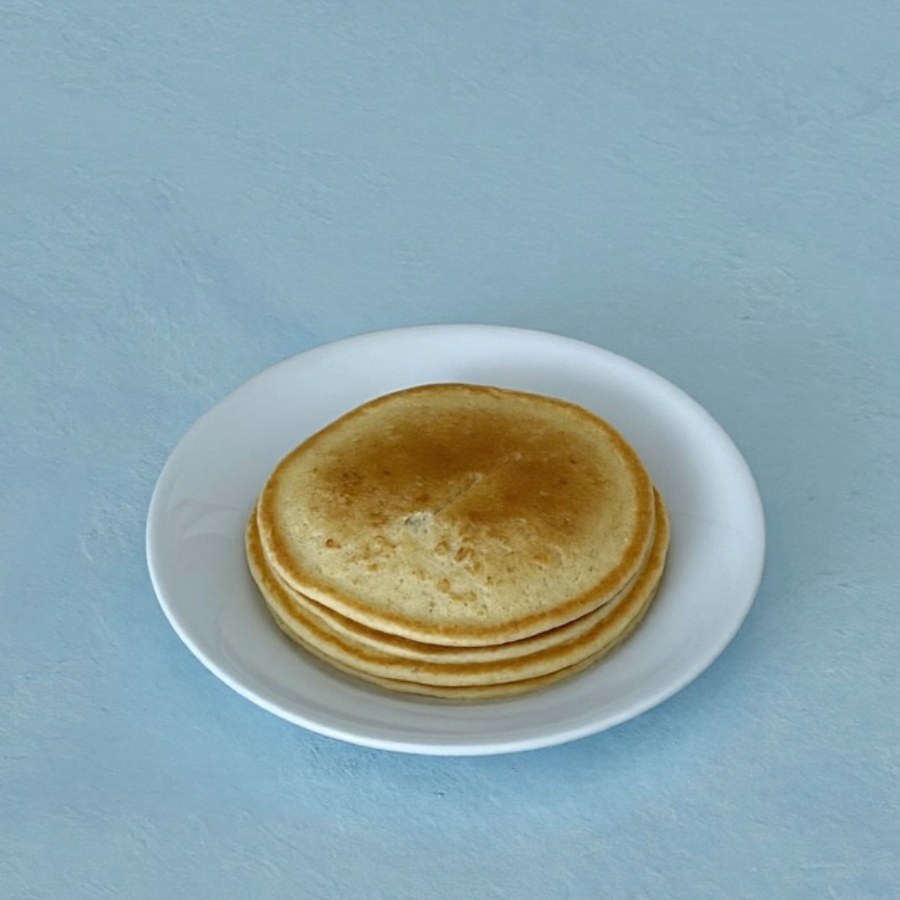
The breakfast is his. The three fried-egg sandwiches, the grits, the French toast with powdered sugar and the three chocolate-chip pancakes all appear in his autobiography Beneath the Surface, as a typical order at Pete’s Grille in Baltimore.
Most of the rest of the famous menu is not. Of the eight claims without a full first-person source, seven come from one menu the New York Post printed in August 2008: a five-egg omelette, two cups of coffee, a pound of pasta at lunch, ham-and-cheese sandwiches, energy drinks, a whole pizza and the 12,000 total.
Phelps has since contradicted three claims himself. He denied the 12,000 figure, he now cooks most of his meals, and he no longer eats whatever he feels like.
In his autobiography Beneath the Surface, Phelps describes a typical breakfast order at Pete’s Grille in Baltimore: three fried-egg sandwiches with cheese, lettuce, tomato, fried onions and mayonnaise, an omelette, a bowl of grits, three slices of French toast with powdered sugar and three chocolate-chip pancakes. He put his daily total at 8,000 to 10,000 calories.
The order, as NBC Sports quotes the book, begins: “Start with three sandwiches of fried eggs, cheese, lettuce, tomato, fried onions and mayonnaise.” It goes on, “add one omelet, a bowl of grits” and “three slices of French toast with powdered sugar,” and ends, “then wash down with three chocolate chip pancakes.”
On the total, he told NBC before Beijing, “I was told that I was supposed to eat between eight and 10,000 calories a day.” He added, “I just sort of try to cram whatever I can into my body.” In another autobiography, No Limits, he wrote, “Maybe eight to ten thousand calories per day.”
By 2012 he was playing it down. “People make a big deal out of what I eat, but it’s not that crazy,” he told Details magazine, in an interview reported by Yahoo. “I had a three-egg omelet and three pieces of French toast and coffee this morning.”
The number arrived during the Beijing Olympics. On 13 August 2008 Newser wrote that Phelps “gorges on 12,000 calories a day,” crediting the New York Post. It listed “a five-egg omelette” and “two cups of coffee” at breakfast, “a pound of enriched pasta” and “1,000 calories’ worth of energy drinks” at lunch, and a dinner that “tacks on a whole pizza.”
Set against his book, the list splits in two. The breakfast matches his own order, apart from the five eggs and the two cups. Lunch and dinner, as a daily menu, have no first-person source in anything we read.
NPR’s segment that summer was more careful. Its page said “Media reports have said” he “consumes as many as 12,000 calories in a day,” and the host credited the menu to the New York Post. The same segment quoted Phelps’s own words to NBC, which gave a lower range.
The menu then travelled. The Taipei Times ran a first-person piece on 17 August 2008 that put the total at “around 12,000 calories,” citing “most media estimates.” On 14 November 2026 that page, and a Guardian piece from the same week, still sat on the first page of a US Google search for the term.
Olympics.com repeats the same lunch and dinner, including “a large pizza, and energy drinks,” while calling the 12,000 figure “rumoured.”

By his own account, no. On Ryan Seacrest’s radio show in May 2012 he said, “I never ate that much,” and “It’s all a myth.” In his book No Limits he wrote, “It’s just not true,” and put his intake at “maybe eight to ten thousand calories per day” instead.
Larry Brown Sports reported the Seacrest interview on 9 May 2012. Phelps went on: “I’ve never eaten that many calories. I wish. It’s just too much though. It would be impossible.”
That summer he told Details, “I don’t count calories.” So neither 12,000 nor 8,000 to 10,000 was a measured figure, and the lower one is what he says he was told to eat.
In 2024 he described the gap between the target and the food. “There’s no way you can just eat clean and get all those calories,” he told E! News at the premiere of his docuseries Fueled By, as People reported. “So, I was trying to cram ice cream and whatever I could into my system.”
The second column says whose words support the claim. The fourth records whether Phelps has since said or done otherwise.
| Claim | In whose words? | What he said | Since contradicted by Phelps? | Source |
|---|---|---|---|---|
| 12,000 calories a day | Third party only (New York Post, 2008) | “I never ate that much … It’s all a myth.” | Yes, denied | Newser, Larry Brown Sports |
| 8,000 to 10,000 calories a day in training | Phelps | “I was told that I was supposed to eat between eight and 10,000 calories a day.” | No contradiction found | NBC Sports |
| Three fried-egg sandwiches at breakfast | Phelps (book) | “Start with three sandwiches of fried eggs, cheese, lettuce, tomato, fried onions and mayonnaise” | No contradiction found | NBC Sports |
| A five-egg omelette | Weaker version only | Book: “add one omelet.” 2012: “a three-egg omelet” | No contradiction found | NBC Sports, Yahoo |
| A bowl of grits | Phelps (book) | “add one omelet, a bowl of grits” | No contradiction found | NBC Sports |
| Three slices of French toast | Phelps (book, 2012 interview) | “three slices of French toast with powdered sugar” | No contradiction found | NBC Sports |
| Three chocolate-chip pancakes | Phelps (book) | “then wash down with three chocolate chip pancakes” | No contradiction found | NBC Sports |
| Two cups of coffee | Weaker version only | “three pieces of French toast and coffee this morning” | No contradiction found | Yahoo |
| A pound of pasta at lunch every day | Weaker version only | One meal at Rio 2016: “I think I had a pound of pasta and spaghetti” | No contradiction found | Global News |
| Two ham-and-cheese sandwiches at lunch | Third party only | Menu: “pairs ham and cheese sandwiches” | No first-person source found | Newser |
| About 1,000 calories of energy drinks a day | Third party only | Menu: “1,000 calories’ worth of energy drinks” | No first-person source found | Newser |
| A whole pizza at dinner | Third party only | Menu: “tacks on a whole pizza” | No first-person source found | Newser |
| Eat, sleep and swim | Phelps | “Eat, sleep and swim. That’s all I can do.” | No contradiction found | AJC |
| He ate whatever he felt like | Phelps | “It’s pretty much whatever I feel like eating, I’m going to eat.” | Yes: “I just really eat what I need,” 2016 | NBC Sports, AJC |
| Ice cream and junk food made up the calories | Phelps | “I was trying to cram ice cream and whatever I could into my system.” | No contradiction found | People via Yahoo |
| He does not count calories | Phelps | “I don’t count calories.” | No contradiction found | Yahoo |
| He does not cook | Phelps, 2008 | He did not cook, “at all” | Yes: “I make most breakfasts and every dinner,” 2021 | NBC Sports, GQ via Yahoo |
| Eats within 30 minutes of training | Phelps | “it’s a big deal to eat within a half-hour after you exercise” | No contradiction found | Yahoo |
| About 3,500 calories a day for Rio 2016 | Third party only | Phelps gave no figure: “I don’t eat many calories a day.” | No first-person source found | CBS Baltimore, AJC |
| Gained 30 to 35 pounds after retiring | Phelps | “After I retired I put on 30 to 35 pounds to end up at just under 230.” | No contradiction found | GQ via Yahoo |
Two rows need a caveat. The breakfast rows rest on one passage in his book describing a typical order, which is a habit, not a daily log. The pasta row is weaker than the claim because his words describe one meal after a relay final, not a lunch he ate every day.
In 2008 he summed up Beijing for NBC. “Eat, sleep and swim. That’s all I can do,” he said, as the Atlanta Journal-Constitution recalled in 2016. He added: “Get some calories into my system and try to recover the best I can.”
He was not cooking any of it. In the same NBC profile before the Games he said he did not cook, “at all.”
The 2012 Details interview gives the closest thing to a rule. “For recovery, I think it’s a big deal to eat within a half-hour after you exercise,” he said. “Otherwise I just try to put carbs into my system before I swim and then load up on the protein after.”
He was just as plain about treats. “Whether it’s Sour Patch Kids or Reese’s or a bag of chips, if I feel like eating it, I’m going to eat it.”
The eating was work, and he said so. After a relay win at Rio in 2016 he told the Associated Press, as Global News reported, “I think I had a pound of pasta and spaghetti,” and then: “And I’m not a spaghetti fan but I forced myself to eat it.” In 2021 he told GQ, “For 25 years, eating was a part of my job, it was a part of my profession.”
We make no claim about whether any of this is a sound way to eat. This piece records what Phelps said, and when.
Far less, by his own account. In a 2021 GQ interview he said he makes most breakfasts and every dinner. Breakfast is usually a smoothie of spinach, almond milk, cacao nibs and figs, or eggs, with a cup of coffee. At lunch and dinner, he said, “I really think a lot about vegetables.”
The interview, republished by Yahoo, has him saying, “I’m not trying to plow food into my system now.” Lunch is the meal he is “the most inconsistent with,” and “We try to have a salad incorporated every night.” On his weight: “After I retired I put on 30 to 35 pounds to end up at just under 230.”
The change started before retirement. In a Facebook Live session from his home in May 2016, three months before Rio, he said, “I don’t eat many calories a day. I just really eat what I need,” according to the AJC. CBS Baltimore later put his Rio intake at 3,529 calories a day. The page states that figure in its own words, with no quote from him, and in the pages we read Phelps gave no number.
By 2024 he described the change himself. “Eating was a full-time job for so long, so now I kind of just eat what I need and what I want to,” he told E! News, as People reported. Fox News carried what came next. “I probably eat cleaner now than I used to,” he said. “And that’s just because I’m not eating as much as I used to.”
Most readers will never swim in an Olympic final. Four parts of this story still apply to anyone who runs a business or a team.
First, a number with no source travels further than one with a source. The 12,000 figure came from a newspaper menu, and Phelps denied it in 2012, yet it is still on the first page of search results. Our check of Kevin Hart’s net worth found 12 of 21 pages crediting one estimates site with figures that its own page did not show.
Quotes behave the same way. Our trace of Kobe Bryant quotes found 11 of the 21 most repeated lines carry no source we could find. Our reading of the Steve Jobs Stanford speech found 12 of 15 summaries print its closing line and only three name where Jobs took it from.
Second, find out whose words you are copying. Our check of the Tom Brady diet found 15 of 20 famous rules traced to Brady or his chef. The Arnold Schwarzenegger workout routine came out at 14 of 22 claims in his own words. The Michael Phelps diet sits at 12 of 20, and its gaps cluster in one 2008 menu.
Third, the inputs follow the workload. Phelps ate for a job that burned the fuel, and when the job ended he changed the plan, and gained 30 to 35 pounds while he worked it out. An operator whose role changes, from founder to manager or from builder to seller, has the same task of rewriting a routine built for the old work.
The training half of an athlete’s week has the same problem. Our guide to zone 2 training found that eight of the nine plans giving a schedule start below the 150-minute weekly US guideline.
Fourth, repetition removes decisions. The same order at the same diner meant one fewer choice before a day in the water. Our reading of John Wooden’s Pyramid of Success found nine of its 15 blocks are actions you can take this week. A standing order is one of them.
Last, treat the headline number as a ceiling until you see the record. The billion in our piece on the George Clooney tequila sale was a maximum with $300 million tied to performance. Our account of Michael Jordan’s net worth went to 11 years of Nike filings. The 12,000 calories was a newspaper’s sum, and the man himself put it lower.
On 14 November 2026 our newsroom listed 20 claims about Phelps’s eating that recur in news coverage since 2008 and on pages ranking for the search, including Olympics.com, Newser’s summary of the 2008 New York Post menu, and CBS Baltimore. For each, we looked for Phelps saying it in his books as quoted by NBC Sports, in interviews with NBC, Details, GQ, the Associated Press and E! News, or in radio and social media appearances as reported at the time.
A reporter’s paraphrase did not count. A claim counted as weaker when his words support a smaller version, and as contradicted when his later words say otherwise. We did not read his books in full, so third party only means no first-person source in the pages we read. We make no health claims. The full dataset, with the quote and source for every row, is available on request.
By his own account, 8,000 to 10,000 while he trained for Beijing. Before the 2008 Games he told NBC, “I was told that I was supposed to eat between eight and 10,000 calories a day.” He has called the 12,000 figure “a myth.”
In Beneath the Surface he describes a typical order at Pete’s Grille in Baltimore: three fried-egg sandwiches, an omelette, a bowl of grits, three slices of French toast with powdered sugar and three chocolate-chip pancakes. In 2021 he told GQ he usually makes a smoothie or eggs.
He does now. Before Beijing he told NBC he did not cook, “at all.” In 2021 he told GQ, “I make most breakfasts and every dinner,” and added, “We try to have a salad incorporated every night.”
The Michael Phelps diet people quote mixes his own breakfast order with a 2008 newspaper’s lunch and dinner. On the calories, his own word in 2012 was that he did not count them.

Written by
Editor of The Executive Insight. Writes about leadership, decision-making and the parts of building a business that nobody puts in the plan.

The alarm says 4:55 and by Wednesday you hate it. The Robin Sharma 5 AM Club is a 2018 book that asks you to wake at five and spend the first hour in three 20-minute blocks: move, reflect, grow. Our own data on 39 CEOs says the hour is the part worth keeping. Most of […]

Your first meeting is at 8.30, you were answering messages from 7, and by 11 the one decision that mattered got twenty distracted minutes between two calls. The Jeff Bezos morning routine, as he has described it, runs the other way round: eight hours of sleep, a slow start he calls puttering, breakfast with his […]
It is eleven in the morning, the third coffee is half finished, and the email you have been avoiding suddenly feels like an emergency. The link between caffeine and anxiety is real, and it is easy to miss because caffeine does exactly what you want it to do first: you feel sharper and faster. Past […]
Two trackers, two answers, $550 million apart. Forbes put LeBron James net worth at $1.4 billion when we checked on 14 November 2026. Celebrity Net Worth said $850 million, and argued in May that he has never been a billionaire. The difference sits almost entirely […]

You put the line on a slide, and someone asks where it comes from. The Mike Tyson everyone has a plan quote is real, and the version on most slides is a later rewrite. In August 1987, before fighting Tyrell Biggs, Tyson was quoted in […]

Type the question into a search bar and nearly every answer says $350 million. That Ryan Reynolds net worth figure comes from Celebrity Net Worth, which still showed it on 14 November 2026, and we could find no Forbes or Bloomberg figure to check it […]

Someone told you a record producer wrote the best book on work they had read, so you searched Rick Rubin The Creative Act. It is a 2023 book of 78 short sections on noticing ideas, making things and letting them go. For someone running a […]

It is Sunday night and you are dreading a job you were proud to win three years ago. The Steve Jobs Stanford speech speaks to that feeling. Delivered on 12 June 2005, it is three short stories, about connecting the dots, love and loss, and […]
Search for the figure and you get five different ones. Kevin Hart net worth estimates on the 21 pages our newsroom read on 11 November 2026 run from $200 million to $450 million. We could find no Forbes or Bloomberg net worth figure for him, […]
You want one line for the slide, the team message or the wall above your desk, and the search hands you hundreds, almost none with a date. We checked the most repeated Kobe Bryant quotes against the record. Fewer than half trace to a book, […]
Search for the Arnold Schwarzenegger workout routine and you are handed a six-day, twice-a-day program to copy. He says his prime years sometimes meant five hours a day with weights. Now 79, he says he rides a bike, lifts lighter weights for about 45 minutes, […]

You have heard that George Clooney sold a tequila for a billion dollars. The terms are more useful than the headline. The George Clooney tequila is Casamigos, created in 2013 with Rande Gerber and Mike Meldman and sold to Diageo in 2017 for $700 million […]

You have been told The Alchemist will change how you think about work, and you have ten minutes. The alchemist summary is short. A shepherd named Santiago dreams of treasure at the Egyptian pyramids, crosses from Spain to North Africa, works about a year for […]
The weekly Executive Briefing: insights, books, tools, and media opportunities worth your attention — curated and distilled into 5 minutes.

Welcome to The Executive Insight. Your free AI guide to the best tools is on its way. The first issue arrives soon. Check your promotions tab if it is not in your inbox!
Your request has been successfully submitted. Please wait for a reply from our manager, he will contact you as soon as possible.
Your copy of The Executive Insight Book Challenge List is downloading now. Enjoy the list — and while you're here, take a look at our latest interviews.