Subscribe to outperform
The weekly Executive Briefing: insights, books, tools, and media opportunities worth your attention — curated and distilled into 5 minutes.

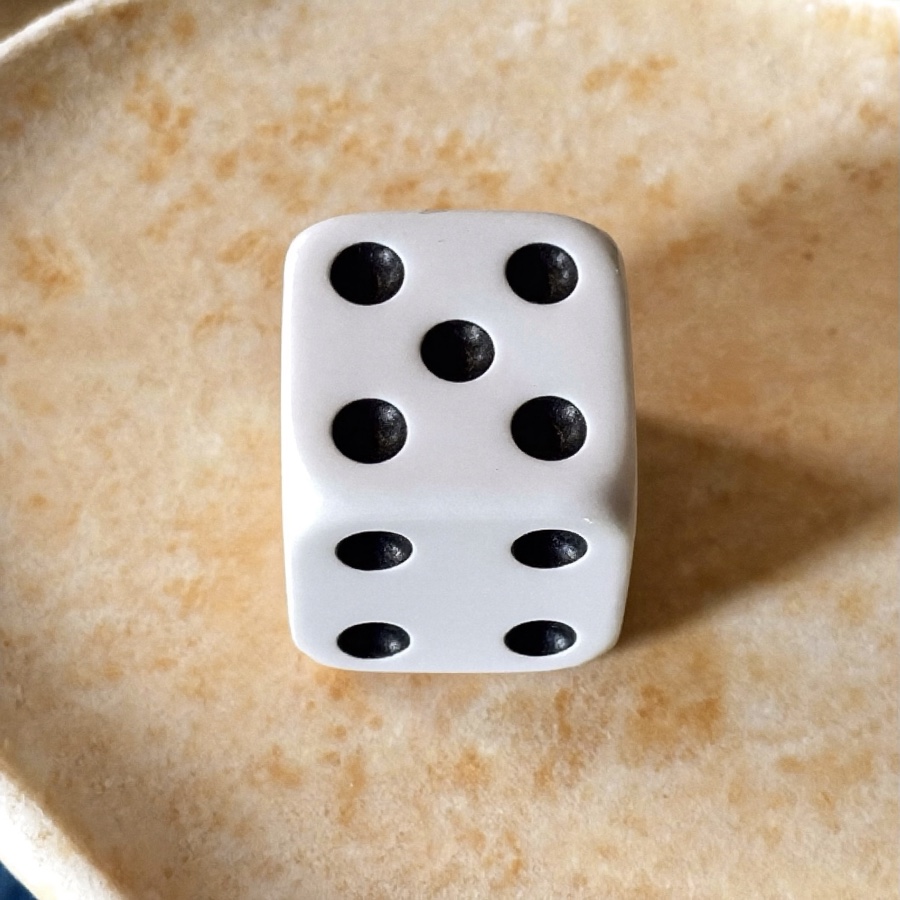

There is a decision on your desk that has been there for three weeks. Hire or wait. Raise the price or hold it. Take the offer or turn it down. And somewhere in those three weeks you started a list of the best books for decision making, because reading about deciding feels a lot like progress on the decision itself.
It is not progress. Most books on the subject make you a sharper critic of other people’s choices and leave your own exactly where they were.
So this list is ranked by a narrow test: what does the book change about the next decision you make? Fame does not count. Neither does how clever the ideas sound at dinner. A book ranks high if a reader can close it on Sunday and decide differently on Monday.
That test pushes some famous names down the list and pulls some less famous ones up. It also means that if you only read one, the first on the list is the one to read.
Every decision has four places where it can go wrong. You can consider too few options. You can judge the options badly. You can decide as a group and let the group’s noise swamp the judgement. And you can learn the wrong lesson afterwards, which quietly ruins the next decision too.
The books below each fix one of those four. The higher ones fix something most people get wrong most often, and give you a habit rather than a theory.
The single most common mistake in a real decision is the frame. “Should I hire this person or not?” is a question with one option in it, dressed up as two. The Heath brothers draw on research by Paul Nutt, a management scholar who studied decisions made inside organisations, and the pattern he found was blunt: “whether or not” decisions failed far more often than decisions where people compared two or more genuine alternatives.
Their fix is a four-step process they call WRAP: widen your options, reality-test your assumptions, attain distance before deciding, and prepare to be wrong. None of it is exotic. All of it is usable the same afternoon.
What it changes: before your next decision, you write down at least one real alternative that is not “do nothing”. That habit alone is worth the book.
Annie Duke played professional poker, a game where you can make the right call and still lose the hand. Her book is about the habit she calls “resulting”: judging a decision by how it turned out rather than by how it was made.
Her opening example is the Seattle Seahawks’ final pass in Super Bowl XLIX, intercepted on the goal line. The call was widely described as the worst in Super Bowl history. Duke argues that the reasoning behind it was defensible, and that the outrage was mostly about the outcome.
Resulting is poisonous for anyone who runs something, because it teaches you the wrong lesson twice. A bad decision that worked out gets repeated. A good one that failed gets abandoned.
What it changes: you stop reviewing decisions by asking “did it work?” and start asking “given what I knew then, was it a good bet?”

Most decision books are written by people who distrust intuition. Gary Klein spent years studying people who rely on it and are mostly right: fireground commanders, intensive care nurses, military officers. He found that experienced commanders rarely compared options at all. They recognised the situation, pictured the first workable course of action, ran it forward in their head, and acted unless the mental simulation showed a problem.
That is the useful part. Intuition is pattern recognition, and it is only as good as the patterns you have actually seen with honest feedback. A commander with twenty years of fires has earned his gut. A founder making her first acquisition has not.
Klein is also the source of the premortem, which he later described in the Harvard Business Review: before committing, imagine the project has failed a year from now and write down why. It surfaces the doubts people are too polite to raise.
What it changes: you learn when to trust your first read, and you run a ten-minute premortem before anything expensive.
Bias is the error everyone has heard of. Noise is the other one: the scatter in judgements that should be identical. The authors describe a “noise audit” at an insurance company, where executives expected their underwriters to differ by around 10 percent when pricing the same case. The median difference turned out to be 55 percent.
Any business where more than one person makes the same kind of call has this problem. Two managers score the same candidate. Two salespeople quote the same client. The variation is invisible until someone measures it.
Their remedy is what they call decision hygiene. The most practical piece of it: collect everyone’s judgement independently, in writing, before the discussion starts, so the loudest or most senior voice does not set the anchor for the rest.
What it changes: meetings where a decision gets made. Independent views first, conversation second.
Philip Tetlock ran the Good Judgment Project, which entered a forecasting tournament sponsored by the US intelligence research agency IARPA and did extremely well against the other teams. Its best performers were ordinary volunteers, and the book is an account of what they did differently.
They put numbers on their beliefs. They broke big questions into smaller ones they could estimate. And they updated in small steps as new information arrived, rather than holding a position until it collapsed.
What it changes: you replace “probably” with a percentage. “I think this hire works out” becomes “I’d put it at 70 percent”, which is a claim you can check later and learn from.

Bent Flyvbjerg has spent his career collecting data on large projects: bridges, IT systems, Olympic Games, buildings. His database runs to more than sixteen thousand projects, and by his count only 8.5 percent came in on budget and on time. Only 0.5 percent managed budget, schedule and the benefits they promised.
His prescription fits in four words: think slow, act fast. Take as long as you need in planning, where changes are cheap, and move quickly in delivery, where every month exposes the project to something going wrong. And estimate the cost and time of your project by looking at how long similar projects actually took, rather than by building your own forecast from the ground up.
What it changes: any decision to build something, from a new office to a product launch. You ask for the base rate before you trust the plan.
A computer scientist and a cognitive scientist take problems computers solve and apply them to ordinary life. The most famous is optimal stopping: if you have to choose from a sequence of options you cannot return to, spend roughly the first 37 percent looking without committing, then take the first option better than everything you have seen.
The deeper idea is the trade-off between exploring and exploiting. Early on, try new things. As your remaining time shrinks, stick with what you know works. It explains a lot about why young companies should experiment and mature ones should not apologise for doing the same thing well.
What it changes: you notice which of your decisions are search problems, and stop agonising over them as if they were one-shot bets.
Galef’s distinction is between the soldier, who reasons to defend a position, and the scout, who reasons to find out what is true. Most of us are soldiers about our own businesses, our own hires and our own strategies, and we do not notice because it feels like conviction.
The book is a set of tests for catching yourself. Would I accept this evidence if it pointed the other way? If a friend described this situation, what would I tell them?
What it changes: how you handle the information that arrives after a decision, which is where most people double down.
This is the most famous book on the list and the most important one intellectually. Kahneman shared the Nobel prize in economics in 2002 for the research behind it, and the division between fast intuitive thinking and slow deliberate thinking has become common vocabulary.
It ranks here because it explains far more than it changes. Kahneman was candid in interviews that decades of studying these errors had done little to protect him from making them. Knowing the name of a bias is a long way from avoiding it, and most readers finish the book better at spotting anchoring in someone else’s pitch than in their own.
Read it for the understanding. Then read Noise, his later book, for what to do about it.
Parrish runs Farnam Street, and this is a clear, well-organised collection of thinking tools: first principles, inversion, second-order thinking, the map is not the territory. It is a good reference.
It sits last because a list of models is easy to admire and hard to apply. The models that stick are the ones you use on a real decision the week you read about them. If one idea here is worth taking straight to work, it is second-order thinking: asking “and then what?” one more time than feels necessary.
If you read one, read Decisive. It fixes the most common error and gives you a process you can use tomorrow.
If you decide in groups, read Noise next. If you review a lot of decisions after the fact, read Thinking in Bets. If you are about to build something large, read Flyvbjerg before you approve the budget.
And read them when there is room to think. A day off where work actually stops is where a book like this gets absorbed rather than skimmed, and where the idea has a chance to connect to something you are actually facing.
Every one of the best books for decision making shares an uncomfortable point. The quality of a decision is set mostly before the moment of choosing: by the options you allowed yourself to see, the evidence you collected, and whether anyone was allowed to disagree.
Which brings back the decision on your desk. Pick it up this week, with one of these habits attached. Write down a real alternative. Put a number on your confidence. Run the premortem. If the decision is money, something like how much to pay yourself, write down what you would tell a friend in the same position.
And if you are making twenty decisions a day and none of them well, the problem may be volume rather than method. Decision fatigue is real, and no book fixes a day that asks too much of you.
Reading about deciding is useful. Deciding is the part that counts.
Written by
Victor Lanza
Editor of The Executive Insight. Writes about leadership, decision-making and the parts of building a business that nobody puts in the plan.

eDreams ODIGEO CEO Dana Dunne explains how the travel subscription model delivers predictable revenue, AI-powered personalization, and durable growth in a volatile market.

How a commitment to sustainability, diversification, and partnering with other family-owned businesses have kept the Terlato Wine Group strong.

Grupo VerdeAzul is transforming Panama’s Pacific coast through long-term investments, with landmark communities like Buenaventura leading the way.
The weekly Executive Briefing: insights, books, tools, and media opportunities worth your attention — curated and distilled into 5 minutes.

Welcome to The Executive Insight. Your free AI guide to the best tools is on its way. The first issue arrives soon. Check your promotions tab if it is not in your inbox!
Your request has been successfully submitted. Please wait for a reply from our manager, he will contact you as soon as possible.
Your copy of The Executive Insight Book Challenge List is downloading now. Enjoy the list — and while you're here, take a look at our latest interviews.