Subscribe to outperform
The monthly briefing for executives to stay ahead. Insights, book reviews, and the best tools — all curated and distilled into 5 minutes.




Could you start by giving us a brief introduction or overview and also milestones that the company has had in the last decade?
Sure. Well, our family is now four generations in the wine industry. It started 85 years ago. Both of my grandparents had a single retail shop and a wine shop in Chicago, two separate businesses. From there, we went from having retail shops too in the forties. My one grandfather started a small distribution business, which my father later joined.
In the sixties, we started importing Italian wine. In the eighties, when I joined the business, we started importing wines from other countries and then also marketing California wines. After I became a CEO in the nineties, we started buying wineries, developing vineyards, and owning the brands. So, it’s a very unusual migration up the food chain.
We sold the retail businesses in the seventies. We sold the distribution business in the early 2000s to focus on owning the brands and marketing lines for other businesses as well. One of the things that we understood is that the closer we were to the source, the larger the marketplace for our wines and the more control over the quality and over our own destiny. You know, when we had a retail store, your customers were a couple of miles in every direction. As a distributor in Illinois, it was the whole state; as an importer, it was the country; as a producer, we can sell all over the world. And we sell our brands in about 39 different countries around the world now.
We also understood that we were building and creating important brands for other people and families. We realized that we should use our efforts to do the same for ourselves and for future generations of our family as well.
That’s a very compelling answer. I would like to ask as well what you think are the main factors or strategies that have contributed to this success.
I think we have a long-term perspective. We look at the business in terms of 10-year cycles. I’ve seen four 10-year cycles in my career. And every 10 years, you get 2 or 3 years, which are really great; 4 or 5 years, which are kind of average; and 2 or 3 years, which are very challenging and difficult.
And what I’ve observed is that when things are good, everybody thinks it’s going to last that way forever. But it doesn’t. And when things are bad, they think it’s never going to get any better, but it does. So, you have to be prepared to get through the bad cycles and also understand when things are good, you have to be prepared for the fact that not everything grows in a straight line. You know, growth comes staggered through the years. So, understanding and looking at the long-term and focusing on quality is important.
We work only with family-owned businesses, not public companies. We work with family-owned partners who also have succession plans for their younger family members. I think the best thing we do is solve problems and overcome adversity.
It’s actually very interesting. I used to be an international correspondent based in Asia, and Japan was one of the countries I covered. The Japanese don’t plan for the next quarter; they plan for the next 25 years. So, I can see a lot of similarities. Also, when it comes to Japan, it’s very hard to do business with them. They stick to Japanese family businesses. So, it’s very similar.
Yeah, there’s no question. When we think of the success of a brand, we make decisions allowing success to be measured in decades, not in years or even quarters, which is what gets done in a lot of the public companies, you know, just to make numbers. I think if you focus on the long term, you make better decisions.
We actually work with a Japanese company. We represent a sake in our portfolio as well. I appreciate your comments because we were looking to have that in our representation, and it took us about 5 or 6 years of continuous meetings with the people we wanted to work with before they became comfortable with our philosophy.
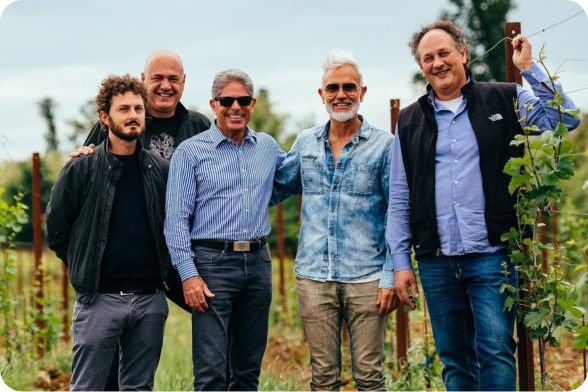
We actually work with a Japanese company. We represent a sake in our portfolio as well. I appreciate your comments because we were looking to have that in our representation, and it took us about 5 or 6 years of continuous meetings with the people we wanted to work with before they became comfortable with our philosophy.
We work only with family-owned businesses, not public companies. We work with family-owned partners who also have succession plans for their younger family members. I think the best thing we do is solve problems and overcome adversity.
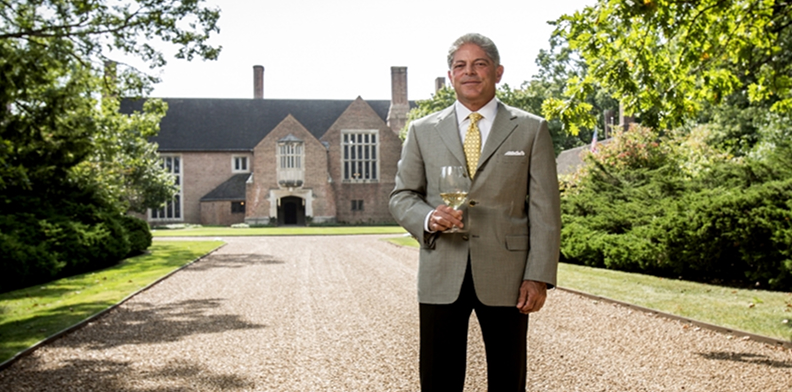

Delve into the rich heritage of Bell Wine Cellars, a family-owned Napa winery, as they unravel the nuances of seven Cabernet Sauvignon clones. Discover a 30-year legacy, unique tastings, and the art of pairing, offering a sensory journey through Napa's diverse terroirs.

How a commitment to sustainability, diversification, and partnering with other family-owned businesses have kept the Terlato Wine Group strong.

Formally established in 1909, with roots going back to 1903, the California Society of CPAs (CalCPA) has evolved into a powerhouse community with over 40,000 visionaries, making it the largest state society of change-makers in the U.S. accounting scene.
The monthly briefing for executives to stay ahead. Insights, book reviews, and the best tools — all curated and distilled into 5 minutes.

Your request has been successfully submitted. Please wait for a reply from our manager, he will contact you as soon as possible.
Your request has been successfully submitted. Please wait for a reply from our manager, he will contact you as soon as possible. (contacts)