Subscribe to outperform
The weekly Executive Briefing: insights, books, tools, and media opportunities worth your attention — curated and distilled into 5 minutes.


South Africa built a telescope that global vendors said couldn’t exist. Now it’s reshaping what the world expects from the continent.
The engineers who knew the most about large-scale data processing said it was impossible. No commercial vendor had dealt with data at that scale, and none wanted to start. So South Africa built it anyway.
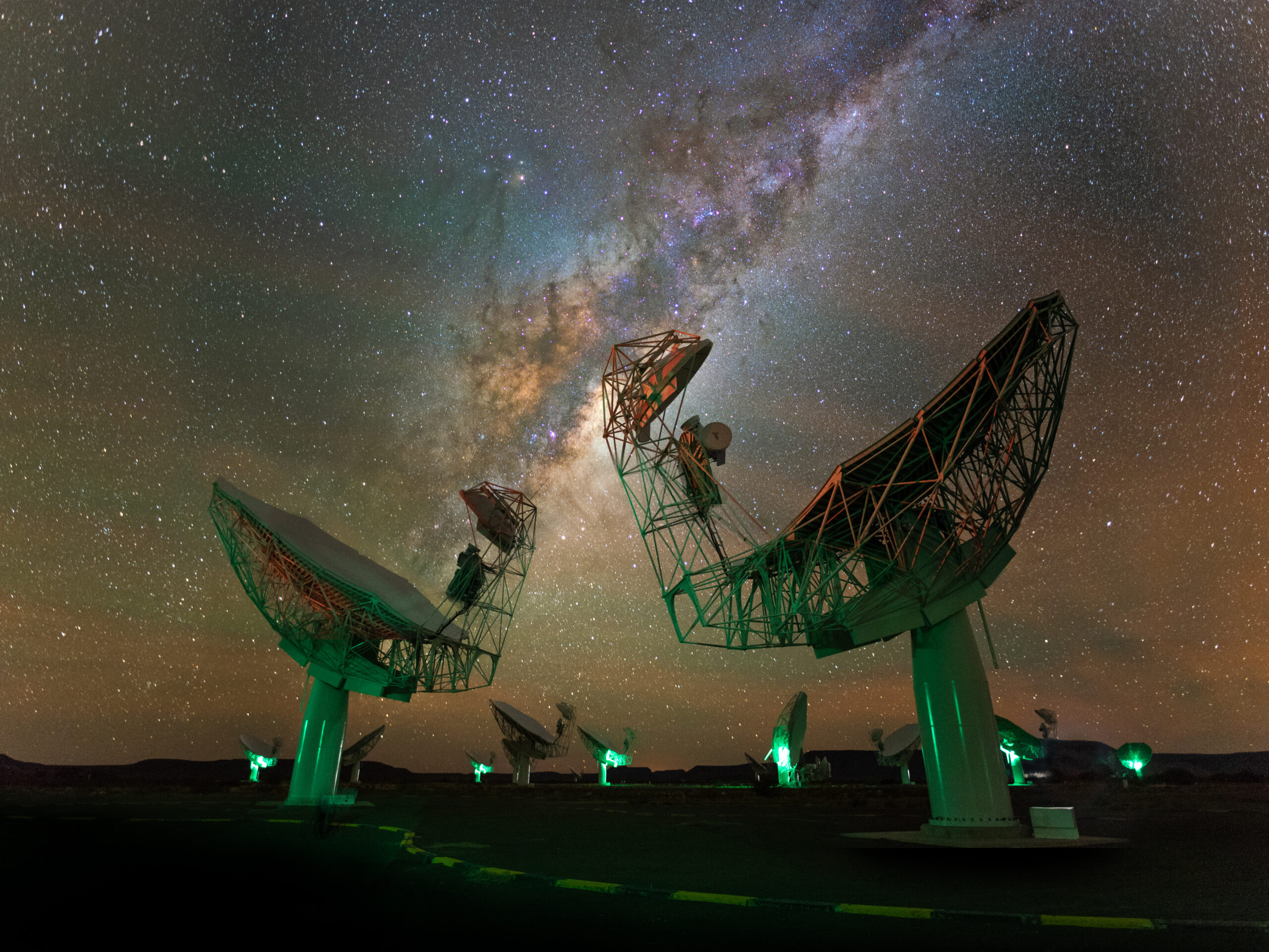
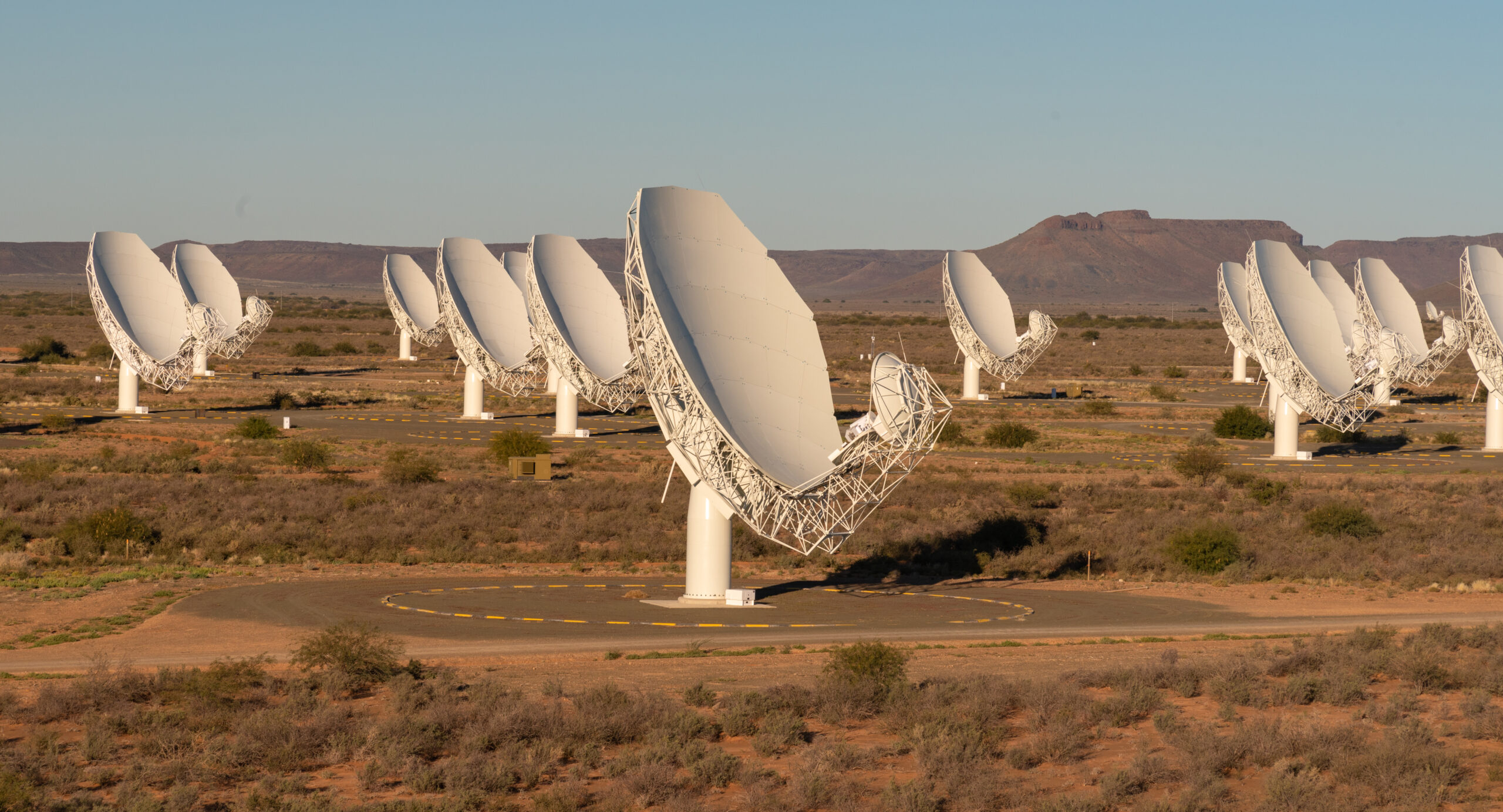
Pontsho Maruping is the Managing Director of the South African Radio Astronomy Observatory—SARAO—the national facility responsible for building, operating, and managing radio telescopes designed to detect signals that have been travelling across the universe for billions of years. At its center is MeerKAT, a 64-dish array in the Northern Cape that has already revealed new structures at the heart of the Milky Way and detected a cosmic laser more than halfway across the observable universe. SARAO also leads South Africa’s role in the Square Kilometer Array, an intergovernmental project now spanning 16 member countries across five continents.
Asked what explains SARAO’s rise, Maruping points to patience: “Our success comes from having a long-term vision for radio astronomy. We’ve made strategic investments over many years, building toward our current telescope, MeerKAT. We worked closely with industry and developed internal capacity to determine which technologies would be appropriate for a radio astronomy array of this scale.”
SARAO has moved Africa’s role in frontier science from aspiration to documented fact.
The vision Maruping describes required a specific kind of institutional patience. MeerKAT was built in phases, each designed to reduce risk before committing to the next stage. When SARAO needed computing systems capable of handling the telescope’s data throughput, commercial vendors declined. The volumes had no market precedent. SARAO’s response was to acquire off-the-shelf components and develop the architecture internally. That system now runs MeerKAT and is expected to contribute to the SKA Regional Centre Network. This global infrastructure project will provide researchers worldwide with access to telescope data, storage, and advanced analysis tools.
The science MeerKAT has returned is not incremental. Its first-light image of the Milky Way showed the galaxy in detail that previous instruments could not resolve — and embedded in that image were giant radio bubbles flanking the galactic center, structures whose origin astronomers are still debating. More recently, the array detected a ‘gigamaser’: a natural cosmic laser produced by hydroxyl molecules in a galaxy merger, located roughly halfway across the observable universe. Each finding represents a category of discovery, not just a data point.
A national grid, or a dam, is built once, in a fixed place, for permanence rather than portability. Neither can be cloned and dropped into a new country; each has to be built again, from the ground up, with the same years of trial and investment. Radio astronomy infrastructure works the same way. The dishes stay in the ground. The data pipelines get deeper. What SARAO built for MeerKAT cannot simply be replicated elsewhere.
“I hope people begin to view Africa differently. South Africa has contributed expertise at every level of this project—from advanced engineering and technology development to construction and operations. I hope this encourages more collaborative, mutually beneficial, and sustainable partnerships across science and technology fields throughout Africa.”
The geographic logic behind placing a flagship global telescope in South Africa was not purely scientific. The Northern Cape offers exceptional radio quietness—low interference, sparse population, protected spectrum. But the choice also established a policy foothold. South Africa secured rights to co-host the SKA through an international, competitive bid process that concluded in 2012. Through the subsequent SKA treaty negotiations, South Africa became a Founding Member of the SKA Observatory, establishing an intergovernmental scientific collaboration that academic partnerships alone do not confer. Researchers from more than 22 countries have already used MeerKAT through SARAO’s open proposal system. Maruping frames this as evidence that astronomy is “inherently collaborative”—though SARAO’s Human Capital Development Programme, which funds postgraduate studies and professional development, suggests the collaboration was deliberately constructed, not simply invited.
The telescope sites sit in some of South Africa’s most economically marginal areas. To this end, SARAO treats the “social license to operate” as an organisational KPI. While it is not likely to address all the issues faced by the communities, it has gone a long way in positioning learners to reach their potential, empowered small businesses to take advantage of the opportunities presented by the project and created significant job opportunities through skills development. As an example, 90% of the staff based on the Karoo come from the region. We ensure local participation through our contracts, including major infrastructure contracts. This initiative helps drive the local economy and skills development.
SARAO also runs STEM programs and supports students through higher education, but the organization is cautious about overclaiming what those programs have delivered so far. These programs come in the form of skills development partnerships, our Human Capital Development bursaries, and schools programs, providing bursaries to school learners, junior degree students, postgraduates, and post-doctoral programs. Our school’s programs include Math and Science camps, Robotics and coding and we even employ a Math teacher, embedding ourselves as a contributing member of the community. “Our goal is not simply to build infrastructure,” Maruping says, “but to create opportunities for future generations to participate meaningfully in science and technology.” That sentence contains its own unresolved tension: the infrastructure is real and measurable; the opportunities are still being constructed.
Across engineering, data science, and international institution-building, SARAO has moved Africa’s role in frontier science from aspiration to documented fact. Whether that demonstration translates into the kind of durable, reciprocal partnerships Maruping is asking for remains an open question, and one that other countries, funding bodies, and scientific consortia will have to answer in ways that outlast any single grant cycle or telescope project.
South Africa’s MeerKAT telescope was built not because the market supported it, but because SARAO decided the science demanded it. When commercial vendors said the data volumes were impossible to handle at a realistic price, the organization built its own systems—systems now embedded in one of the largest scientific infrastructure projects in history. Pontsho Maruping, SARAO’s Managing Director, wants the world to see what that took: not goodwill and potential, but expertise, engineering, and a long-term vision built in phases, each one reducing risk before committing to the next. The question now is whether the global science community meets that with partnerships that last longer than a grant cycle.
Learn more about SARAO at sarao.ac.za

Special School District of St. Louis County (SSD) serves over 23,000 students with special needs in partnership with 22 public school districts and other academic organizations.

For over 30 years, JMG (formally known as Jobs for Maine’s Graduates) has been at the forefront of addressing Maine's growing workforce challenges, offering equitable solutions to economically disadvantaged and underserved students.

Set amid the serene landscape and natural beauty of the Hamptons, Ross School is defining education for tomorrow, with an interdisciplinary curriculum built on global understanding, independent scholarship, and rigorous inquiry. The school prepares students to approach an ever-changing world with confidence, creativity, and a willingness to engage with new ideas and challenges, while a […]

Most personal development books get read once, enjoyed and forgotten by the following quarter. A few are worth a second read, because they change what you do on an ordinary Monday rather than how you feel on a Sunday afternoon. The ten below pass that […]

You ask an AI for a statistic and it hands you one, with a footnote. You click the footnote and the number is not on the page. That is where the Perplexity vs ChatGPT choice really begins. Perplexity is built to find sources and put […]
The first meeting usually goes pleasantly. The office is warm, the adviser is good company, and by the end you have talked about your children, your plans for retirement and the house you might sell one day. What you have rarely done is ask the […]

You have two offers on the table, or two candidates, or two ways to spend the next year, and you have been going round in circles for a week. What you are looking for is a decision making framework, something that turns the loop into […]

The first week of the holiday goes well. You sleep ten hours a night, read a novel for the first time in a year, and start to feel like yourself. Then, somewhere around the Sunday before you fly home, the dread comes back. Two weeks […]

Most advice on how to manage stress at work treats stress as a personal failing: breathe better, sleep more, download an app. Those help at the edges. They leave untouched the thing that makes work stressful for most people, which is having a lot asked […]

Most people asking how to become a consultant already have the hard part: years of doing something well inside a company. What they lack is a way to sell it. Consulting is a business built on a narrow promise, and the people who struggle usually […]

Is an online MBA worth it? For a working professional who wants the knowledge and the credential without giving up a salary, it can be one of the better deals in higher education. For someone who wants to change careers, it is often the weaker […]

AI consulting for small businesses has become a crowded market in about two years. Agencies that built websites now sell AI audits. Freelancers who learned prompting last spring sell implementation packages. Most owners who get a pitch have no way to judge it, because they […]

Will AI replace financial advisors? For the part of the job most clients think they are paying for, the portfolio, it largely has. Software has been picking funds, rebalancing and harvesting tax losses for over a decade, for a fraction of what an advisor charges. […]
The weekly Executive Briefing: insights, books, tools, and media opportunities worth your attention — curated and distilled into 5 minutes.

Welcome to The Executive Insight. Your free AI guide to the best tools is on its way. The first issue arrives soon. Check your promotions tab if it is not in your inbox!
Your request has been successfully submitted. Please wait for a reply from our manager, he will contact you as soon as possible.
Your copy of The Executive Insight Book Challenge List is downloading now. Enjoy the list — and while you're here, take a look at our latest interviews.