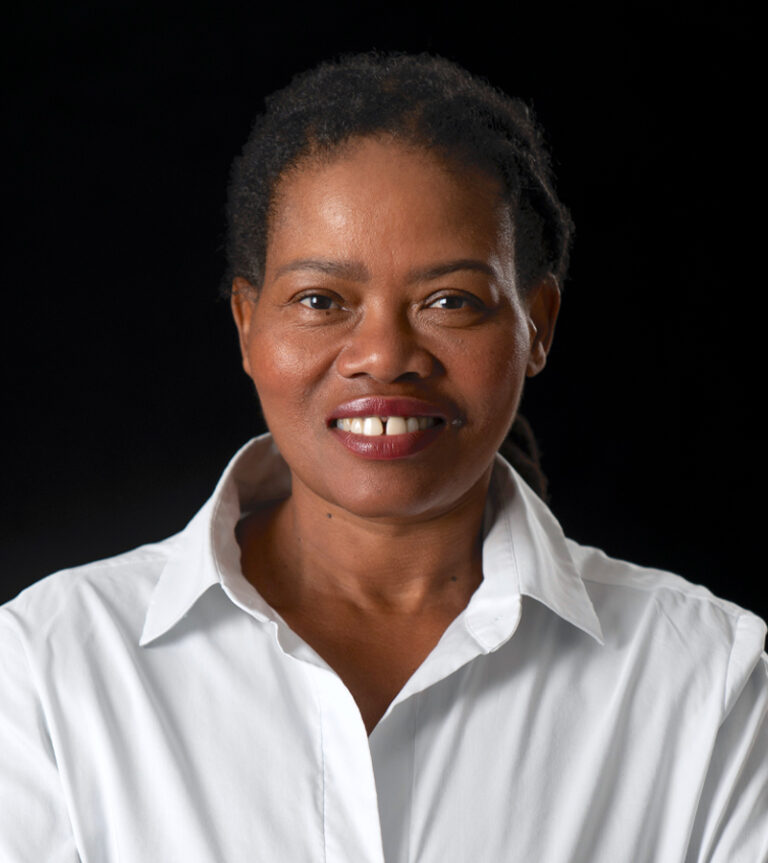
“We offer our students a pedagogy based on experiential learning and the teaching of both soft and hard skills.”
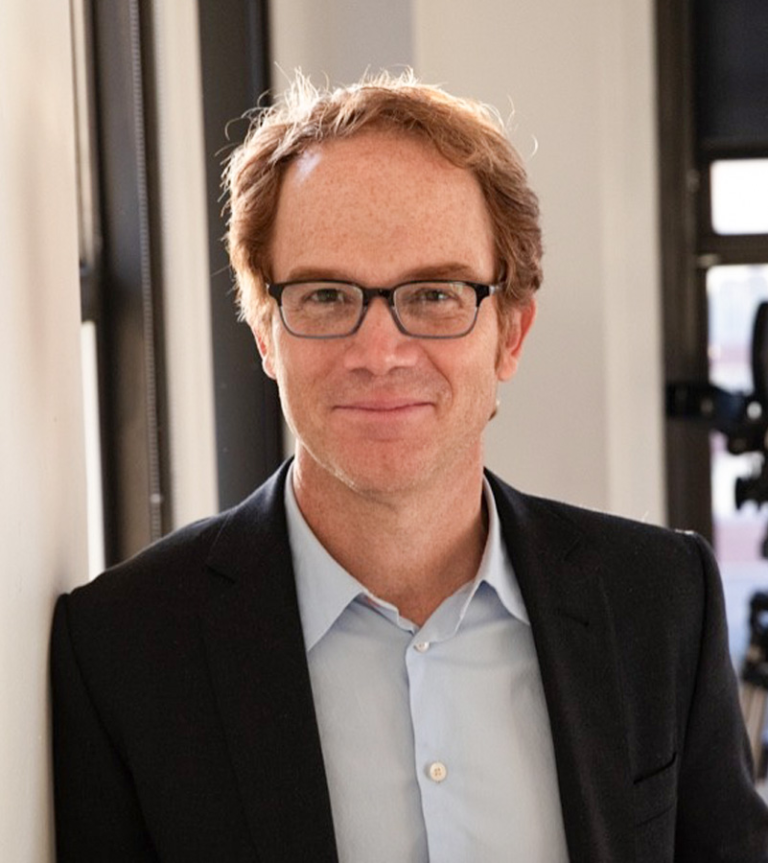
"We live in the future. Right now, everything is possible."
SARAO is one of the national facilities under the National Research Foundation. National facilities provide critical research infrastructure that can’t necessarily be established by a single institution — some are in nuclear science, some in environmental science, and we’re one of the observatories, with a focus on radio astronomy.
We build, operate, and manage radio telescopes. We train and develop skills in radio astronomy, and we carry out science engagement, public engagement, and community development in the areas close to where our telescopes are built. We’re also responsible for the Square Kilometre Array (SKA) project in South Africa — an international, intergovernmental organization building telescopes in South Africa and Australia, which already has 16 member countries across five continents.
Our success comes from having a long-term vision for radio astronomy. We’ve made strategic investments over many years, building toward our current telescope, MeerKAT. We worked closely with industry and developed internal capacity to determine which technologies would be appropriate for a radio astronomy array of this scale.
Primarily through innovation. A lot of the design principles and systems-engineering approach behind MeerKAT, including new technologies introduced through the dish design, have been carried into the SKA-Mid project. The next phase of the project relies heavily on what we learned from building MeerKAT.
Another way we distinguish ourselves: when we first started with MeerKAT, we tried to go to market for a data-ingest, backend, and compute solution, and a lot of the OEMs told us it was impossible — they’d never had to deal with that much data before. Instead of getting frustrated, we put a team together that bought off-the-shelf components and built the solution internally. That approach has since guided how we support and store MeerKAT’s data, and it will also contribute to how we build the future science regional centre for the SKA — part of the SKA Regional Centre Network, which will give researchers worldwide access to telescope data, storage, and advanced analysis tools.
Telescopes like this let you study many different areas of astronomy by their very nature — you’re observing large parts of the sky, so you ingest a lot of data even without targeting one specific area. That data can then be analyzed for years, turning up discoveries nobody anticipated.
I learned recently from someone who’s studied pulsars for a long time that MeerKAT has significantly cut the time it takes to study them, enabling work that just wasn’t possible before. Because pulsars act as extremely precise cosmic clocks, they let us test the laws of physics under extreme conditions, and even search for evidence of gravitational waves. It’s really enabling astronomers to do science that would have taken far longer in the past, or wasn’t possible at all without an instrument like MeerKAT.
We’ve already touched on pulsars, which shows part of why it’s significant. MeerKAT itself is a 64-dish array here in the Northern Cape. Going back to our first-light image, it was the first time our Milky Way had been observed in that level of detail — that alone held a few surprises. Then there was the discovery of things like radio bubbles flanking the galactic center — structures whose origin astronomers are still debating — which let us study the Milky Way in more depth than was possible before.
More recently, there was the discovery of a cosmic laser — what astronomers call a ‘gigamaser,’ produced by hydroxyl molecules in a galaxy merger — roughly halfway across the universe — again, a significant find that’s enabling astronomers to do things that weren’t possible before. All of this is building a strong foundation for the next phase of the project, enabling even more advanced discoveries than before. We really do live in the future right now — everything feels possible, and we’re lucky to be part of it.
This probably applies to a lot of sciences, but astronomy by its very nature is very collaborative — you can’t really contain the research within your own borders. As soon as you have an instrument as capable as MeerKAT, people around the world who want to use it will naturally choose to become partners and collaborate.
We divide observation time on the telescope between long-term projects, which run over multiple years, and annual open-time calls, where researchers around the world can submit proposals for how they want to use the telescope. Through that process, we’ve had researchers from more than 22 countries use MeerKAT. Because astronomy is so collaborative, these researchers often end up working with local researchers or students, which supports skills development and gives access to other instruments researchers might not otherwise have had. It also brings South African researchers working in similar areas closer together, since they can share data, students, and analysis and imaging tools.
It’s also worth noting the history behind our role in the SKA. South Africa secured the rights to co-host the project through an international, competitive bid process that concluded in 2012, and through the treaty negotiations that followed, we became a Founding Member of the SKA Observatory. That’s a different kind of standing than an academic partnership alone would give us — it’s an intergovernmental collaboration.
In some cases, we’ve worked directly with specific universities to develop research areas that advance science and technology. One example is Stellenbosch University, where we have a research chair focused on dish design — they characterize astronomy dishes, but that research also applies to dishes used in telecoms and the space sector, so it’s contributed well beyond astronomy. We also run a dedicated human capital development program, now more than 20 years running, that funds postgraduate studies and professional development and strengthens research groups at universities, to build enough capacity to use telescopes like MeerKAT.
MeerKAT will be integrated into the next phase of the project. An array like this is scalable — you can add more dishes, place them farther from the core, and improve the telescope’s sensitivity. We’re working toward that integration now.
Beyond that, our focus will shift to building internal research capacity. At the moment, a lot of our scientists mainly support other scientists working on MeerKAT; going forward, we’ll build internal capacity to focus on research areas where we see gaps and future potential.
We’re also exploring other collaborative projects happening around the world, whether that’s building other arrays or expanding radio astronomy across Africa, which has been a key objective for us. Primarily, though, our future focus is on setting up the SKA regional centre — each SKA member country is setting one up, and it will let researchers access telescope data, with all the centres forming a network to ensure adequate storage and compute capacity. So a lot of our effort going forward will be in data science, high-performance computing, and analysis and imaging tools — capacity that supports radio astronomy but can also be applied in other fields that need high-performance computing and data science skills.
Mainly, I hope people begin to view Africa differently. South Africa has contributed expertise at every level of this project — from advanced engineering and technology development to construction and operations.
I hope this encourages more collaborative, mutually beneficial, and sustainable partnerships across science and technology fields throughout Africa.
One area we haven’t touched on is how well we’ve worked with the communities near the telescope. With big international projects like this, you sometimes see situations where the local community is unhappy or the relationship isn’t great. From the beginning, we made sure to build what we now call a social license to operate — we wanted the community to feel part of a project this significant.
We treat that social license to operate as an organisational KPI. It’s not going to solve every issue the communities face, but it’s gone a long way toward positioning learners to reach their potential, empowering small businesses to take advantage of the opportunities the project presents, and creating real job opportunities through skills development. As an example, 90% of our staff based in the Karoo come from the region — we ensure local participation through our contracts, including on major infrastructure contracts, and that helps drive the local economy and skills development.
Because this is a remote, rural area, you won’t necessarily find the right engineers or scientists nearby, but building the relationship allows future generations to be part of the project in a much more meaningful way. We work with young people to encourage them into STEM through skills development partnerships, our Human Capital Development bursaries, and schools programs — bursaries for school learners, junior degree students, postgraduates, and post-doctoral researchers. Our schools programs include Math and Science camps and robotics and coding, and we even employ a dedicated Math teacher, so we’re embedded as a contributing member of the community, and we don’t just support the ones who already show potential — we’ve put interventions in place to support them while they’re still in school, so that by the time they reach university, we can continue supporting them. It’s a different approach to how these kinds of projects are sometimes run elsewhere. Our goal is not simply to build infrastructure, but to create opportunities for future generations to participate meaningfully in science and technology.
“We offer our students a pedagogy based on experiential learning and the teaching of both soft and hard skills.”
“The Costa Rican Red Cross has more than 140 years of experience providing humanitarian services throughout Costa Rica.”
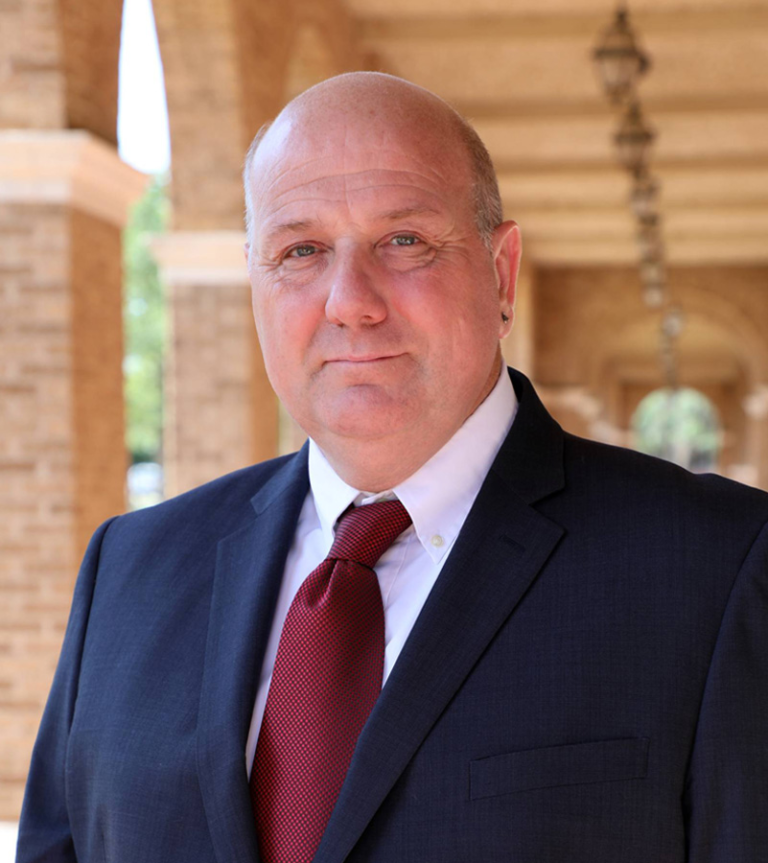
“It's one of our mottos to shape the next now and try to be a beacon of light for our students.”
The monthly briefing for executives to stay ahead. Insights, book reviews, and the best tools — all curated and distilled into 5 minutes.
Welcome to The Executive Insight. Your free AI guide to the best tools is on its way. The first issue arrives soon.
Your request has been successfully submitted. Please wait for a reply from our manager, he will contact you as soon as possible.