Subscribe to outperform
The weekly Executive Briefing: insights, books, tools, and media opportunities worth your attention — curated and distilled into 5 minutes.




Youth Advocate Programs (YAP), Inc., a nonprofit operating in 32 states and Washington, D.C., announced today two major initiatives aimed at keeping some of the highest-risk youth out of incarceration and other residential facilities, and scaling proven interventions globally. The organization is launching YAP Pursuing Excellence®, which adds cognitive behavioral therapy to its YAPWrap® comprehensive community-based youth and family services model. The organization will also unveil the YAP Global Leadership Institute (GLI) to train practitioners and partners in delivering evidence-based youth services in their communities.
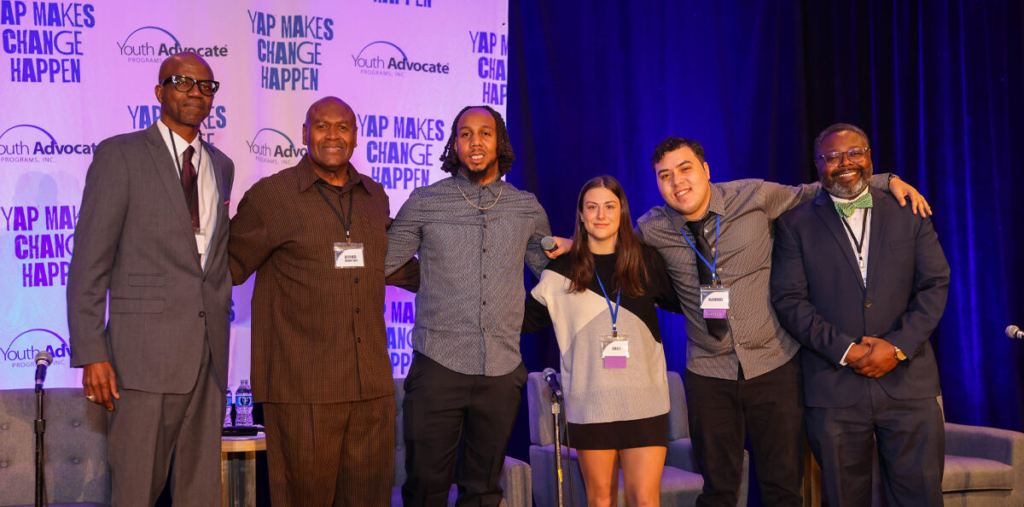

Both expansions build on YAP’s four signature program areas — Youth and Family Empowerment, Bringing Systems Change, Investing in Economic Mobility, and Global Capacity Building. These initiatives are anchored by the 50-year-old YAPWrap® model, recognized by the National Institute of Justice and the Office of Juvenile Justice and Delinquency Prevention as a promising community-based individual and family wraparound program. John Jay College of Criminal Justice research found 86% of YAP youth justice participants remain arrest-free, and nearly 90% still lived in their communities six to 12 months after completing the program, with fewer than 5% in secure placement.
“We’re working to enhance donor funding to fuel the expansion of YAP Pursuing Excellence®, our innovative approach to improving outcomes for system-involved and other young people in trouble or crisis,” says Gary Ivory, president and CEO of Youth Advocate Programs, which adheres to a no-reject, no-eject approach to referrals from youth justice, child welfare, and other system partners.
GLI details are expected in the coming months. The institute will provide coaching, training, and technical assistance to practitioners in the U.S. and abroad. In 2025, YAP also launched YAP® Alumni Ambassadors, giving former participants a forum to share their outcome stories and testify before city councils, state legislators, and Congress. Part of its Bringing Systems Change efforts, the national nonprofit’s work has contributed to reducing violence rates in Baltimore, Charlotte, and other cities.
“We’re aligning all our functions with an eye on ensuring that through new and expanded government, philanthropic, corporate, community and other partnerships, more young people and families will benefit from our services,” Ivory says. “These alliances, bolstered by sustainable donor support, will ensure that our staff and service models will continue to bring positive change for individuals, families, and neighborhoods in American and global communities.”
Corporations and individuals can support YAP through donations or workforce development partnerships. Visit www.YAPInc.org to learn more.


Founded in 1975 by Tom Jeffers, Youth Advocate Programs (YAP) is a national nonprofit delivering evidence-based services in homes and communities as a more effective alternative to youth incarceration and out-of-home placements. YAP deploys neighborhood-based advocates and mobile behavioral health professionals nationwide, partnering with justice, child welfare, behavioral health, and public safety systems to empower individuals, families, and communities to thrive.
Learn more about Youth Advocate Programs at www.yapinc.org.

Founded in 2000, Springs Charter Schools is a publicly funded, tuition-free academic institution. Its seven schools in 21 locations serve more than 12,000 students.

Established by Tiger Woods in 1996, TGR Foundation is committed to empowering young people from under-resourced communities to pursue their passion through education. The organization has a state-of-the-art learning lab in Anaheim, California, and is opening similar sites in Philadelphia and Los Angeles.

You ask an AI for a statistic and it hands you one, with a footnote. You click the footnote and the number is not on the page. That is where the Perplexity vs ChatGPT choice really begins. Perplexity is built to find sources and put them beside every claim. ChatGPT is built to work on […]

A former nurse manager applies for an operations role. Her résumé says “excellent communication skills” and “strong leadership”. So do most of the other applications on the recruiter’s screen. The skills are real, and as written they are invisible. Good transferable skills examples always come […]

The spreadsheet says 52 is possible. You have run it three times, changed the return assumption twice, and it still works. Then come the questions the spreadsheet cannot answer: how to get money out of a 401k seven years early, who pays for health insurance […]

Forty minutes into the meeting, the team is still arguing about which of two suppliers to choose. Both options have been costed twice. Every new argument digs further into the same two answers. Lateral thinking is the habit of stopping at that moment and asking […]

Thursday, 3 p.m. You read the same email for the third time and still could not say what it asks for. You slept six hours last night, and the night before, and you feel fine, mostly. So is 6 hours of sleep enough? For most […]

The Monday meeting goes quiet when one person speaks, and everyone else looks at the table. Nothing in the comment is quite bad enough to discipline. It is the fourth one this month, and the team is waiting to see whether you noticed. Knowing how […]

You land at 7 a.m., the meeting is at 9, and the shirt you packed comes out of the case with a crease across the chest that no amount of smoothing will remove. Learning how to fold a business shirt for travel takes ten minutes […]

It is late, the house is quiet, and three tabs are open. One is a $49-a-month certificate from a company everyone has heard of. One is a bootcamp that promises a new job in sixteen weeks. One is a university program whose price makes you […]

The offer email arrives. The number is fine, maybe slightly less than you hoped, and the recruiter is waiting for an answer. Most people say yes. Knowing how to negotiate salary at this exact point is worth more than at any other moment in the […]

The busiest office workers are interrupted every two minutes during core hours. That figure comes from Microsoft’s own data on how people use its software, and anyone who runs a team will recognise it. Most productivity hacks are written for a calendar you control. The […]

The alarm goes off at six. You hit snooze twice, get up at half past, and spend the first hour of the day feeling like someone else is driving. Most advice on how to become a morning person starts with the alarm: set it earlier […]
The weekly Executive Briefing: insights, books, tools, and media opportunities worth your attention — curated and distilled into 5 minutes.

Welcome to The Executive Insight. Your free AI guide to the best tools is on its way. The first issue arrives soon. Check your promotions tab if it is not in your inbox!
Your request has been successfully submitted. Please wait for a reply from our manager, he will contact you as soon as possible.
Your copy of The Executive Insight Book Challenge List is downloading now. Enjoy the list — and while you're here, take a look at our latest interviews.