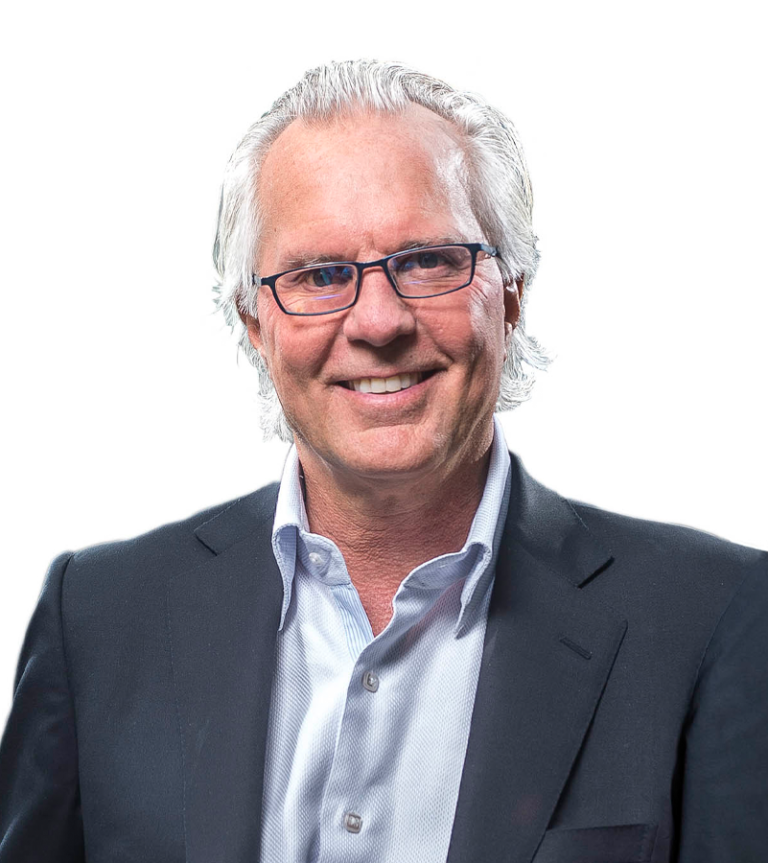
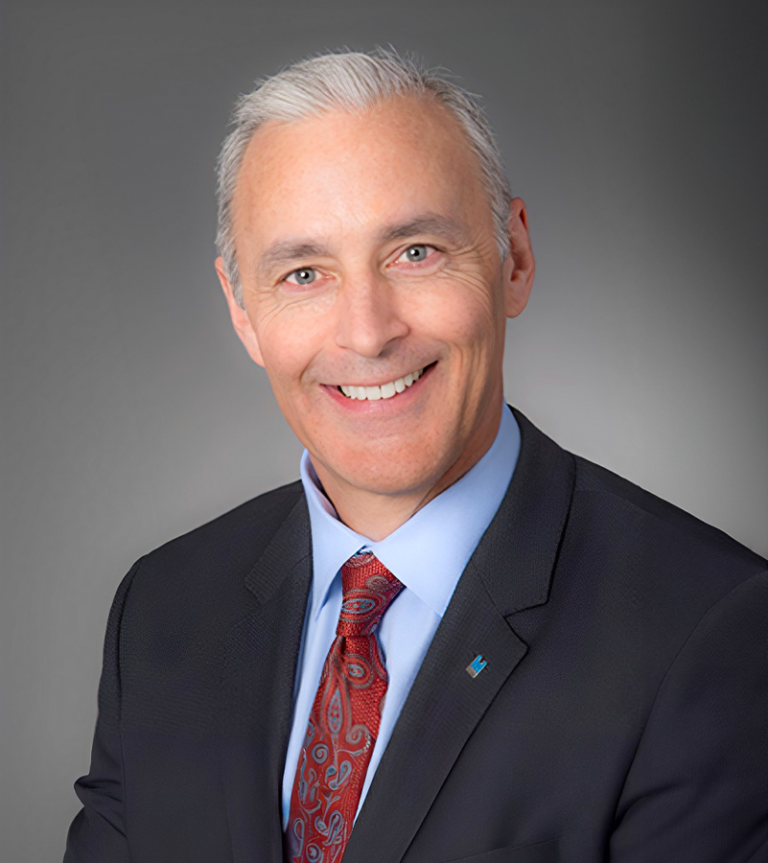
"I think people should get back to the basic theory of treating people how you want to be treated."

Could you give us a brief introduction to Clayco as of today?

We’re a leading design-build, fully integrated real estate development and construction company. We work across North America, mostly in the United States but also in Canada and Mexico. We have projects in about 45 cities and about 4,500 employees, of which 3,500 are full-time. We build mostly complex, mission-critical projects that are our clients’ most important projects.

What would you say have been the keys to the success of Clayco?

The first thing that comes to mind when I think about what has made the company so successful is our culture, which is made up of the people who work here. We really focus on hiring the best and brightest team members. We’re looking for smart and ambitious people of high integrity. They may not be totally focused on a paycheck as much as they are making the world a better place. We really focus on hiring people who care about their community.

I’m a softie for a person who might have been their high school newspaper editor. I like people who have a history of doing things that they don’t have to do to make the world a better place. So we find people who have good value systems, who treat people how they want to be treated and who follow the Golden Rule.

I also think about building a culture of diverse people, a very inclusive organization with different ethnicities and a lot of different languages spoken. I think 46 different languages are spoken in the company today. We can almost relate to anybody from anywhere around the world. This makes us a unique proposition for our clients.

The other thing that’s made us successful is that we’ve really built the organization to understand every aspect of delivering a project, from financing the real estate development business, to the architecture and engineering business, including process engineering. We also have many self-perform capabilities. We have our own concrete company. We do our own mechanical and electrical installations. We really cover every facet of a really complicated building, and that’s an attractive proposition for our clients.

You just mentioned the Golden Rule. Could you please elaborate a little bit more about why it is important in your company?

I think the Golden Rule should be important to everybody in the whole world. And I think it is more important today than ever before, since so many people are trying to divide others into different categories using social media and similar platforms. There’s a lot of tension right now in politics and related areas. I think people should get back to the basic principle of treating others how they want to be treated, applying the Golden Rule in everything that they do.

I also talk to people about conflict resolution and solving problems.  Often, you have to put yourself in the other person’s shoes. A critical secret sauce within our business is that we’ve surrounded ourselves with people passionate about solving each other’s problems. I think this approach makes our clients see us as more than just a transaction. It’s an important part of our culture and our business.

I want to ask you more about the secret sauce. The company’s mantra is “Beyond These Walls.” Could you please elaborate a little bit about what that means?

For many years, we just thought of ourselves as the art and science of building. After all, architecture incorporates aesthetics and beauty. Then, there’s the technology associated with the structural engineering and building the building. For years and years, we built the business with this motto, “The Art and Science of Building.”

My late wife, Ellen Clark, who passed away in 2010, was very much a partner of mine when I was growing the business. Around the time that she passed away, I took her out with me to one of my construction jobs. She came up behind me, and she said that she knew that I loved the buildings that I was building but that she thought it would be a terrible outcome if my legacy was just about building buildings.

I was shocked because, of course, my legacy is going to be about building buildings since I’m one of the biggest builders in the country. I said, “Well, I’m not sure what you mean.” She explained that what happens INSIDE these buildings is a thousand times more important than the bricks and mortar. What happens inside the hospitals, cancer centers and education facilities we’re building, is the essence of why we exist.

Ultimately, it’s about the patient. It’s about the discovery of a new drug that might happen in the Pfizer Laboratory that we built. In fact, the COVID-19 vaccine was invented, designed and manufactured in a building that we constructed.

In short, “Beyond These Walls” is about what’s happening in the minds of the people in the building and creating a lifestyle in our residential buildings. I came back from that jobsite and told my partners what Ellen had said, and it resonated with everybody. And then it became a significant part of our brand.

What do you think differentiates you from competitors, especially when it comes to the culture of the company?

I don’t think too much about our competitors. I think mostly about our clients and what they need. I very rarely discuss what our competitors are thinking and doing. Many people come to Clayco from many other places. It’s hard to pinpoint a single competitor in the country because no company does exactly what we do in the comprehensive way that we do it. We might have 350 architects in our architecture group. They might be competing with a handful of resourceful architecture firms. We might have competitors in the concrete business because we have the 7th largest concrete subsidiary in the United States, and it certainly competes with other concrete companies. But as a total, unified organization, we don’t really have a specific kind of competitor.

You are building your new facility in Berkeley, Saint Louis. I wanted to ask you about your commitment to the city and how the new building will impact it.

There are a couple of things about this. First, we’re humbled to have grown the business the way that we have. Since I started the company 40 years ago, we’ve seen remarkable growth. An interesting fact is that we grew over 40 percent in nine of the first 16 years. This rapid growth has become normal for us. In the last eight years, we’ve probably grown tenfold.

The business has grown from nothing to about $7 billion in revenue this year. We’ve also grown our employee base. Because we’re a national company, we have what we call base camp offices in Chicago, which is technically our headquarters, Phoenix, Los Angeles, Atlanta and other cities. However, St. Louis is where we started. It’s our biggest office where our back-of-house, IT and accounting departments, as well as several architects within our engineering business are based.

Before COVID, many employees had relocated to other offices. However, an interesting thing happened. After COVID, many of our employees asked if they could come back to St. Louis or stay in St. Louis. New employees often selected St. Louis as the place they would like to live after they graduate from college. It’s a good community with a great cost structure. A person can buy a home here.

The other contrast is that St. Louis has experienced some really tough times. I don’t think any other city in America has experienced as much loss as St. Louis has. In the 40 years since I started Clayco, 54 major companies have left St. Louis or sold and become subsidiaries. These are stalwart companies like Ralston Purina, Perena, Anheuser-Busch, McDonnell Douglas, General Dynamics and Trans World Airlines.

Our airport, St. Louis Lambert, also lost its hub status. St. Louis was a major airport for Trans World Airlines, but it was taken over by American Airlines, which moved its hubs to Texas and Illinois. I don’t think there’s another city that has such great assets and has had so much trauma.

We have an unbelievable culture in St. Louis—the Art Museum, Symphony and the Arch. We have great tourism. We have amazing universities—St. Louis University, University of Missouri and Washington University are some of the top schools in the United States.

There are good bones in St. Louis. There’s a lot of great infrastructure here. We have a great mass transit system. We have an underutilized airport. These are just a few reasons we decided to double down in St. Louis. Instead of moving these jobs someplace else, we said, “Let’s expand in St. Louis. Let’s walk the walk and not just talk the talk.” And so we’re adding around 500 new jobs in St. Louis.

Recently, the Wall Street Journal wrote an incredibly negative story about St. Louis, casting it in a very unfavorable light with the headline “The Doom Loop.” Honestly, I’d love to say that the article was not true. However, the article was pretty accurate. It’s an accurate depiction of a city that’s in trouble and has experienced a lot of trauma. Civic leaders like me have a responsibility to respond to add jobs in the market and encourage other companies in St. Louis to continue to grow their business base here. That’ll help grow the tax revenue in the area. It helps us hire more police officers and start doing a better job of creating a safer community.

However, we can’t just build a building and hire people. We must also have a strong voice. We need to actively communicate to the community why we’re doing what we’re doing and emphasize our commitment to turning St. Louis around. It is truly a turnaround story, if there ever was one. Cities like Detroit are in turnaround mode. Cities like Kansas City, Nashville and Indianapolis have done a terrific job of starting from a low point and achieving tremendous growth and opportunity in their communities. I believe we can do the same in St. Louis.

What’s next? What is your vision for Clayco for the next three to five years?

We’re already a major player in artificial intelligence, and we’re building infrastructure for leading technology companies. We work for virtually all of them. We’re one of the biggest builders of hyperscale data centers in the United States. We’re also a major player in advanced manufacturing, such as car and battery plants. We’re building the new technology to produce chips domestically in America and working with the major chip companies. We have a significant footprint in the industrial warehouse and distribution market for companies like Amazon that are transforming the way we shop. We have a strong footprint in higher education.

We’ll continue to deliver these types of products, but you’ll also see us enter the energy sector. We are committed to becoming a resource for major utility companies in renewable energy, including solar, wind, battery and other technologies. Many of our biggest clients, who are building hyperscale data centers, are looking for green energy solutions. We’ll play a major role in helping our customers solve their most complicated energy problems. That’s really what’s next—exploring nuclear energy, microgrid solutions, and similar innovations. We’re pretty focused on the technologies of the future.

Is there anything I haven’t asked you about that you would like to mention?

I think you’ve covered it nicely. We’re excited about our future, our people and some of the things that we’re doing, not just to differentiate ourselves from our competitors but also to differentiate ourselves for our employees.

Student debt is a significant burden for many of our employees, so we’re addressing it in a unique and creative way. We’re investing in this because we understand its impact. Additionally, we provide lunch for our employees across the country every day. We’re doing a lot of things to allow our team members focus on our clients’ problems instead of their own, which I believe is a unique proposition.

Latest From The Executive Insight

  • Education

    A former nurse manager applies for an operations role. Her résumé says “excellent communication skills” and “strong leadership”. So do most of the other applications on the recruiter’s screen. The skills are real, and as written they are invisible. Good transferable skills examples always come […]

    9 min read
  • Wealth

    The spreadsheet says 52 is possible. You have run it three times, changed the return assumption twice, and it still works. Then come the questions the spreadsheet cannot answer: how to get money out of a 401k seven years early, who pays for health insurance […]

    8 min read
  • Mindset

    Forty minutes into the meeting, the team is still arguing about which of two suppliers to choose. Both options have been costed twice. Every new argument digs further into the same two answers. Lateral thinking is the habit of stopping at that moment and asking […]

    9 min read
  • Wellness

    Thursday, 3 p.m. You read the same email for the third time and still could not say what it asks for. You slept six hours last night, and the night before, and you feel fine, mostly. So is 6 hours of sleep enough? For most […]

    9 min read
  • Business

    The Monday meeting goes quiet when one person speaks, and everyone else looks at the table. Nothing in the comment is quite bad enough to discipline. It is the fourth one this month, and the team is waiting to see whether you noticed. Knowing how […]

    9 min read
  • Lifestyle

    You land at 7 a.m., the meeting is at 9, and the shirt you packed comes out of the case with a crease across the chest that no amount of smoothing will remove. Learning how to fold a business shirt for travel takes ten minutes […]

    8 min read
  • Education

    It is late, the house is quiet, and three tabs are open. One is a $49-a-month certificate from a company everyone has heard of. One is a bootcamp that promises a new job in sixteen weeks. One is a university program whose price makes you […]

    8 min read
  • Wealth

    The offer email arrives. The number is fine, maybe slightly less than you hoped, and the recruiter is waiting for an answer. Most people say yes. Knowing how to negotiate salary at this exact point is worth more than at any other moment in the […]

    8 min read
  • Mindset

    The busiest office workers are interrupted every two minutes during core hours. That figure comes from Microsoft’s own data on how people use its software, and anyone who runs a team will recognise it. Most productivity hacks are written for a calendar you control. The […]

    8 min read
  • Wellness

    The alarm goes off at six. You hit snooze twice, get up at half past, and spend the first hour of the day feeling like someone else is driving. Most advice on how to become a morning person starts with the alarm: set it earlier […]

    9 min read