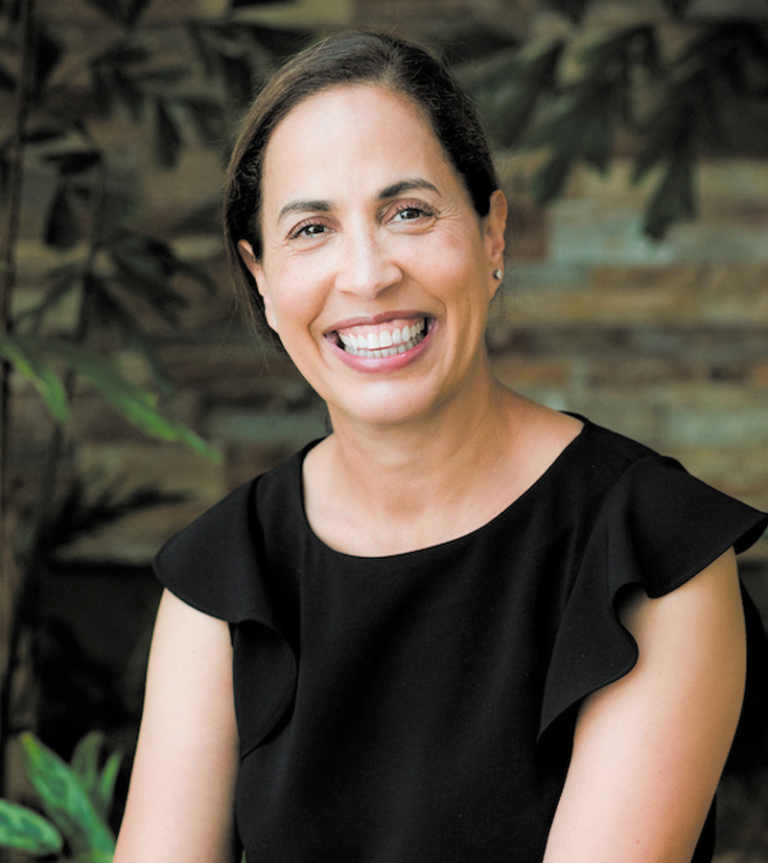
"We need to teach in ways that align with the unique learning styles of children with language-based learning differences."

Could you please state your name, position and the name of the institution that you represent?

My name is Dr. Julie Porter, and I am the head of school at Park Century School.

Could you give us an introduction to Park Century School as of today?

Park Century School is for students with language-based learning differences, specifically dyslexia, dyscalculia, dysgraphia and ADHD. Our program is tailored to meet each student’s individual needs, providing interventions to help with reading, writing and math skills.

What would you say are the keys to success for your organization?

Our success lies in helping students understand how they learn, as their brains are wired differently. For example, when you’re dyslexic, you see the world differently, so you think and learn differently as well. We need to teach in ways that align with their unique ways of learning.

Our success also comes from strong teacher training, structured literacy and evidence-based programming. We use a multimodal, multisensory environment, incorporating movement and executive functioning support, which is essential for managing learning differences. We also focus on strengths rather than solely on areas of difficulty.

For parents who might have gone through difficult experiences trying to find solutions, could you tell us about your philosophy and approach?

Many parents come to us after being told by other schools that they can no longer meet their child’s needs, which can lead to frustration. These families often arrive with a sense of loss or trauma, and we spend time unpacking those feelings. We begin with assessments to understand specific areas like phonemic awareness, decoding, fluency and comprehension. With this foundation, we identify the root of learning challenges and apply evidence-based interventions.

We have to dig down deeper to figure out what we’re treating in a sense. It’s very similar when you go to a medical doctor. You go from test to test so that doctors can pinpoint what they’re trying to treat. So, once we know the diagnosis or what we’re really looking at, then, those programs come into place. For example, if a student has dyscalculia, we use a multisensory approach to teach math concepts without overwhelming visual information, helping students to engage and learn more effectively. It’s not worksheets or too many things on a page because they can’t discern how many things are on it.

These strategies are evidence-based. They don’t require them to read everything. The approach is seeing how their brain learns or sees it, and then delivering it in that way, depending on the issue. Some of our kids have expressive and receptive language issues. So, how does the language come in and go out? Each child has something unique to them. We spend a lot of time training and at work to understand these nuances.

The diagnosis can look different at home or the mall. We would like to know what it looks like in the classroom. Once we know what it looks like in the classroom, we know what we need to do to fill in the gaps; we want that early intervention to fill in the gaps early. The brain is soft when they’re young, so we can rewire it quicker. If we wait till they get older, it’s a little bit harder. Like Play-Doh, it’s soft and easy to mold when you have just opened it. That’s early intervention. We can go in and just mold it and make it play on the child’s strength. If we or the family wait longer, the gap gets bigger.

So, we decided a year ago to open an early literacy program. We used to only take kids in second grade because some research said you can’t identify dyslexia. But now we know you can identify it. Research tells us there are early markers, so why wait? Why wait for the trauma to come in when we can go in earlier? Other layers come later, and some are in the social and emotional realm as kids go through adolescence.

Could you tell us more about the academic programs you offer?

Our programs are similar to neurotypical schools, covering subjects like math, science, social studies and fine arts, along with physical education. While we follow state standards, our focus and teaching strategies are unique and aimed at addressing the needs of students who come in below grade level. We have to address those issues to get them to where they need to be.

You’re not going to go to another neurotypical school around us and see the same thing because if that worked, kids would stay at their school, right? They wouldn’t come to us. Additionally, our approach to reading includes structured literacy tailored to our students’ needs.

Could you give us an example of a student who has benefitted from attending Park Century School?

We had a third-grade student who came to us unable to read but with an incredible social personality. He had been asked to leave two schools prior. One spring day, he came running out, thrilled that he had read a chapter independently. That breakthrough moment opened up his world, allowing him access to the curriculum and a sense of achievement. His family saw his progress and became fully invested, making this a true success story.

What would be your message to potential partners, donors or people within the local community?

Our students think differently and that diversity is the future, especially in creative and scientific industries. Supporting our students not only helps them reach their potential but also contributes to a better world, as neurodiverse thinkers drive innovation.

These kids should not have the shame that comes with their circumstances. Their families should embrace it and have that pride as their children see the world and learn differently, and that they will change the world.

So when I look at potential partners, why wouldn’t they want to be in on that? You can make a difference, not only in one child’s life, but that exponentially builds up and can go on. So by partnering with us, you can make a significant impact on both individual lives, families and society.

Do you have a final message?

Early intervention is essential. If you’re considering support for your child, don’t wait. Even though it feels like it would be difficult, the earlier you do it, the more success you’ll have and the better it’ll be for the child. For instance, a kindergartener at our school still believes in his or her intelligence, while older students might already doubt themselves. Early intervention allows us to address needs before trauma sets in, helping children build confidence and avoid feelings of inadequacy. Using evidence-based strategies and early intervention can make all the difference.

Latest From The Executive Insight

  • Education

    A former nurse manager applies for an operations role. Her résumé says “excellent communication skills” and “strong leadership”. So do most of the other applications on the recruiter’s screen. The skills are real, and as written they are invisible. Good transferable skills examples always come […]

    9 min read
  • Wealth

    The spreadsheet says 52 is possible. You have run it three times, changed the return assumption twice, and it still works. Then come the questions the spreadsheet cannot answer: how to get money out of a 401k seven years early, who pays for health insurance […]

    8 min read
  • Mindset

    Forty minutes into the meeting, the team is still arguing about which of two suppliers to choose. Both options have been costed twice. Every new argument digs further into the same two answers. Lateral thinking is the habit of stopping at that moment and asking […]

    9 min read
  • Wellness

    Thursday, 3 p.m. You read the same email for the third time and still could not say what it asks for. You slept six hours last night, and the night before, and you feel fine, mostly. So is 6 hours of sleep enough? For most […]

    9 min read
  • Business

    The Monday meeting goes quiet when one person speaks, and everyone else looks at the table. Nothing in the comment is quite bad enough to discipline. It is the fourth one this month, and the team is waiting to see whether you noticed. Knowing how […]

    9 min read
  • Lifestyle

    You land at 7 a.m., the meeting is at 9, and the shirt you packed comes out of the case with a crease across the chest that no amount of smoothing will remove. Learning how to fold a business shirt for travel takes ten minutes […]

    8 min read
  • Education

    It is late, the house is quiet, and three tabs are open. One is a $49-a-month certificate from a company everyone has heard of. One is a bootcamp that promises a new job in sixteen weeks. One is a university program whose price makes you […]

    8 min read
  • Wealth

    The offer email arrives. The number is fine, maybe slightly less than you hoped, and the recruiter is waiting for an answer. Most people say yes. Knowing how to negotiate salary at this exact point is worth more than at any other moment in the […]

    8 min read
  • Mindset

    The busiest office workers are interrupted every two minutes during core hours. That figure comes from Microsoft’s own data on how people use its software, and anyone who runs a team will recognise it. Most productivity hacks are written for a calendar you control. The […]

    8 min read
  • Wellness

    The alarm goes off at six. You hit snooze twice, get up at half past, and spend the first hour of the day feeling like someone else is driving. Most advice on how to become a morning person starts with the alarm: set it earlier […]

    9 min read