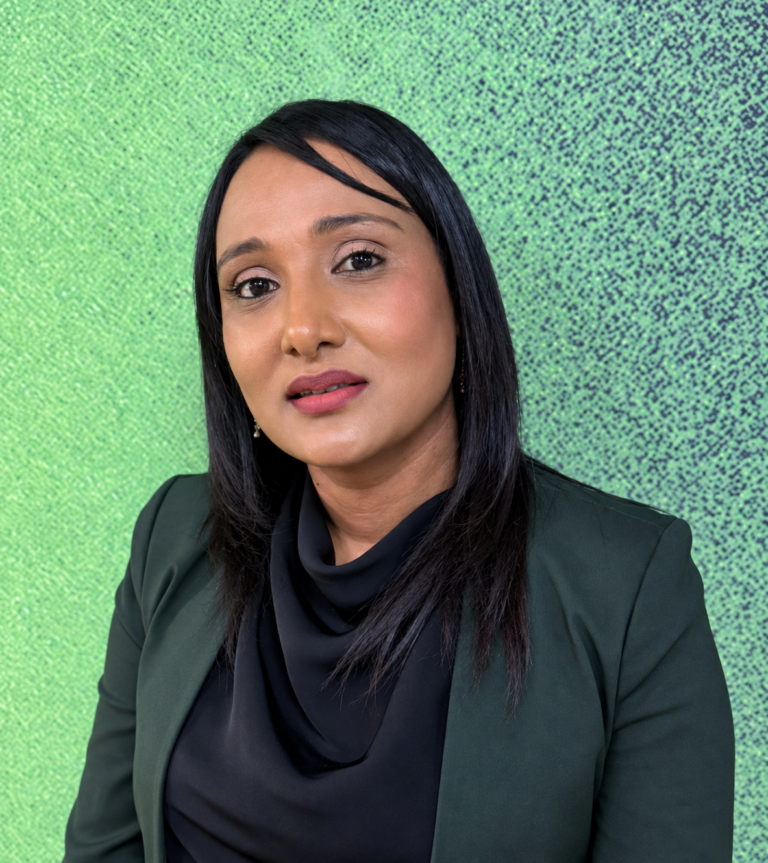
"No matter how high you grow, there’s a customer at the end of the day."

Could you give us a quick overview of Citiq?

Citiq started over 15 years ago in the sub-metering space, where we assisted owners with managing their utility services. We haven’t moved away from sub-metering; we’re still very much in that space. We like utility management and helping people manage their utilities day to day. But we’re also moving more towards the FinTech space.

At Citiq, we realized that our business has always been transactional. We collect money on a monthly basis, and on a daily basis as tenants buy their tokens. We collect that money for our owners, and at the end of the month, we pay it out to them so they can successfully pay their utility bills. It gives owners peace of mind that their utilities are being managed. That’s exactly what we do, and it’s our everyday business.

Then there’s the FinTech part of the business, where we’re trying to innovate a bit more and give a little more back to the South African people. We are developing products that best suit not only our owners but also our tenants.

Citiq has grown from a prepaid sub-metering provider into a broader utility management platform. How has the company’s mission changed over the years?

I don’t think our mission has changed. We have three core values that the company’s foundation is built on: impact, agility and respect.

Every single innovation is built on that foundation. We understand that we need to respect every individual who comes into contact with us, whether through our contact center, our sales team or the products we put out there. Everything we do must respect individuals and their human rights.

We develop products based on respect, but also with the understanding that industries change along the way, and that’s where agility comes in. Sub-metering 15 years ago is not the same as it is today. A lot of things are changing, and our people, our owners and our customers have many more needs. How do we move with that change? Agility is very much a part of our foundation: forever changing, forever finding a better solution, a better product that can meet the needs of our fellow South Africans.

Then there’s impact. We understand that when we put a product out there, it’s not just a product to be sold to make a quick buck. It’s a product that actually has an impact on people’s lives. At Citiq, those three values are instilled from the core of the business into everything we do.

We’re the largest sub-metering company in South Africa, and it’s taken a lot of hard work to get there. But we don’t always look for the most popular places to advertise. Last week, my team was at White Cane Day, supporting blind people in South Africa. There are certain people in South Africa who are crying out to be heard, and a lot of industries don’t hear them. We say, we’re right there, we hear you, and we’re willing to stand with you.

You’ll find us in the least popular places, where we want to create an impact, make a difference and show respect for certain movements and causes. You’ll see us supporting the fight against GBV, but you won’t necessarily see another big organization there. You’ll see us at White Cane Day, but you won’t necessarily see another big organization there either.

For us, it’s not about the publicity. It’s about being there and walking that walk as Africans: understanding the struggle, understanding the impact and understanding that every single day can be a struggle for someone. It’s about making sure those people feel heard. Wherever you see Citiq, it must be with purpose.

Powering People is our new slogan. When you see Citiq now, it says “Powering People,” and that’s not only with electricity, but in other ways we can give back to our community and our country.

You recently launched South Africa’s first in-app electricity advance. What inspired this idea, and how have tenants and property owners responded?

The in-app advance product was tailor-made for our tenants rather than our owners. Actually, I think it was for both. If you have a prepaid meter in a property you rent out, whether it’s a one-bedroom, a two-bedroom or a room at the back of the property, it gives your tenants that additional coverage. It’s almost like a selling point for the owner. It gives them something more to put out there and say, “Listen, if you ever run into an issue, Citiq will help you. That’s why I’ve partnered with Citiq to put their meter into my property.”

On the tenant side, I can assure you it wasn’t a product that took one or two months to come out. We did a lot of analysis and research, really trying to find out what our tenants actually need, and we put a lot of care into how we deliver that product and put it out there. At the end of the day, we are a business, and yes, there are fees attached to it. But how do we make the fee reasonable enough that people can actually afford it? There has to be someone who manages it for you.

Then there’s understanding the need. Electricity is something you budget for, but it’s also an essential need. There are times in the month, like school holidays, when your kids are at home and your electricity expense just spikes. You didn’t think about it, and you didn’t budget for it. If you understand the South African people, most are living from paycheck to paycheck. When you have a limited amount of cash, do you worry about putting food on the table or keeping the lights on?

That’s where we could come in and say, “Okay, we’re willing to help. You need it now. We’ll fund it upfront for you so you can worry about something else.” And we do that without burdening our tenants with the exorbitant rates and huge costs attached to other products out there.

As for how it’s been received, I can only speak for the Citiq tenant base, because the advance is an in-app service available only to our tenants. But I must say it’s been very successful, and our tenants love the product. It’s also building an element of trust between Citiq and our tenants. When they actually have a need, we’re there to help them get to the end of the month so they can make sure their families are fine.

South Africa’s energy market can be unpredictable. How does Citiq help property owners and tenants manage these challenges and keep services running smoothly?

Energy and electricity are everyday topics, not only in South Africa but, I assume, everywhere in the world. But we find that education can be an issue. Sometimes tenants are not properly educated on what the costs are and why certain costs are in place.

That’s where we bridge the gap between owner and tenant. We’re happy to facilitate a conversation between them, come in and help the tenant understand where the costs come from and what they can do to minimize and curb their electricity costs. We’re very much involved in that education. If an owner and a tenant are facing a challenge, we step in and help either educate the tenant or help the owner manage that electricity a bit better.

Sometimes it’s not the tenant; sometimes it’s the owner. We’re governed by certain regulations, so we can’t just set any tariff the owner wants. We make sure we educate our owners as well, so they know exactly within which lines they can operate. We’re very strict about it, and we have strict measures in place. We make sure our owners stay within the line, and that our tenants aren’t struggling with electricity costs because an owner has set them too high.

We really get involved in the education side. If people don’t understand it, there’s always going to be conflict. But once somebody understands how it works, things change. For example, in addition to the advance product we launched in our app, we’ve made sure we have the lowest channel fees in South Africa when tenants purchase electricity through our app. That’s another way of giving back to our tenants and helping our owners, so their tenants aren’t paying huge costs and can save at the end of the day.

But most people may not know that. That’s where education comes in. We say, “Listen, why are you buying electricity from this platform? You can use our app. This is how it works, and this is the registration process,” and we really walk people through it. Nine times out of ten, Mila, that helps a lot with conflict. It’s about education and making sure people understand.

What are Citiq’s main goals for the next 12 to 24 months? Will you focus on growing in South Africa or expanding into new markets?

It’s every organization’s goal to expand, and we definitely want to expand our reach. Right now, the markets where we want to expand are a bit of a secret, because we don’t want to put too much out there. But I can tell you that Citiq is a company that innovates every single day, in ways that are best for our South African market, finding solutions that are best for our South African owners.

We also understand that technology is changing and utilities are changing. Owners need more insight into how their utilities are working, how their electricity expenses change from month to month and where they can make changes. They need full oversight of that.

Everybody throws around smart metering. But can you walk into a wholesaler and buy a smart meter at a reasonable cost? Can the owner actually afford that smart meter? That’s very important as well. At Citiq, we’re trying to find solutions that are, first and foremost, affordable for our customers, and secondly, give them the best possible oversight of their properties to manage their utilities, while making sure they get world-class service at the same time.

So, to answer your question, in the next 12 to 24 months, Citiq has a lot more coming. We have many more innovations, but at the heart of it all is knowing exactly what our customers’ needs are and making sure we meet them at that need.

That’s who Citiq is, both inside and outside the organization. I’m proud to be the CEO of this company because we don’t only take care of our owners and tenants; we take care of the people who work with us. Citiq is built on many people’s strengths. Some have said goodbye along the way, and some are still here. Some have been here for 15 years, others for six. Every single person has played a role in our success.

When we try to empower people, grow people, innovate and come up with new solutions, we’re not only thinking about our owners and tenants. We’re thinking about our people inside the company and how we can grow them and keep them employed. Every day, we understand that we’re an African-based company with close to 150 people, growing every single day and looking for innovative solutions to be better in the market so we can keep our people employed. Internally, when a new position opens up as Citiq grows, we look internally first: how we can grow our people, give them opportunities and improve their lives and livelihoods.

As Citiq grows, how do you balance new technology and innovation with reliable service and the company’s core values?

Technology is ever-changing. Sitting in this seat, I see new technology every single day. But we don’t jump at the first sight of something new that can do weird and wonderful things. We wait, we investigate and we make sure it’s the technology our company needs. Then we innovate and use that technology. And it’s not just one thing; we test and pilot several different things before we put a product out there for our customers.

Our core values will never change. Every product we put out there must be built with respect for the people it serves. It must have a proper impact and speak to the solution people need, not just work for a while and then fail to sustain itself. And then there’s agility: using technology to make sure that whatever product we put out there can change as the need evolves. A standalone product that can’t evolve over time is just going to cost me more money at the end of the day.

Technology keeps improving, people keep coming up with new things, and AI is something everyone is using now. But how do we find the best solution that can last for years, not just a one-stop solution? That’s where I’m striving to go. It must be a solution that can change as time changes and as my customers’ needs change.

As a final thought, what’s the main message you would like to share with the community and our readers about Citiq?

What I want them to take away from this conversation is that no matter how high you grow, there’s a customer at the end of the day. No matter which seat you sit in within your organization, there’s still a customer you are accountable to.

We can come up with many solutions on our own, in our own offices, in our own glass towers, that may never meet the needs of the people who actually need them. Sometimes you really have to put yourself in your customer’s shoes, understand your economy and understand your customers’ needs to be able to innovate and come up with a product that best suits them. You need to understand your industry.

When people look at Citiq today, I want the message to be: “Wow, look at this company. They started off as a sub-metering company, and today they’re moving into FinTech, understanding that it was never just about sub-metering. It was always something more.” It was about providing a service, striving for world-class service for our customers, giving our best every single day and coming up with solutions that people can actually use and that make a difference in every single person’s life.

That’s what Powering People means for us. It’s not just the electricity when you switch on the plug at the wall socket. It’s about every single individual who comes into contact with us, and how we can power people in every situation where they need us. And it’s about giving back to our community.

Latest From The Executive Insight

  • Wealth

    The offer email arrives. The number is fine, maybe slightly less than you hoped, and the recruiter is waiting for an answer. Most people say yes. Knowing how to negotiate salary at this exact point is worth more than at any other moment in the […]

    8 min read
  • Mindset

    The busiest office workers are interrupted every two minutes during core hours. That figure comes from Microsoft’s own data on how people use its software, and anyone who runs a team will recognise it. Most productivity hacks are written for a calendar you control. The […]

    8 min read
  • Wellness

    The alarm goes off at six. You hit snooze twice, get up at half past, and spend the first hour of the day feeling like someone else is driving. Most advice on how to become a morning person starts with the alarm: set it earlier […]

    9 min read
  • Business

    A project lands that your team cannot carry. The product launch is in four months, the two engineers you need do not exist on your payroll, and a permanent hire will take most of that time just to find. Staff augmentation is the usual answer: […]

    10 min read
  • Lifestyle

    Most people meet Alex Hormozi through a video clip: a muscular man in a T-shirt explaining, with some impatience, why your business is not making money. The books are better than the clips. Alex Hormozi books are short, blunt manuals on three problems every business […]

    9 min read
  • Editorial

    Most of the decisions that shape a company are made on an ordinary afternoon, between two other meetings, by someone who is slightly tired. Decision making in business mostly happens in small moments: a yes sent from a phone, a hire approved because the role […]

    9 min read
  • Education

    It is a Sunday evening and you are dreading the morning again. Not the workload, which you can handle, but the sameness of it. You have been good at this job for fifteen years and you can picture the next fifteen with no surprises in […]

    9 min read
  • Wealth

    The email from HR arrives on a Friday afternoon. Your last day is in three weeks, and in the attachment there is a line about what happens to your 401k. Within a day, somebody in your network has suggested an advisor who can “help with […]

    9 min read
  • Mindset

    The biggest client calls at nine on a Monday to say they are leaving. By ten, two things need to happen. Someone has to work out what the lost revenue does to payroll, which projects pause and who tells the team what. And someone has […]

    11 min read
  • Wellness

    You open a document to write one paragraph. Four minutes later you are reading an email you did not need to read, with two new tabs open and the paragraph unwritten. If that sounds like most of your working day, you are in good company, […]

    8 min read