"Equipo's goal is to bridge gaps in healthcare—to share data, provide insights, and reduce administrative burden so providers can do what they do best: care for patients."

Could you introduce yourself and the company?

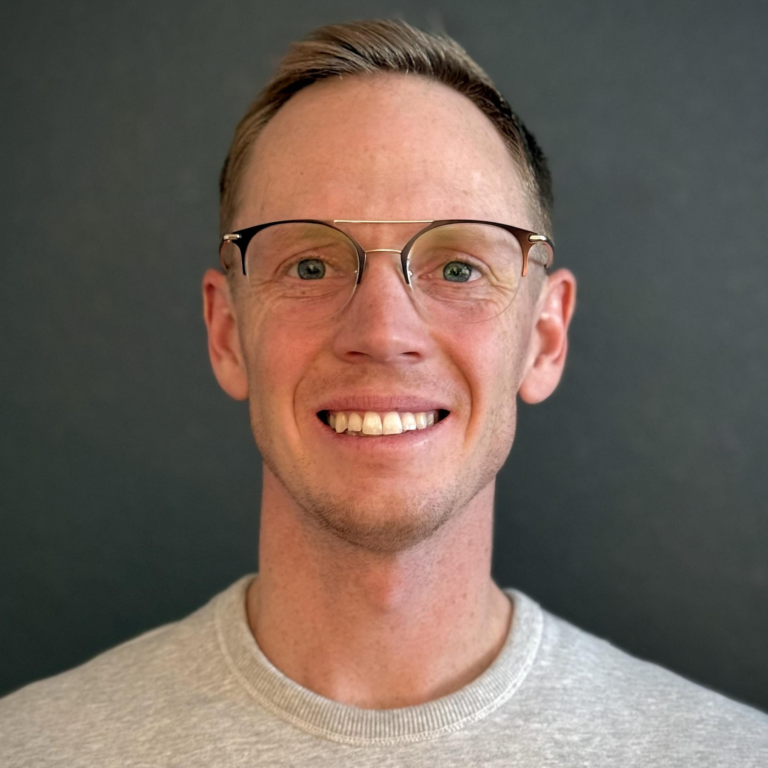
I’m Parijat Bhattacharjee, CEO and founder of Equipo Health. I’ve been in healthcare for over 15 years. Before starting Equipo Health, I co-founded two startups focused on continuous care in sleep and pulmonary diagnostics. Through that experience, I realized it’s not enough to just diagnose patients—we need to support them with continuous care, offering valuable insights to both patients and providers throughout their health journey.

That’s how Equipo Health began about seven years ago. Value-based care became more relevant back then, especially for physicians and primary care practices. We saw a niche opportunity to build a platform beyond just reports and dashboards—we aimed to solve real problems for providers, especially burnout. Providers face time pressure, lower reimbursements, and heavy documentation—managing care gaps, risk, and more. We realized that neither clinical nor non-clinical staff alone could handle all this, so we created a holistic, simplified platform that integrates real-time data from multiple sources to support better care—not just at the clinic but also at home.

Our platform covers multiple areas—what we call the “Circle of Care.” It starts with identifying patient risk, creating and executing care plans, and engaging through touchpoints like telehealth, screenings, remote monitoring, and referrals. Then, we track and measure outcomes for each patient to see how care is performed.

We designed Equipo to be EMR-agnostic—it sits on top of any EMR and continuously generates actionable insights for providers so they can focus on care, not paperwork. The goal is to improve patient outcomes and engagement. There’s a metric called Patient Activation Measure (PAM), which ranges from 1 to 4. Level 1 means the patient believes healthcare is solely the doctor’s job, while Level 4 means the patient takes shared responsibility for their health. Our goal is to move people from 1 to 4, empowering them to take ownership of their well-being.

To sum it up, Equipo Health is a healthcare CRM platform that manages all aspects of the care cycle—from office visits to home care and even hospice and palliative care. We aggregate data, run analytics, and provide insights—not just static reports—at every stage of care, whether the patient is at a clinic, hospital, or home.

Could you share some key achievements or milestones Equipo Health has reached?

Absolutely. All our clients are in the U.S., and we currently operate in New York, New Jersey, Florida, Texas, Illinois, Arkansas, and Puerto Rico. Our clients include physician practices, hospitals, and extensive primary care groups. We provide a full suite of services to help coordinate care and manage patients efficiently, mainly through automation that reduces manual work.

In Florida, for example, we work with Sanitas Health, one of the largest healthcare organizations in the U.S. and South America. Sanitas processes about 50,000 referrals a month across 27 primary care centers statewide. In Puerto Rico, we support MCS (Medical Card System), the second-largest payer, by managing their 24/7 nursing line to assist with symptom checks, triage, and care navigation.

We also support independent physician associations (IPAs), which are still essential despite consolidation in primary care. We help them with gap closure and risk management—key priorities for their success.

Beyond analytics, we’ve ventured into AI development with five models in collaboration with hospitals. These include:

  • Malnutrition Detection: Often overlooked, especially during hospital stays. We use data beyond traditional bedside screenings to identify risks and prevent readmissions.
  • Suicide Prevention: We monitor 36 data features using machine learning and natural language processing to assess suicide risk.
  • Clinical Deterioration Detection: For emergency patients, we track lab results every few hours to detect deterioration and send alerts to clinicians.
  • Fall Risk and Risk Scoring: In primary care, we review ICD codes, discharge notes, and documentation to catch coding gaps and missed complex cases. This practice gives a 360° patient view, especially for those treated across multiple centers, helping in risk-based contracts.

A major success story is with Sanitas. They faced inefficiencies in their referral process. Previously, it took at least 10–12 minutes per referral: post-visit, staff would manually request pre-authorization, contact the patient, and find a provider. We automated this entire flow. Now, we instantly receive visit data, generate the pre-authorization, identify the nearest in-network provider, and notify both the patient and specialist via mobile. Once the visit is complete, consultation notes are shared with Sanitas providers, ensuring seamless care. This closed-loop system improves efficiency and care continuity.

Is there anything important we haven’t covered that you’d like to share about Equipo Health?

Yes. One key message I want to share is that healthcare has become more complex—for both patients and providers. Today’s distractions—technology, social media, and fast-paced lifestyles—mean people often don’t prioritize their health or rely solely on doctors to “fix” them. But true wellness requires active patient engagement.

For example, if I’m prescribed physical therapy and pain medication but ignore them, that pain could become chronic. People often delay care due to cost, time, or access, but with patient activation, outcomes improve. Like we track deliveries on our phones, we should be able to track healthcare events—appointments, tests, treatments—in real-time. Unfortunately, healthcare data is still siloed, making access hard.

For providers, the challenge is different. They face documentation overload, payer pressure, and information gaps, while patients come in saying, “Google says I have this…” These circumstances distract providers from delivering care for which they spent years training. They should focus on treatment, not paperwork or coding.

Equipo’s goal is to bridge these gaps—to share data, provide insights, and reduce administrative burden so providers can do what they do best: care for patients. Without this shift, healthcare will only get more fragmented and inefficient. We believe better coordination between patients and providers will drive system-wide efficiency.

Latest From The Executive Insight

  • Education

    A former nurse manager applies for an operations role. Her résumé says “excellent communication skills” and “strong leadership”. So do most of the other applications on the recruiter’s screen. The skills are real, and as written they are invisible. Good transferable skills examples always come […]

    9 min read
  • Wealth

    The spreadsheet says 52 is possible. You have run it three times, changed the return assumption twice, and it still works. Then come the questions the spreadsheet cannot answer: how to get money out of a 401k seven years early, who pays for health insurance […]

    8 min read
  • Mindset

    Forty minutes into the meeting, the team is still arguing about which of two suppliers to choose. Both options have been costed twice. Every new argument digs further into the same two answers. Lateral thinking is the habit of stopping at that moment and asking […]

    9 min read
  • Wellness

    Thursday, 3 p.m. You read the same email for the third time and still could not say what it asks for. You slept six hours last night, and the night before, and you feel fine, mostly. So is 6 hours of sleep enough? For most […]

    9 min read
  • Business

    The Monday meeting goes quiet when one person speaks, and everyone else looks at the table. Nothing in the comment is quite bad enough to discipline. It is the fourth one this month, and the team is waiting to see whether you noticed. Knowing how […]

    9 min read
  • Lifestyle

    You land at 7 a.m., the meeting is at 9, and the shirt you packed comes out of the case with a crease across the chest that no amount of smoothing will remove. Learning how to fold a business shirt for travel takes ten minutes […]

    8 min read
  • Education

    It is late, the house is quiet, and three tabs are open. One is a $49-a-month certificate from a company everyone has heard of. One is a bootcamp that promises a new job in sixteen weeks. One is a university program whose price makes you […]

    8 min read
  • Wealth

    The offer email arrives. The number is fine, maybe slightly less than you hoped, and the recruiter is waiting for an answer. Most people say yes. Knowing how to negotiate salary at this exact point is worth more than at any other moment in the […]

    8 min read
  • Mindset

    The busiest office workers are interrupted every two minutes during core hours. That figure comes from Microsoft’s own data on how people use its software, and anyone who runs a team will recognise it. Most productivity hacks are written for a calendar you control. The […]

    8 min read
  • Wellness

    The alarm goes off at six. You hit snooze twice, get up at half past, and spend the first hour of the day feeling like someone else is driving. Most advice on how to become a morning person starts with the alarm: set it earlier […]

    9 min read