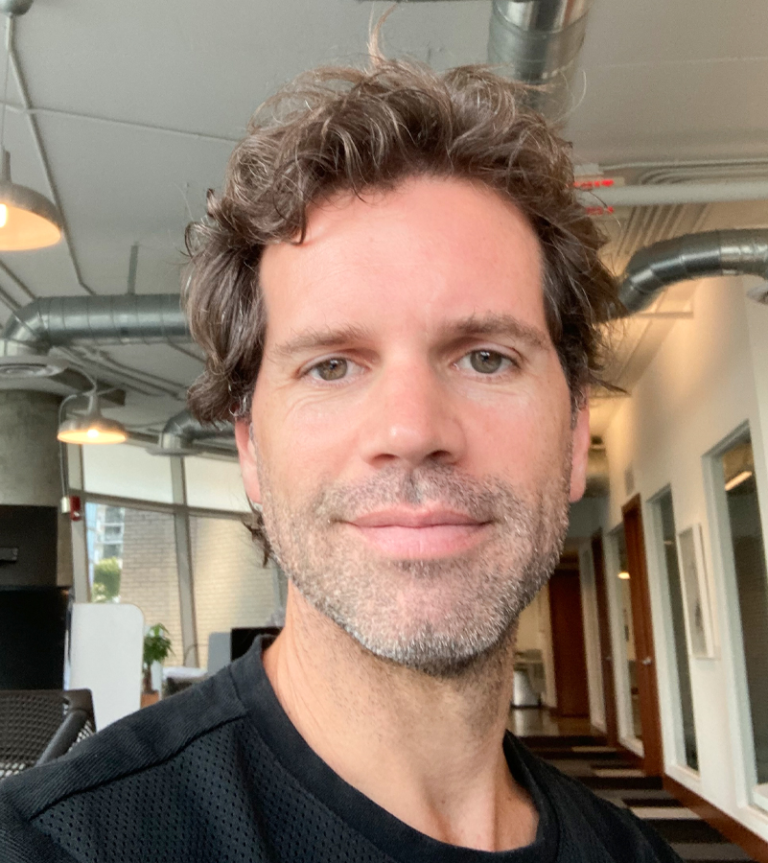
"Our mission is to make Latin American talent more widely known, so people worldwide can discover the advantages it brings."

What are the key factors that have contributed to Workana’s success?

I’d say there are two. Number one is we were the first ones to really nail down remote work. We started in 2012 with the premise that work should be done from anywhere. At that moment, this sounded a bit crazy and insane. People were saying, “Are you really serious about that?” Finally, the world has caught on. So, being the pioneer in remote work has been one of our success factors. The other one is this intense focus on making sure that we’re always matching the correct person with the right job opportunity. And that has been what we’ve been doing for the past over 10 years.

How would you describe Workana’s platform and evolution?

Workana is an ecosystem of remote work. We’re the largest and the biggest in Latin America. What we focus on is making sure that we find the right job opportunities for our talents. It has evolved over the years. When we started, we were only doing short-term projects—people were doing work for a few weeks, maybe a few months. As time went by, we started doing longer-term engagements with full-time dedication, sometimes six months, sometimes even up to a year. In those cases, we take on more and more of the vetting ourselves. We go deeper into understanding who the person is—what are their hard skills, what are their soft skills, what are the experiences they’ve had before, and what are they looking for in their next career phase. With that knowledge, we make sure to match them with the best clients we have out there.

What differentiates Workana from other platforms?

Number one is volume size. One of the advantages of being pioneers is that we have a huge amount of volume. To give you a sense, almost two million people sign up to our platform every year. That allows us to go very deep and granular into the person and find exactly what the client is looking for. Since this all happens via the platform, it’s not a manual, antiquated process like it used to be. We can do it super fast. Clients are surprised at how deep we can go with matching the talent—and how quickly the process works. These things used to take weeks or months before. The fact that you can now do it in a couple of days is amazing.

How did the pandemic impact your business and strategy?

There’s something that changed with the pandemic. When we started, our main goal was the concept of remote work. What ended up happening—particularly in Latin America and in many places—is that if you were born in Latin America and not in one of the big cities like Argentina, Brazil, or Colombia, when you turned 18 to 25 and started your professional career, you had to choose: do I stay in my hometown, where I have all the support of my family, friends, and social connections? Or do I move to a big city to pursue a challenging career?

That was the key thesis behind what we were doing—it made no sense to have to choose. Why not stay and have both social support and a challenging career? So when we started, it was more about Latin America-to-Latin America connections: clients in Latin America hiring the best remote talent in Latin America.

Over the years, we became very strong there. When the pandemic hit, we started getting more American companies discovering the qualities of Latin American talent. They realized the level of talent was super good, the work ethic was amazing, the English level was very high, and the time zone was perfect. Companies used to outsource to India or Vietnam—where it was cheaper but had issues with language, culture, and time zones—realized Latin America was perfect.

That’s when we started adding a U.S. go-to-market and hiring teams here in the U.S. That part has been growing. On the talent side, our focus is Latin American talent—that’s where we shine and where we’re strong. On the demand side, we’re working with both Latin America and increasingly the U.S., mostly in engineering, design, marketing and finance roles.

What is Workana’s approach to long-term relationships with talent and clients?

One of the things we realized over the years is that it makes no sense to go through all the effort to win a client or talent and then have them leave after a few months. We prefer to have fewer, deeper relationships that last over time. That’s how we strive to work with our talents. We want to be the platform that supports them throughout their entire professional lives. Sometimes they may want to have multiple jobs and the flexibility to juggle them. Other times, they want to focus on one client and dedicate all their working hours. We offer both options. In some cases, they may want to gain experience in areas where they’re not yet qualified. We help them through upskilling—bridging the gap and preparing them for more challenging, higher-paying jobs. Our goal is to be with our talents throughout their careers.

The same goes for clients. We don’t want them to try us once and then leave. We want them to discover the amazing things about Latin American talent and stay with us for a long time. That’s our thesis.

What message would you share with companies considering Workana?

I’d say two things. Number one is that we’re on a mission to make Latin American talent more mainstream and widely known, so more people around the world can discover all the amazing advantages it brings. I’m from Argentina, so I’m biased, but we know we have amazing qualities—our work ethic and talent pool are exceptional.

Second, it is now possible. It used to be very complicated to do all this, but now you can find the right person for your team within days and get started without worrying about all the administrative stuff. We still consider ourselves a startup, so we understand the value of speed. Being able to offer that to companies—big or small—is amazing. The message is: try it out and you’ll be amazed by the results.

Latest From The Executive Insight

  • Education

    A former nurse manager applies for an operations role. Her résumé says “excellent communication skills” and “strong leadership”. So do most of the other applications on the recruiter’s screen. The skills are real, and as written they are invisible. Good transferable skills examples always come […]

    9 min read
  • Wealth

    The spreadsheet says 52 is possible. You have run it three times, changed the return assumption twice, and it still works. Then come the questions the spreadsheet cannot answer: how to get money out of a 401k seven years early, who pays for health insurance […]

    8 min read
  • Mindset

    Forty minutes into the meeting, the team is still arguing about which of two suppliers to choose. Both options have been costed twice. Every new argument digs further into the same two answers. Lateral thinking is the habit of stopping at that moment and asking […]

    9 min read
  • Wellness

    Thursday, 3 p.m. You read the same email for the third time and still could not say what it asks for. You slept six hours last night, and the night before, and you feel fine, mostly. So is 6 hours of sleep enough? For most […]

    9 min read
  • Business

    The Monday meeting goes quiet when one person speaks, and everyone else looks at the table. Nothing in the comment is quite bad enough to discipline. It is the fourth one this month, and the team is waiting to see whether you noticed. Knowing how […]

    9 min read
  • Lifestyle

    You land at 7 a.m., the meeting is at 9, and the shirt you packed comes out of the case with a crease across the chest that no amount of smoothing will remove. Learning how to fold a business shirt for travel takes ten minutes […]

    8 min read
  • Education

    It is late, the house is quiet, and three tabs are open. One is a $49-a-month certificate from a company everyone has heard of. One is a bootcamp that promises a new job in sixteen weeks. One is a university program whose price makes you […]

    8 min read
  • Wealth

    The offer email arrives. The number is fine, maybe slightly less than you hoped, and the recruiter is waiting for an answer. Most people say yes. Knowing how to negotiate salary at this exact point is worth more than at any other moment in the […]

    8 min read
  • Mindset

    The busiest office workers are interrupted every two minutes during core hours. That figure comes from Microsoft’s own data on how people use its software, and anyone who runs a team will recognise it. Most productivity hacks are written for a calendar you control. The […]

    8 min read
  • Wellness

    The alarm goes off at six. You hit snooze twice, get up at half past, and spend the first hour of the day feeling like someone else is driving. Most advice on how to become a morning person starts with the alarm: set it earlier […]

    9 min read