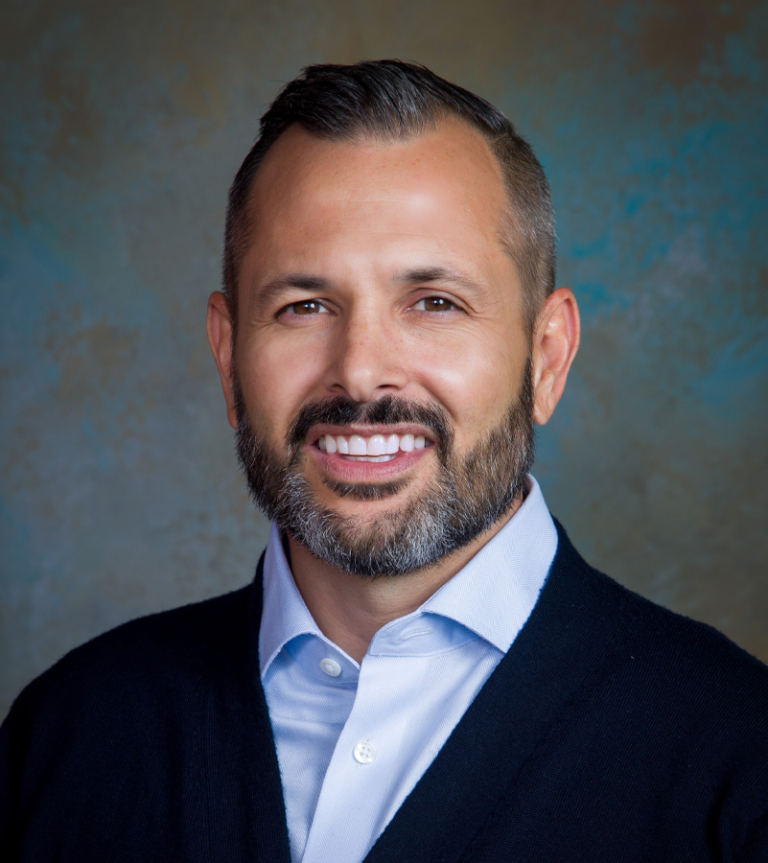
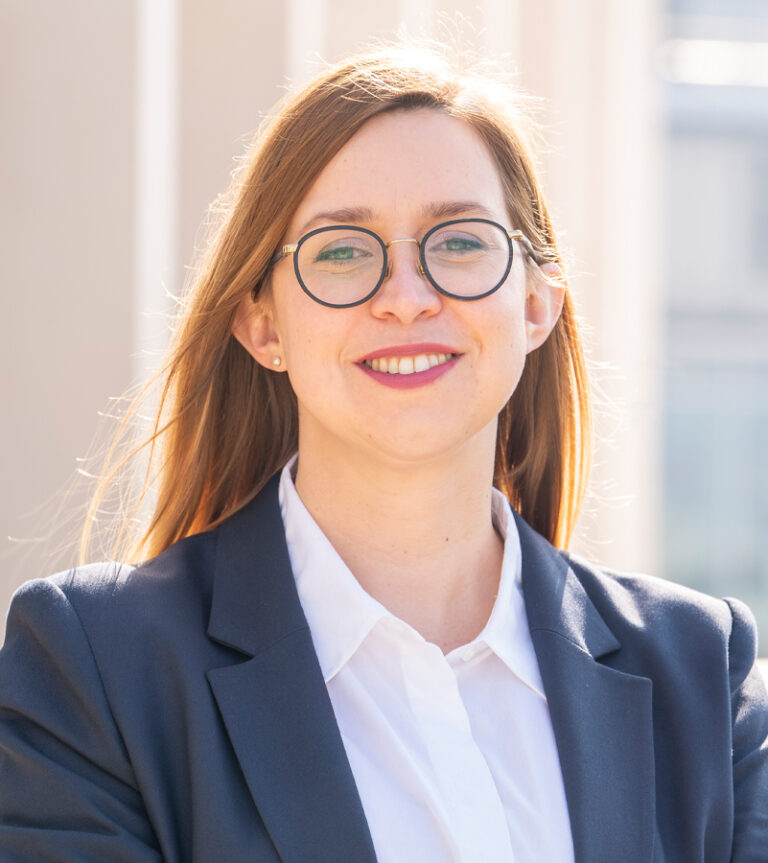
"We offer our students a pedagogy based on experiential learning and the teaching of both soft and hard skills."

Could you give us an introduction to EHL Hospitality Business School as it stands today?

EHL was founded in 1893 as the world’s first hotel management school. About 130 years later, it has grown from a small classroom of about 30 students to an international education group with around 4,000 students, three campuses in Switzerland and Singapore, 30,000 alumni and educational programs ranging from apprenticeships to master’s degrees, as well as professional short courses and executive education.

EHL Group draws its strength from EHL Hospitality Business School, which is regularly recognized as the world’s best university in hospitality management. Its unique pedagogical approach based on Swiss experiential learning and its pioneer spirit inspire many institutions, governments and businesses worldwide that use EHL’s consultancy services to raise their standards of excellence.

How does EHL’s curriculum integrate practical experiences with academic learning?

At EHL Hospitality Business School, our educational approach is rooted in experiential learning that is close to the needs of the industry. We have a long heritage of dual education where theoretical principles are systematically coupled with practical skills. EHL’s students are learning by doing through their studies via compulsory internships, Capstone projects, field trips, industry conferences and other hands-on experiences.

For example, the bachelor program that leads to obtaining a Bachelor of Science in International Hospitality Management starts with a Preparatory Year, which is divided into two semesters. The first semester is dedicated to teaching students first-hand knowledge of hotel and restaurant operations through different on-campus workshops. They are immersed in the day-to-day life of hoteliers, from service in our Michelin-starred restaurant to oenology, mixology, housekeeping in VR or front desk. For the second semester, students leave for a 6-month operational internship in which they will train the skills learned during the first semester.

After this Preparatory Year, students continue with 3 years of studies at EHL to obtain their degree that prepares them for managerial positions at an international level, whether in the hotel and restaurant industry or in related industries such as luxury goods, real estate or finance, to name but a few. During these 3 years, students follow traditional business classes such as finance, marketing, micro- and macro-economics, management, communication, sustainability, accounting and so on. These classes are tailored to train them to work in groups on practical cases, present their work in front of their classmates, and they also have the opportunity to meet with industry leaders through various events with companies.

In the final semester of the bachelor’s program, students can choose between a Student Business Project (SBP) or an individual applied research project. Many students opt for the SBP. Gathered in groups of 5-6 students, they are tasked with providing consulting services to an actual external client, conducting research and proposing practical and feasible recommendations for the client companies’ issues under the supervision of experienced professors. To date, over 600 student projects have been completed with companies such as Accor, Nestlé and Audemars Piguet, to name a few. A large majority of our students’ proposals are implemented by the clients, and a significant number of students are hired by the same client at the end of the project.

At EHL Hospitality Business School, we are committed to hiring top experts within our academic and practical arts faculty. Sixty percent of our academic faculty members hold a doctorate, with forty actively engaged in research within our five research institutes or independently. Additionally, among our practical arts faculty, we have six Meilleurs Ouvriers de France (“Best Craftsmen of France”) who teach our students.

True to its pioneering spirit, EHL has constantly reinvented itself throughout its rich history to establish itself today as the global benchmark for hospitality management education. We draw on the hotel industry’s unique know-how to teach our students, at all levels and from all walks of life, a management style centered on something simple yet so essential: people. In an age of digitalization and internationalization, this driving force is more relevant than ever, and will hopefully continue to be our guiding principle for the next 130 years.

Can you highlight some key soft skills that EHL graduates acquire during their studies?

At EHL Hospitality Business School, we emphasize a number of soft skills emblematic of the hospitality industry and highly sought-after by other industries such as emotional intelligence, leadership, communication and cultural agility. These are crucial for creating exceptional guest experiences and managing diverse teams effectively.

Through our dual education with theoretical principles coupled with practical skills, EHL students learn to recognize and manage their own emotions, as well as understand and influence the emotions of others. Emotional intelligence is vital for providing exceptional guest service and fostering positive team dynamics.

EHL’s comprehensive leadership development programs prepare students to take on management roles with confidence. Our curriculum includes real-world projects, internships and leadership courses, enabling students to develop decision-making, conflict resolution and team management skills.

Effective communication is at the heart of hospitality. EHL students engage in activities that enhance their verbal and written communication abilities, including public speaking courses, group projects and presentations. These experiences ensure they can convey ideas clearly and professionally in any situation.

The diverse and inclusive environment at EHL with more 120 nationalities, combined with opportunities for international exchange programs, instills a deep understanding and appreciation of different cultures. Our graduates are adept at navigating multicultural settings, making them valuable assets in the global hospitality industry.

Through our holistic approach, EHL graduates are well-prepared to excel in their careers with a strong foundation in these crucial soft skills.

In what ways do EHL graduates benefit from the school’s focus on customer experience and human interaction?

The hospitality industry is one of the oldest in the world—it started as soon as people started to move and travel, building expertise in human interactions and human-centric experiences over the centuries.

In our increasingly digitalized societies and multipolar world, business leaders will imperatively need to focus on human interactions and kind leadership methods. Today, many other industries recruit our graduates for this highly sought-after expertise in hospitality and these soft skills that are inherent to hospitality skills (communication, problem-solving, empathy, cultural agility, etc.). Our graduates distinguish themselves for their hospitality competencies and hands-on approach, which is typical of the hospitality industry.

Companies tend more and more to look for strong soft skills in candidates. Our hospitality expertise and dual education approach allow us to train our students on these important skills and our employability rate of 96 percent shows that companies are eager to recruit our students. We organize a Career Fair twice a year, during which we welcome around 180 companies from the hospitality industry (such as Mandarin Oriental, Four Seasons and Accor), but also neighboring industries such as the luxury goods industry (such as LVMH, Cartier and Chopard), the finance and real estate industries and others.

How does a hospitality management education at EHL prepare students for careers outside the traditional hospitality industry?

We equip our students with both hard and soft skills: we emphasize the importance of human relations and hospitality skills combined with hard skills such as microeconomics, macroeconomics, revenue management, marketing classes and more. Naturally, the hospitality industry is the core of our curriculum, but we also have an excellent business school offering. For example, we have advanced finance courses taught by renowned economists, equipping students with solid competencies necessary for a career in finance in addition to all the human skills they acquire, especially during the preparatory year of our bachelor program. Furthermore, students in their last year of the bachelor program can choose the courses they wish to take, called electives, thus allowing them to specialize in the preferred sector.

On the side of their studies, students can apply to become brand ambassadors for companies that are part of the EHL Alliance. The EHL Alliance is an exclusive global network that connects leadership professionals with peers and resources to elevate the future of hospitality and other business sectors. The Alliance gathers companies from various industries such as LVMH, Cartier, Four Seasons, Laurent-Perrier and Rothschild & Co. Being members of the EHL Alliance, companies can organize on-campus conferences and work with students. This gives the students the opportunity to meet and connect with professionals from diverse industries.

About 50 percent of our alumni pursue a career inside the hospitality industry, while the other 50 percent pursue a career in other human-centric industries, where our students’ hospitality competencies are much-appreciated and sought after.

Being six years at the top of the QS rankings is a testament to the success of our graduates. We are proud to support the continued growth and transformation of the hospitality and services industry by educating the next generation of leaders capable of empowering growth by nurturing excellence in human experiences. EHL’s position as one of the top business schools in Switzerland also reflects the value of hospitality education in adjacent industries such as luxury, finance and real estate.

Recently, EHL Hospitality Business School obtained the official accreditation of AACSB, the world’s largest business education alliance. AACSB accreditation constitutes a major milestone in the history of EHL Hospitality Business School and its evolution as a leading institution in hospitality management education. EHL Hospitality Business School is the only standalone hospitality management school in the world to receive this accolade and only the 7th school of business and management in Switzerland to be granted this quality label, testifying to the school’s commitment to excellence.

Today, we are immensely proud to be recognized by AACSB for the quality of our programs, faculty, students and alumni. This is a demonstration of our growth as well as our commitment for over 130 years to education and hospitality management. With this AACSB accreditation, EHL now unequivocally joins a globally accredited network of business schools renowned for their academic excellence.

How do EHL’s experiential learning projects contribute to developing students’ leadership and problem-solving abilities?

At EHL Hospitality Business School, we teach the human side of business and educate future leaders who deeply understand human interaction and are open to the world. Our experiential learning projects immerse students in real-world scenarios, fostering their leadership and problem-solving abilities.

Through hands-on activities, teamwork and direct industry engagement, students develop critical thinking, adaptability and effective decision-making skills. These projects challenge them to address complex issues, innovate and lead with empathy, preparing them to excel in dynamic and diverse environments.

Latest From The Executive Insight

  • Education

    A former nurse manager applies for an operations role. Her résumé says “excellent communication skills” and “strong leadership”. So do most of the other applications on the recruiter’s screen. The skills are real, and as written they are invisible. Good transferable skills examples always come […]

    9 min read
  • Wealth

    The spreadsheet says 52 is possible. You have run it three times, changed the return assumption twice, and it still works. Then come the questions the spreadsheet cannot answer: how to get money out of a 401k seven years early, who pays for health insurance […]

    8 min read
  • Mindset

    Forty minutes into the meeting, the team is still arguing about which of two suppliers to choose. Both options have been costed twice. Every new argument digs further into the same two answers. Lateral thinking is the habit of stopping at that moment and asking […]

    9 min read
  • Wellness

    Thursday, 3 p.m. You read the same email for the third time and still could not say what it asks for. You slept six hours last night, and the night before, and you feel fine, mostly. So is 6 hours of sleep enough? For most […]

    9 min read
  • Business

    The Monday meeting goes quiet when one person speaks, and everyone else looks at the table. Nothing in the comment is quite bad enough to discipline. It is the fourth one this month, and the team is waiting to see whether you noticed. Knowing how […]

    9 min read
  • Lifestyle

    You land at 7 a.m., the meeting is at 9, and the shirt you packed comes out of the case with a crease across the chest that no amount of smoothing will remove. Learning how to fold a business shirt for travel takes ten minutes […]

    8 min read
  • Education

    It is late, the house is quiet, and three tabs are open. One is a $49-a-month certificate from a company everyone has heard of. One is a bootcamp that promises a new job in sixteen weeks. One is a university program whose price makes you […]

    8 min read
  • Wealth

    The offer email arrives. The number is fine, maybe slightly less than you hoped, and the recruiter is waiting for an answer. Most people say yes. Knowing how to negotiate salary at this exact point is worth more than at any other moment in the […]

    8 min read
  • Mindset

    The busiest office workers are interrupted every two minutes during core hours. That figure comes from Microsoft’s own data on how people use its software, and anyone who runs a team will recognise it. Most productivity hacks are written for a calendar you control. The […]

    8 min read
  • Wellness

    The alarm goes off at six. You hit snooze twice, get up at half past, and spend the first hour of the day feeling like someone else is driving. Most advice on how to become a morning person starts with the alarm: set it earlier […]

    9 min read