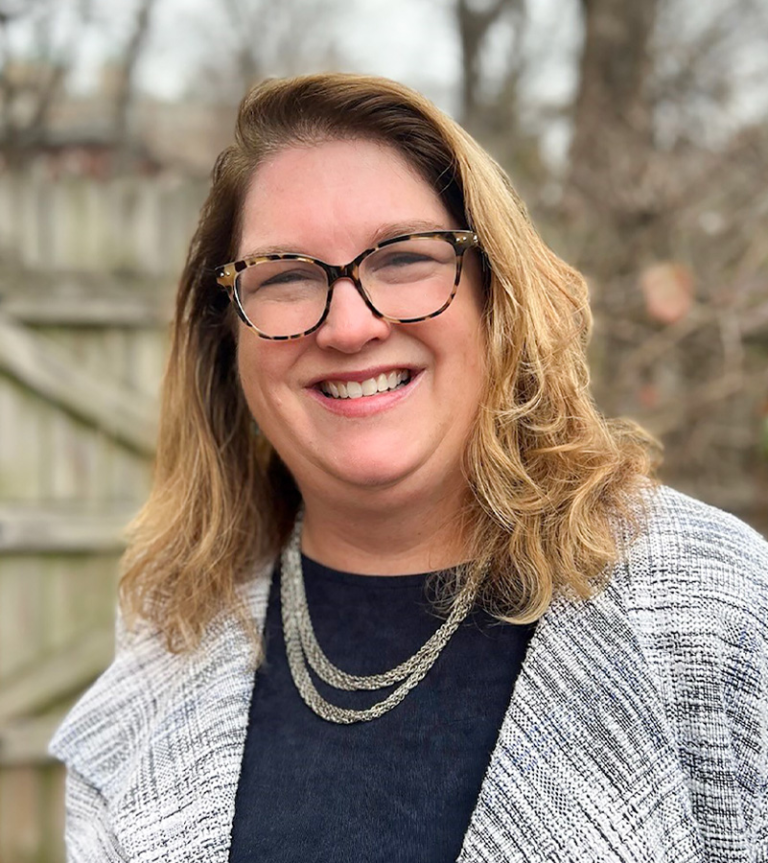
"Miriam School is dedicated to unlocking the potential of students who learn differently, offering personalized education and support to help them thrive academically and in life."

Could you introduce us to the Miriam School and Learning Center, highlighting its mission and focus?

Meg Bamford: The Miriam School and Learning Center is a premier institution dedicated to supporting children who learn differently and the individuals who serve them. Our mission is to provide resources that enable students with special educational needs to unlock their potential and build a pathway to success in life.

With over a century of experience, what would you identify as the most significant factors contributing to the institution’s recent success?

Meg Bamford: Many factors contribute to our success. Foremost is our commitment to providing students with the tools, strategies, and instruction they need in a personalized learning environment. We approach each child by first recognizing their strengths and then identifying how we can help them grow holistically—not just academically. This child-centered focus, coupled with small class sizes and tailored programs, ensures every learner is placed at the forefront of what we do. It’s a distinctive approach that sets us apart.

Can you elaborate on the academic programs and support services Miriam offers to its students?

Meg Bamford: Our school serves students from kindergarten through 12th grade. Every student begins their journey with an Individual Learning Plan tailored to their unique needs. This plan is informed by comprehensive assessments and ensures they can not only progress but achieve their full potential.

Our high school, based in Olivette, Missouri, is particularly innovative, offering three distinct pathways:

  1. Concepts Pathway: Provides remedial instruction in essential skills like numeracy, literacy, and communication to equip students with foundational competencies.
  2. Core Pathway: Delivers a standard high school curriculum with integrated support, such as scaffolding and therapeutic interventions, to ensure classroom success.
  3. Challenge Pathway: Focuses on nurturing students’ strengths with advanced coursework, including dual-enrollment college credits. For instance, last year, students took college-level calculus, algebra, and engineering classes.

Integrated services such as speech and language therapy, occupational therapy, and counseling are seamlessly woven into the school day. This holistic approach accelerates progress, avoiding the fragmented experience students might face in traditional settings.

How does the Miriam School foster innovation in its approach to education?

Meg Bamford: Innovation is central to what we do. A key focus is experiential learning—connecting classroom instruction with real-world applications. Students engage in community activities, volunteer work, and internships, bridging the gap between education and life.

Additionally, we’ve developed the Miriam Essentials curriculum to teach critical life skills, including self-awareness, wellness, executive functioning, and college and career readiness. These skills prepare students for long-term success, whether in higher education or the workforce.

We recognize that many neurodiverse students face challenges in traditional settings, from high unemployment rates to college dropout statistics. Our innovative methods address these barriers, ensuring our students thrive in life, not just in academics.

Could you share a success story or example that illustrates the impact of Miriam’s unique methodologies?

Katie Stalter (Content & Communications Strategist): There are countless stories of transformation at Miriam. One that stands out is a student who joined us in first grade after struggling in other schools. He faced both learning and social challenges but quickly found a sense of belonging at Miriam.

Through personalized instruction, he learned to read and excelled academically, even graduating with strong social skills and leadership qualities. After high school, he was accepted into a university transition program that focuses on independent living and college readiness. His family, once told he would face lifelong struggles, saw him blossom into a confident, capable individual.

We hear similar stories from many parents who describe how their children, once hesitant learners, grow into students eager to attend school and embrace learning.

What role does your staff and faculty play in delivering the exceptional services Miriam is known for?

Meg Bamford: Our staff is extraordinary—mission-driven and dedicated to helping each child achieve their potential. Collaboration is one of our core values, and our team embodies that by working closely together to deliver exceptional outcomes.

At our Lower and Middle School, every teacher is certified in special education, with many holding advanced degrees. At the high school level, we combine special education expertise with subject-matter specialists to ensure students receive a comprehensive and rigorous education. Continuous training and mentorship are integral to our approach, ensuring our teachers remain at the forefront of their field.

The Learning Center appears to complement the school. Can you tell us more about its role and outreach?

Meg Bamford: The Learning Center extends Miriam’s mission beyond the school, serving families who may not require intensive K-12 programming. It offers testing, therapy, and professional development for teachers and therapists in over 100 zip codes across Greater St. Louis.

We also operate the Switching Post, an upscale resale shop that has supported tuition assistance for over 70 years, raising approximately $2.2 million annually. This allows more families to access our services and resources.

What is your message to potential donors and partners who may wish to support Miriam’s mission?

Meg Bamford: Miriam is a lifeline for children who learn differently and the people who support them. The demand for our services continues to grow, but the cost of delivering quality special education is high.

We aim to raise $120 million to expand accessibility and ensure no child is turned away due to financial constraints. By partnering with us, donors can play a vital role in transforming lives and creating a brighter future for countless families.

Looking ahead, what is your vision for Miriam’s growth and impact over the next three to five years?

Meg Bamford: Our vision is to solidify Miriam as a hub for neurodiverse learners and those who serve them. By launching a strategic plan, we aim to expand our reach, support more students, and empower teachers and therapists.

Miriam changes lives—not just for the students but for their entire families. By offering holistic, innovative, and personalized education, we’re shaping futures and creating a ripple effect that benefits our community and beyond.

Latest From The Executive Insight

  • Education

    A former nurse manager applies for an operations role. Her résumé says “excellent communication skills” and “strong leadership”. So do most of the other applications on the recruiter’s screen. The skills are real, and as written they are invisible. Good transferable skills examples always come […]

    9 min read
  • Wealth

    The spreadsheet says 52 is possible. You have run it three times, changed the return assumption twice, and it still works. Then come the questions the spreadsheet cannot answer: how to get money out of a 401k seven years early, who pays for health insurance […]

    8 min read
  • Mindset

    Forty minutes into the meeting, the team is still arguing about which of two suppliers to choose. Both options have been costed twice. Every new argument digs further into the same two answers. Lateral thinking is the habit of stopping at that moment and asking […]

    9 min read
  • Wellness

    Thursday, 3 p.m. You read the same email for the third time and still could not say what it asks for. You slept six hours last night, and the night before, and you feel fine, mostly. So is 6 hours of sleep enough? For most […]

    9 min read
  • Business

    The Monday meeting goes quiet when one person speaks, and everyone else looks at the table. Nothing in the comment is quite bad enough to discipline. It is the fourth one this month, and the team is waiting to see whether you noticed. Knowing how […]

    9 min read
  • Lifestyle

    You land at 7 a.m., the meeting is at 9, and the shirt you packed comes out of the case with a crease across the chest that no amount of smoothing will remove. Learning how to fold a business shirt for travel takes ten minutes […]

    8 min read
  • Education

    It is late, the house is quiet, and three tabs are open. One is a $49-a-month certificate from a company everyone has heard of. One is a bootcamp that promises a new job in sixteen weeks. One is a university program whose price makes you […]

    8 min read
  • Wealth

    The offer email arrives. The number is fine, maybe slightly less than you hoped, and the recruiter is waiting for an answer. Most people say yes. Knowing how to negotiate salary at this exact point is worth more than at any other moment in the […]

    8 min read
  • Mindset

    The busiest office workers are interrupted every two minutes during core hours. That figure comes from Microsoft’s own data on how people use its software, and anyone who runs a team will recognise it. Most productivity hacks are written for a calendar you control. The […]

    8 min read
  • Wellness

    The alarm goes off at six. You hit snooze twice, get up at half past, and spend the first hour of the day feeling like someone else is driving. Most advice on how to become a morning person starts with the alarm: set it earlier […]

    9 min read