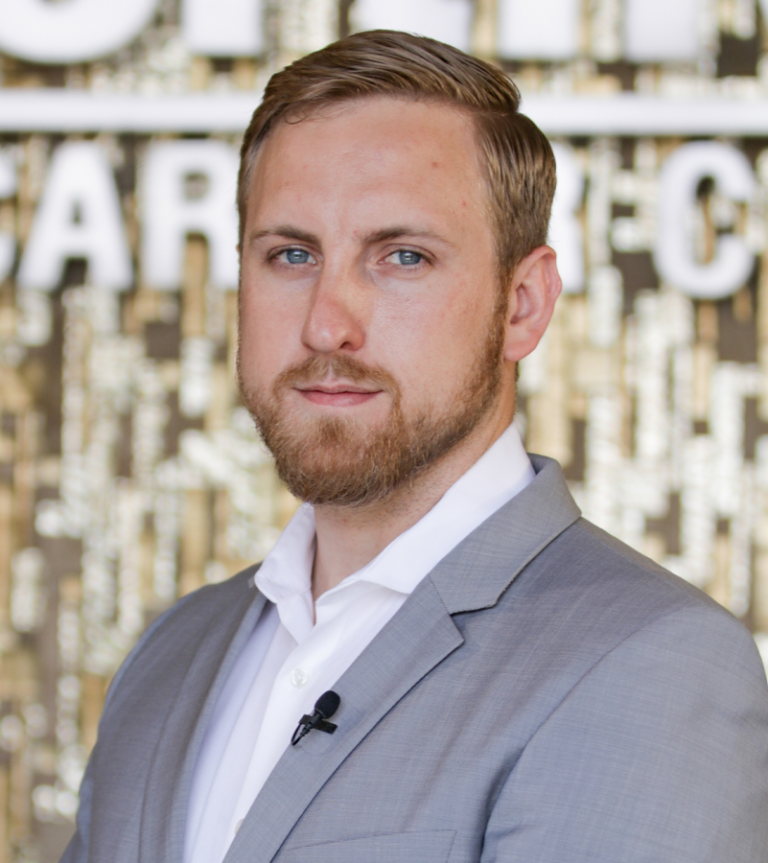
"Think big, go big, and believe in yourself."

Could you please introduce yourself with your name and position, and give us a brief overview of Zen?

My name is Jorge Vaccaro, and I’m the CEO of Zen. We’re a SaaS distribution company that works throughout LATAM, and we also have our own digital factory where we build applications for our customers. We’ve been doing this for the last 22 to 23 years.

We operate specifically in Chile, but we also have offices in Argentina, Peru, and Ecuador, along with a small operation in the United States.

What makes Zen different from other technology companies?

As a company, we started very early on adopting the first SaaS solutions for ourselves. We initially started out as an outsourcing company, working as a service desk supporting IT systems for external companies. As early adopters, we implemented our own project management and help desk solutions, which eventually led us to represent some of these SaaS solutions across LATAM.

We’re well-rounded in the sense that we don’t only distribute subscriptions — we also provide consultancy on all the solutions we represent. And if companies need to connect these solutions to their environments, whether private or cloud-based, we can do that too. We build applications to extend the scope of whatever solution they have, which is probably a key differentiator.

We’re also up to date: we have certified consultants on staff, and we’re an ISO-certified company from a procedures standpoint. So we’re a well-rounded alternative for companies that need to implement and move their vision forward.

How is AI changing what Zen offers its clients?

AI is the big elephant in the room — or at this point, I’d call it a dinosaur, because it’s impactful in every sense of the word. It can get overwhelming given the sheer scope of functionality that can now be delegated to AI.

Many of our partners are implementing AI at a very deep level to further automate their solutions. From a CX perspective, which is one of our biggest verticals, a lot of work that used to be handled by human agents is now shifting to agentic AI. Nowadays, if you reach out to a vendor to check on an order or report an issue, you can usually speak to an intelligent bot that fully understands what you purchased.

I’d say level one used to be handled by workflows, mostly through chat or email. Now that’s being extended, so a human is really only needed when the AI can’t properly assess or respond to an inquiry.

It’s not just about support anymore, either — it’s now being used to build. Right before this session, I was programming bots to help manage decisions and generate reports for myself. AI accelerates a lot of our internal procedures. We’re building with AI, we’re doing quality assurance with AI, and we’re trying to adapt to the trends we’re seeing.

About a month ago, I saw that Google announced 75% of their code is now written by AI. We’re heading in that direction — we’re not quite there yet, but it’s a good, achievable goal. It can be overwhelming, but it accelerates whatever you’re doing, and you have to take advantage of it, because if you don’t, your competitors will.

What is the biggest technology challenge your clients face today?

Social marketing. There’s so much exposure you can get for yourself now, and the primary goal for any business is to increase sales. There was a time when, if you had the money, you could just sponsor a segment on a radio station. Nowadays, it’s all about creativity — the hook, how you present yourself to the market, how you operate 24/7, and how you retain and grow your customers.

It’s about building an engaging relationship with your customers and delivering proactiveness in the conversation, because technology moves so fast that you need to communicate in a language your customers understand. You have to bring technology to a more human level, and from there customers can take advantage of it. It’s all about exposure, branding, and keeping relationships — sales, marketing, strategy, relationships. The human side of things is what matters most.

What are some recent Zen projects that you're most proud of?

We have plenty. What’s interesting about us is that we work across many different industries, so we have to be very open to each customer’s reality. I often tell my friends that I can go from a conversation about raising chickens to one about wood-exporting industries in different parts of South America — there’s a broad range of conversations we have as a consultancy.

We’ve implemented interesting solutions for the pharmaceutical industry and for cement companies, some at a large scale. We usually operate behind the scenes for the end user, but from a broader perspective, some of the implementations we’ve done are quite large — pharmaceutical, cement, and travel agencies are some examples.

What is one technology you could not live without, personally?

I use AI on a daily basis — three different AI vendors. We started with Google, so we use Gemini a lot, but we use two others as well, and we’re strengthening those relationships, hopefully becoming partners with another vendor too. We’re also bringing some of that back to our customers.

On a more personal note, I build applications for my own kids. Just a couple of days ago, I built an application to help teach my kids German, since they study at a German school and need to strengthen it. I don’t speak German myself, so I built a tool to help them.

So you can't live without AI — that's it?

Pretty much. I could, but then I’d have to go live out in the field, I guess. Nowadays it’s a must.

If you could give your younger self one piece of career advice, what would it be?

That’s a very good question — as an entrepreneur, there are just so many mistakes you make. I’d tell my younger self: you don’t have to rely on any external support, you can do it yourself — you just have to believe in yourself.

I started out thinking I’d only work as an outsourcing company for a handful of customers for the first several years, but I wasn’t thinking big enough. So: think big, go big, and believe in yourself. That would be my advice to my younger self — and I think I’ll take that advice for myself as well.

Latest From The Executive Insight

  • Wellness

    The first week of the holiday goes well. You sleep ten hours a night, read a novel for the first time in a year, and start to feel like yourself. Then, somewhere around the Sunday before you fly home, the dread comes back. Two weeks […]

    9 min read
  • Editorial

    Most advice on how to manage stress at work treats stress as a personal failing: breathe better, sleep more, download an app. Those help at the edges. They leave untouched the thing that makes work stressful for most people, which is having a lot asked […]

    8 min read
  • Business

    Most people asking how to become a consultant already have the hard part: years of doing something well inside a company. What they lack is a way to sell it. Consulting is a business built on a narrow promise, and the people who struggle usually […]

    8 min read
  • Lifestyle

    Is an online MBA worth it? For a working professional who wants the knowledge and the credential without giving up a salary, it can be one of the better deals in higher education. For someone who wants to change careers, it is often the weaker […]

    8 min read
  • Education

    AI consulting for small businesses has become a crowded market in about two years. Agencies that built websites now sell AI audits. Freelancers who learned prompting last spring sell implementation packages. Most owners who get a pitch have no way to judge it, because they […]

    8 min read
  • Wealth

    Will AI replace financial advisors? For the part of the job most clients think they are paying for, the portfolio, it largely has. Software has been picking funds, rebalancing and harvesting tax losses for over a decade, for a fraction of what an advisor charges. […]

    8 min read
  • Mindset

    You sit down to do the one piece of work that matters today, and forty minutes later you have answered six messages, read two articles and started nothing. Learning how to stay focused at work is less about willpower than about design. Attention breaks because […]

    8 min read
  • Wellness

    Most advice on balance starts with values and ends with a vague promise to spend more time with family. The practical version is smaller and more useful. The time management techniques for work life balance that actually last are the ones that decide where work […]

    8 min read
  • Business

    A full-time chief financial officer is out of reach for most small businesses. A fractional one is not, and that is why the question of fractional CFO cost comes up at a particular stage: revenue is growing, cash feels tighter than it should, and the […]

    7 min read
  • Lifestyle

    Most people who want to read more assume the problem is time. Usually it is something smaller: no fixed place in the day for reading, and a habit of finishing books they stopped enjoying fifty pages in. If you want to know how to read […]

    7 min read